
REVIEW · LOUVRE MUSEUM TOURS
Paris: Louvre Museum Highlights and Mona Lisa Tour
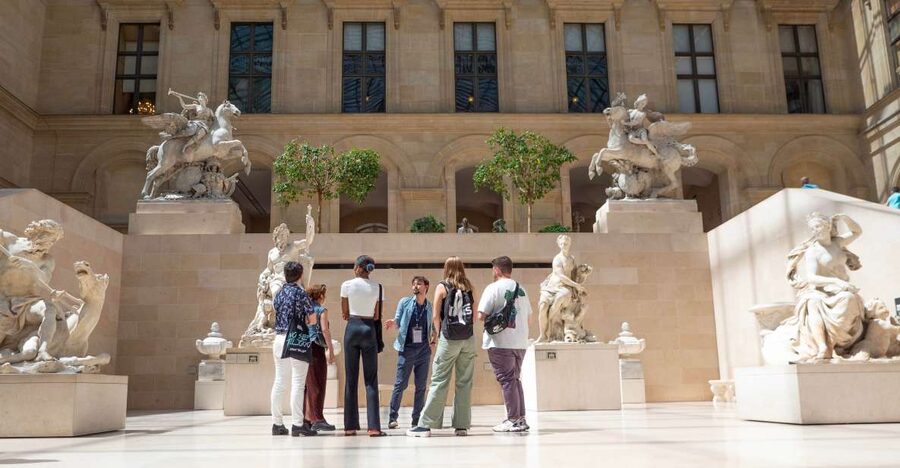
The Louvre is too big for casual wandering. This English-language tour gives you a practical route through the former royal palace, taking in the Mona Lisa, Venus de Milo, Winged Victory of Samothrace, Renaissance paintings, ancient Greek art, and the remains of the medieval fortress. I like the way it turns an overwhelming museum into a manageable two-hour visit, and I like the stories that explain why these famous works matter. The main drawback is crowding, especially around the Mona Lisa, plus the possibility that 20 to 40 minutes of your tour may go toward security and entry.
You meet at the Arc du Carrousel du Louvre, not at the museum entrance, then enter with a pre-reserved ticket and follow a planned highlights route. A guide is especially useful here, since the Louvre is enormous and its rooms can be confusing. Just keep close to the group, arrive early, and expect stairs, crowds, and a brisk pace.
In This Review
- Key points at a glance
- Why a guided Louvre visit makes sense
- Meeting at the Arc du Carrousel
- Entering a former royal palace
- Venus de Milo and ancient Greek sculpture
- Winged Victory of Samothrace
- The Mona Lisa finale
- Renaissance paintings and overlooked rooms
- How the guides shape the experience
- Is $116 good value?
- Timing, crowds, and practical advice
- Who should book this Louvre tour?
- Final verdict: a smart first look at the Louvre
- FAQ
- How long does the Louvre highlights tour last?
- What artworks are included?
- Is the Mona Lisa included?
- Is entry to the Louvre included?
- Does this tour really skip the line?
- What language is the tour in?
- How large is the group?
- Can I continue exploring after the guided tour?
- Is the tour suitable for people with mobility impairments?
Key points at a glance
- The tour ends at the Mona Lisa, after covering major works and useful background on the Louvre itself.
- The route includes Venus de Milo and Winged Victory, two grand sculptures that are easy to miss without direction.
- A reserved museum ticket saves time, but airport-style security can still involve a wait of up to 20 minutes in busy periods.
- Guides such as Sally, Barbara, Pauline, Rodrigo, and Pierre receive especially warm praise for clear explanations, humor, and good crowd handling.
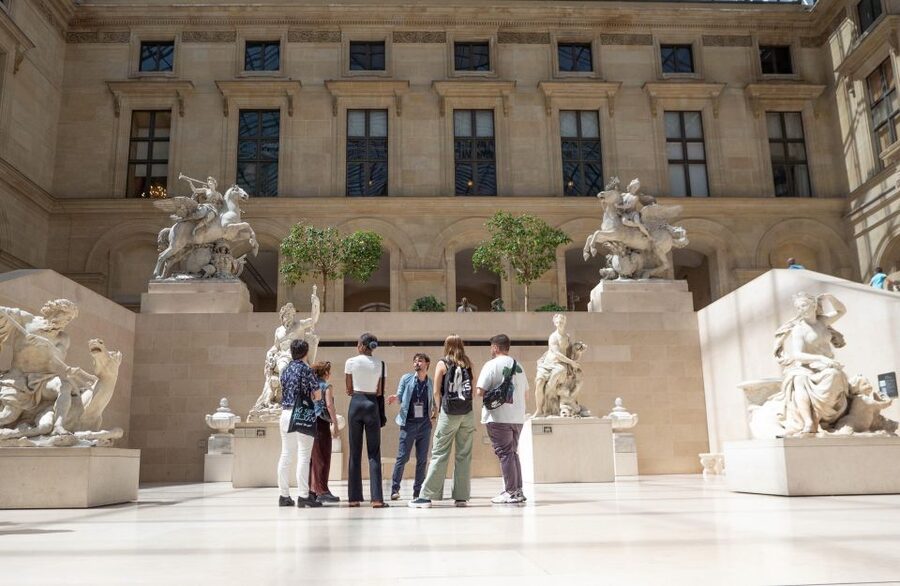
- The group is capped at 20 people, a useful middle ground between a private visit and a large coach tour.
- Two hours is enough for highlights, not the whole museum, though you can continue exploring after the guided portion if you remain inside.
Why a guided Louvre visit makes sense
The Louvre is not simply a large art museum. It is a former residence of the Kings of France, built and expanded over centuries. Its collection runs from ancient civilizations through the mid-19th century, and the building itself is part of the experience.
That scale is exciting for art experts and exhausting for everyone else. You can spend several minutes trying to find a room, walk past an important work without realizing it, or use half your visit just getting from one wing to another. This is where the tour earns its keep.
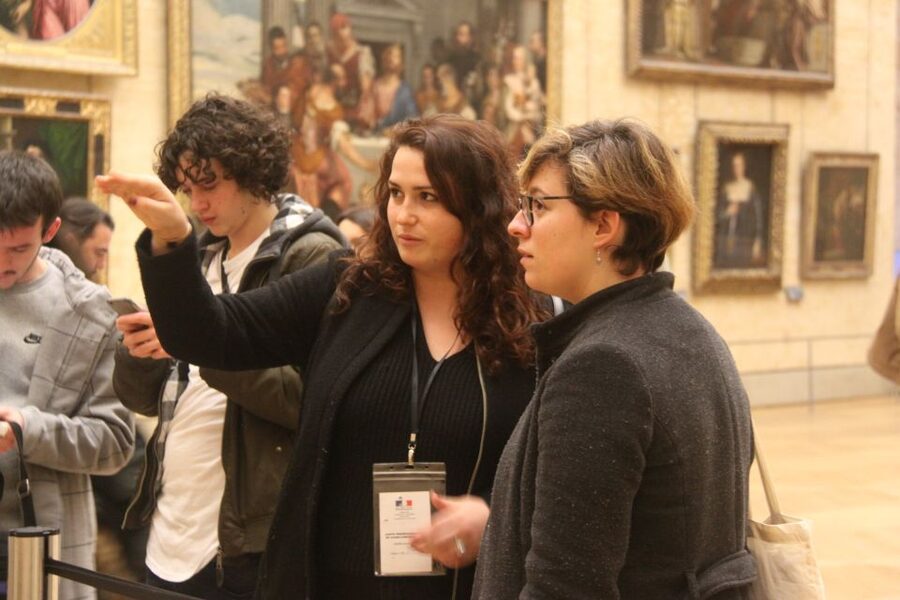
Your guide provides a route rather than leaving you to make hundreds of choices. You see famous works, hear the stories behind them, and get enough historical context to understand how the Louvre became the institution it is today. Guides have been praised for making complicated subjects easy to follow, keeping children interested, and answering questions without turning the visit into a lecture.
The group limit of 20 is not intimate, but it is workable. Headsets are included, which matters in crowded galleries where a guide’s voice can disappear under the noise. Still, you need to pay attention and stay near the guide. One person found it easy to lose sight of the guide in a packed artwork room, and a taller sign or flag would have helped.
More Louvre visits and guided rooms:
- Paris: Louvre Museum Timed-Entrance Ticket
★ 4.6 · 71,977 reviews - Paris: Louvre Guided Tour with Reserved Access & Boat Cruise
★ 4.3 · 16,353 reviews - Louvre Museum Masterpieces Guided Tour with Access
★ 4.5 · 12,023 reviews
Meeting at the Arc du Carrousel
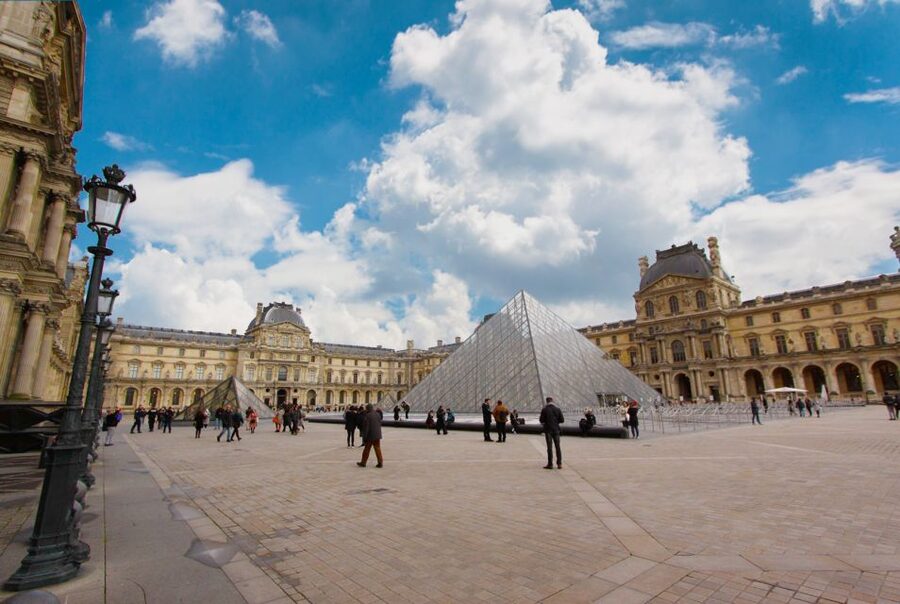
Your meeting point is at the Arc du Carrousel du Louvre, just outside the museum. The exact location can vary according to the option you book, so read your confirmation carefully.
Do not go directly to the Louvre entrance. The guide must check in the group and distribute the reserved tickets. If you arrive late, the operator may not be able to issue your ticket because this is a group booking. In practical terms, give yourself enough time to find the arc, locate the guide, and deal with the crowds around the museum.
You need a passport or identity card and comfortable shoes. Large bags, luggage, non-folding strollers, and double baby strollers are not allowed inside. This is not the place for a full daypack packed for every possible Paris emergency.
Everyone passes through airport-style security. The reserved ticket helps with the ticket line, but it does not remove security screening. During the busiest summer periods, the security wait can reach 20 minutes. One visitor reported that roughly 35 to 40 minutes of a two-hour visit went toward getting inside, so your usable gallery time can vary.
Entering a former royal palace
Once inside, the guide begins connecting the museum to the building around you. The Louvre’s identity as a palace explains why the visit can feel less like moving through a simple gallery and more like passing through a series of grand historic rooms.
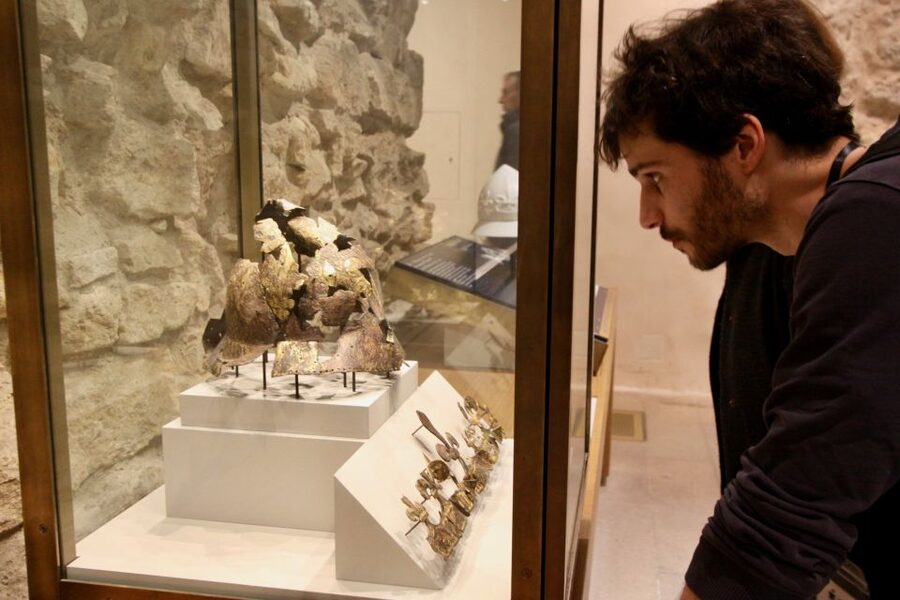
The tour also reaches the underground galleries, where you can see the remains of the original medieval fortress. This section adds useful context. Before the Louvre became a museum filled with international masterpieces, it was a defensive structure and royal residence. Seeing its foundations helps you understand why the building has such an unusual shape and why navigation can be difficult.
This part is easy to overlook if you visit alone with a short list of paintings. I value it because it gives the famous objects a setting and a timeline. You are not just rushing from one celebrated image to another. You are also seeing how the palace changed over time.
Expect stairs. The tour requires you to walk and climb stairs, and the museum’s elevator locations mean it cannot accommodate people using wheelchairs or those with mobility impairments. If stairs are difficult for you, this is not a suitable choice.
Venus de Milo and ancient Greek sculpture
The Venus de Milo is one of the tour’s central stops. This ancient Greek sculpture has influenced generations of artists, and its missing arms have become part of its identity. Your guide can help you look beyond the famous name and focus on the statue’s pose, balance, and idealized form.
A good explanation is valuable here because the gallery can be crowded and the viewing time may be short. You may get only a brief chance to position yourself, listen, and take photographs before the group moves on. The benefit is that you do not have to search for the sculpture or wonder why it has such a strong place in popular culture.
The ancient Greek section also gives the tour a change of pace. After the grand palace interiors and painted scenes, sculpture asks you to look at the body, movement, and stone from different angles. The guide’s job is to point out details you might otherwise miss.
More museums in Paris:
- Paris: Louvre Museum Entry Ticket With Host and River Cruise
★ 4.6 · 9,926 reviews - Les Invalides: Napoleon’s Tomb & Army Museum Entry
★ 4.6 · 9,185 reviews - Louvre Museum – Exclusive Guided Tour (Entry Included)
★ 5.0 · 6,296 reviews - Paris: Louvre Museum Hosted Entry and Mona Lisa Audioguide
★ 4.6 · 5,235 reviews
Winged Victory of Samothrace
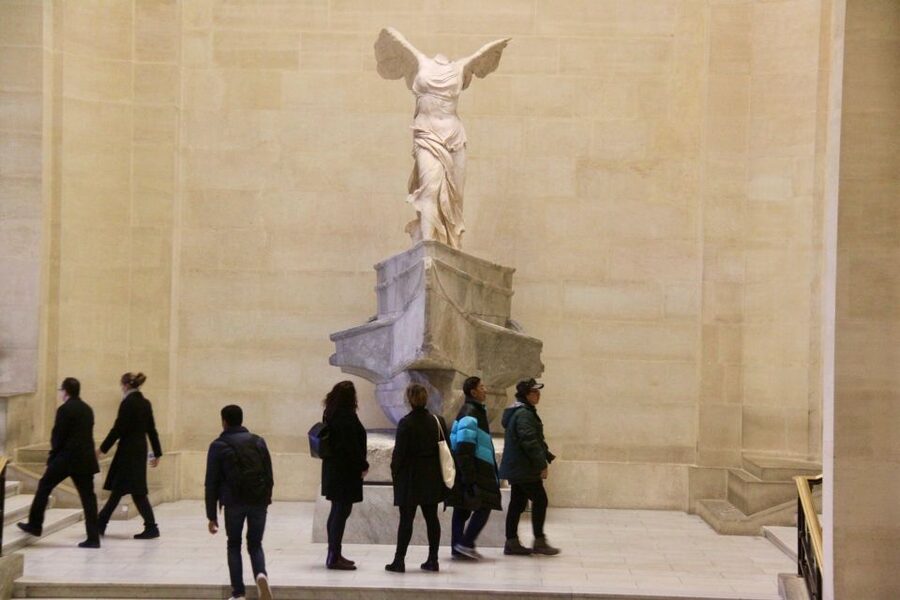
Winged Victory of Samothrace, also called Nike, is another essential stop. The Hellenistic statue represents the Greek goddess of victory and is displayed in a setting that makes the approach part of the experience.
The sculpture is dramatic even before you study its details. Your guide helps explain the figure’s movement, clothing, and sense of forward motion. This is a useful example of why a highlights tour is more than a checklist. You see the object, but you also get a framework for understanding the artistic choices behind it.
Crowds can make the main galleries feel intense, particularly in high season. One visitor noted that the rooms near the most famous pieces were packed, while areas devoted to Dutch masters offered more breathing room. The route may give you some relief by moving through less crowded rooms between the headline works.
The Mona Lisa finale
The tour ends near Leonardo da Vinci’s Mona Lisa, which is exactly what many people book the experience to see. Your guide explains the painting, its importance, and the theft in 1911 that helped turn it into a worldwide celebrity.
The theft is a fascinating piece of the painting’s story. The portrait was famous before it disappeared, but the international attention surrounding its disappearance helped push it into a different level of public fame. That context makes the Mona Lisa more interesting than simply seeing a small painting behind a crowd barrier.
You should set your expectations carefully. The Mona Lisa room can be crowded, with people pressing toward the viewing area for a quick look and photograph. The tour gives you access and explanation, but it cannot create a quiet, private moment with the painting.
The guide’s commentary ends here, and you can generally continue exploring on your own after the tour. This is a useful feature. You get the structure and context first, then you can return to a room or visit another wing at your own pace.
There is one important rule: once you have exited the wings and are under the pyramid, you cannot re-enter the rooms. Do not leave the galleries before you have seen everything you want to see.
Renaissance paintings and overlooked rooms
The route includes Renaissance art, paintings from the 13th through 19th centuries, and prints from the Royal Collection. The exact works can vary depending on museum conditions, crowd movement, and the guide’s choices.
That flexibility is a strength. Guides including Sally, Barbara, Pauline, Rodrigo, Veronica, Guillaume, and Pierre have been praised for adding unusual details, pointing out works people might walk past, and adjusting the presentation for families and mixed-age groups. Pierre, in particular, was praised for positioning the group well for photographs while keeping the visit personal despite the crowds.
You should not expect a full art-history course. Two hours moves quickly, and the guide must choose what to explain. One guide may spend more time on a favorite painting, while another may offer a broader sweep of the collection. That means you may see fewer rooms than an independent visitor who races through, but you will likely understand more of what you do see.
The Dutch master rooms can be a pleasant surprise. They are not always the first target for people focused on the Mona Lisa and Venus de Milo, and they may feel less congested. If your guide spends time there, listen closely. These quieter sections can provide some of the most rewarding moments of the tour.
How the guides shape the experience
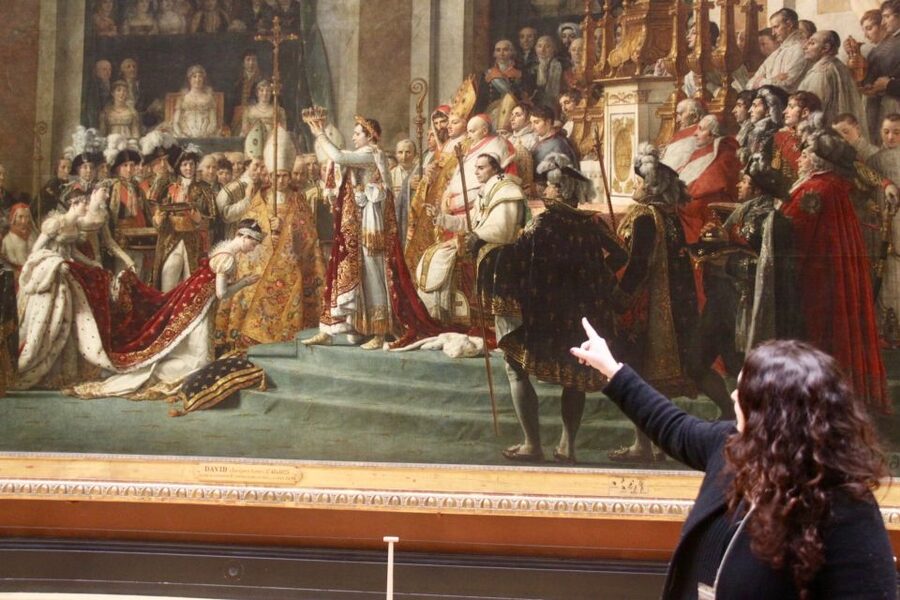
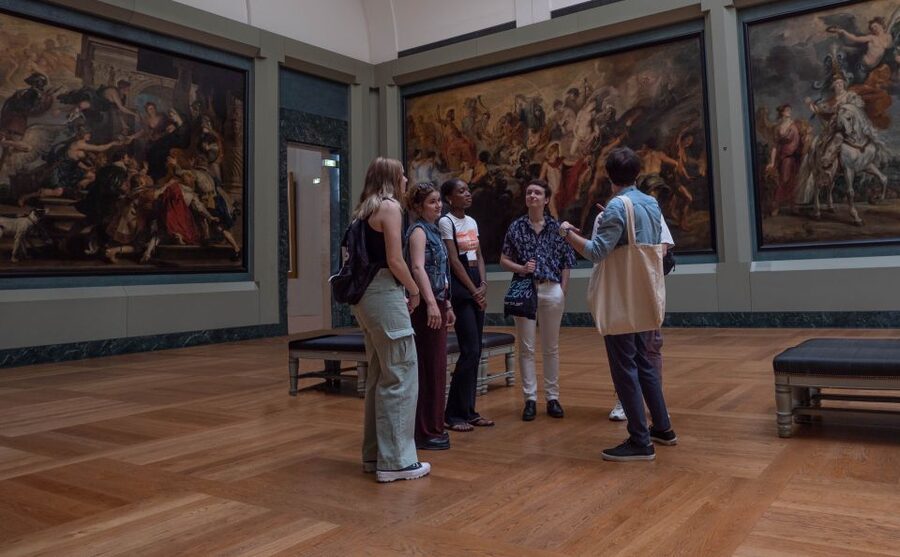
The strongest part of this tour is the human element. The guides are not simply leading you from sign to sign. The best ones tell stories, ask questions, handle interruptions, and make art accessible without talking down to you.
Sally has been praised for keeping the visit focused, fun, and full of useful stories. Barbara receives repeated praise for her clear explanations, humor, courtesy, and ability to explain the purpose behind what you are seeing. Pauline used questions to keep the group involved, while Rodrigo was praised for covering major works along with additional paintings and objects.
Families should pay attention to this point. One guide, Phillip, kept children engaged, and another guide was praised for handling children, families, older people, and solo participants with patience. That does not guarantee a particular guide on your date, but it shows the format can work well for a mixed group.
The guide’s pace can be brisk. That is partly unavoidable in a museum this large. If you want to stop for ten minutes at every painting, an independent visit will suit you better. If you want a sensible route with clear explanations, the pace is a fair trade.
Is $116 good value?
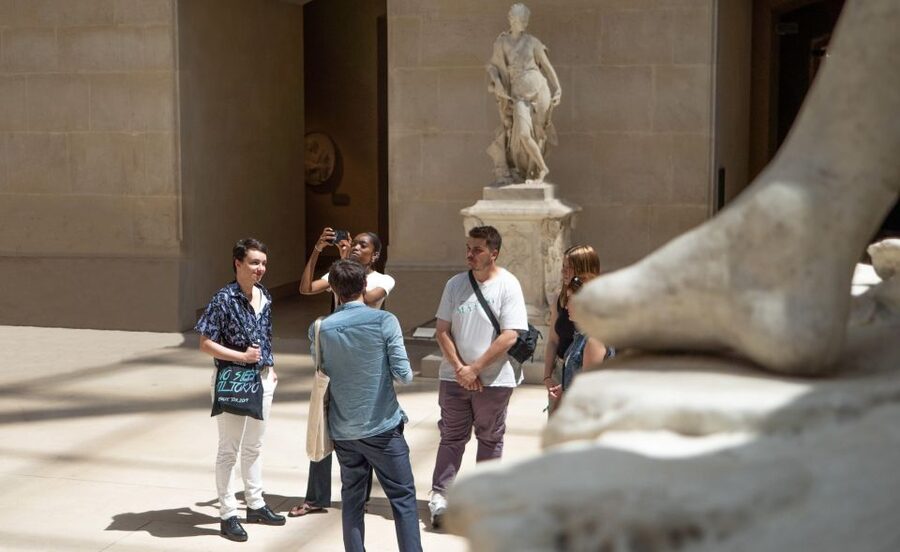
At $116 per person, this is not a cheap museum ticket. You are paying for the reserved entry, an English-speaking licensed guide, headsets, and the work of organizing a route through one of Paris’s most confusing sights.
The value is strongest for a first visit. You avoid figuring out where to begin, reduce the risk of missing the major works, and receive context that is difficult to absorb from wall labels alone. Several people felt that the ticket access alone made the price worthwhile, especially because the Louvre can be hard to navigate.
The value is weaker if you already know the museum well or want a slow, self-directed visit. You will not see everything in two hours, and the busy rooms can limit how long you can look at the most famous pieces. Still, you can stay and continue exploring after the tour, which improves the overall deal.
I would compare this cost with the price of a standard museum ticket, then ask what your time is worth. If you have only one Louvre visit in Paris, the guidance can prevent a frustrating morning. If you have several days and enjoy planning museum routes yourself, you may prefer to save the money.
Timing, crowds, and practical advice
Book an early start if you can. The Louvre becomes harder to navigate as more people arrive, and the Mona Lisa, Venus de Milo, and Winged Victory areas can be especially crowded. Summer is the busiest period, but popular dates in other seasons can also bring delays.
Arrive early at the meeting point. A late arrival can mean losing the reserved ticket, and the group cannot simply wait indefinitely. Wear shoes suitable for stairs and hard museum floors.
Keep your belongings light. Large bags and luggage are not permitted, and security screening is required for everyone. Families should book every child on the tour and avoid bringing a non-folding or double stroller.
Check the booking conditions carefully. The general information allows cancellation up to 24 hours before the activity for a full refund, while the specific instructions also say the tour is non-refundable and cannot be rescheduled. Because those terms conflict, confirm the exact policy attached to your chosen time before paying.
Who should book this Louvre tour?
I would recommend it most strongly to first-time Louvre visitors, families, and anyone who wants the famous works without spending hours lost between wings. It is also a good fit if you like history explained through stories rather than reading every label.
You should book it if the Mona Lisa, Venus de Milo, and Winged Victory are priorities and you want an expert to connect them to the museum’s wider story. The headsets, reserved ticket, and group route remove several common sources of stress.
You may want another format if you use a wheelchair, have serious difficulty with stairs, need a slow pace, or want to spend a long time with a small number of paintings. Art specialists may also prefer a private guide or a self-planned visit focused on one collection.
Final verdict: a smart first look at the Louvre
This tour does not make the Louvre small, quiet, or easy on the feet. Nothing can fully solve the crowds around the Mona Lisa, and security may consume a chunk of your scheduled time.
It does give you a clear path through a huge museum, reliable access with a reserved ticket, and explanations that help the major works make sense. With a strong guide, two hours can feel focused rather than rushed. I would book it for a first Louvre visit, especially if your Paris schedule is tight, but I would arrive early and plan to remain inside afterward for more independent exploring.
FAQ
How long does the Louvre highlights tour last?
The stated duration is one to two hours, with the guided highlights visit generally taking about two hours.
What artworks are included?
The route includes the Mona Lisa, Venus de Milo, and Winged Victory of Samothrace. It also covers Renaissance works, ancient Greek objects, paintings from the 13th through 19th centuries, Royal Collection prints, and parts of the medieval fortress foundations.
Is the Mona Lisa included?
Yes. The tour ends at the Mona Lisa, where the guide explains the painting and its history.
Is entry to the Louvre included?
Yes. A pre-reserved Louvre Museum entry ticket is included.
Does this tour really skip the line?
The tour uses a separate entrance with a pre-reserved ticket, helping you bypass the standard ticket line. All visitors must still pass airport-style security, and this can take up to 20 minutes during peak periods.
What language is the tour in?
The live guided tour is conducted in English.
How large is the group?
The standard group can include a maximum of 20 participants.
Can I continue exploring after the guided tour?
Yes, you can spend additional time exploring after the guided portion. However, once you exit the wings and are under the pyramid, you cannot re-enter the galleries.
Is the tour suitable for people with mobility impairments?
No. The tour requires walking and climbing stairs, and it cannot accommodate people in wheelchairs or those with mobility impairments because of the location of the museum elevators.
Recently added in Paris
- Private Transfers in Paris★ 5.0 · 75 reviews
- CDG – Euro Disney – CDG Two Way Private Shuttle Transfer★ 5.0 · 233 reviews
- Disneyland® Paris 1 Day Ticket with Transport from Paris★ 3.5 · 302 reviews
- Personalized Transport service from Disneyland to Paris★ 5.0 · 63 reviews
- Monet’s Gardens & House-Private Giverny Tour From Paris★ 4.5 · 137 reviews
- Guided tour Monet’s house and gardens/small group★ 4.5 · 68 reviews
- Giverny Monet House and Gardens Skip the line Walking tour★ 4.0 · 217 reviews
- Monet’s House and Garden & Giverny Village★ 4.5 · 39 reviews
Louvre Museum Tours, compared.


Louvre Guided Tour with Reserved Access & Boat Cruise
Read our review →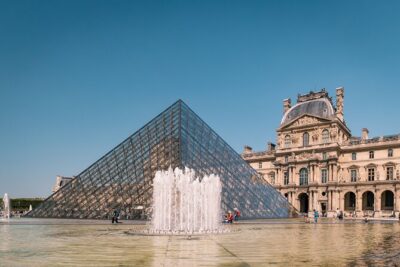
Louvre Museum Masterpieces Guided Tour with Access
Read our review →
Louvre Museum Entry Ticket With Host and River Cruise
Read our review →
Priority Access Louvre with Host -Direct to Mona Lisa
Read our review →
Mona Lisa & Louvre Masterpieces Tour with Reserved Access
Read our review →
Louvre Museum – Exclusive Guided Tour (Entry Included)
Read our review →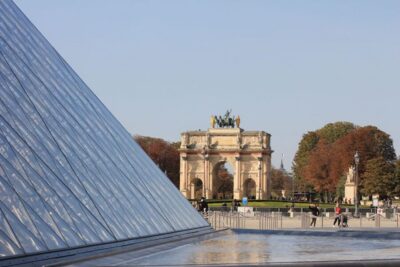
Louvre Reserved Ticket and River Cruise Combo
Read our review →Browse the lists this tour appears in