
REVIEW · LOUVRE MUSEUM TOURS
Paris: Louvre Museum Skip-The-Line Tour
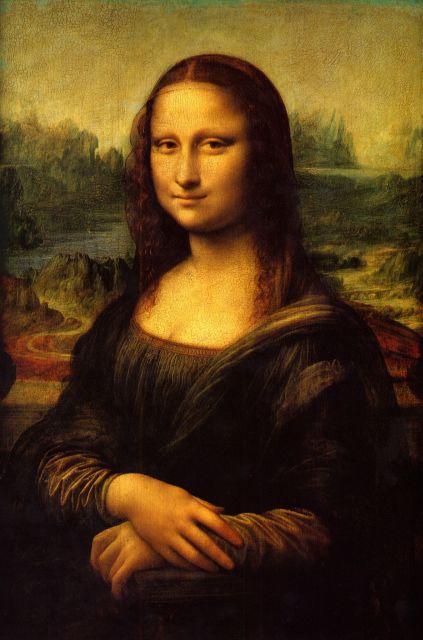
The Louvre rewards a smart plan. This two-hour private tour moves through major Renaissance, Neoclassical, and Romantic works without asking you to tackle the museum’s huge collection alone. You’ll see famous pieces such as the Mona Lisa, but the guide also brings attention to works many visitors might otherwise pass by.
I especially like the focus on how art changed from the Medieval period into early Renaissance Humanism. I also like the chance to adjust the visit around your interests, something one family praised after their guide kept two teenagers engaged. The main drawback is the price: at $294 per person, this is a serious splurge for only two hours.
The meeting point is the Arc de Triomphe du Carrousel. Look for a guide carrying a red canvas tote bag. Boris received special praise for his clear historical explanations and his habit of tracing how artists used sunlight and light, while another guide was praised for being attentive and flexible.
In This Review
- Key points to know before you book
- Meeting your guide beneath the Carrousel Arch
- The Louvre in two hours: a focused route
- Botticelli and the turn toward Humanism
- Mantegna, Bellini, and Renaissance variety
- Nike of Samothrace and the drama of sculpture
- Veronese’s Marriage at Cana
- David, Ingres, and the art of power
- Romanticism: feeling, conflict, and public life
- What the private format is really worth
- Practical details that can shape your visit
- Who should book this Louvre tour?
- Should you book it?
- FAQ
- How long is the Louvre tour?
- What languages are available?
- Is the Louvre entrance ticket included?
- Where does the tour meet?
- Is the tour private?
- Is the tour wheelchair accessible?
- Can I bring a large suitcase?
- Are food and drinks included?
- Can I cancel the booking?
Key points to know before you book
- The tour is private, so the guide can respond to your interests instead of following a fixed script for a large crowd.
- The route covers three major art periods: Renaissance, Neoclassicism, and Romanticism.
- You’ll see the Louvre’s signature works, including the Mona Lisa, Nike of Samothrace, Marriage at Cana, and Liberty Leading the People.
- Botticelli, Mantegna, Bellini, Leonardo, Veronese, Gericault, Ingres, and David all feature in the planned art focus.
- Skip-the-line entry saves time, but you still need to arrive at the Arc de Triomphe du Carrousel with no oversize luggage.
- The tour runs for two hours and is offered in English, French, or Serbo-Croatian.
Meeting your guide beneath the Carrousel Arch
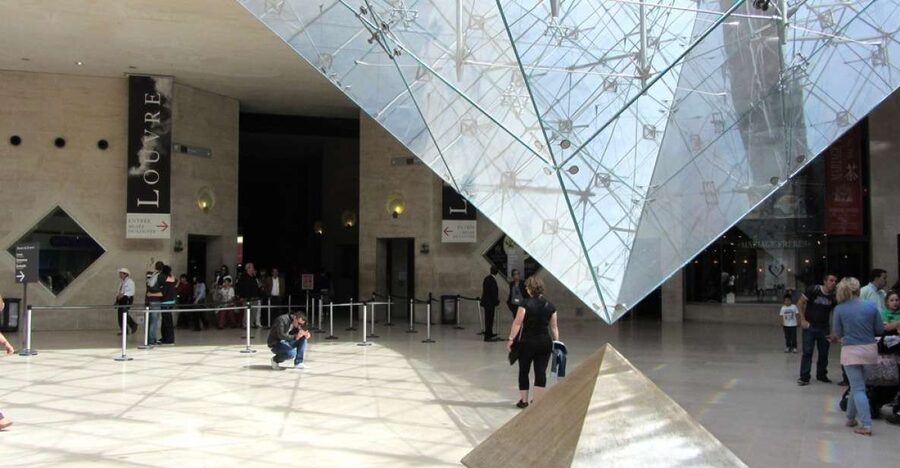
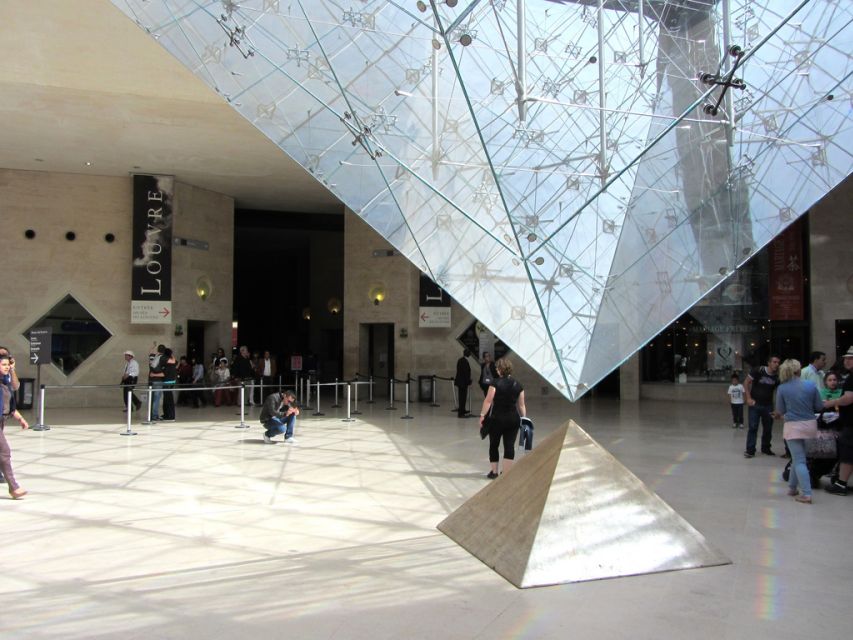
Your visit begins at the Arc de Triomphe du Carrousel, the grand arch near the Louvre’s main entrance area. This is a useful meeting point, but the museum complex can feel confusing if you arrive late, so give yourself extra time to find the arch and identify the red tote bag.
The guide provides the Louvre entrance ticket, and skip-the-line access removes one of the most tiring parts of a museum visit. It does not mean the galleries will be quiet. The Louvre is still one of Paris’s busiest sights, and famous rooms can feel crowded.
You should travel light. Bags larger than 55 by 35 by 20 centimeters are not allowed inside, and oversize luggage is specifically excluded. Food and drinks are not included, so plan those around the visit rather than expecting a refreshment stop during the tour.
The private format matters here. The Louvre is so large that a guide must make choices. With a private group, you can ask for more painting, more sculpture, or more historical context. A family with two teenage boys found this flexibility especially useful, and another participant praised the guide for customizing the visit around personal interests.
More Louvre visits and guided rooms:
- Paris: Louvre Museum Timed-Entrance Ticket
★ 4.6 · 71,977 reviews - Paris: Louvre Guided Tour with Reserved Access & Boat Cruise
★ 4.3 · 16,353 reviews - Louvre Museum Masterpieces Guided Tour with Access
★ 4.5 · 12,023 reviews
The Louvre in two hours: a focused route
Two hours is enough for a strong introduction, not enough to cover the museum. That distinction is important. You’ll see major highlights and receive a framework for understanding them, but you should not expect a complete tour of Ancient Egypt, Greece, Roman art, European painting, sculpture, and decorative arts.
The visit concentrates on Renaissance, Neoclassicism, and Romanticism, while still reaching back to ancient Greek sculpture and forward to early 19th-century painting. This gives the route a clear shape. Rather than rushing from famous object to famous object, you can follow changing ideas about the human body, nature, power, religion, and public life.
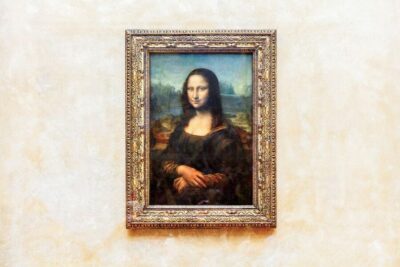
I like this approach because the Louvre can otherwise become a checklist. The Mona Lisa is famous, but it makes more sense when you also see the works around it and understand how Renaissance artists treated light, space, and the human figure.
The guide’s job is especially valuable in a museum where labels can only offer so much. Boris, in particular, was praised for explaining how sunlight and light appeared in art across different periods. That kind of theme helps connect paintings that may look unrelated at first glance.
Botticelli and the turn toward Humanism
One of the most distinctive stops is Botticelli’s fresco, Venus and the Three Graces Presenting Gifts to a Young Woman. It offers a useful way to discuss the early Renaissance and the shift from Medieval religious traditions toward Humanism.
The work is not as universally known as the Mona Lisa, which is part of its appeal. You can look closely at the graceful figures, the decorative details, and the way the scene combines Christian and classical ideas. Your guide can help explain why the return to ancient Greek and Roman subjects mattered so much to Renaissance artists.
This is also where the tour’s teaching style becomes important. You are not simply told that Botticelli was a Renaissance painter. You are shown how the period developed and how artists began to give greater attention to the individual, the body, nature, and classical mythology.
If you prefer art explained through a story of change, this part should suit you. If you mainly want a rapid march to the Louvre’s most famous names, the Botticelli fresco may feel like a slower stop. I think the extra context pays off, especially for first-time visitors.
Mantegna, Bellini, and Renaissance variety
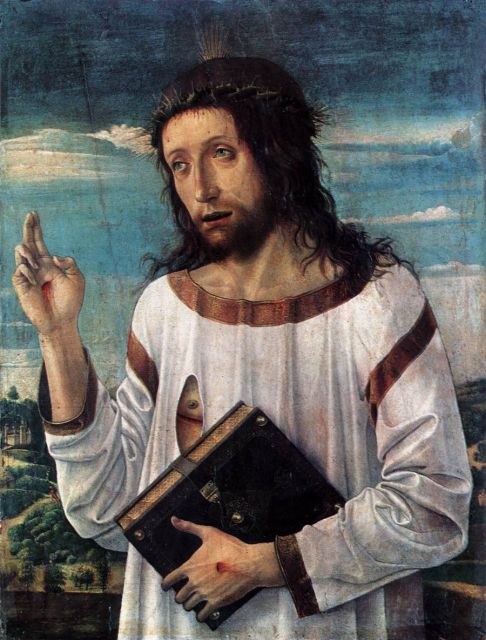
The tour also highlights Andrea Mantegna’s Saint Sebastian and early Florentine art. Mantegna’s work gives you a chance to see a more structured, forceful side of the Renaissance, with attention to the body, space, and the physical world.
Bellini represents the Venetian tradition. This contrast with Florentine painting is one of the most useful parts of the route. You can begin to see that the Renaissance was not one uniform style. Different cities and artists made different choices about color, line, setting, and atmosphere.
The mention of Bellini is especially helpful because the Louvre’s best-known Renaissance name is Leonardo. A visit that only points toward the Mona Lisa misses much of what makes the period interesting. Bellini and Mantegna widen the picture and show you how varied Renaissance painting could be.
The route includes Leonardo da Vinci’s Mona Lisa, of course. Expect this to be a high-demand stop, with many people gathered around the painting. The guide can give you a better way to look at it, but the crowd may limit how long you can stand close to the work.
More reserved-entry tickets in Paris:
- Versailles: Skip-the-Line Tour of Palace with Gardens Access
★ 4.7 · 9,778 reviews - Versailles: Skip-the-Line Guided Palace Tour and Full Access
★ 4.6 · 5,214 reviews - Louvre Museum: Skip-the-Line Small Group Guided Tour
★ 4.6 · 3,960 reviews - From Paris: Versailles Skip-the-Line Tour & Gardens Access
★ 4.7 · 3,011 reviews
Nike of Samothrace and the drama of sculpture
The Nike of Samothrace is a major change of pace from the paintings. This 2nd-century BC marble sculpture depicts Nike, the Greek goddess of Victory, poised at the top of the Daru staircase.
The statue is famous for its sense of motion. The wings, drapery, and forward thrust create the feeling of a figure meeting strong wind. Even without a long explanation, it is an arresting sight. With a guide, you can consider how the sculpture creates movement despite being made of stone.
This stop also helps break up the painting-heavy parts of the tour. After studying Renaissance frescoes and portraits, you are looking at the human form on a much larger scale. The contrast makes the route feel varied rather than like a parade of framed canvases.
The Louvre contains far more sculpture than you can see in two hours. Nike is a sensible choice because it is both visually powerful and easy to connect with the wider story of ancient Greek influence on later European art.
Veronese’s Marriage at Cana
Paolo Veronese’s Marriage at Cana is the largest painting in the Louvre. Its sheer size makes it one of the visit’s most impressive works, even before you consider the scene itself.
The painting shows a grand wedding feast filled with figures, architecture, fabrics, and small moments of activity. It is the sort of work that needs space and time. Your guide can help direct your attention instead of leaving you to face the huge canvas without a starting point.
This painting also provides a strong comparison with Leonardo. Both belong to the broad Renaissance story, but they create very different visual experiences. Leonardo is often associated with subtle expression and soft transitions, while Veronese gives you ceremony, scale, and theatrical display.
Because the tour lasts only two hours, you may not get a long period to inspect every figure in Marriage at Cana. Still, seeing it with an explanation of its place in the Louvre collection is far more useful than simply walking past its enormous surface.
David, Ingres, and the art of power
The Neoclassical section brings you to Jacques-Louis David’s The Coronation of Napoleon and The Oath of the Horatii. These works are tied to discipline, civic duty, political authority, and carefully arranged bodies.
The Coronation of Napoleon is a grand public statement. It asks you to think about how art can shape an official image of power. The Oath of the Horatii has a different energy, with its emphasis on sacrifice and duty. Together, the paintings show why Neoclassicism often looked to ancient Rome for moral lessons and strong visual order.
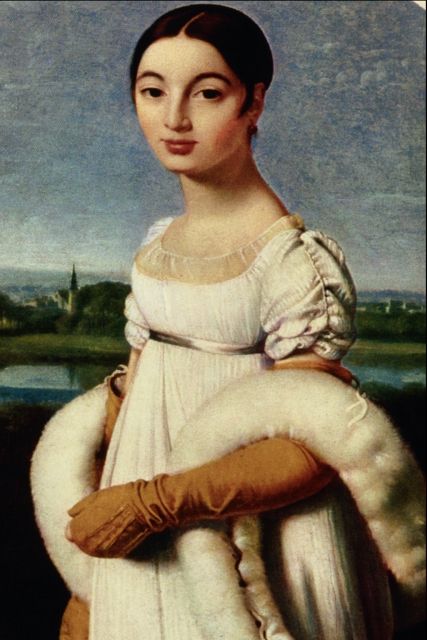
Ingres’ Une Odalisque offers a striking contrast. Its sinuous nude and elongated form show an artist treating the body in a more stylized way. It is a useful reminder that art periods are not sealed boxes. Even within a formal tradition, artists could bend anatomy and emphasize sensuality.
This part of the tour will appeal to you if you enjoy art linked to politics and society. The guide can help explain why these paintings were made, not just what they depict. That turns a room of large historical canvases into a conversation about who gets represented and why.
Romanticism: feeling, conflict, and public life
The Romantic section includes Theodore Gericault’s The Raft of the Medusa. The painting is known for its emotional force and its account of people left struggling after a shipwreck. It draws your attention to fear, suffering, survival, and the power of a large public painting.
Unlike the controlled geometry of David, Gericault’s work feels unstable and urgent. Bodies twist, hope seems uncertain, and the composition pulls your eye through a crisis. This is an excellent point for comparing Neoclassical order with Romantic emotion.
Eugene Delacroix’s Liberty Leading the People commemorates the July Revolution of 1830. It combines an allegorical figure with a contemporary political event, giving the painting both symbolic force and a direct connection to French public life.
These works are not merely decorative highlights. They show how painting could respond to current events and stir political feeling. If your guide follows the same clear historical approach praised in the feedback, you should come away with a stronger idea of how European art changed during periods of social upheaval.
What the private format is really worth
At $294 per person, this tour costs much more than a basic museum ticket. You are paying for the guide’s time, skip-the-line entry, and a private visit designed around a small party. The value depends on how much help you want inside a museum that can easily overwhelm you.
I see the strongest value for first-time Louvre visitors who have only a short window in Paris. Two hours with a focused route can prevent wasted time and help you see major works in a sensible order. It is also a good fit for families, especially when children or teenagers need a guide who can adjust the pace and subject matter.
The value is less clear if you already know the Louvre well or prefer to wander alone. Two hours passes quickly, and the price does not include food or beverages. You may prefer a standard entry ticket and a self-guided plan if your main goal is to spend a full day exploring at your own pace.
The provider, Paris in person private tours, was selected among the top 10 small tour operators in Europe in the 2025 Arival TourReview Spotlight Awards, from a field of 26,000 companies. That recognition does not guarantee a perfect match with every guide, but it adds useful context to the strong five-star score from 32 ratings.
Practical details that can shape your visit
The tour operates rain or shine, which is easy to manage because the main experience takes place indoors. You should still arrive prepared to wait briefly outdoors if needed and allow time to locate the meeting point.
English, French, and Serbo-Croatian are available. Boris is one guide specifically praised for a strong historical perspective and clear explanations. Another guide received praise for being attentive and accommodating, especially with a family group.
The activity is wheelchair accessible. Large luggage is not permitted, and items over 55 by 35 by 20 centimeters cannot enter the museum. That rule can cause trouble if you arrive with a large suitcase, so leave it at your accommodation or use an appropriate storage option before meeting the guide.
You can cancel up to 24 hours before the tour for a full refund, and reserve now while paying later. Those policies help if your Paris schedule is still shifting, though they do not change the need to arrive on time.
Who should book this Louvre tour?
I would choose this tour if you want the Louvre’s major works explained through art history rather than simply pointed out. The route gives you Botticelli, Mantegna, Bellini, Leonardo, Veronese, David, Ingres, Gericault, and Delacroix, with a clear focus on how ideas and styles changed.
It also suits families and private groups that want flexibility. The experience with two teenagers shows that the guide can adjust the presentation for different ages and interests. Art lovers who want a particular emphasis, such as Renaissance painting or political art, may also benefit from the private format.
I would hesitate if $294 per person feels uncomfortable or if you want a long, leisurely museum day. Two hours is focused by design. You will see important works, but you will leave plenty of the Louvre untouched.
Should you book it?
Book this tour if you want a short, structured introduction and value personal guidance more than a low entry price. The strongest features are the private format, skip-the-line access, clear historical themes, and the chance to see both famous masterpieces and less obvious Renaissance works.
Skip it if you prefer to explore independently, have plenty of time, or mainly want the cheapest way into the museum. For everyone else, especially first-time visitors with limited time, the high price can make sense because it buys direction inside one of Paris’s most confusing museums.
FAQ
How long is the Louvre tour?
The tour lasts two hours.
What languages are available?
The live guide is available in English, French, and Serbo-Croatian.
Is the Louvre entrance ticket included?
Yes. A skip-the-line entrance ticket to the Louvre is included.
Where does the tour meet?
Meet at the Arc de Triomphe du Carrousel. Your guide will carry a red canvas tote bag.
Is the tour private?
Yes. The activity is offered as a private group experience.
Is the tour wheelchair accessible?
Yes, the tour is wheelchair accessible.
Can I bring a large suitcase?
No. Oversize luggage is not allowed, and items exceeding 55 by 35 by 20 centimeters cannot enter the museum.
Are food and drinks included?
No. Food and beverages are not included.
Can I cancel the booking?
Yes. You can cancel up to 24 hours in advance for a full refund. You can also reserve now and pay later.
More Museums in Paris
- Paris: Louvre Museum Entry Ticket With Host and River Cruise
★ 4.6 · 9,926 reviews - Les Invalides: Napoleon’s Tomb & Army Museum Entry
★ 4.6 · 9,185 reviews - Louvre Museum – Exclusive Guided Tour (Entry Included)
★ 5.0 · 6,296 reviews - Paris: Louvre Museum Hosted Entry and Mona Lisa Audioguide
★ 4.6 · 5,235 reviews
Recently added in Paris
- Private Transfers in Paris★ 5.0 · 75 reviews
- Disneyland® Paris 1 Day Ticket with Transport from Paris★ 3.5 · 302 reviews
- CDG – Euro Disney – CDG Two Way Private Shuttle Transfer★ 5.0 · 233 reviews
- Personalized Transport service from Disneyland to Paris★ 5.0 · 63 reviews
- Monet’s Gardens & House-Private Giverny Tour From Paris★ 4.5 · 137 reviews
- Guided tour Monet’s house and gardens/small group★ 4.5 · 68 reviews
- Giverny Monet House and Gardens Skip the line Walking tour★ 4.0 · 217 reviews
- Monet’s House and Garden & Giverny Village★ 4.5 · 39 reviews
Louvre Museum Tours, compared.

Louvre Guided Tour with Reserved Access & Boat Cruise
Read our review →
Louvre Museum Masterpieces Guided Tour with Access
Read our review →
Louvre Museum Entry Ticket With Host and River Cruise
Read our review →
Priority Access Louvre with Host -Direct to Mona Lisa
Read our review →
Mona Lisa & Louvre Masterpieces Tour with Reserved Access
Read our review →
Louvre Museum – Exclusive Guided Tour (Entry Included)
Read our review →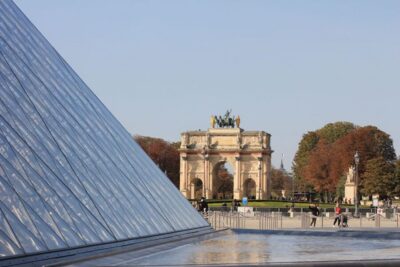
Louvre Reserved Ticket and River Cruise Combo
Read our review →Browse the lists this tour appears in