
REVIEW · LOUVRE MUSEUM TOURS
Paris: Louvre Museum Tour Mona Lisa & Iconic Masterpieces
The Louvre can swallow a whole day. This two-hour guided visit gives you a clear route through Paris’s enormous museum, with reserved entry and focused stories about the Mona Lisa, Venus de Milo, Winged Victory, and other major works. I like the expert storytelling, which turns famous objects into memorable human stories, and I like that you can stay inside after the tour to explore on your own. The main drawback is pace: two hours covers highlights, not the Louvre’s full collection, and busy days can make the visit feel hurried.
For a first visit, this is a sensible way to get your bearings without wandering past hundreds of galleries in a daze. Guides such as Sophie, Gabriela, Megan, Lucia, and René have been praised for warmth, humor, and clear explanations. Still, you must meet at the Kiosque des Noctambules rather than the museum entrance, and late arrivals may lose their place and ticket.
In This Review
- Key points to know before booking
- Why a guided Louvre visit makes sense
- Meeting the guide at Kiosque des Noctambules
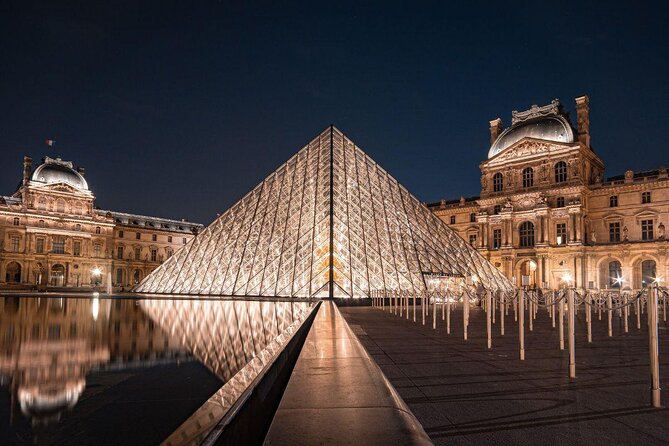
- Entering through the pyramid with a reserved ticket
- The Mona Lisa, with more than a quick photograph
- Venus de Milo and the art of the ancient world
- Winged Victory and the dramatic staircase
- Paintings, prints, and lesser-known works
- Two hours inside a museum that needs two days
- Staying on after the guided route
- Is $79 a fair price?
- Who will get the most from this tour?
- Should you book the Louvre highlights tour?
- FAQ
- Where is the meeting point for the Louvre tour?
- Should I go directly to the Louvre entrance?
- How long does the Louvre tour last?
- Which Louvre artworks are included?
- What languages are available?
- How large is the tour group?
- Is the tour suitable for wheelchair users?
Key points to know before booking
- The meeting point is outside the Louvre: Find the colorful Kiosque des Noctambules opposite the Comédie Française, near Palais Royal.
- The route covers the big three: Expect the Mona Lisa, Venus de Milo, and Winged Victory of Samothrace, plus other paintings, sculptures, and palace remains.
- A guide adds real value: The best part is the context behind the art, including the Mona Lisa’s 1911 theft and the Louvre’s earlier life as a royal castle.
- You can continue afterward: Once the guided portion ends, you may remain in the museum and look around at your own pace.
- Groups reach 20 people: Headsets help you hear, but this is still a standard group tour rather than a quiet private visit.
- Plan for steps and security: Large bags, luggage, selfie sticks, and non-folding wheelchairs are not allowed, and security may take up to 20 minutes in peak season.
Why a guided Louvre visit makes sense

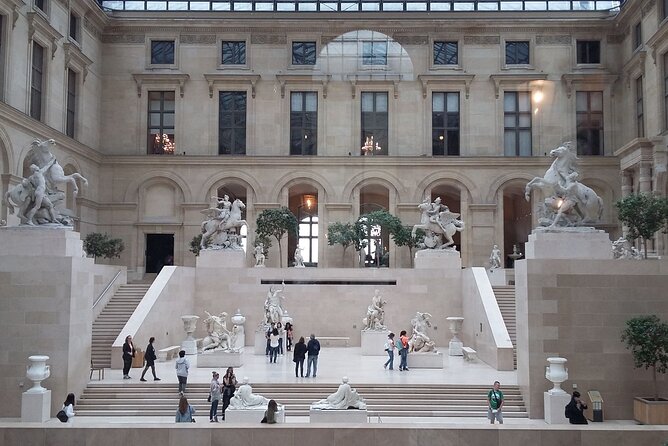
The Louvre is not simply a large museum. It is a former royal residence with collections stretching from ancient civilizations through the mid-19th century. Its size is the problem. Without a plan, you can spend half your visit finding the right corridor, then discover that your energy is gone before reaching the Mona Lisa.
This tour solves that problem with a highlights route. You are not promised every famous painting or an exhaustive survey of French art. Instead, you get a compact introduction to the building, major collections, and a handful of works that help explain why the Louvre matters.
I especially like this format for a first visit. You get the basic map in your head, hear the stories that make the art easier to understand, and still have time afterward to revisit a favorite room. Several people have said the museum felt overwhelming alone but much easier with a guide leading the way.
The 4.7 rating from more than 4,500 reviews supports that impression, though ratings never remove the practical limits. Crowds, distance between galleries, security, and the museum’s sheer scale are still part of the day.
More Louvre visits and guided rooms:
- Paris: Louvre Museum Timed-Entrance Ticket
★ 4.6 · 71,977 reviews - Paris: Louvre Guided Tour with Reserved Access & Boat Cruise
★ 4.3 · 16,353 reviews - Louvre Museum Masterpieces Guided Tour with Access
★ 4.5 · 12,023 reviews
Meeting the guide at Kiosque des Noctambules
Your day begins at the Kiosque des Noctambules, a colorful public artwork decorated with Murano glass beads. It faces the Comédie Française and is about a five-minute walk from the Louvre entrance.
Do not walk straight to the pyramid expecting to meet the group there. The guide arrives at the selected start time, not early, and carries a GetYourGuide flag. The nearest metro station is Palais Royal, Musée du Louvre, using the Place Colette exit.
This meeting arrangement is easy once you know it, but it can be confusing if you simply paste the address into a map. One person specifically had trouble finding the location because the address led elsewhere. I would arrive with enough time to locate the kiosk, especially if you are unfamiliar with Paris or have a tight schedule.
The group can include up to 20 participants. That is small enough for a workable walking tour, but not intimate. Headsets are supplied, which matters in echoing halls and crowded rooms. You should still stay close to the guide because the Louvre’s corridors can swallow a group quickly.
Entering through the pyramid with a reserved ticket
The tour includes a pre-reserved Louvre entry ticket, so you are not joining the ordinary ticket queue. That is a major benefit when the museum is busy or official tickets are difficult to find.
Skip-the-line does not mean skip-everything. Everyone must pass security, and during the busiest summer periods that check can take up to 20 minutes. The practical gain is that you avoid the longer ticket process and enter as part of an organized group.
Keep your belongings light. Luggage and large bags are not permitted, and double baby strollers cannot enter. Selfie sticks are also banned. These rules are worth taking seriously because a rejected bag or a delayed child can put the whole timetable under pressure.
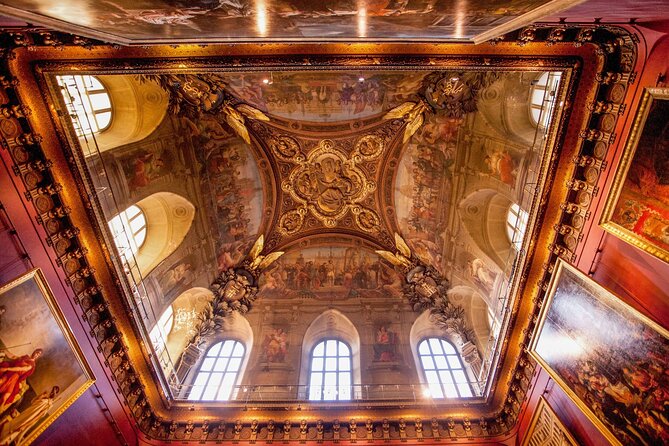
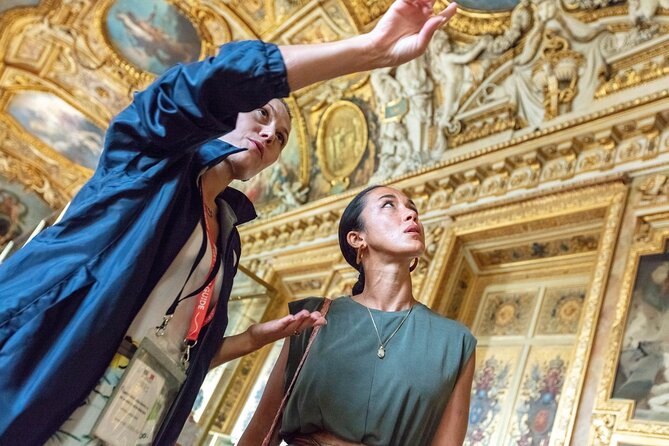
Once inside, the guide leads you through the former palace and its galleries. The building itself is part of the lesson. In the basement, you can see foundations from the castle that once occupied the site. That small archaeological stop helps connect the modern museum to the older fortress and royal residence beneath it.
The Mona Lisa, with more than a quick photograph
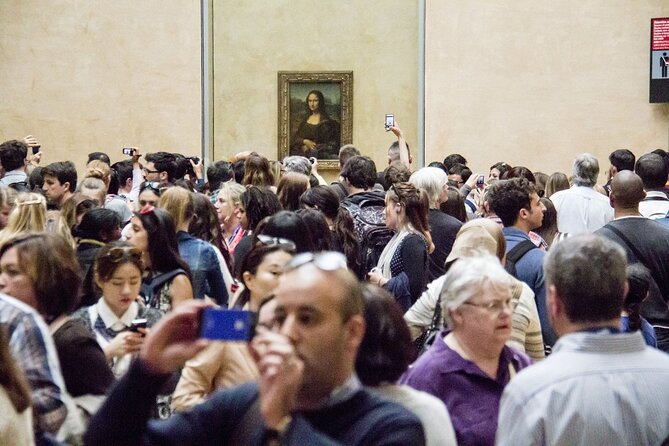
The Mona Lisa is usually the emotional center of this visit, but the guide gives you more than directions to a crowded room. You learn about the portrait’s fame and the 1911 theft that helped turn it into the world’s most famous painting.
That detail is useful because it shifts the focus from simply looking at a small portrait behind protective barriers. The painting’s celebrity is not only about Leonardo da Vinci’s technique. Its public story, including the theft, shaped the way the world sees it today.
Expect crowds around the painting, particularly in summer. The group may help you reach a useful viewing position, but nobody can make the room private. One account described the guide taking the group close to the front of the Mona Lisa rope, which can make a real difference when the room is packed.
Give yourself permission not to linger forever. You will have other art to see, and the painting can be surprisingly small compared with the attention it receives. The guide’s explanation helps you make the visit meaningful even when the physical viewing time is brief.
More museums in Paris:
- Paris: Louvre Museum Entry Ticket With Host and River Cruise
★ 4.6 · 9,926 reviews - Les Invalides: Napoleon’s Tomb & Army Museum Entry
★ 4.6 · 9,185 reviews - Louvre Museum – Exclusive Guided Tour (Entry Included)
★ 5.0 · 6,296 reviews - Paris: Louvre Museum Hosted Entry and Mona Lisa Audioguide
★ 4.6 · 5,235 reviews
Venus de Milo and the art of the ancient world
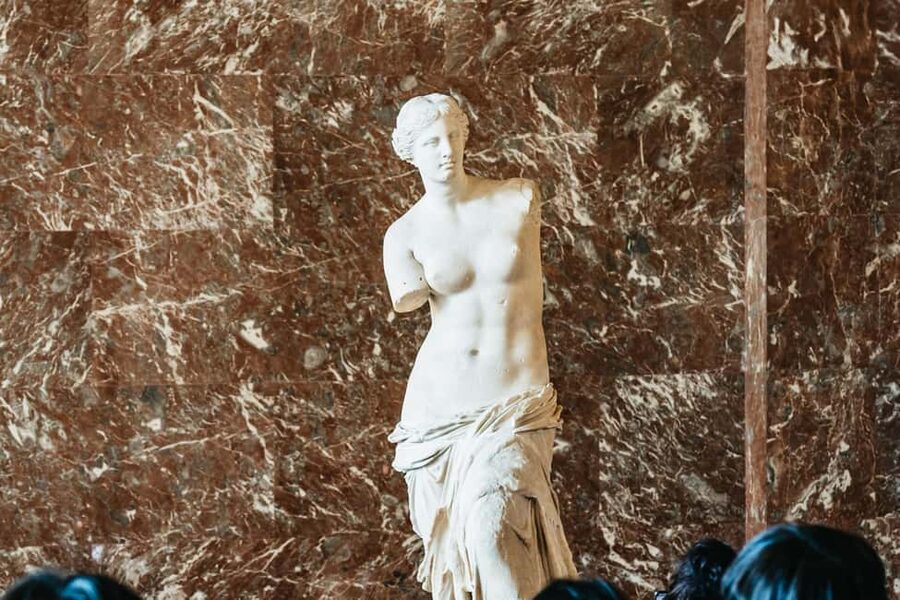
The Venus de Milo provides a different experience. This ancient Greek sculpture is famous partly because of its missing arms, yet the tour uses it to discuss how the work influenced later artists and how people understand classical sculpture.
The statue is one of the Louvre’s essential stops because it gives you a chance to look closely at form, balance, and the idealized human figure. A guide can point out details that are easy to miss when you are simply following the crowd toward a famous name.
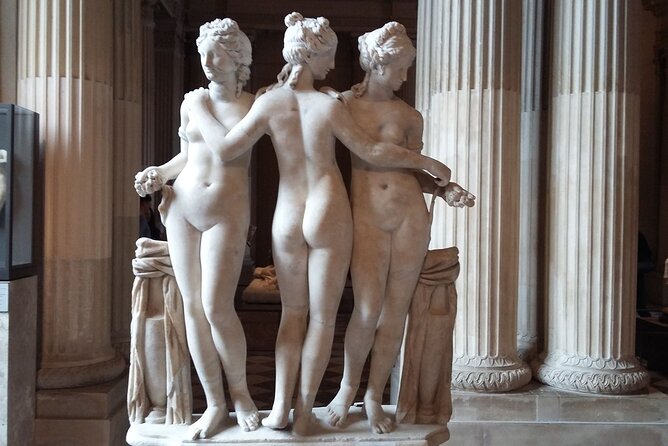
The Louvre also contains Greek relics and works from ancient civilizations, so this part of the route broadens the visit beyond Renaissance painting. That balance is important. If you only chase the Mona Lisa, you miss some of the museum’s most impressive sculpture.
Winged Victory and the dramatic staircase
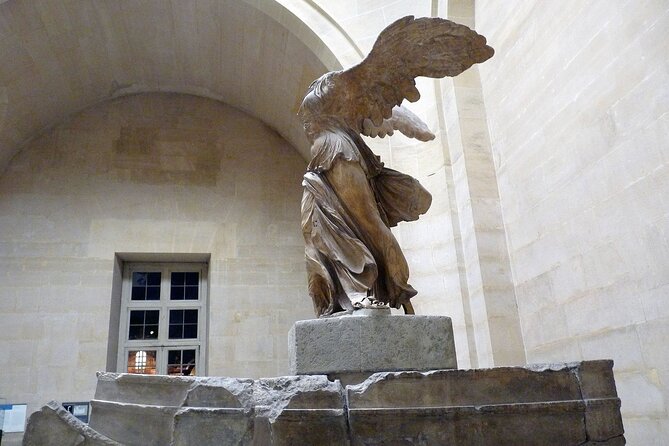
The Winged Victory of Samothrace, also called Nike, is one of the Louvre’s most dramatic sculptures. Carved in the Hellenistic period as an image of the Greek goddess of victory, it is displayed in a way that makes the approach almost as memorable as the statue itself.
The figure has no head or arms, but the forward motion remains powerful. The folds of the clothing suggest wind and movement, and the position above the staircase gives the work a sense of arrival. This is exactly the kind of piece that benefits from a live explanation because the room, viewpoint, and sculpture work together.
You should expect stairs during the route. The Louvre is spread across broad wings and several levels, and the experience is not suitable for people with mobility impairments or wheelchair users. Non-folding and electric wheelchairs are not permitted on this tour.
Paintings, prints, and lesser-known works
The tour is not limited to three famous objects. It includes Renaissance treasures, paintings dating from the 13th through 19th centuries, and prints from the Royal Collection. The guide also points out lesser-known works that deserve attention.
That is where the quality of the guide matters most. A list of room numbers is easy to print. A good explanation tells you why a work matters, what to notice, and how it fits into the story of the museum.
The strongest praise has gone to guides who keep the information lively rather than turning the visit into a lecture. Gabriela has been praised for making complex subjects feel personal. Sophie has been described as upbeat and easy to follow, while Megan has been appreciated for humor, interaction, and patience with questions. Other highly praised guides include Lucia, René, Francesca, Babou, Andrea, and Gabrielle.
Guides change, so you cannot choose one of those names when booking. Still, the repeated pattern is encouraging: the experience depends heavily on personable, well-prepared guides, and that seems to be one of its strongest features.
Two hours inside a museum that needs two days
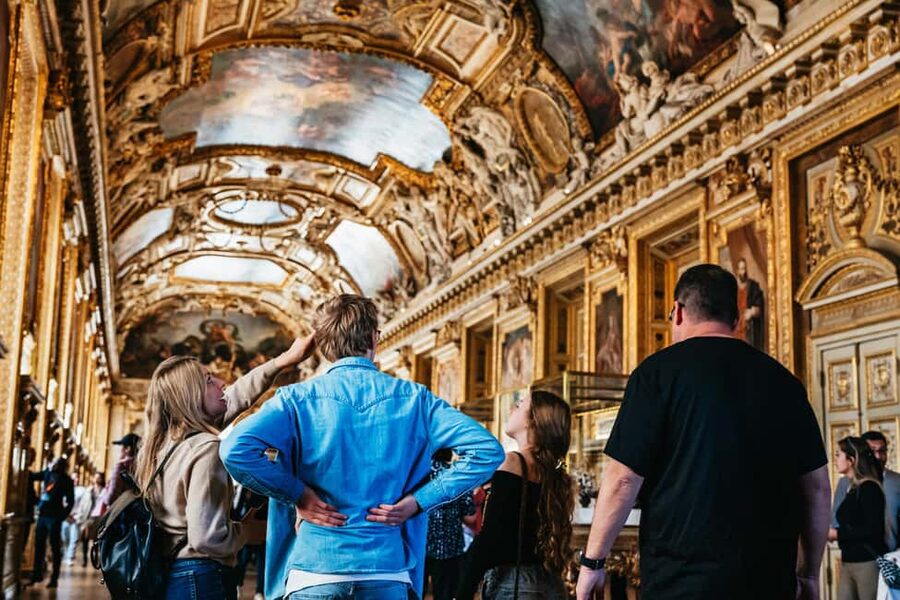
Two hours is long enough for a useful introduction and too short for serious coverage of the Louvre. Both statements are true.
You will walk through several periods and collections, hear the story of the building, see the headline works, and receive a practical sense of where you might want to return. You will not see every major gallery, study paintings at length, or cover the museum from ancient Egypt to 19th-century France in any complete way.
Some people wish the tour lasted longer, especially when the guide was engaging. Others appreciated the efficient route and the time afterward. I see the short duration as a strength if you have limited time in Paris, a layover, or a packed sightseeing plan. It is less ideal if the Louvre is your main reason for visiting and you want a slow art-focused day.
The museum can feel crowded, and one person found the pace too fast because of the number of people. Comfortable shoes are essential. You should also expect plenty of walking and stairs, not a gentle room-by-room stroll.
Staying on after the guided route
One of the better features is the freedom to remain inside after the two-hour tour. Once the guide finishes, you can revisit a favorite gallery or continue into areas not included on the highlights route.
This turns the tour into a useful first chapter rather than a complete museum visit. I would pay attention to the guide’s suggestions and note the names of rooms or works you want to see again. The Louvre is easier to handle once you have a few fixed points in mind.
There is one important rule: once you have exited the wings and are back under the pyramid, you cannot re-enter the galleries. Do not leave the museum for lunch or a bathroom stop unless you are ready to finish the interior visit.
Is $79 a fair price?
At $79 per person, this is not the cheapest way into the Louvre. A self-guided visit costs less if you can secure a regular ticket and are comfortable planning your own route.
The value comes from three things: the reserved entry, the guide’s explanations, and the time saved finding the main works. When official tickets are sold out, the price can feel easier to justify because the tour offers access as well as instruction. One visitor with a 14-hour Paris layover found the quick entry and focused route especially useful.
I would also compare the price with the cost of losing half a day to queues, wrong turns, or a poorly planned visit. If you are traveling during a crowded summer period, the practical advantage may be worth more than the ticket difference.
Still, $79 is a premium for a standard group of up to 20 people. If you already know the Louvre well, dislike group tours, or want to spend 30 minutes with one painting, you may prefer an independent visit. The optional upgrade adds a morning tour of the Orsay Museum, but the information provided does not specify the combined price or exact schedule, so check those details before paying.
Who will get the most from this tour?
I would recommend it most strongly to first-time Louvre visitors, families with limited sightseeing time, and people who want art explained in plain language. It also suits anyone who has tried to visit the Louvre alone and found the building confusing.
You may appreciate the tour if you are not a major art fan. Several guides have been praised for sharing plenty of facts without making the experience feel like school. The stories, building history, and human details give the paintings a way into your attention.
It is less suitable for wheelchair users, people with mobility difficulties, or anyone carrying large luggage. It is also not the best choice for a private, quiet experience. For that, you would need a small or private tour, which this product does not include.
Book with care around the start time. If you are late, a group ticket may not be issued, and you may not be able to join. Cancellation is available up to 24 hours ahead for a full refund, while late changes cannot be rescheduled or refunded according to the tour conditions.
Should you book the Louvre highlights tour?
Book it if you want to see the Louvre’s essential works without trying to organize the world’s largest museum on your own. The reserved entry is useful, but the real reason to choose it is the guide. Sophie, Gabriela, Megan, Lucia, René, and others have been praised for making the art clear, lively, and personal.
Skip it if you already have a detailed Louvre plan, need step-free access, or want a long, quiet look at individual works. For most first-time visitors, though, $79 buys a well-organized introduction, a sensible route, and the confidence to keep exploring after the guide leaves.
FAQ
Where is the meeting point for the Louvre tour?
Meet at the Kiosque des Noctambules, opposite the Comédie Française. It is about a five-minute walk from the Louvre entrance. The nearest metro station is Palais Royal, Musée du Louvre, using the Place Colette exit.
Should I go directly to the Louvre entrance?
No. You must meet the guide at the Kiosque des Noctambules. Look for the guide holding a GetYourGuide flag.
How long does the Louvre tour last?
The guided tour lasts two hours. Afterward, you may stay in the museum and continue exploring at your own pace.
Which Louvre artworks are included?
The highlights include the Mona Lisa, Venus de Milo, and Winged Victory of Samothrace. The route also includes Renaissance works, ancient Greek relics, paintings from the 13th to 19th centuries, Royal Collection prints, lesser-known works, and the foundations of the earlier castle beneath the Louvre Palace.
What languages are available?
The live guide is available in English and Portuguese. The included guided tour is in English.
How large is the tour group?
The standard group can include up to 20 participants. Headsets are provided so you can hear the guide more clearly.
Is the tour suitable for wheelchair users?
No. The tour includes many steps and is not suitable for people with mobility impairments or wheelchair users. Non-folding and electric wheelchairs are not permitted. Large bags, luggage, selfie sticks, and double baby strollers are also not allowed.
Recently added in Paris
- Private Transfers in Paris★ 5.0 · 75 reviews
- CDG – Euro Disney – CDG Two Way Private Shuttle Transfer★ 5.0 · 233 reviews
- Disneyland® Paris 1 Day Ticket with Transport from Paris★ 3.5 · 302 reviews
- Personalized Transport service from Disneyland to Paris★ 5.0 · 63 reviews
- Giverny Monet House and Gardens Skip the line Walking tour★ 4.0 · 217 reviews
- Monet’s Gardens & House-Private Giverny Tour From Paris★ 4.5 · 137 reviews
- Guided tour Monet’s house and gardens/small group★ 4.5 · 68 reviews
- Monet’s House and Garden & Giverny Village★ 4.5 · 39 reviews
Louvre Museum Tours, compared.


Louvre Guided Tour with Reserved Access & Boat Cruise
Read our review →
Louvre Museum Masterpieces Guided Tour with Access
Read our review →
Louvre Museum Entry Ticket With Host and River Cruise
Read our review →
Priority Access Louvre with Host -Direct to Mona Lisa
Read our review →
Mona Lisa & Louvre Masterpieces Tour with Reserved Access
Read our review →
Louvre Museum – Exclusive Guided Tour (Entry Included)
Read our review →
Louvre Reserved Ticket and River Cruise Combo
Read our review →Browse the lists this tour appears in