
REVIEW · MORNING
Paris: Sunrise Running and Sightseeing Group Tour
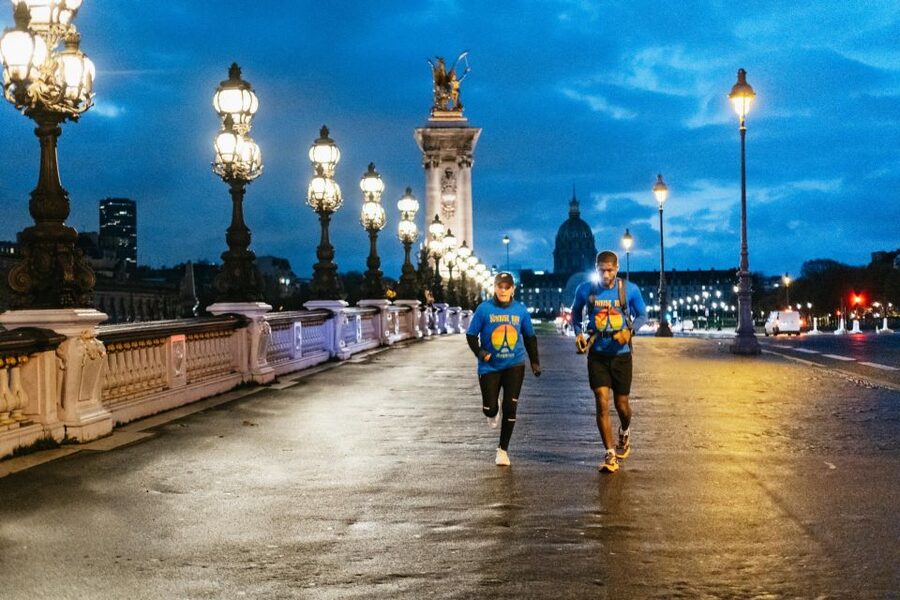
Paris looks best before the city wakes. I like the quiet streets and open views, and I like how this two-hour outing combines real exercise with a fast introduction to Paris landmarks. At $55, the guide, photos, water, snacks, and jacket add useful value.
The main catch is simple: you need to run at least 5 kilometers without stopping. This is not a gentle sightseeing walk with a few playful jogs, although the pace includes regular breaks. Small bags only are allowed, and the route may feel demanding if you are not used to city running.
In This Review
- Paris at sunrise: key points to know
- A two-hour workout with a city attached
- Starting at Saint-Michel and crossing old Paris
- The Louvre, Tuileries Garden, and Concorde
- Pont Alexandre III, Les Invalides, and the grand westward route
- Trocadéro and the Eiffel Tower payoff
- What the guide adds to the experience
- Is $55 a fair price?
- Who should book this Paris running tour?
- Practical tips for a smoother morning
- Should you book it?
- FAQ
- How long is the Paris sunrise running tour?
- How far must I be able to run?
- Where does the tour meet?
- Which transport serves Place Saint-Michel?
- Does the tour enter the Louvre or Eiffel Tower?
- What is included in the $55 price?
- Can I bring luggage or a large bag?
- Are children allowed to join?
- What happens if I need to cancel?
Paris at sunrise: key points to know
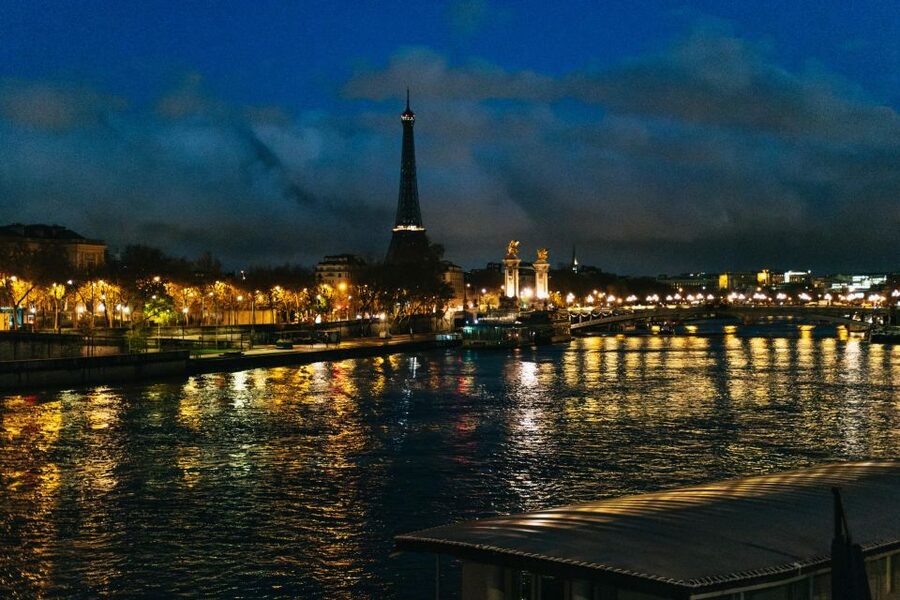
- You cover a remarkable number of landmarks: The route links Notre Dame, the Louvre, Concorde Square, the Champs-Elysées, Les Invalides, Trocadéro, and the Eiffel Tower.
- The group is limited to 10 people: That makes it easier for the guide to manage different running speeds and answer questions.
- The tour mixes running and sightseeing: Expect photo stops, short history talks, scenic pauses, and refreshments rather than two hours of nonstop speed.
- Andrea has earned especially warm praise: Her running ability, local stories, photos, and skill with mixed-ability groups are recurring strengths in the available feedback.
- You receive practical extras: Water, dried fruit or nuts, a waterproof running jacket, and digital photos are included.
- The meeting point is easy to reach: Place Saint-Michel is served by Metro Line 4 and RER B and C, with a clear meeting spot by the fountain.
A two-hour workout with a city attached
This is one of the better ways to fit Paris sightseeing into a busy morning, provided you genuinely enjoy running. You meet at Place Saint-Michel, near the fountain and Metro exit 3, then move through central Paris toward the western monuments and the Eiffel Tower before returning to Saint-Michel.
The stated duration is two hours. One participant described a longer outing of about two and a half hours and roughly 8.4 miles, so actual distance and timing can vary with the route, guide, and pace of the group. The official guidance is more useful for planning: you should be able to run at least 5 kilometers nonstop.
The format is friendly to runners who are not fast. You stop often for photos, short explanations, and views. That makes the tour less like a race and more like a moving city lesson. Still, you should arrive ready to run, not hoping that the guide will turn it into a walking tour.
The group limit of 10 is a real advantage. A large running group can become a loose pack that leaves slower people behind. Here, the guide has a better chance of keeping everyone together and adjusting the pace. The feedback about handling runners with different abilities is particularly encouraging.
More early starts in Paris:
- A Morning in Paris Food Tour: Croissants, Baguettes & Chocolate
★ 5.0 · 556 reviews - Paris Before the Crowds: Sunrise Bike Tour with Breakfast
★ 4.8 · 70 reviews - From Reims: Morning Champagne Tour and Tastings
★ 4.8 · 463 reviews
Starting at Saint-Michel and crossing old Paris
The meeting point at 4 Place Saint-Michel puts you in the center of the city from the first minute. Look for the guide between the Saint-Michel fountain and the Metro exit. If you use public transport, exit 3 is called Fontaine Saint-Michel.
The nearest Metro station is Saint-Michel on Line 4. Cluny-La-Sorbonne on Line 10 is another option, while Saint-Michel-Notre-Dame serves RER B and RER C. Bring your own public transport ticket. It is not included.
From there, the route begins around Notre Dame Cathedral. You can expect a guided stop and time for photographs. Early morning is especially useful here because the open spaces around the cathedral are generally calmer than later in the day. You get a clear look at the building rather than a view broken up by a thick crowd.
The nearby Palais de Justice, Conciergerie, and Sainte-Chapelle add a concentrated dose of Paris history. These are listed as guided sightseeing and break stops, so this section gives your legs a chance to settle into the outing. You do not enter the buildings, however. Entry tickets to monuments and museums are not part of the price.
At Pont Neuf, the oldest bridge across the Seine, the tour becomes more scenic. This is one of the places where sunrise can make the route feel special without requiring a long stop. The river, stone bridge, and early light give you a good photo setting, and the guide can add context while you catch your breath.
You then continue toward Pont des Arts. This footbridge is associated with views along the Seine and the Louvre area. Again, the point is not an extended bridge visit. It is a short pause within a moving route, with time for photos and a few stories.
The Louvre, Tuileries Garden, and Concorde
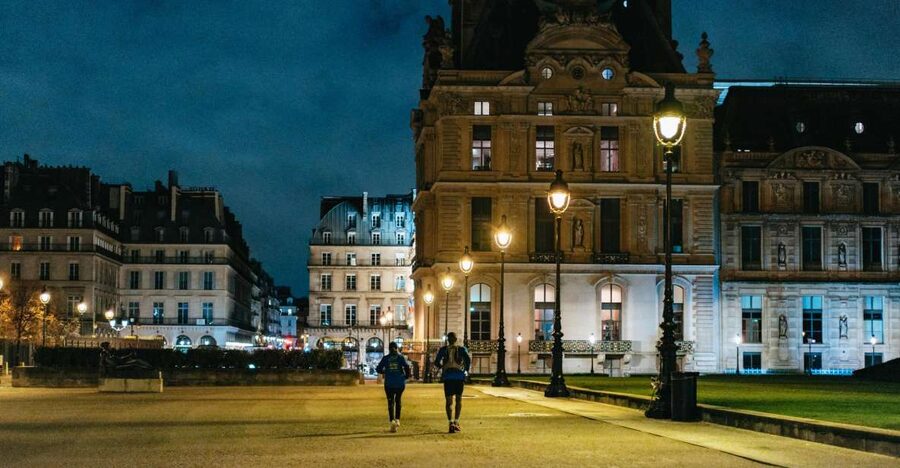
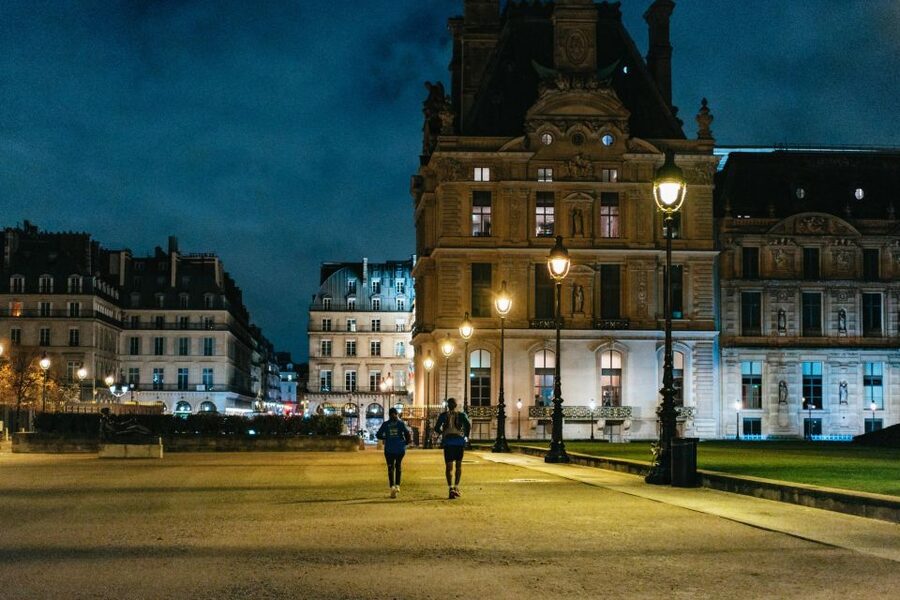
The Louvre is one of the route’s major rewards. You see the museum from outside, with a guided stop and sunrise views, but you do not go inside. That distinction matters. If your main goal is the Mona Lisa or the galleries, you will need a separate visit on another day.
As a morning stop, the Louvre works well. The courtyards and broad approaches feel more open before the day’s crowds arrive. You can take in the scale of the former palace without spending an hour in a ticket line or navigating packed galleries.
The route passes through the Tuileries Garden next. You are guided through the garden rather than given a formal garden visit. This section helps connect the Louvre to Place de la Concorde and gives you a more relaxed running stretch among famous Paris views.
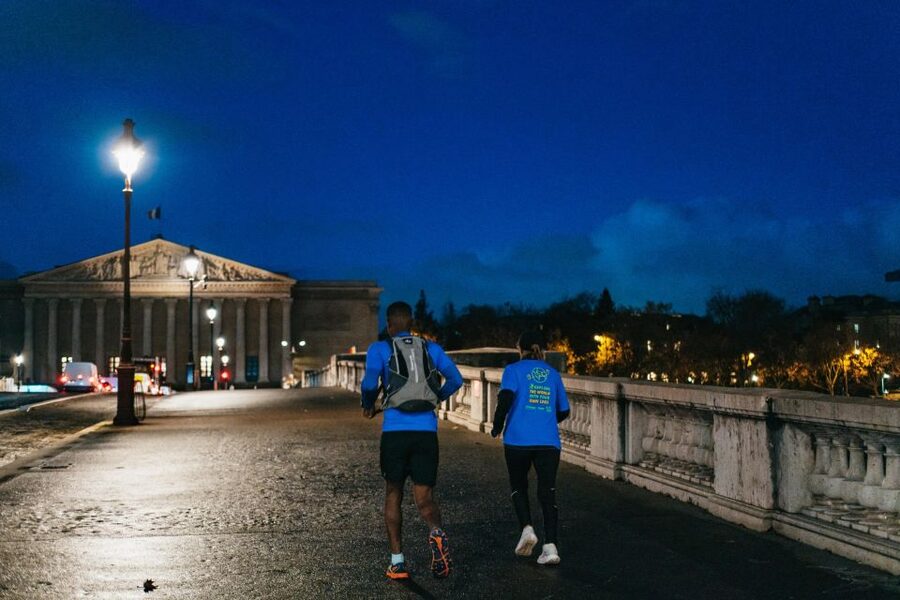
Place de la Concorde is another photo stop. Its broad layout makes it easier to appreciate the relationship between the Tuileries, the Champs-Elysées, and the river. Your guide also provides a break here, which is welcome because the route covers a lot of ground in a short time.
I like this central section because it shows how Paris works as a connected city. You are not being driven from one isolated sight to another. You run between them, seeing the changing streets and public spaces along the way.
Pont Alexandre III, Les Invalides, and the grand westward route
Pont Alexandre III brings another strong view over the Seine. It is one of the route’s most photogenic bridges, and the stop includes time to pause, take pictures, and hear about the area.
From the bridge, you pass by Les Invalides. The golden dome is one of Paris’s clearest visual markers, and it makes a striking backdrop even during a brief stop. The tour does not include entry, so plan a separate museum visit if you want to go inside.
The route then passes the Grand Palais and Petit Palais before reaching the Champs-Elysées. These stops are primarily pass-by sightseeing rather than extended visits. That is typical of a running tour, but it means you should keep your expectations realistic. You will see the buildings and hear about them, not study every facade at walking-tour length.
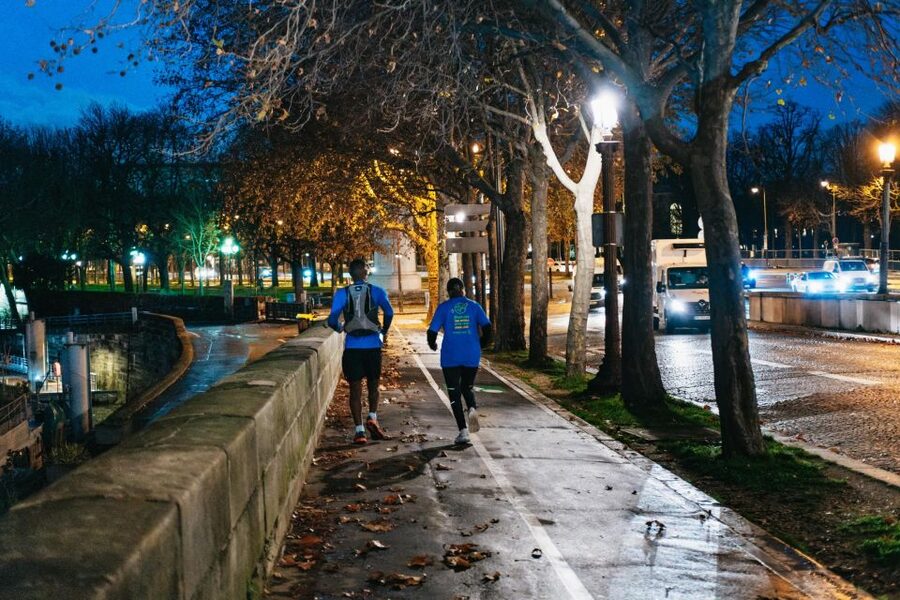
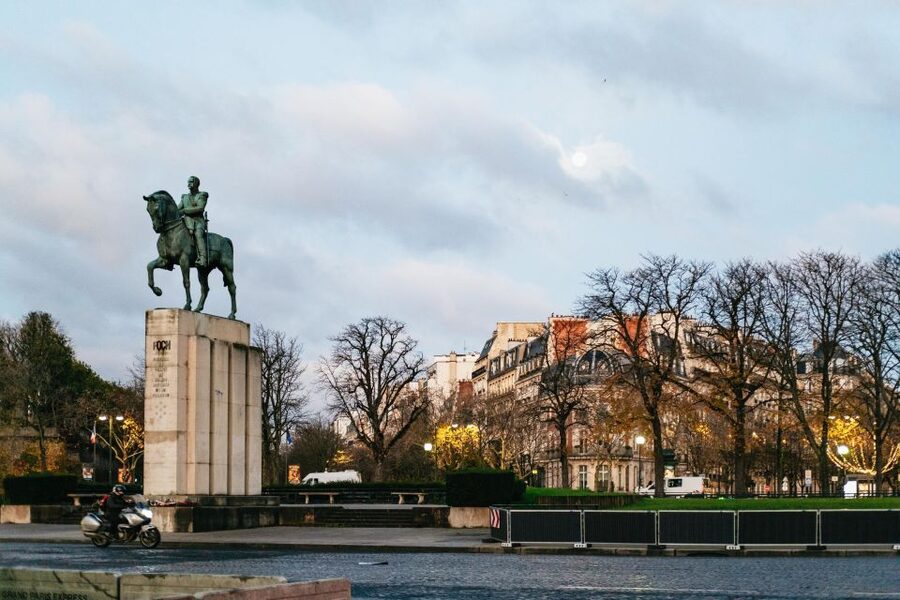
The Champs-Elysées provides a broad, famous avenue for the westward part of the route. At sunrise, you get the best chance of seeing it without the daytime crush. It is also a reminder of the tour’s central tradeoff: you cover much more ground than on foot, but you spend less time at each individual monument.
At Pont de l’Alma, there is another break and photo stop. The route then passes the Palais de Tokyo before climbing or continuing toward Place du Trocadéro. The exact effort here depends on the route and pace, but you should save some energy for the Eiffel Tower section.
A few more Paris outings to set side by side
- Paris: Louvre Museum Timed-Entrance Ticket
★ 4.6 · 71,977 reviews - Disneyland® Paris 1-Day Ticket
★ 4.6 · 49,412 reviews - Paris: Versailles Palace and Gardens Full Access Ticket
★ 4.6 · 41,579 reviews - Paris: Evening River Cruise with Music
★ 4.4 · 22,721 reviews
Trocadéro and the Eiffel Tower payoff
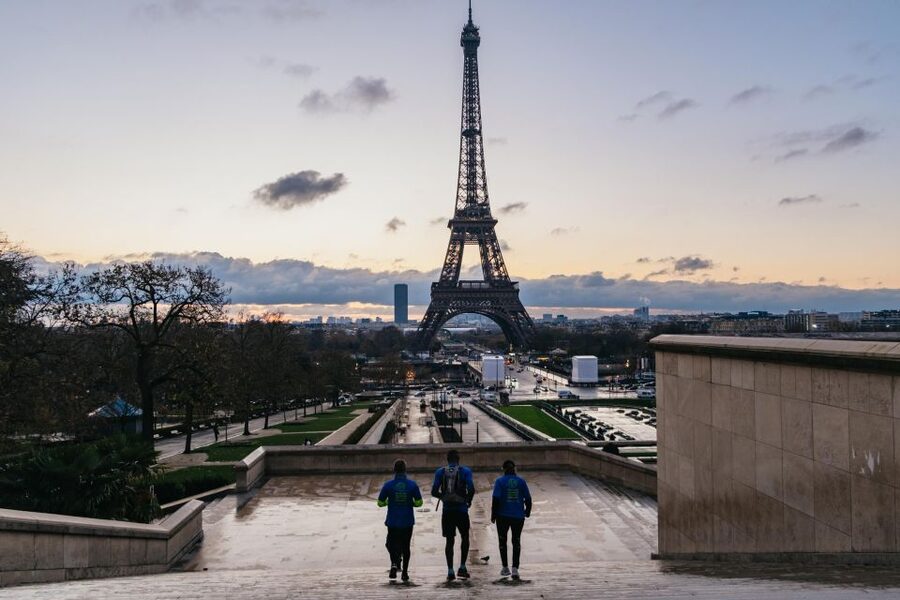
Place du Trocadéro is the visual high point of the tour. From here, the Eiffel Tower opens up across the Seine, and the sunrise setting can provide the clearest photographs of the morning.
You stop for pictures and guided sightseeing before continuing to the Eiffel Tower itself. This is a smart design choice. Trocadéro gives you the classic broad view, while the tower stop lets you appreciate the monument at closer range.
The Eiffel Tower is also where you feel the benefit of an early start most clearly. Later in the day, the area can be difficult for unhurried photographs. Early morning gives you more room to frame the tower and listen to the guide without constant interruption.
Do not expect to go up the Eiffel Tower. Monument entries are excluded, and the experience is about seeing the exterior landmarks while running through the city. If you want tower access, book that separately and allow extra time.
After the Eiffel Tower, the itinerary includes about 30 minutes on foot and passes the Musée d’Orsay before returning to Place Saint-Michel. This final stretch gives you a quieter change of pace. It also means the tour is not running every second of the two-hour period.
What the guide adds to the experience
The guide is more than a person setting the pace. You receive local stories, historical facts, route guidance, and help with photographs. The best feedback gives particular credit to Andrea, who is described as strong both at running and at explaining Paris, while also taking photos and videos.
That photo service is useful. You do not have to choose between keeping up with the group and finding someone to take a picture at each landmark. Digital photos are included, along with video according to the feedback associated with Andrea, though the formal inclusions specifically guarantee digital photos.
The guide also carries small personal items in a backpack. Water and dried fruit or nuts are provided during the stops. A waterproof running jacket is included, which can be handy in uncertain Paris weather, but you still need your own sports clothes and running shoes.
The tour is offered in English or French. If you need a particular language, check the available departure when booking rather than assuming every start uses both.
Is $55 a fair price?
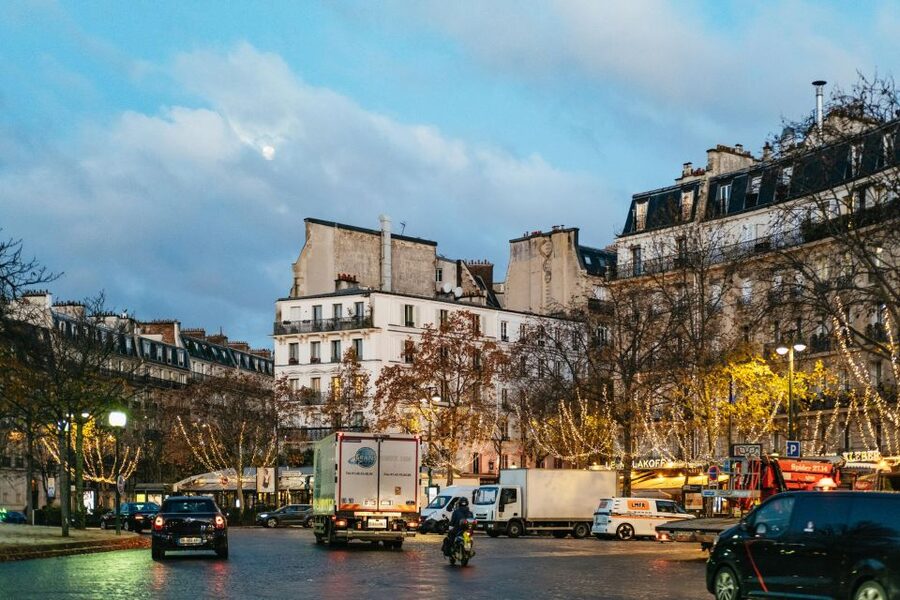
At $55 per person, this is not the cheapest way to see Paris landmarks. You can walk many of the same central streets for the cost of a Metro ticket and a coffee. The price becomes easier to justify if you value the guide, the organized route, the small group, the photos, the jacket, and the chance to see the city before normal sightseeing hours.
You also save time. In two hours, you cover a route that would take much longer on foot, especially if you stopped at every bridge and monument. For a short Paris stay, that efficiency has real value.
The price does not cover museum or monument entries, transportation tickets, running shoes, or storage for large bags. It is best understood as the fee for a guided running experience, not a complete sightseeing package.
The included refreshments are modest, just bottled water and dried fruit or nuts. Think of them as useful fuel between stops, not breakfast. Arrange your own meal afterward.
Who should book this Paris running tour?
I would choose this for a runner who wants an active start and a broad first look at Paris. It suits solo visitors, couples, friends, and small family groups who can maintain a steady run and do not mind seeing most sights from the outside.
It can also work well early in a trip. The route helps you get your bearings around the Seine, Louvre, western monuments, and Eiffel Tower. You can then return to the places that deserve more time, such as the Louvre, Sainte-Chapelle, Musée d’Orsay, or the Eiffel Tower.
You should skip it if you have back, heart, or mobility problems, or if you are looking for a slow walking tour. The tour is not designed for large luggage, and there is no storage for bulky clothes or bags.
Minors may join if they are accustomed to running and a parent comes along. For ages 15 and younger, the parent should accompany them. For ages 16 and 17, one parent should preferably make the reservation in the young runner’s name and attend the meeting point. Running with a toddler in a stroller is possible, but you must bring a stroller suited to city running, and Paris is not very wheelchair-friendly.
Practical tips for a smoother morning
Wear proper sports shoes. Cobblestones, pavement, bridge approaches, and city crossings can be harder on your feet than a park path.
Dress for the weather and keep your belongings to a minimum. A small item can go into the guide’s backpack, but large bags and luggage are not accepted.
Bring your public transport ticket for reaching the meeting point and returning afterward. The tour finishes back at Place Saint-Michel, so you do not need to work out a separate end point.
Plan your breakfast for after the tour. The supplied nuts or dried fruit will help, but they are not a full meal. You may also want to bring any personal running essentials you normally use, since only water and light snacks are listed as included.
Book with the weather in mind, but remember that free cancellation is available up to 24 hours before departure for a full refund. You can also reserve now and pay later, which helps if your Paris schedule is still shifting.
Should you book it?
Book this tour if you can run 5 kilometers nonstop and want Paris at its quietest. The strongest reasons are the compact route, the early light, the small group, and the guide’s role in keeping the outing informative rather than turning it into a plain jog.
I would not book it as your only Paris sightseeing experience. You will pass many major places without entering them, and a two-hour run cannot replace time inside the Louvre or Sainte-Chapelle.
For active visitors, though, $55 buys a memorable first look at the city and a useful workout before breakfast. If Andrea is leading your group, the available feedback gives you an extra reason to feel confident. For everyone else, choose a walking tour instead and save your running shoes for the Seine on another morning.
FAQ
How long is the Paris sunrise running tour?
The tour lasts two hours. One available account describes an outing of about two and a half hours, so the total time may vary by group pace and route.
How far must I be able to run?
You should be able to run at least 5 kilometers, or about 3 miles, without stopping. You do not need to be a fast runner, since the tour includes breaks and sightseeing stops.
Where does the tour meet?
Meet at 4 Place Saint-Michel, between the Saint-Michel fountain and the Metro exit. If arriving by Metro, use exit 3, Fontaine Saint-Michel.
Which transport serves Place Saint-Michel?
Saint-Michel is served by Metro Line 4 and RER B and C through Saint-Michel-Notre-Dame. Cluny-La-Sorbonne on Metro Line 10 is also nearby.
Does the tour enter the Louvre or Eiffel Tower?
No. The tour provides outside sightseeing and guided stops. Entry fees to monuments and museums are not included.
What is included in the $55 price?
The price includes the running tour, guide, waterproof running jacket, bottled water, dried fruit or nuts, and digital photos from the tour.
Can I bring luggage or a large bag?
No. Large bags and luggage are not allowed, and storage for bulky clothes or bags is not available. The guide can carry only small items in a backpack.
Are children allowed to join?
Minors may join if they are used to running and a parent accompanies them. Additional guidance applies to children aged 15 and younger and to those aged 16 and 17.
What happens if I need to cancel?
You can cancel up to 24 hours before the tour for a full refund. A reserve-now, pay-later option is also available.
Recently added in Paris
- Private Transfers in Paris★ 5.0 · 75 reviews
- CDG – Euro Disney – CDG Two Way Private Shuttle Transfer★ 5.0 · 233 reviews
- Disneyland® Paris 1 Day Ticket with Transport from Paris★ 3.5 · 302 reviews
- Personalized Transport service from Disneyland to Paris★ 5.0 · 63 reviews
- Guided tour Monet’s house and gardens/small group★ 4.5 · 68 reviews
- Giverny Monet House and Gardens Skip the line Walking tour★ 4.0 · 217 reviews
- Monet’s Gardens & House-Private Giverny Tour From Paris★ 4.5 · 137 reviews
- Monet’s House and Garden & Giverny Village★ 4.5 · 39 reviews
Morning, compared.
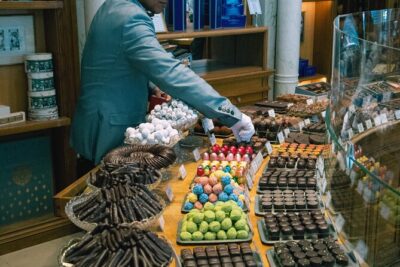
A Morning in Paris Food Tour: Croissants, Baguettes & Chocolate
Read our review →

Omaha Beach Half-Day Morning Trip From Bayeux (A1)
Read our review →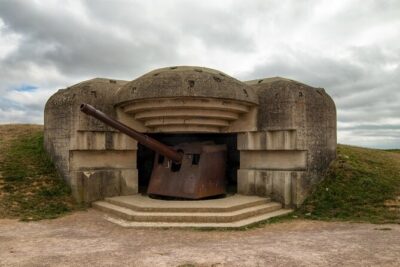
Omaha Morning Half Day Tour to visit the landing areas at Omaha Beach
Read our review →
Saint Emilion Morning Wine Tour – Winery & Tastings from Bordeaux
Read our review →
Hyères : Morning Discovery or Relaxing Afternoon cruise
Read our review →
Tours: Chateaux Azay-le-Rideau and Villandry Morning Tour
Read our review →
Paris Before the Crowds: Sunrise Bike Tour with Breakfast
Read our review →Browse the lists this tour appears in