
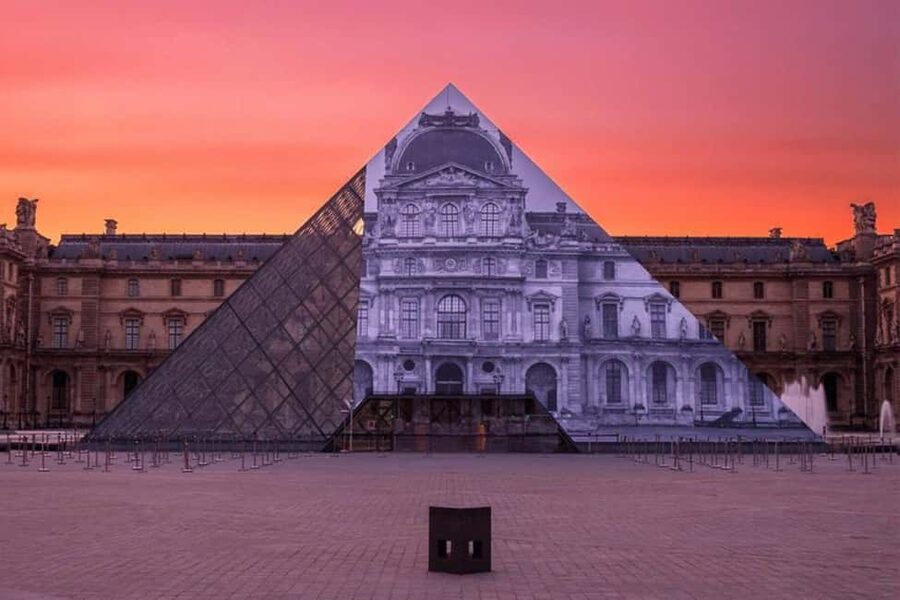
REVIEW · LOUVRE MUSEUM TOURS
Skip-the-Line Louvre Museum Tour with Artist
The Louvre rewards a plan. This two-hour visit pairs reserved entry with a certified artist-guide who explains not only what you are seeing, but how the art was made. I like the tiny groups, capped at six people, and I like the artist’s eye applied to famous works such as the Mona Lisa, Venus de Milo, and Nike. The main drawback is the price: at $246 per person, this is a serious splurge for a short museum visit.
You meet away from the Louvre, at Jean-Michel Othoniel’s glass-bead Kiosque des Noctambules near the Comédie Française. That odd, colorful meeting point is easy to spot near the Place Colette exit of Palais Royal, Musée du Louvre metro station. The tour is best for anyone who wants a clear path through a huge museum, especially families and first-time visitors who would rather understand a few major works than wander until their feet give out.
In This Review
- Key points at a glance
- Why an artist-guide changes the Louvre visit
- Meeting at the Kiosque des Noctambules
- Crossing the Louvre Pyramid and entering the museum
- Two hours with the Louvre’s greatest hits
- Nike and the power of movement
- Venus de Milo and the unfinished story
- The Mona Lisa and the art of attention
- The value of a small group capped at six
- What families and less confident museum visitors gain
- Is $246 worth it for two hours?
- Practical details that affect your day
- Who should book this Louvre tour?
- Should you book the artist-led Louvre visit?
- FAQ
- Where does the Louvre tour meet?
- Does the tour meet at the Louvre Pyramid?
- How long does the tour last?
- What does the price include?
- Which languages are available?
- Is the tour suitable for wheelchair users?
Key points at a glance
- A six-person maximum keeps the visit personal: You can hear the guide, ask questions, and adjust the pace more easily than in a large museum group.
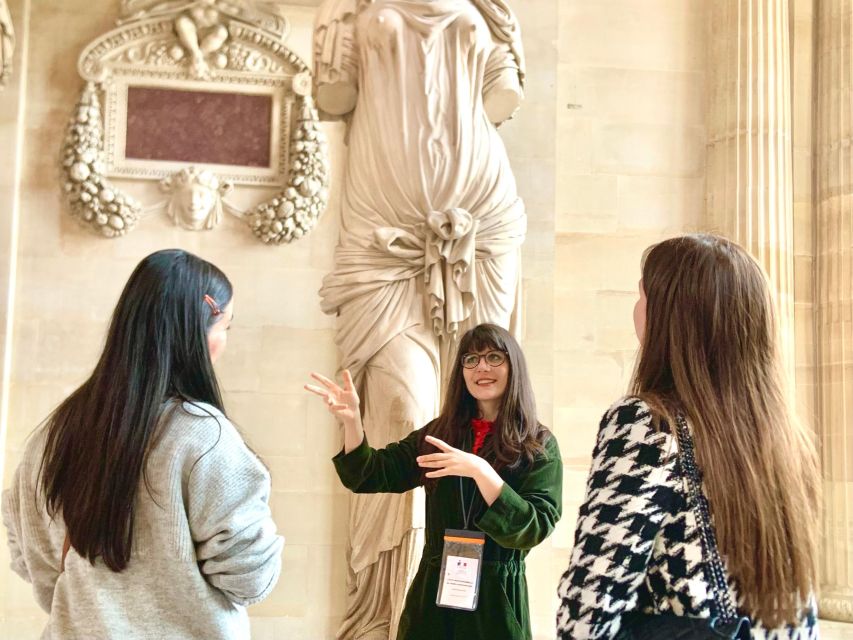
- The guide is also a practicing artist: You learn about brushwork, light, folds, composition, and visual choices in plain language.
- The route focuses on Louvre essentials: Expect Greek Antiquity, the Italian Renaissance, the Mona Lisa, Venus de Milo, Nike, and other major works.
- You enter through a separate access point: Reserved tickets save time, though security and museum conditions can still affect the entry process.
- The tour meets at the Kiosque des Noctambules: Do not go directly to the Louvre expecting to find the group there.
- The format suits families well: Several parents praised the way guides kept children and teenagers involved without talking down to them.
Why an artist-guide changes the Louvre visit

The Louvre contains more than 35,000 works. That number is thrilling for art lovers and slightly alarming for everyone else. Without a plan, you can spend half your visit finding the right staircase and the other half trying to read a sign while a crowd presses behind you.
An artist-guide gives you a way into the collection. Instead of treating each masterpiece as a famous object to photograph, the guide can point out the decisions behind it. Why do the folds of Nike’s fabric appear to flow? How does Leonardo da Vinci create the unusual mood of the Mona Lisa? What do light and dark areas do inside a religious painting?
Those questions make the art easier to see. You do not need formal art training. The strongest part of this format is its use of simple visual ideas that you can spot for yourself.
Guides praised in the booking feedback include Blerta, Arianna, and Assgan. Blerta received especially warm attention for her ability to explain difficult ideas in clear English, answer specific questions, and keep families involved. One family with teenagers continued discussing light and dark in paintings after the tour. That is a good sign for parents hoping to turn a museum visit into something more than a forced march past old pictures.
The guide can also respond to your interests. Arianna, for example, asked a family what they wanted to see and shaped the visit around those interests while still covering key works. That kind of flexibility matters in a museum this large.
More Louvre visits and guided rooms:
- Paris: Louvre Museum Timed-Entrance Ticket
★ 4.6 · 71,977 reviews - Paris: Louvre Guided Tour with Reserved Access & Boat Cruise
★ 4.3 · 16,353 reviews - Louvre Museum Masterpieces Guided Tour with Access
★ 4.5 · 12,023 reviews
Meeting at the Kiosque des Noctambules
The tour does not begin at the Louvre entrance. You meet at the Kiosque des Noctambules, a Murano glass-bead sculpture by Jean-Michel Othoniel, across from the Comédie Française.
This is a useful meeting place because it is near the Palais Royal, Musée du Louvre metro station. Use the Place Colette exit. Give yourself time to find the sculpture and locate your guide before the scheduled start. A missed meeting point could erase the time saved by the reserved ticket.
The sculpture is distinctive, but the practical point is more important: do not simply walk to the Louvre Pyramid and wait there. The group gathers first at the kiosk, then proceeds together.
The tour is offered in Albanian, English, and French. A private-group option is also available, which may suit families or friends who want more control over the pace and questions.
Crossing the Louvre Pyramid and entering the museum
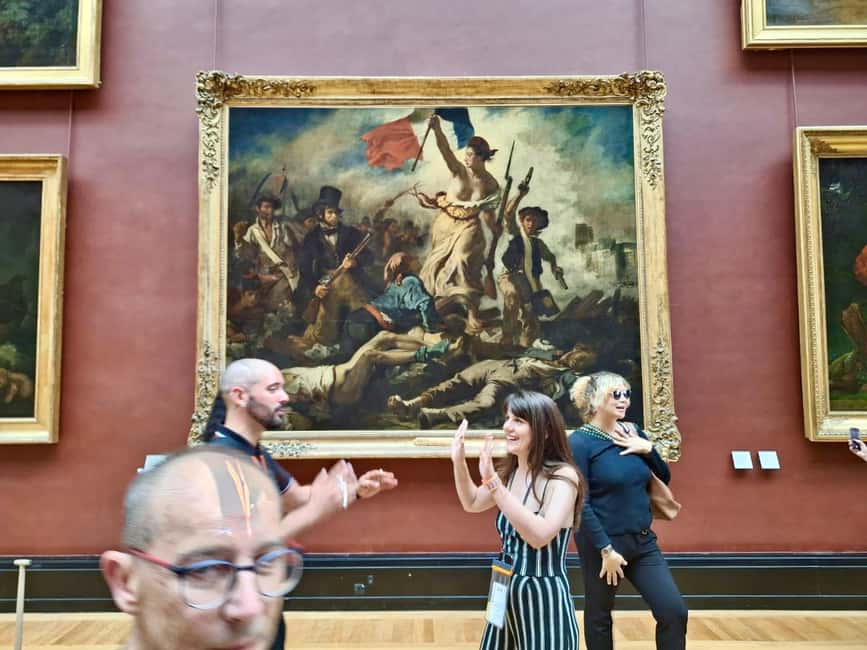
The itinerary includes a guided look at the Louvre Pyramid before the main museum visit. The pyramid is more than a photo stop. It helps you understand the modern entrance to a former royal palace and gives the group a clear visual starting point before heading inside.
Reserved entry is one of the tour’s strongest practical features. The group uses a separate entrance rather than joining the regular public line. That can be valuable in Paris, where a long wait at a major sight can eat up a large part of your day.
Still, skip-the-line does not mean skip-all-security. You need an identity document, and security rules apply. Weapons and sharp objects are not allowed, and food and drinks are not permitted inside. Bring comfortable shoes and a reusable water bottle for the time before or after the visit, but plan to keep food and drinks out of the museum.
The tour includes museum admission and, when available, audio headsets so you can hear the guide. In a small group, the headsets may be less important than they are in a large tour, but they can help when nearby crowds become noisy.
Two hours with the Louvre’s greatest hits
Two hours is enough to build a strong first impression, not enough to see the Louvre properly from end to end. That limit is not a flaw if you understand what you are buying. You are paying for a focused introduction, not an all-day museum expedition.
The route traces art from Greek Antiquity through the Italian Renaissance. That broad arc gives the visit a useful shape. You are not just jumping between famous names. You are seeing how artistic ideas change across periods, materials, and subjects.
More reserved-entry tickets in Paris:
- Versailles: Skip-the-Line Tour of Palace with Gardens Access
★ 4.7 · 9,778 reviews - Versailles: Skip-the-Line Guided Palace Tour and Full Access
★ 4.6 · 5,214 reviews - Louvre Museum: Skip-the-Line Small Group Guided Tour
★ 4.6 · 3,960 reviews - From Paris: Versailles Skip-the-Line Tour & Gardens Access
★ 4.7 · 3,011 reviews
Nike and the power of movement
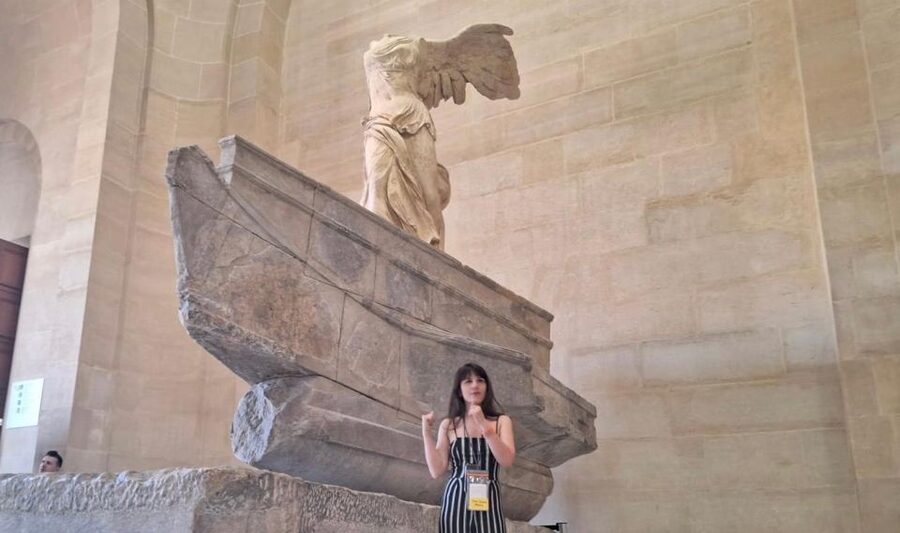
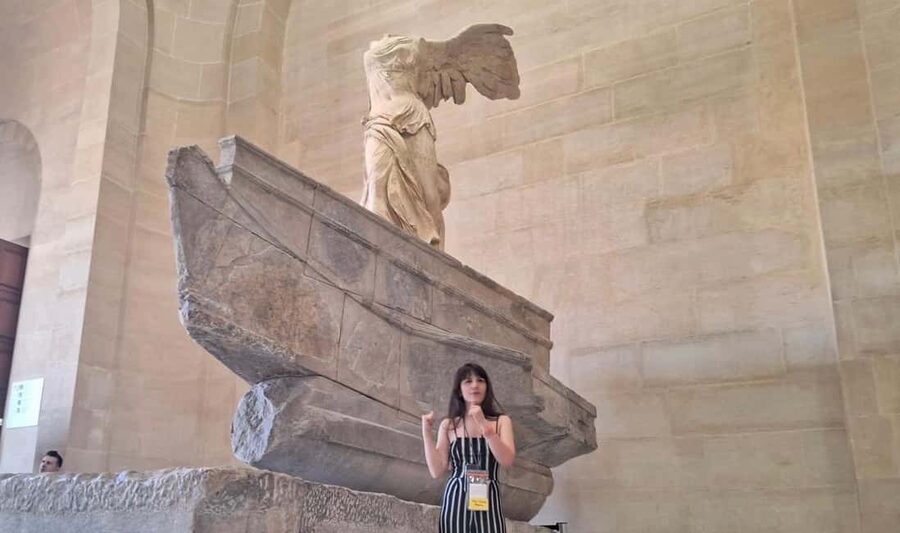
Nike of Samothrace is one of the museum’s most dramatic sculptures. The guide’s artistic perspective is especially useful here because the statue depends so much on movement: the wind in the fabric, the forward thrust of the body, and the sense that the figure has just landed.
You can look at the folds as decoration, or you can see them as a tool for making stone appear light and fluid. That shift is central to the tour’s method. The guide encourages you to inspect how the effect is built, rather than simply accepting the sculpture as famous.
Venus de Milo and the unfinished story
The Venus de Milo gives the guide a chance to discuss the way sculpture communicates through posture, balance, and missing details. The statue’s lost arms invite questions, but the tour’s value is not in inventing a final answer. It is in helping you notice the body’s stance and the way the figure presents itself.
The visit places you close to major works, though crowd levels can affect exactly how long you get to look. This is where the small group helps. A guide can position six people more easily than a large crowd and can make sure you are looking at the same detail.
The Mona Lisa and the art of attention
The Mona Lisa is usually the busiest stop. You should expect a crowd and a brief, concentrated viewing rather than a quiet private encounter.
The guide can make the moment more useful by directing your attention away from the standard checklist. You may look at the sitter’s expression, the painting’s visual structure, and Leonardo’s handling of atmosphere and transitions. The goal is not to claim that the crowd disappears. It is to give you something meaningful to notice once you reach the front viewing area.
One particularly useful promise of this tour is insight into techniques associated with masters such as Da Vinci. You learn how artistic choices shape the way a face, body, or setting affects you. That is far more memorable than simply taking a photograph and moving on.
The value of a small group capped at six
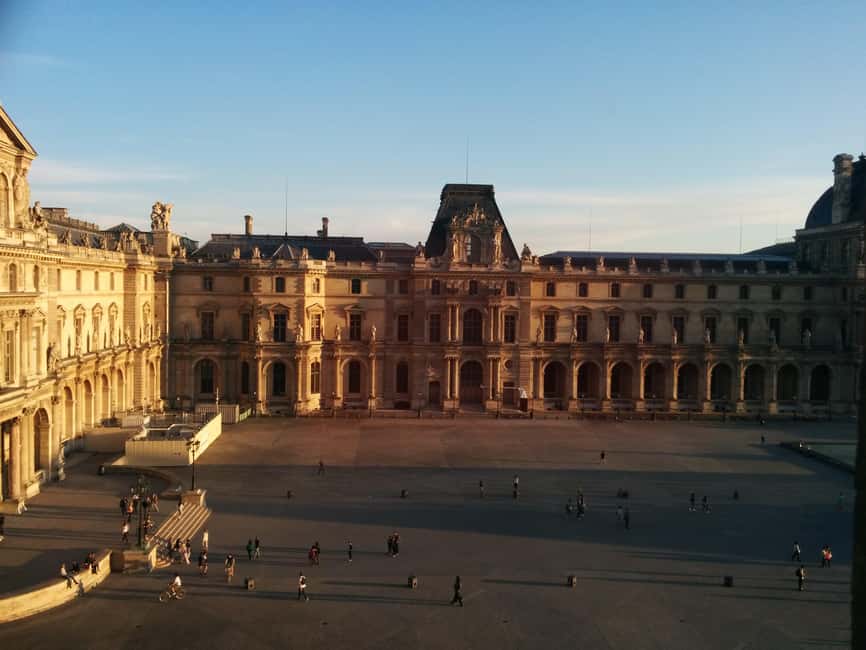
Six people is a meaningful limit. You can ask a question without interrupting a lecture for thirty strangers, and the guide can respond to different ages and interests.
That mattered to families in the feedback. Blerta was praised for working well with children aged 11 to 16, while another family with teenagers appreciated a pace that held everyone’s attention. A good guide can explain a religious painting to an adult, then restate the idea in a way a teenager can use.
The small format also helps with movement. The Louvre can feel like a maze of corridors, stairs, and galleries. A compact group is easier to keep together, especially when the guide is navigating busy rooms.
There is a limit, though. The tour is still shared unless you book a private group. If your entire party wants to spend a long time on one lesser-known painting, the fixed two-hour format may feel restrictive. The guide can respond to requests, but the tour must still cover its central highlights.
What families and less confident museum visitors gain
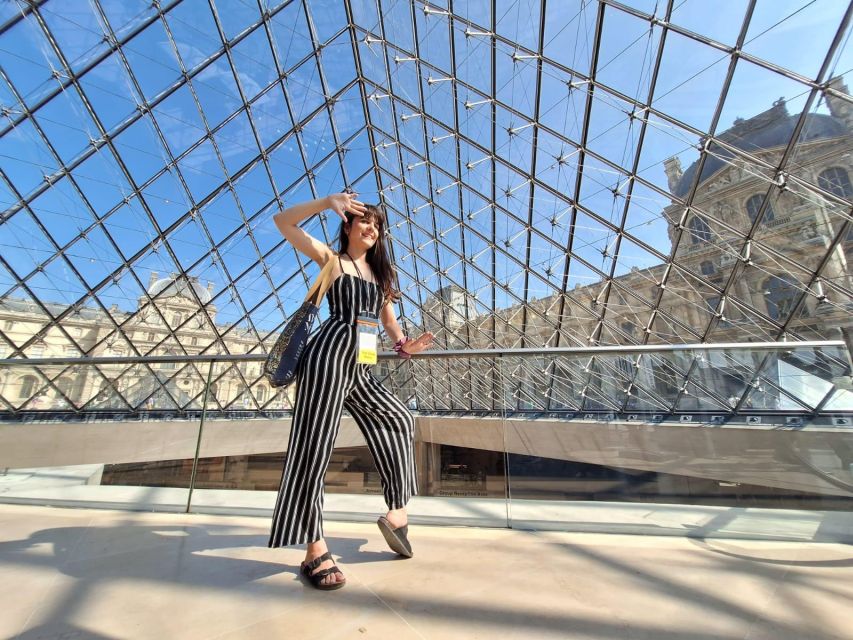
This is a strong choice if you are visiting Paris with children or teenagers. The guide’s job is not just to list dates and names. It is to make visual ideas usable.
For example, you might learn to compare how artists handle light, dark areas, fabric, movement, or facial expression. Those are concepts your children can continue spotting in other galleries and museums. The visit becomes a conversation rather than a stream of names to memorize.
It also suits adults who feel unsure about art. You do not need to know the difference between every Renaissance school before arriving. The guide supplies enough context to help you form your own response.
The best evidence of this strength is the repeated praise for personal attention. Blerta was described as warm, funny, and able to answer detailed questions about individual pieces. Another family appreciated having specific artworks located for a daughter who had her own list of interests.
You should still tell the guide what matters to you at the beginning. If you care about painting, sculpture, mythology, religious art, or a particular artist, say so. The more the guide knows, the more useful the two hours can become.
Is $246 worth it for two hours?

The price is the hardest part of this experience. At $246 per person, the tour costs much more than a basic museum admission. You are paying for the reserved entry, a certified artist-guide, a very small group, and the chance to use your limited Louvre time well.
For a first visit, the value can be strong if you have only a morning or afternoon in Paris. The Louvre is enormous, and wandering without direction can waste time while leaving you with little understanding of what you saw. A good guide gives you structure and helps you avoid that problem.
The price is less convincing for a repeat visitor who already knows the museum, has a full day to explore, or prefers to move alone. You may also find it poor value if you want to focus on rooms outside the main highlights. This is a guided introduction, not a private art consultation or a full museum study.
The strongest case for the cost comes from the combination of access and interpretation. Entry alone does not solve the Louvre’s scale. A guide alone cannot help if you spend your first hour waiting in line. Here, both problems are addressed in one short visit.
Practical details that affect your day
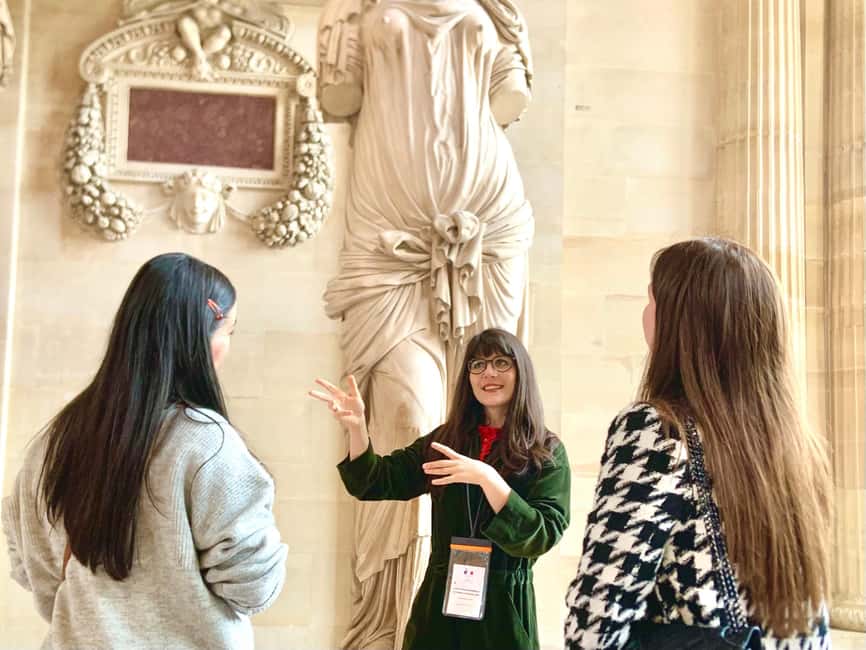
The tour lasts two hours, with starting times depending on availability. Pickup and drop-off are not included, so you need to reach the meeting point yourself.
Bring a passport or identity card. A copy is accepted according to the tour information, but carrying the required document is still the sensible choice. Wear comfortable shoes, since the museum visit involves walking and may include stairs.
The tour is not suitable for wheelchair users. One booking party with mobility concerns said Blerta worked hard to reduce the number of stairs, but that personal effort should not be treated as a guarantee of step-free access. If mobility is a concern, confirm the current route before booking.
Free cancellation is available up to 24 hours before the tour for a full refund. You can also reserve now and pay later, which helps if your Paris schedule is still shifting.
Who should book this Louvre tour?
I would choose this experience for:
- First-time Louvre visitors who want the main works explained clearly
- Families with children or teenagers
- Adults who want help reading art without a formal art background
- People with limited time in Paris
- Anyone who values questions and conversation over a large group lecture
- Visitors who want an artist’s perspective on technique and composition
I would hesitate if you prefer solitary museum visits, want to spend hours in one department, or consider $246 too high for a two-hour activity. I would also check accessibility carefully if stairs or long periods of walking are difficult.
Should you book the artist-led Louvre visit?
Book it if you want the Louvre to make sense quickly. The reserved entry saves time, the six-person limit keeps the experience personal, and the artist-guide format adds useful detail to works you may otherwise only photograph.
Blerta receives the strongest praise in the available feedback, especially for families, clear English, humor, and her ability to adapt the route. Guides may vary, but the format remains appealing: a short, focused visit with access to major works and explanations grounded in the way art is made.
At $246, this is not the budget way into the Louvre. It is the efficient way, and for a family or first-time visitor with little time, that distinction may be worth paying for.
FAQ
Where does the Louvre tour meet?
The group meets at the Kiosque des Noctambules, a Murano glass-bead sculpture by Jean-Michel Othoniel across from the Comédie Française. It is near the Place Colette exit of the Palais Royal, Musée du Louvre metro station.
Does the tour meet at the Louvre Pyramid?
No. You meet at the Kiosque des Noctambules first, then continue to the Louvre. Do not wait at the Pyramid for the group.
How long does the tour last?
The guided Louvre experience lasts two hours. Starting times depend on availability.
What does the price include?
The $246 per-person price includes shared tour admission, Louvre entry tickets, a certified artist-guide, and audio headsets when available. Pickup and drop-off are not included.
Which languages are available?
The tour is offered in Albanian, English, and French.
Is the tour suitable for wheelchair users?
No. The activity is listed as unsuitable for wheelchair users. A guide may be able to reduce stairs in some situations, but you should confirm access needs before booking.
More Museums in Paris
- Paris: Louvre Museum Entry Ticket With Host and River Cruise
★ 4.6 · 9,926 reviews - Les Invalides: Napoleon’s Tomb & Army Museum Entry
★ 4.6 · 9,185 reviews - Louvre Museum – Exclusive Guided Tour (Entry Included)
★ 5.0 · 6,296 reviews - Paris: Louvre Museum Hosted Entry and Mona Lisa Audioguide
★ 4.6 · 5,235 reviews
Recently added in Paris
- Private Transfers in Paris★ 5.0 · 75 reviews
- CDG – Euro Disney – CDG Two Way Private Shuttle Transfer★ 5.0 · 233 reviews
- Disneyland® Paris 1 Day Ticket with Transport from Paris★ 3.5 · 302 reviews
- Personalized Transport service from Disneyland to Paris★ 5.0 · 63 reviews
- Monet’s Gardens & House-Private Giverny Tour From Paris★ 4.5 · 137 reviews
- Guided tour Monet’s house and gardens/small group★ 4.5 · 68 reviews
- Giverny Monet House and Gardens Skip the line Walking tour★ 4.0 · 217 reviews
- Monet’s House and Garden & Giverny Village★ 4.5 · 39 reviews
Louvre Museum Tours, compared.


Louvre Guided Tour with Reserved Access & Boat Cruise
Read our review →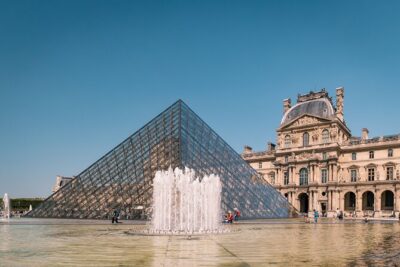
Louvre Museum Masterpieces Guided Tour with Access
Read our review →
Louvre Museum Entry Ticket With Host and River Cruise
Read our review →
Priority Access Louvre with Host -Direct to Mona Lisa
Read our review →
Mona Lisa & Louvre Masterpieces Tour with Reserved Access
Read our review →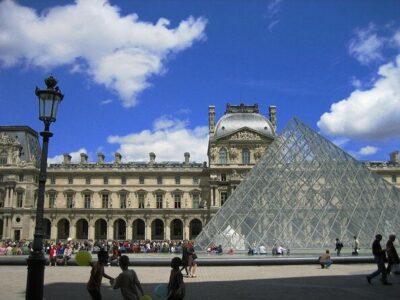
Louvre Museum – Exclusive Guided Tour (Entry Included)
Read our review →
Louvre Reserved Ticket and River Cruise Combo
Read our review →Browse the lists this tour appears in