
REVIEW · AVIGNON TOURS
The prestige course at Maison Brotte
Wine museums are rare in Châteauneuf-du-Pape. Maison Brotte brings together the appellation’s only wine museum and a tasting of five wines, and I like the clear audio guide and the friendly, professional sommeliers. The main concern is that the tasting may feel rushed if you want time to savor each glass.
The 90-minute visit works well for a short stop in the village, especially at $16 per person. I also like the small group limit of 10, the multilingual support, and the useful private parking. Still, this is partly a retail experience, so you should expect a chance to buy wine at the end rather than a long cellar conversation.
In This Review
- Key points to know before you go
- Why Maison Brotte makes a good wine stop
- Inside the 1972 Wine Museum
- The five wine tasting at Maison Brotte
- A family estate with an international welcome
- Is $16 a fair price?
- How to use the 90 minutes well
- What the experience does best
- Where the experience may disappoint
- Who should book Maison Brotte?
- FAQ
- How long does the Maison Brotte experience last?
- How many wines are included?
- Is an audio guide provided?
- What languages are available for the host or greeter?
- Is the experience wheelchair accessible?
- Can I bring my pet?
- Should you book the Prestige Course?
Key points to know before you go
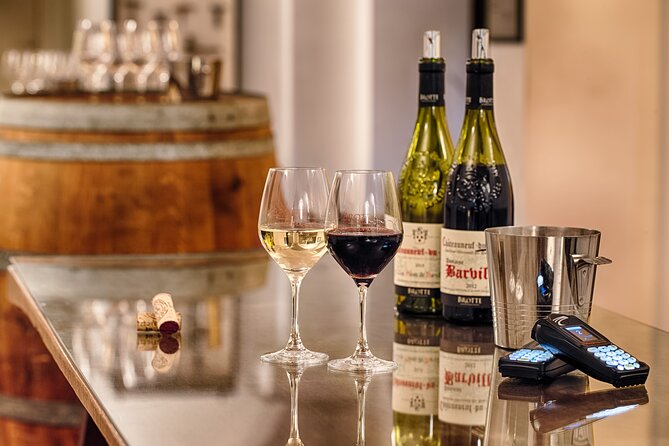
- The only wine museum in Châteauneuf-du-Pape: Learn about vines, winemaking, cork, and the Brotte family through a self-guided museum visit.
- Five wines are included: A sommelier leads the tasting and explains the wines in an approachable way.
- The museum dates to 1972: Jeanne Brotte, grandmother of the current owner, created it as a way to share the estate’s wine traditions.
- The visit lasts 90 minutes: That gives you enough time for the museum and tasting, but the pace may feel tight if you like lingering over each wine.
- Small groups make a difference: The experience is limited to 10 people, with support in French, English, German, Portuguese, Chinese, Russian, Spanish, and Dutch.
- Practical extras are useful: Private parking is available for cars and campers, pets are allowed on a leash, and the site is wheelchair accessible.
Why Maison Brotte makes a good wine stop
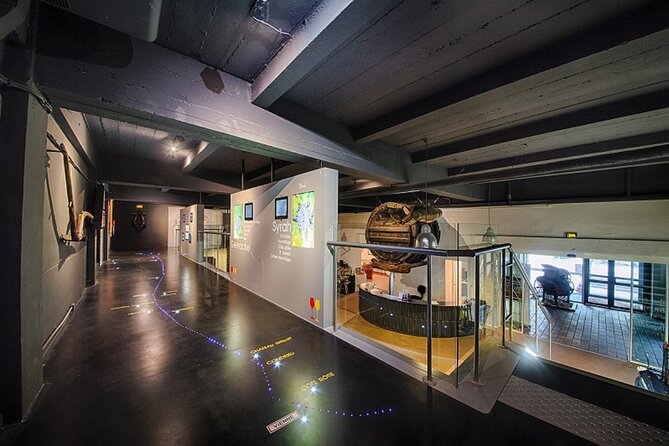
Châteauneuf-du-Pape is one of the best-known wine names in the southern Rhône, but a famous label does not automatically make a good visitor experience. Maison Brotte helps by giving you a little context before asking you to taste.
The Brotte family has worked in wine since 1931. That long family connection gives the visit a personal angle, even though the experience is designed for a broad international audience. You are not simply standing at a counter with five glasses in front of you. You first get an introduction to the estate, the appellation, and the people behind the bottles.
I like this setup because wine can be hard to understand when you only hear tasting notes. The museum gives you a basic framework. You learn about vines, wine production, cork, and the family story, then move into the tasting with a better sense of what you are drinking.
The experience is also easy to fit into a day in Châteauneuf-du-Pape. At 90 minutes, it is short enough to combine with sightseeing, lunch, or another wine stop. It is not an all-day estate visit, and that is part of its appeal.
A few more Avignon outings to set side by side
- From Arles: Half-Day 4×4 Camargue Safari
★ 4.7 · 1,772 reviews - Provence Highlights Full-Day Tour from Avignon
★ 5.0 · 499 reviews - Chateauneuf du Pape wine tour
★ 5.0 · 484 reviews
Inside the 1972 Wine Museum
The museum was created in 1972 by Jeanne Brotte, the grandmother of the current owner. That detail gives the museum a nice family thread. It is not a recently assembled display built only to support tourism. It has been part of Maison Brotte’s public identity for decades.
The museum uses an audio guide rather than a continuously guided walk. That means you can take the information at your own speed. If you already know something about wine, you can move along quickly. If you are new to the subject, you can stop and listen without feeling pressure to keep up with a live group.
Audio guides are available in French, English, German, Portuguese, Chinese, Russian, Spanish, and Dutch. That broad language choice is helpful in an international wine region. It also means you can focus on the material instead of trying to follow technical explanations in a language you only partly understand.
The museum covers three main ideas: vines, wine, and the history of the Brotte family. One especially useful section focuses on cork. Cork displays are not always included in wine museums, yet the material affects how wine is sealed, stored, and presented. It is a small subject, but it gives the museum an extra point of interest beyond the usual vineyard panels and bottles.
I would allow yourself enough time to listen properly. The self-guided format is flexible, but there is quite a bit of information. If you race through the exhibits, you may remember the tasting better than the museum. If you enjoy learning, the museum can fill much of the 90-minute visit.
The five wine tasting at Maison Brotte
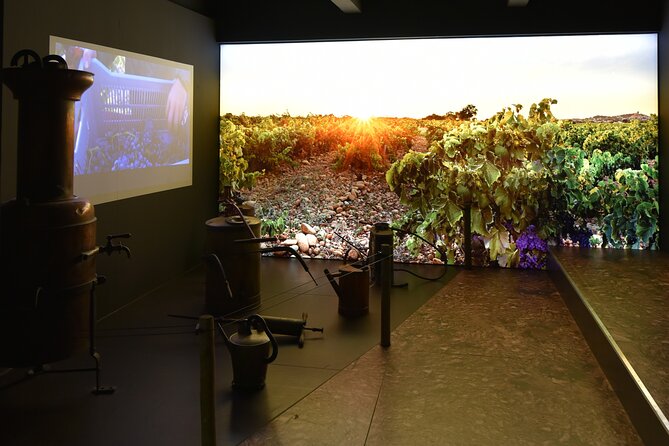
After the museum, a sommelier welcomes you for a tasting of five wines. This is the heart of the visit for many people, and the staff’s approach matters more here than fancy furniture or clever displays.
The strongest part of the tasting is its accessibility. You do not need a strong wine background to take part. The sommeliers are described as professional and able to explain the wines in a way that works for people who are still learning. That makes Maison Brotte a good first tasting in the Rhône region.
I like tastings that give you permission to ask basic questions. Wine language can become needlessly grand, especially when you are standing among people who already seem confident. A clear explanation of what you are smelling, tasting, and comparing is more useful than a long list of obscure terms.
The five wine format also gives you a useful range without becoming excessive. One or two wines can feel too limited for comparison. Ten or more can blur together, particularly if you are visiting several producers in one day. Five gives you enough material to notice differences while keeping the session manageable.
There is one important caution. The tasting may feel rushed to someone who wants a slow, reflective experience. One recent assessment described it as closer to a shop tasting than a relaxed paid tasting, with the focus leaning toward sales. That does not cancel out the educational value, but it sets the right expectation.
You should treat this as an introductory tasting with a commercial side, not as a private sommelier seminar. The staff will explain the wines, but you may not have unlimited time with each glass. If you want to linger, ask questions early and make good use of the small group setting.
A family estate with an international welcome
Maison Brotte has a family story, but the visitor program is built for an international audience. Hosts and audio guides support eight languages: French, English, German, Portuguese, Chinese, Russian, Spanish, and Dutch.
That is more than a minor convenience. Wine terms are difficult enough in your first language, and the audio guide lets you choose the language that gives you the clearest understanding. You can also listen privately rather than wait for a guide who speaks your language.
The group size is limited to 10 participants. That is small enough to make questions possible, though the actual feel will depend on how many people attend your time slot. A small group should be less chaotic than a large public tasting, and it may help the sommelier keep the explanations approachable.
The visit is also wheelchair accessible. Private parking is available for cars and campers, which is useful in a wine village where parking can complicate an otherwise simple stop. Pets are allowed on a leash, so you have a little more flexibility if you are driving through the region with a dog.
These practical details make Maison Brotte suitable for a wide range of visitors. It is not limited to serious wine collectors. Couples, families with an adult interest in wine, first-time tasters, and road trippers can all find a reason to include it.
Same city, a slower kind of day:
- 4×4 Camargue Safari 4h – Departure from Arles
★ 4.5 · 467 reviews - From Avignon: Châteauneuf du Pape Half-Day Wine Tour
★ 4.7 · 365 reviews - From Avignon: Full-Day Best of Provence Tour
★ 4.7 · 338 reviews - From Avignon: Half-Day Great Vineyards Tour
★ 4.7 · 321 reviews
Is $16 a fair price?
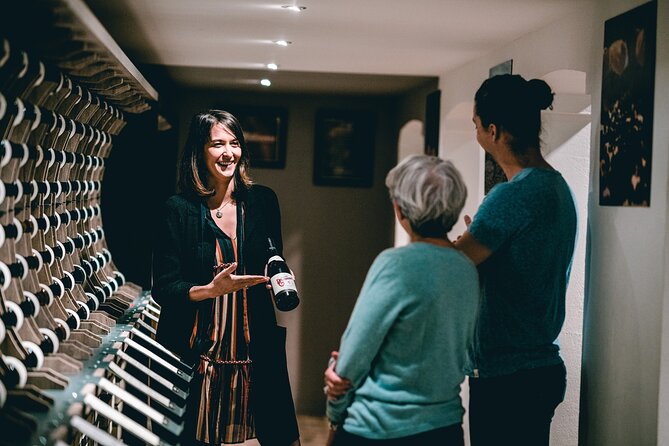
At $16 per person, the value is solid if you plan to use both parts of the experience. You receive five wines, the museum visit, and an audio guide. The museum is the feature that makes the price easier to justify because it gives you more than a short pour and a sales pitch.
A basic tasting can be inexpensive or even free at some wine shops, so you should not judge the price only by the wine samples. Maison Brotte charges for a small educational visit, a dedicated museum, and staff time. If you care only about tasting, you may find the value less convincing.
The price works best for you if this is your first introduction to Châteauneuf-du-Pape. You get an overview of the local wine culture and the Brotte family in one stop. You also avoid committing to a lengthy estate program when you only have part of a day.
For experienced wine drinkers, the decision is less automatic. Five wines may not be enough if you want a detailed comparison of vintages, vineyard sites, or production methods. The information provided does not promise a vineyard walk, a visit to working cellars, or a private appointment. You are paying for the museum and tasting experience as presented.
The ability to cancel up to 24 hours before the visit for a full refund adds useful flexibility. You can also reserve and pay later, which helps if your route through the Rhône is not completely fixed.
How to use the 90 minutes well
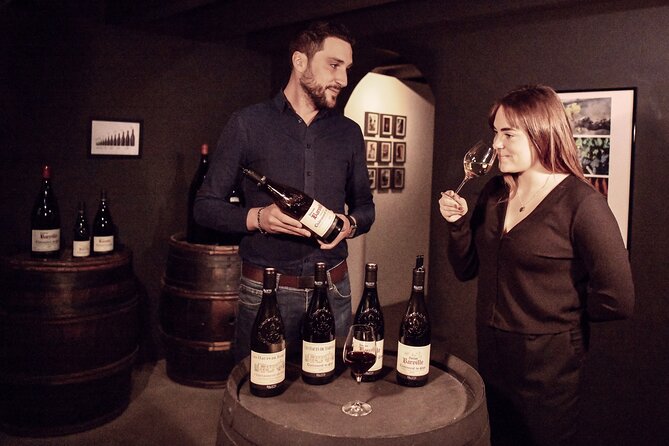
The official duration is 90 minutes, and you should think of that as the total visit rather than 90 minutes devoted only to drinking wine. The museum and tasting share the time.
I would begin by paying attention to the audio guide instead of treating the museum as a quick prelude. The museum explains the basic subjects that make the tasting easier to follow. Look for the section about cork, which adds something less common to the usual wine story.
During the tasting, listen for the differences between the five wines. You do not need to identify every aroma. Instead, notice which wine you prefer and ask the sommelier what creates that difference. Simple questions often produce the most useful answers.
The small group limit should help, but time still matters. If you want an explanation, ask while the wine is being poured. Waiting until the end may leave too little time, especially if the tasting is moving briskly.
The visit can also serve as a useful introduction before exploring more of Châteauneuf-du-Pape. After learning the basic vocabulary, you may find it easier to understand menus, bottle labels, and later tastings in the region.
What the experience does best
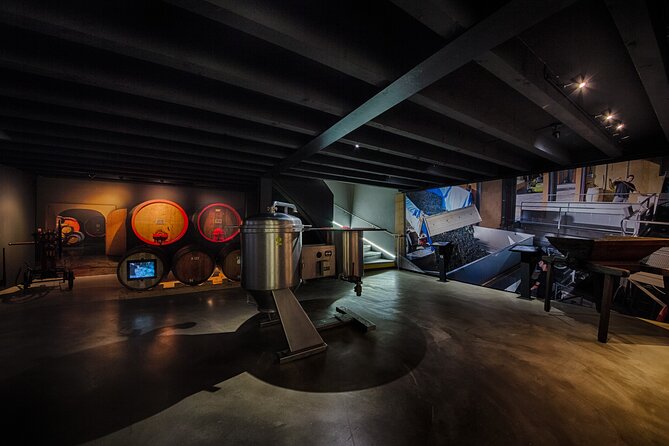
The most praised feature is the professional, approachable tasting staff. That matters because the subject can intimidate newcomers. A good sommelier does not merely name the wine. The sommelier helps you understand what to notice and gives you a place to start.
The museum also earns strong marks for its presentation and concept. It is not only a display of bottles. The focus on vines, wine, family history, and cork gives the visit a broader shape.
The relaxed pace of the museum is another advantage. Because it is self-guided, you can spend more time on the topics that interest you and less time on material you already know. That flexibility is especially useful in a mixed group with different levels of wine experience.
The experience has a clear identity. It combines the Brotte family story with the wider Châteauneuf-du-Pape appellation. You leave with more than a list of wines you tasted, at least if you give the museum enough attention.
Where the experience may disappoint
The main weakness is the tasting pace. If your ideal wine visit involves sitting down for a long conversation, watching the staff open bottles, and taking your time with every glass, this may feel too commercial.
The shop setting can also shape the mood. A wine producer naturally hopes you will buy something, and the tasting is part of that business. There is nothing unusual about that, but you should know what you are paying for. This is not presented as a private, no-pressure master class.
The audio guide has a similar tradeoff. It offers freedom and many languages, but it lacks the back-and-forth of a live museum guide. You can ask the sommelier questions during the tasting, but the museum portion itself is not built around conversation.
Finally, the amount of information may feel heavy for a short visit. One person can find the museum thorough and engaging, while another may feel there is too much to absorb before the tasting. You control the pace, so do not feel required to listen to every section.
Who should book Maison Brotte?
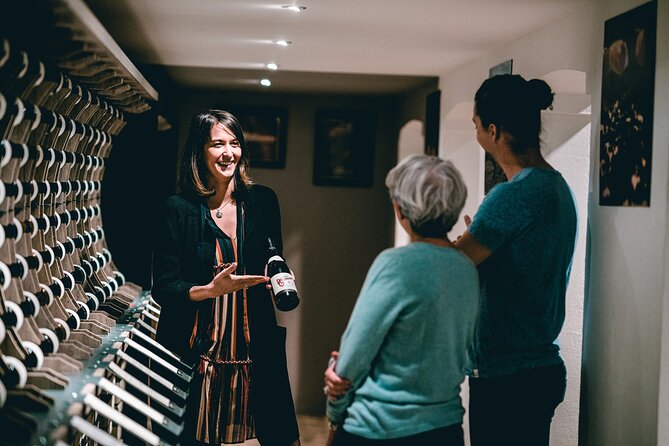
I would recommend this experience to first-time wine visitors, curious couples, and anyone who wants a short introduction to Châteauneuf-du-Pape. It is particularly useful if you want the cultural side of wine along with the tasting itself.
It also suits visitors who value language flexibility, accessible facilities, and easy parking. The support in eight languages makes the visit practical for international groups, and the limit of 10 participants keeps it from becoming a mass-market tasting.
You may want to skip it if you already know the region well and want a technical, slow-paced wine appointment. You may also feel disappointed if you expect a vineyard tour or a long cellar visit, since those features are not included in the stated experience.
FAQ
How long does the Maison Brotte experience last?
The experience lasts 90 minutes, including the museum visit and the tasting of five wines.
How many wines are included?
Five wines are included in the tasting.
Is an audio guide provided?
Yes. An audio guide for the wine museum is included. It is available in French, English, German, Portuguese, Chinese, Russian, Spanish, and Dutch.
What languages are available for the host or greeter?
The host or greeter may provide support in French, English, German, Portuguese, Chinese, Russian, Spanish, and Dutch.
Is the experience wheelchair accessible?
Yes, the experience is wheelchair accessible.
Can I bring my pet?
Yes. Pets are allowed, but they must be kept on a leash.
Should you book the Prestige Course?
Book it if you want a reasonably priced, compact introduction to Maison Brotte and Châteauneuf-du-Pape. The combination of five wines, the appellation’s only wine museum, a family story dating to 1931, and a multilingual audio guide gives you plenty to do for $16.
Go in with the right expectations. You are buying an educational tasting with a retail element, not a private wine lesson. Take your time in the museum, ask questions during the tasting, and focus on comparing the five wines. For a first visit to the region, that makes Maison Brotte a useful and worthwhile stop.
Recently added in Avignon
- Rafting Verdon – “Explor Verdon” – Family Course★ 5.0 · 51 reviews
- Rando Aqua – “Le Pont de Tusset” – Discovery Course★ 5.0 · 92 reviews
- Lavender Route – Small-Group Day Trip from Avignon★ 5.0 · 120 reviews
- Wines from Châteauneuf-du-Pape and surrounding areas in 1/2 day★ 5.0 · 96 reviews
- Châteauneuf du Pape Wine Day Tasting Tour including Lunch from Avignon★ 5.0 · 287 reviews
- Truffle Hunting in Provence★ 5.0 · 55 reviews
- Van Gogh & Carrières de Lumières Half-Day Tour from Avignon★ 4.5 · 29 reviews
- Morning Wine Tour to Chateauneuf du Pape from Avignon★ 4.5 · 70 reviews
Avignon Tours, compared.

Provence Highlights Full-Day Tour from Avignon
Read our review →

Provence Cru Wine Small-Group Half-Day Tour from Avignon
Read our review →Browse the lists this tour appears in