
REVIEW · FOOD & DRINK
Unusual visit & Tasting of our organic wines
Wine history lives beneath your feet. At Château de Luc, you walk through a 15th-century underground cellar and the 17th-century Grande Cuisine, still part of the Fabre family home. I like the personal scale of this visit and the chance to taste five organic wines in a former stable. The main drawback is reaching Luc-sur-Orbieu without a car, especially from Carcassonne.
I also like that your group gets to move at its own pace rather than follow a large crowd through a polished commercial winery. The visit covers wine-growing, winemaking, local sights, and food, with English, French, and Spanish available. At roughly $14.42 per person for an hour, it is a strong value, though serious wine fans may want a longer cellar visit.
In This Review
- Key points at a glance
- Château de Luc and fourteen generations of wine
- Beneath the château in the 15th-century cellar
- Inside the 17th-century Grande Cuisine
- Five organic wines in a former stable
- Questions worth asking during the visit
- The value of a one-hour private visit
- Getting to Luc-sur-Orbieu without a car
- Who will enjoy Château de Luc most
- Booking, timing, and cancellation
- Should you book this organic wine visit?
- FAQ
- How long does the Château de Luc experience last?
- Where does the tour begin and end?
- How many wines are included?
- Is this a private tour?
- Which languages are spoken?
- Can I cancel for a full refund?
Key points at a glance
- Fourteen generations of Fabre family life: The château remains inhabited by the family, giving the visit a lived-in feel.
- A 15th-century underground cellar: You see an old working part of the property, not just a modern tasting room.
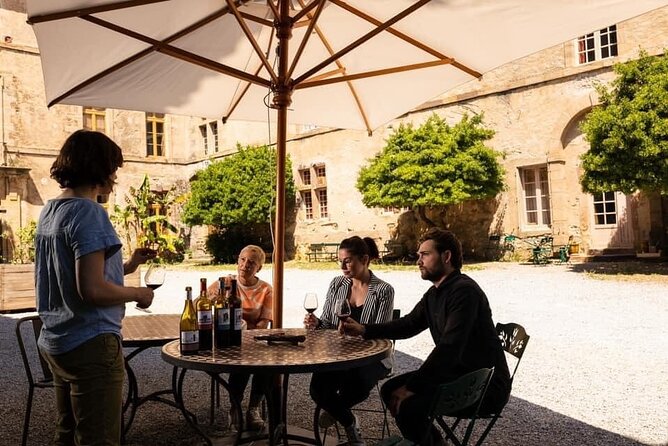
- Five organic wines: The tasting gives you a useful sample of the family’s current wine production.
- A former stable becomes the tasting cellar: The setting adds character without turning the visit into a formal museum tour.
- Private and self-paced: Only your group takes part, making it easier to ask questions and linger where you wish.
- A practical stop near Carcassonne: A train and taxi can work if you do not have a car, but allow time for the connection.
Château de Luc and fourteen generations of wine
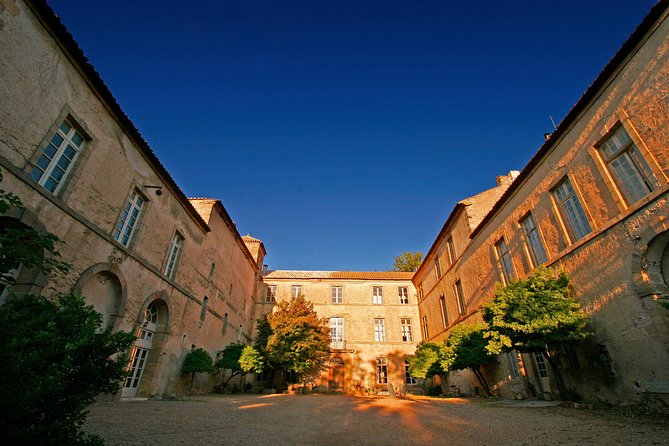
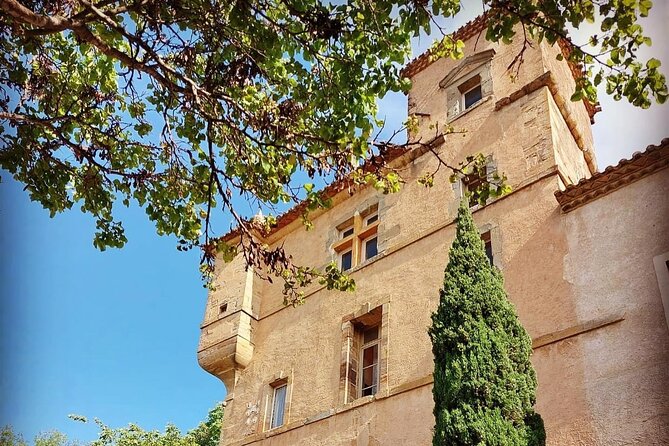
The visit begins at Famille Fabre au Château de Luc, at 1 Av. Jean Moulin in Luc-sur-Orbieu. This is not simply a tasting room with a family name attached. The Fabre family has been connected with the property for 14 generations, and the château is still inhabited by the family.
That detail changes the mood. You are not walking through a staged reconstruction of old wine-country life. You are entering a place that continues to function as a home and wine business. Some rooms and spaces serve visitors, while other parts remain part of everyday family life.
I find that kind of setting far more revealing than a large facility built only for tours. It helps you understand wine as a long-running family occupation, not just a bottle on a shop shelf. The family connection also gives the visit a clear focus. You are learning about one estate, one cellar, and one approach to making wine.
The tour is designed for a small private group. That matters because wine questions can be specific. You can ask about vineyard management, organic production, the winemaking process, or nearby places to eat without trying to catch a guide’s attention in a crowd.
The tone is likely to feel relaxed rather than academic. The stated aim is to share a passion for wine and local culture, so you should expect conversation as much as formal explanation. If you want a short introduction to the family and its wines, this format works well. If you want a detailed technical lecture about soil, grape varieties, and fermentation figures, check your expectations before booking.
More food tours in France:
- Paris: Seine Cruise & Crepe Tasting near the Eiffel Tower
★ 4.4 · 11,231 reviews - Authentic Parisian Gourmet Food Tour with 10 Local Dishes & Wines
★ 5.0 · 4,754 reviews - Bordeaux: Cité du Vin Entry Ticket and Wine Tasting
★ 4.6 · 3,885 reviews
Beneath the château in the 15th-century cellar
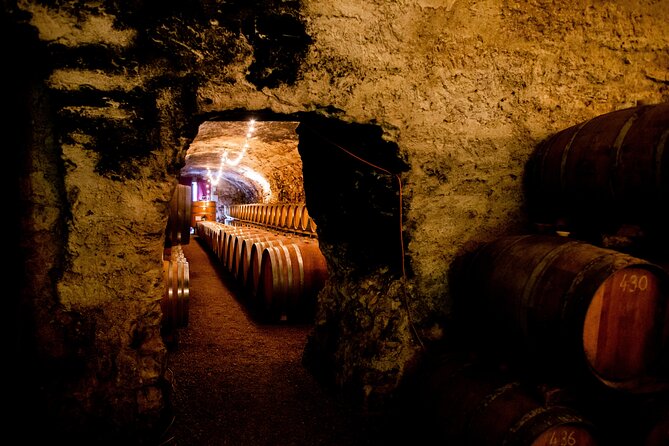
The first major stop is the underground cellar dating from the 15th century. Its age is the point, but the real value is the connection between the stonework and the wine operation around it.
Old underground cellars often explain wine better than a display panel can. Their purpose was practical: storage, protection, and a stable environment for wine. Here, the cellar forms part of a historic château that still has a working family presence.
You will want comfortable shoes. No special clothing is listed, and the tour lasts only about an hour, but an old underground space can feel less polished than a modern tasting room. The available information does not specify stairs, floor surfaces, or temperature, so anyone who needs detailed access information should contact Château de Luc before arrival.
The cellar should appeal to anyone who prefers places with original character. You are not just tasting a product in a neutral room. You are seeing one of the older spaces connected with the property and its long relationship with wine.
The private format helps here. Your group can pause for questions instead of moving in a fixed line. You might ask how the cellar was used over time, how it relates to the current production, or which wines are best connected to the estate’s older traditions.
Do not expect an enormous underground complex. The visit is approximately one hour, and it also includes the château kitchen and the tasting cellar. The old cellar is one part of a compact experience, not a standalone archaeological tour.
Inside the 17th-century Grande Cuisine
After the cellar, the tour continues to the Grande Cuisine of the château, dating from the 17th century. This room is still part of the home occupied by the Fabre family.
That combination makes the stop especially appealing. You are seeing a domestic space tied to the château’s past, but it has not been separated completely from the family’s present life. The kitchen adds a human scale to the story. Wine estates are not only vineyards and barrels. They are also homes, meals, work, and family routines.
The name Grande Cuisine suggests a substantial historic kitchen, but no detailed room description is provided. I would treat it as an atmospheric stop rather than expect a fully furnished museum interior with extensive interpretation.
This is also where the visit moves beyond wine alone. The hosts can answer questions about favorite places to eat and good dishes in the surrounding area. That may be as useful as the wine advice, especially if you are building a food-focused day in the region.
You can use this part of the visit to ask how the estate fits into local life. The experience promises discussion of nearby sights and places to taste a good dish, so it works well as a starting point for planning more of your time around Luc-sur-Orbieu.
Five organic wines in a former stable
The tasting takes place in a cellar installed in a former stable. This is a practical reuse of an old agricultural space, and it gives the final part of the visit a clear sense of place.
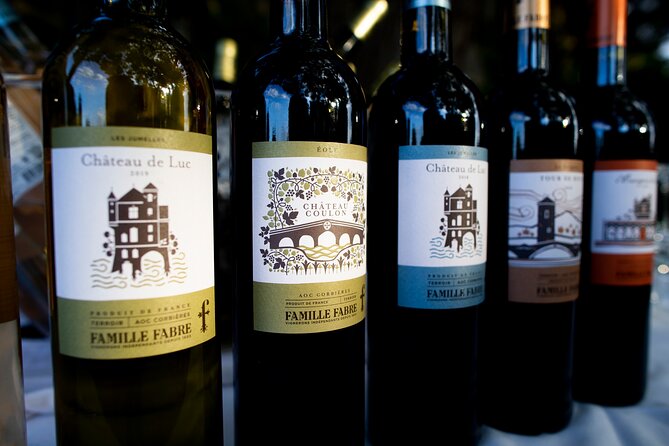
You taste five organic Fabre family wines. The available information does not name the individual bottles, grape varieties, vintages, or tasting sequence, so do not arrive expecting a published flight. The advantage is that the tasting can focus on what the family is making now rather than on a fixed list that may quickly become outdated.
Five wines is enough to compare styles without turning a one-hour visit into a long professional tasting. You can notice differences in aroma, weight, sweetness, acidity, or finish as the host explains the wines. If you are new to wine, five samples provide a useful introduction without requiring a large amount of technical knowledge.
The organic element is important, but it should be understood correctly. Organic wines reflect organic vineyard practices and the producer’s approach to managing the vines. The information does not provide certification details or explain every treatment used in the vineyard, so you will need to ask the host if those points matter to your buying decision.
I like that the tasting follows the historic spaces. You first see where the property comes from, then meet the family’s current work through the wines. That creates a more useful connection than tasting bottles with no sense of origin.
The former stable should also help keep the atmosphere informal. This is not presented as a formal restaurant pairing or a grand banquet. The sample menu is simply listed as Fabre family wines, so plan for wine tasting rather than food service.
If you are hoping for a full meal, this experience will not meet that need. If you want a compact introduction to organic wines made at the estate, the five-wine format is sensible.
Same city, a slower kind of day:
- Paris: Louvre Museum Timed-Entrance Ticket
★ 4.6 · 71,977 reviews - Disneyland® Paris 1-Day Ticket
★ 4.6 · 49,412 reviews - Paris: Versailles Palace and Gardens Full Access Ticket
★ 4.6 · 41,579 reviews - Paris: Evening River Cruise with Music
★ 4.4 · 22,721 reviews
Questions worth asking during the visit
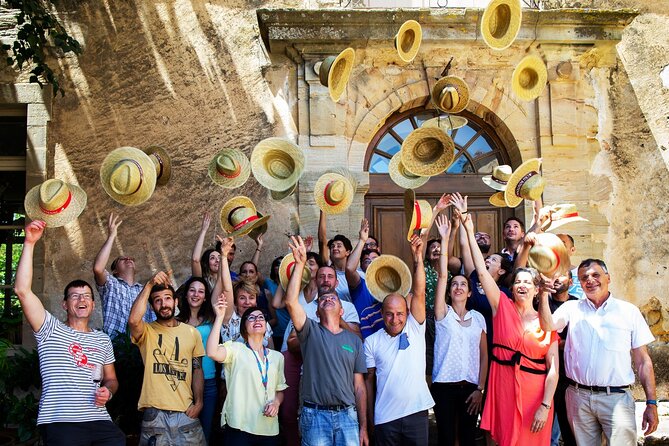
The hosts invite questions about vineyard management and winemaking, so you should take advantage of the private format. A few useful questions include:
- What makes the wines organic in practice?
- How does the family manage the vines through the year?
- Which of the five wines best represents the estate?
- Which wine works best with local dishes?
- Are there nearby sights worth visiting after the château?
- Where would the family go for a good meal?
These questions are not just conversation starters. They can help you decide what to buy, where to eat, and how to spend the rest of your day.
Because English, French, and Spanish are spoken, you have a good chance of discussing the wines comfortably. The exact language used for your visit is not specified, so you may want to confirm your preferred language when booking.
The personal side of the experience earns special attention. The strongest praise focuses on that direct, human contact. A private tour lets you ask questions that might be impossible in a bus group, and it gives the host room to adjust the pace to your interests.
The value of a one-hour private visit
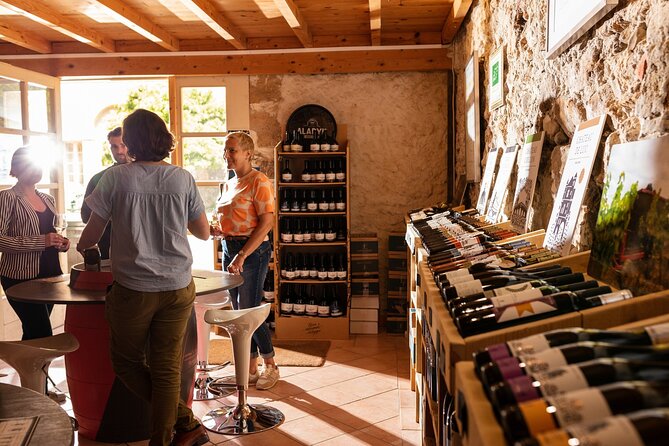
At about $14.42 per person, this is priced modestly for a private château visit with five wine samples. The value is not only in the number of pours. You are also paying for access to historic parts of a family property, a guided explanation of the estate, and time for questions.
For a group interested in wine, the price is especially appealing. Since only your group participates, the per-person cost remains easy to justify if you want a more personal experience than a standard public tasting.
The one-hour duration cuts both ways. It fits neatly into a day of sightseeing and will not consume an entire afternoon. You can visit the cellar, see the Grande Cuisine, taste five wines, and get local suggestions before moving on.
On the other hand, an hour passes quickly. You may not have time for a long technical discussion, an extensive vineyard walk, or a leisurely meal. None of those are included in the stated program.
I would think of this as a focused introduction rather than a full winery day. It is a good choice if you want to add wine and family history to a wider visit in the area. It is less suitable if the main purpose of your day is detailed wine education.
The experience is booked, on average, 16 days ahead. That suggests planning a little in advance, particularly if your schedule is fixed. Confirmation is provided at booking, and the mobile ticket makes it easy to keep the reservation on your phone.
Getting to Luc-sur-Orbieu without a car
Luc-sur-Orbieu is the one practical challenge. One visitor made the trip from Carcassonne without a car by using a train and a taxi, and described that combination as doable, though not easy.
That is useful advice. You do not necessarily need a rental car, but you should plan the connection rather than assume public transport will deliver you directly to the château. The meeting point is specific: Famille Fabre au Château de Luc, 1 Av. Jean Moulin, 11200 Luc-sur-Orbieu, France.
The activity begins and ends at that same point. There is no separate drop-off at another sight or town, so you will need to arrange your onward transport after the tasting.
If you are coming from Carcassonne, leave enough time for the train and taxi connection. The available details do not state train schedules, taxi prices, or how close the arrival point is to the château. Check those details on the day you plan to go.
Having a car will make the visit simpler, especially if you want to see other places around the area or stop for a meal afterward. Without one, the trip can still work, but the transport may take more planning than the one-hour château visit itself.
Who will enjoy Château de Luc most
I would recommend this experience to several types of visitors:
- Couples or friends who want a short, personal wine stop
- Wine drinkers curious about organic production
- People who prefer historic homes and working family properties
- Families looking for a manageable activity with a games corner for children
- English, French, or Spanish speakers who want to ask questions directly
- Anyone building a food and wine day around Luc-sur-Orbieu
The games corner for kids is a useful touch for families, although the tasting remains an adult-focused activity. The information says most people can participate, and service animals are allowed.
I would be more cautious if you need detailed accessibility information. The program takes place in a 15th-century underground cellar and historic château spaces, but no specific details are given about steps, surfaces, or wheelchair access. Contact the provider before booking if those points are important for you.
This also may not be the right choice for someone who dislikes wine tasting or wants a broad tour of the wider region. The focus stays on Château de Luc, the Fabre family, organic wines, and local advice.
Booking, timing, and cancellation
Free cancellation is available if you cancel at least 24 hours before the local start time. If you cancel less than 24 hours ahead, you will not receive a refund, and changes within that period are not accepted.
That policy is fairly simple, but transport deserves equal attention. If you depend on a train and taxi, make sure your arrival plan allows a margin for delays. The experience lasts about an hour, but your full outing will take longer once you include the journey to and from Luc-sur-Orbieu.
The mobile ticket is convenient. Keep the address handy, since the meeting point is the château itself and the activity returns there at the end.
Should you book this organic wine visit?
Book it if you want a short, private, good-value introduction to a family wine estate with real historic spaces. The 15th-century cellar, 17th-century Grande Cuisine, and former-stable tasting room give the hour more character than a basic tasting counter.
I especially like the personal format and the five organic wines. You get enough time to form an impression of the family’s production, ask questions, and leave with ideas for food and nearby sights.
Think twice if you want a full-day vineyard program, a meal, detailed tasting notes, or an extensive tour of the surrounding area. The experience is compact by design.
For most people already planning time in the Corbières area, Château de Luc is an easy addition. If you are coming from Carcassonne without a car, plan the train and taxi carefully. Once you arrive, the personal welcome and unusual setting make the effort worthwhile.
FAQ
How long does the Château de Luc experience last?
The visit lasts approximately one hour. It includes the historic cellar, the Grande Cuisine, and a tasting of five organic wines.
Where does the tour begin and end?
It begins at Famille Fabre au Château de Luc, 1 Av. Jean Moulin, 11200 Luc-sur-Orbieu, France. The activity ends back at the same meeting point.
How many wines are included?
You taste five Fabre family wines. The available information does not specify the individual wine names, grape varieties, or vintages.
Is this a private tour?
Yes. Only your group participates, and you can go at your own pace during the visit.
Which languages are spoken?
English, French, and Spanish are spoken during the experience.
Can I cancel for a full refund?
Yes, if you cancel at least 24 hours before the experience start time, based on the local time. Cancellations or changes made less than 24 hours before the start are not refunded or accepted.
Recently added in France
- Mt St. Michel Private Tour with Abbey tickets and tour guide★ 5.0 · 45 reviews
- Mont-St-Michel: Private Walking Tour “Abbey Ticket Included”★ 5.0 · 28 reviews
- Normandy Victory Museum admission ticket★ 5.0 · 58 reviews
- Private Guided Tour in WW2 Jeep of the Landing Beaches★ 5.0 · 110 reviews
- The Urban Hike of Marseille★ 5.0 · 35 reviews
- Airborne Museum Admission Ticket★ 5.0 · 424 reviews
- From Cherbourg: D-Day Beaches Shore Excursion★ 5.0 · 28 reviews
- Surf school Soonline Moliets★ 4.5 · 27 reviews
Food & Drink, compared.
Seine Cruise & Crepe Tasting near the Eiffel Tower
Read our review →
Authentic Parisian Gourmet Food Tour with 10 Local Dishes & Wines
Read our review →

Normandy D-Day Small-Group Day Trip with Omaha Beach, Cemetery & Cider Tasting
Read our review →
Illuminated Evening River Cruise & Waffle Tasting
Read our review →
Montmartre Hill French Gourmet Food and Wine Tasting Walking Tour
Read our review →
Loire Valley Castles Day Trip With Wine Tasting
Read our review →Browse the lists this tour appears in