
REVIEW · AVIGNON TOURS
Visit Avignon and Villeneuve lez Avignon aboard a Double-Decker Bus
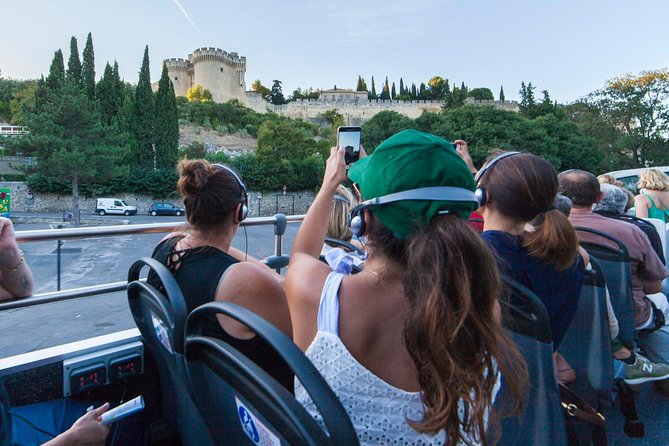
Avignon reveals more from across the Rhône. This double-decker bus ride gives you a useful first look at Avignon’s medieval walls, river crossings, and neighboring Villeneuve lez Avignon, with stops near major sights and an audio commentary in English. I like the broad route and the chance to see places you might skip on foot, especially Fort Saint-André and the views from Île de la Barthelasse. The main drawback is that this is not always a classic hop-on hop-off service, so you should not assume every stop works like a normal city sightseeing bus.
I also like the clean coach, the generally good audio system, and the way the route crosses the Rhône on different bridges. But the experience can feel rushed during the one-hour circuit, and some buses have had faulty audio connections. Check the operating days and exact meeting point before you leave your hotel, since a few passengers arrived for a scheduled departure that did not operate.
In This Review
- Key points before you book
- What this Avignon bus tour actually offers
- Pont Saint-Bénézet, the bridge that stops halfway
- The Lambert Collection and Avignon’s modern side
- Villeneuve and the Philippe le Bel Tower
- Fort Saint-André and the Abbey gardens
- Chartreuse de Villeneuve lez Avignon
- Île de la Barthelasse gives you the best broad view
- What the ride feels like on the road
- Price, timing, and the real value
- Who should choose this bus ride?
- Should you book the Avignon double-decker bus?
- FAQ
- Where does the Avignon double-decker bus tour start?
- Does the tour return to the starting point?
- Is the Pont Saint-Bénézet entrance included?
- Is entry to the Chartreuse de Villeneuve lez Avignon included?
- Is Fort Saint-André admission included?
- Is the tour offered in English?
- How long does the experience last?
- Can I cancel for a full refund?
Key points before you book
- The route crosses the Rhône: You see Avignon from Île de la Barthelasse and Villeneuve lez Avignon from the opposite bank.
- Pont d’Avignon admission costs extra: The bus takes you near the famous bridge, but entry is not included in the ticket price.
- Fort Saint-André is a worthwhile stop: Its medieval walls and nearby abbey gardens offer more than a quick photo stop.
- The one-hour circuit is best for orientation: Traffic can use up a large part of the ride, leaving little time for photographs.
- The service is not always true hop-on hop-off: Some departures operate more like a narrated loop, so ask about return times before getting off.
- The ticket costs about $16.30: That is fair for a broad introduction, but less attractive if you only want a fast ride around central Avignon.
What this Avignon bus tour actually offers
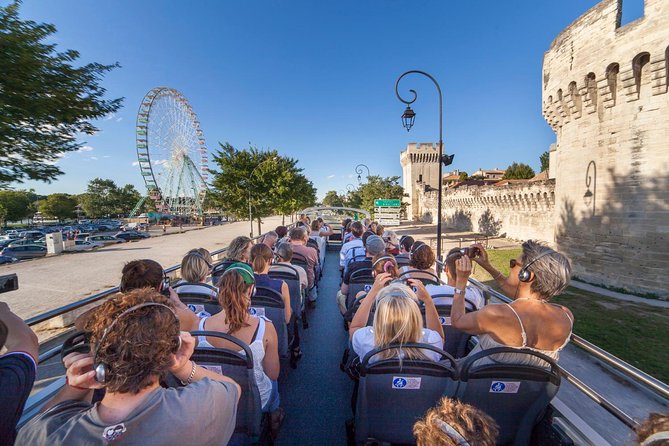
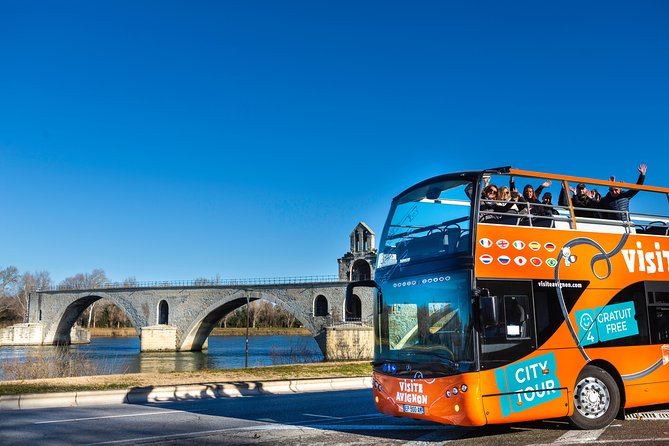
The tour begins at 40 Cr Jean Jaurès in Avignon and returns there. The listed price is about $16.30 per person, and the service uses a double-decker coach with English audio commentary. The maximum group size is 73, so this is a proper sightseeing coach rather than a private outing.
The advertised duration ranges from one hour to a full day because the route includes several possible stops. In practice, you should separate the experience into two parts. First comes the narrated city and river circuit, which can take about an hour. Then come the optional stops, where you decide how long to spend at sights such as the Pont Saint-Bénézet, Fort Saint-André, or the Chartreuse.
That distinction matters. If you stay on the bus, you get a quick overview. If you get off, you may need to wait for a later bus or make your own way back. The service has been described as hop-on hop-off, but the operation does not always match that label. Ask the driver about the next return departure before leaving the coach.
The English commentary is useful when it works properly. One particularly positive point is the route itself. It skirts the city walls, crosses the Rhône, and brings you to places outside the compact historic center. I would use it early in an Avignon visit, when I want to understand how the old papal city fits together.
A few more Avignon outings to set side by side
- From Arles: Half-Day 4×4 Camargue Safari
★ 4.7 · 1,772 reviews - Provence Highlights Full-Day Tour from Avignon
★ 5.0 · 499 reviews - Chateauneuf du Pape wine tour
★ 5.0 · 484 reviews
Pont Saint-Bénézet, the bridge that stops halfway
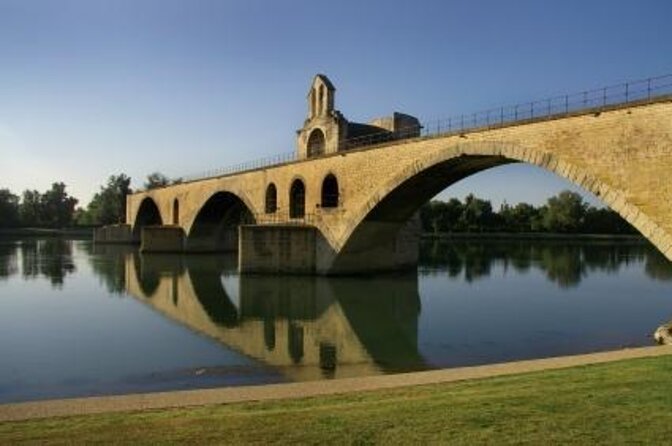
The Pont Saint-Bénézet is Avignon’s most famous sight, even though only four arches remain. The bridge began in 1177 and was completed around 1185. Its original form extended roughly 920 meters, with 22 arches and a width of about four meters.
The bridge was destroyed and rebuilt more than once. During the siege of 1226, the first Romanesque bridge was ruined as far as the fourth arch. A later version again reached across the Rhône, but floods, war, and the cost of repairs eventually left the bridge in its present broken form.
The familiar French song about dancing on the bridge helped make it famous far beyond Provence. The real story is more practical and more dramatic. In the Middle Ages, the bridge carried pilgrims traveling between Italy and Spain. After the popes moved their court to Avignon in the fourteenth century, it also linked the papal city with important residences in Villeneuve.
Cardinals increasingly built homes on the Villeneuve side, partly to escape the crowded and unpleasant conditions of Avignon. The bridge became the direct connection between those residences and the Palais des Papes inside Avignon’s walls.
A small chapel dedicated to Saint Bénézet once gave the bridge a spiritual role as well. Popes reportedly paused there to pray and leave an alms of a florin. The bridge was paved in 1377 after repeated slips caused accidents and drownings.
You need a separate admission ticket to enter the bridge. That is important when judging the $16.30 bus fare. The coach gives you the setting and the story, but it does not include access to the bridge itself. If the bus moves quickly past it, you may prefer to return later on foot for photographs and a proper visit.
The Lambert Collection and Avignon’s modern side
The route also passes the Lambert Collection, Avignon’s museum of modern art. It opened in June 2000 during the city’s year as European Capital of Culture.
The collection began with 350 works placed in an eighteenth-century mansion by gallerist and collector Yvon Lambert. It has since grown to more than 1,200 works, covering art from the 1960s to the present.
The museum occupies about 2,000 square meters and includes exhibition space, conservation areas, activities for younger visitors, a bookstore with artists’ editions, and a restaurant in the mansion courtyard. That makes it a useful contrast to Avignon’s churches, ramparts, and papal buildings.
The bus does not turn this into a museum visit. It simply places the collection on your route. If modern art interests you, note the location and return independently. If your time is short, I would treat it as a reminder rather than a reason to choose this tour.
Villeneuve and the Philippe le Bel Tower
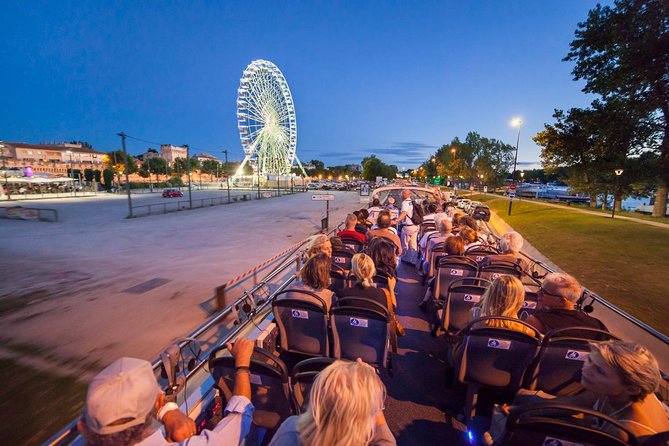
Crossing the Rhône brings you to Villeneuve lez Avignon, a separate town with its own medieval character. The Philippe le Bel Tower was built in the thirteenth century by the Capetian king Philip IV, known as Philippe le Bel.
Its purpose was to control access to the Pont d’Avignon. The tower therefore represents royal authority facing the power of the papacy. That political tension gives the stop more weight than its size suggests. Avignon was the seat of the popes, while the French crown controlled the approach from the opposite bank.
The tower is a fine example of medieval military architecture. From the bus, you get an introduction to its role and position. Admission details for this stop are not included in the tour information, so check locally if you want to enter.
This is one reason I find the cross-river route worthwhile. A standard ride around Avignon’s center can leave you thinking only about the popes. Villeneuve shows you the royal side of the story.
Same city, a slower kind of day:
- 4×4 Camargue Safari 4h – Departure from Arles
★ 4.5 · 467 reviews - From Avignon: Châteauneuf du Pape Half-Day Wine Tour
★ 4.7 · 365 reviews - From Avignon: Full-Day Best of Provence Tour
★ 4.7 · 338 reviews - From Avignon: Half-Day Great Vineyards Tour
★ 4.7 · 321 reviews
Fort Saint-André and the Abbey gardens
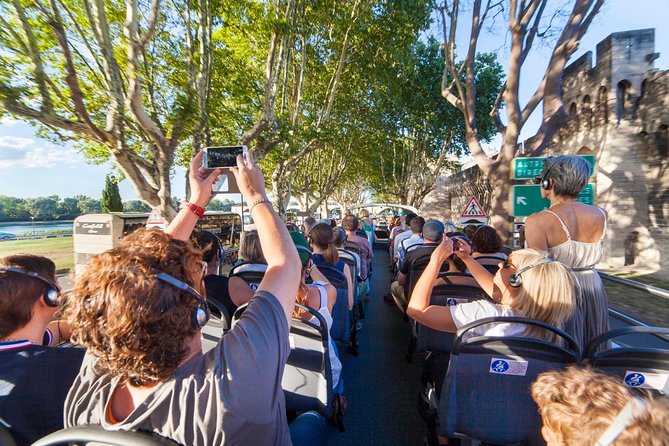
Fort Saint-André is the strongest stop on the Villeneuve side. Construction began at the end of the twelfth century, and the fort later protected the Benedictine abbey of the same name during the fourteenth century.
The fort’s walls and position make its purpose easy to understand. It guarded Villeneuve and helped control the approaches to the Rhône. The tour allows about an hour around this part of the route, though the precise time you have depends on the bus schedule and how the stops operate that day.
Near the fort, the Abbey of Saint-André adds a quieter, more decorative side to the visit. Its vaulted rooms contain seventeenth-century decoration, while the gardens combine Romanesque remains with Renaissance Tuscan-style ornaments.
The gardens carry the Remarkable Gardens label, and they are a strong reason to get off the bus if you have time. Rose beds and Mediterranean plants fill the grounds, with old architectural fragments placed among them. I would choose this stop over a quick second circuit if gardens and old stone appeal to you.
There is one practical catch. A one-hour city circuit can feel compressed, and traffic may take up about half the ride. You cannot expect a long garden visit and still be sure of catching the same bus back. Ask exactly how often the coach returns.
Chartreuse de Villeneuve lez Avignon
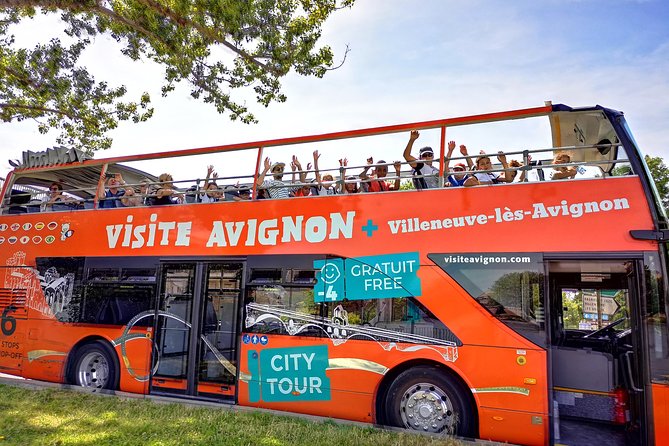
The Chartreuse de Villeneuve lez Avignon, also called the Chartreuse of the Val de Bénédiction, was a former cardinal’s residence. Pope Innocent VI encouraged its construction from 1353.
The site reflects the close connection between the papal court and Villeneuve. This was not simply a religious building. It was part of the network of residences, institutions, and political power that developed around Avignon during the papal period.
The complex is housed in a fourteenth-century mansion where many cardinals lived. That detail helps you read Villeneuve as a place of high-ranking church life, not just a suburb across the river.
Admission is not included in the bus fare. If you want to go inside, allow enough time and confirm the return transport first. The coach is most useful here as a link between the sites. It saves you from treating each location as an isolated walk and gives the area a clear historical shape.
Île de la Barthelasse gives you the best broad view
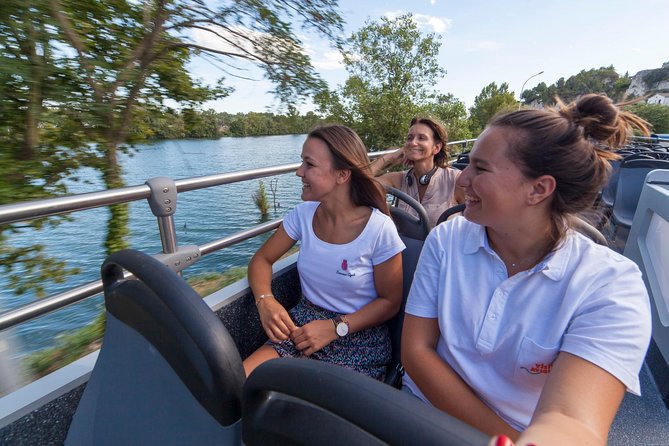
The stop on Île de la Barthelasse is one of the most pleasant parts of the ride. This large green island covers about 700 hectares in the Rhône, opposite Avignon.
The planned stop lasts around 10 to 15 minutes. That is enough to stretch your legs, take in the view, and see the city from across the water. The panorama includes the fortified city and the profile of the City of the Popes.
You may also use the free river shuttle from the island to reach the historic center, or continue by bicycle. The tour information does not promise bike rental, so think of those as onward options rather than included features.
The short stop can be frustrating if you want serious photography. Still, I value it because Avignon’s walls make more sense when seen from the island. The Rhône, bridge, ramparts, and towers form one picture instead of several disconnected sights.
If the bus is crowded or the upper deck is moving too quickly for photographs, this is the place to have your camera ready. The coach may not pause long, so do not wait until the final minute.
What the ride feels like on the road
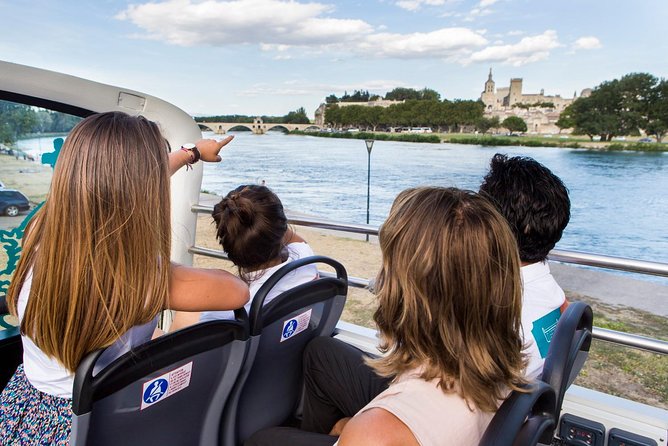
The double-decker coach is clean and of good quality when operating normally. The elevated seats give you a broad view, especially as the route crosses bridges and circles the outside of the walls.
The audio commentary is offered in English. It can add useful context to buildings that pass too quickly to inspect. One caution is that the audio connections are not always reliable. If your headset does not work, tell the driver at once and ask for another one. Do not spend the whole route trying to fix it yourself.
The bus can also move quickly. That is helpful for covering both sides of the Rhône, but it makes photographs difficult. If your main goal is detailed sightseeing, this is a poor substitute for walking.
Traffic is another issue. A one-hour tour can spend roughly 30 minutes in road congestion, depending on conditions. That leaves a shorter narrated circuit than the advertised duration might suggest.
The route is at its best when you treat it as an orientation ride. You see the geography first, mark the places that interest you, and return on foot or by local transport. It is less satisfying if you expect a slow, stop-rich tour with a guide beside you.
Price, timing, and the real value
At about $16.30, the price is modest for a ride that reaches both Avignon and Villeneuve lez Avignon. The fare makes sense if you want to see the outer walls, cross the Rhône, and get a quick view of the fort, abbey area, and island.
The value drops if you only remain in central Avignon. Much of the historic center is walkable, and the bridge and papal sights require separate admission fees anyway.
The ticket is a paper ticket, and confirmation is provided when you book. Service animals are allowed, public transportation is nearby, and most people can participate. The maximum capacity is 73, so you should expect a shared coach rather than a quiet small-group tour.
Operating days deserve special attention. Service has not always run on Sundays or Mondays, including a reported May schedule. Since the available information does not give a complete current timetable, verify the exact date, departure time, and meeting point before setting out.
The advertised starting point is 40 Cr Jean Jaurès. Some passengers have found the meeting location unclear, so use the address rather than relying only on a map pin. Arrive early enough to ask staff or the driver where the coach boards.
Free cancellation is available up to 24 hours before the start time for a full refund. Changes or cancellations inside that window are not accepted, and poor weather or an insufficient number of bookings can lead to a rescheduled tour or refund.
Who should choose this bus ride?
I would recommend it to you if you have limited time, want a broad first look at Avignon, or are curious about Villeneuve but do not want to arrange every connection yourself.
It is especially useful for:
- First-time visitors who want to understand both banks of the Rhône
- People who prefer a seated sightseeing route
- History fans interested in the papal court, royal power, and medieval fortifications
- Visitors who plan to return to selected sights after the circuit
- Anyone who values an English audio introduction
I would be more cautious if you want a traditional hop-on hop-off service with frequent departures. You should also reconsider it if your priority is quiet photography, detailed museum visits, or a leisurely walk through the Abbey gardens.
Should you book the Avignon double-decker bus?
Book it for orientation, not for a complete guided tour. The route is genuinely useful because it reaches Villeneuve lez Avignon, Fort Saint-André, Île de la Barthelasse, and the river crossings that a central walking tour can miss.
The best plan is to ride the circuit early, listen to the English commentary, and note where you want to return. Before getting off, confirm the next bus and where it will take you. If the schedule works and you want the broad view, $16.30 is reasonable. If you expect a dependable hop-on hop-off service every day, check the operating calendar carefully and consider exploring the sights on foot instead.
FAQ
Where does the Avignon double-decker bus tour start?
The stated meeting point is 40 Cr Jean Jaurès, 84000 Avignon, France.
Does the tour return to the starting point?
Yes. The activity ends back at the meeting point.
Is the Pont Saint-Bénézet entrance included?
No. Admission to the Pont Saint-Bénézet is not included in the bus ticket.
Is entry to the Chartreuse de Villeneuve lez Avignon included?
No. Admission to the Chartreuse is not included.
Is Fort Saint-André admission included?
The listed information identifies admission to Fort Saint-André as free.
Is the tour offered in English?
Yes. English audio commentary is available.
How long does the experience last?
The listed duration ranges from about one hour to one day, depending on how you use the route and stops. The main bus circuit is described as taking about one hour.
Can I cancel for a full refund?
Yes, if you cancel at least 24 hours before the experience start time. Cancellations made less than 24 hours before the start are not refunded.
Recently added in Avignon
- Rafting Verdon – “Explor Verdon” – Family Course★ 5.0 · 51 reviews
- Rando Aqua – “Le Pont de Tusset” – Discovery Course★ 5.0 · 92 reviews
- Lavender Route – Small-Group Day Trip from Avignon★ 5.0 · 120 reviews
- Wines from Châteauneuf-du-Pape and surrounding areas in 1/2 day★ 5.0 · 96 reviews
- Châteauneuf du Pape Wine Day Tasting Tour including Lunch from Avignon★ 5.0 · 287 reviews
- Truffle Hunting in Provence★ 5.0 · 55 reviews
- Van Gogh & Carrières de Lumières Half-Day Tour from Avignon★ 4.5 · 29 reviews
- Morning Wine Tour to Chateauneuf du Pape from Avignon★ 4.5 · 70 reviews
Avignon Tours, compared.

Provence Highlights Full-Day Tour from Avignon
Read our review →



Provence Cru Wine Small-Group Half-Day Tour from Avignon
Read our review →Browse the lists this tour appears in