
REVIEW · WINE TOURS
Workshop Bordeaux wine tasting: 4 reds & charcuterie pairing
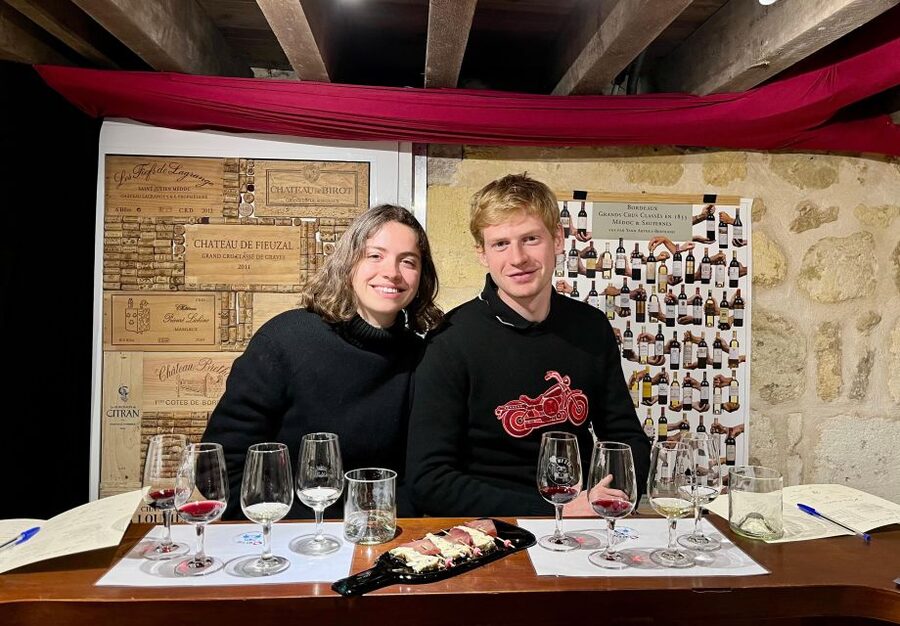
Bordeaux makes more sense after one good tasting. I like the small group, the relaxed teaching style of Cécilia and Mathilde, and the chance to compare Left Bank and Right Bank wines in one sitting. I also like that you leave with a tasting booklet, not just a pleasant buzz and a vague memory of grape names. The main drawback is the one-hour format: it gives you a useful introduction, but serious wine students may want more time.
The setting adds charm, too. Your tasting may take place in a stone-built room, a private courtyard, or an underground cellar, depending on the season. The room is tucked behind a building near Stalingrad tram stop, so finding it takes a little care. Look for the Guy Hoquet sign, the gray door, and the bell marked I ♥️ TASTING.
In This Review
- Key points at a glance
- Arriving at 25 Avenue Thiers
- A one-hour class with a clear purpose
- Four Bordeaux reds, each with a job to do
- The mystery glass and the value of comparison
- Charcuterie makes the wine lessons practical
- The setting changes with the season
- What you take home besides wine
- Is $46 good value for one hour?
- Who will enjoy this tasting most?
- Practical booking advice
- Should you book this Bordeaux wine class?
- FAQ
- How long does the Bordeaux wine tasting last?
- How many wines will I taste?
- Is charcuterie included?
- Where does the tasting take place?
- What languages are available?
- Is the tasting suitable for beginners?
- Is a booklet included?
- Can I arrange a white wine tasting instead?
Key points at a glance
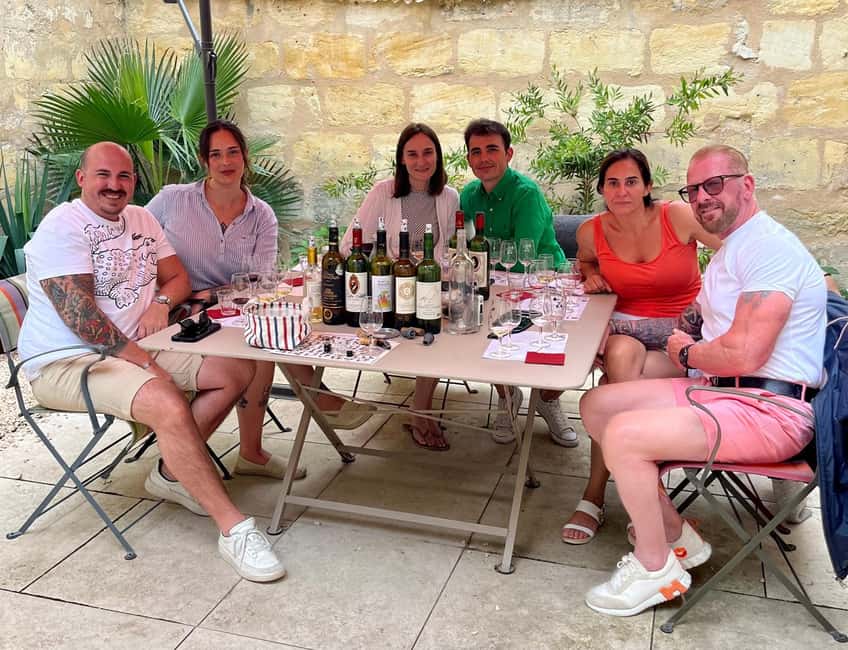
- Four Bordeaux reds plus a mystery glass: Compare several styles, including single-varietal wines, blends, and a mature bottle.
- Left Bank and Right Bank explained: Learn why Cabernet Sauvignon often gives Médoc wines structure, while Merlot brings softness to many Saint-Émilion wines.
- Charcuterie matched to each pour: The food is not an afterthought. It helps you see how salt, fat, texture, and seasoning change a wine.
- Friendly teaching from Cécilia or Mathilde: The session feels like a conversation, with room for questions and practical advice.
- Aroma game and booklet included: You get simple tools for tasting with more confidence after the class ends.
- Easy tram access: The room sits at 25 Avenue Thiers, about 100 meters from tram A at Stalingrad.
Arriving at 25 Avenue Thiers
The meeting point is at 25 Avenue Thiers, 33100 Bordeaux, close to the Stalingrad tram stop. That is convenient if you are staying in central Bordeaux and want to reach the class without arranging a taxi or hotel transfer.
The entrance is easy to miss because the tasting room is behind a building. Use the Guy Hoquet panel as your landmark. The gray door next to it is the right one, and the bell says I ♥️ TASTING. I would save these instructions before leaving your hotel, especially if you are arriving on foot or near the starting time.
There is no hotel pickup or drop-off. That is not a problem for most people, since the location is near public transportation, but it does mean you need to plan your own route. The activity is also listed as unsuitable for people with mobility impairments, so ask the provider about the physical setup if that is relevant to you.
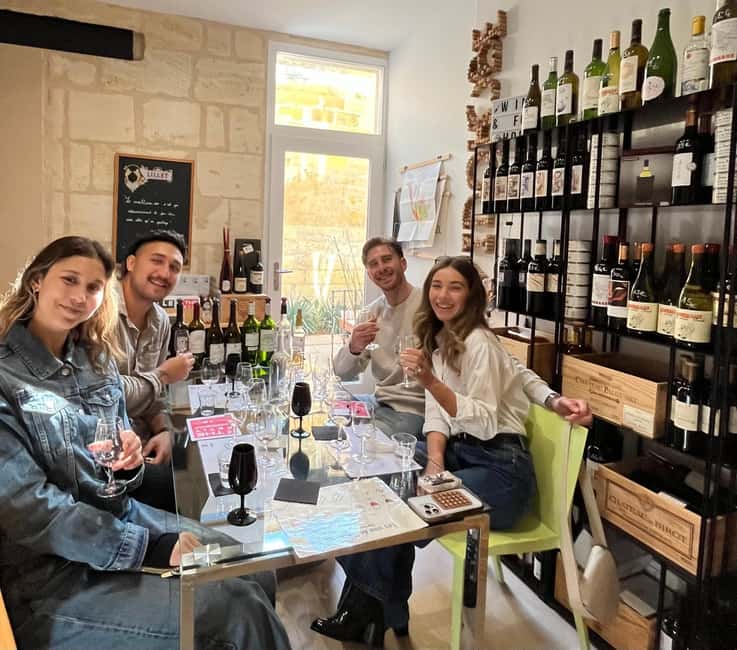
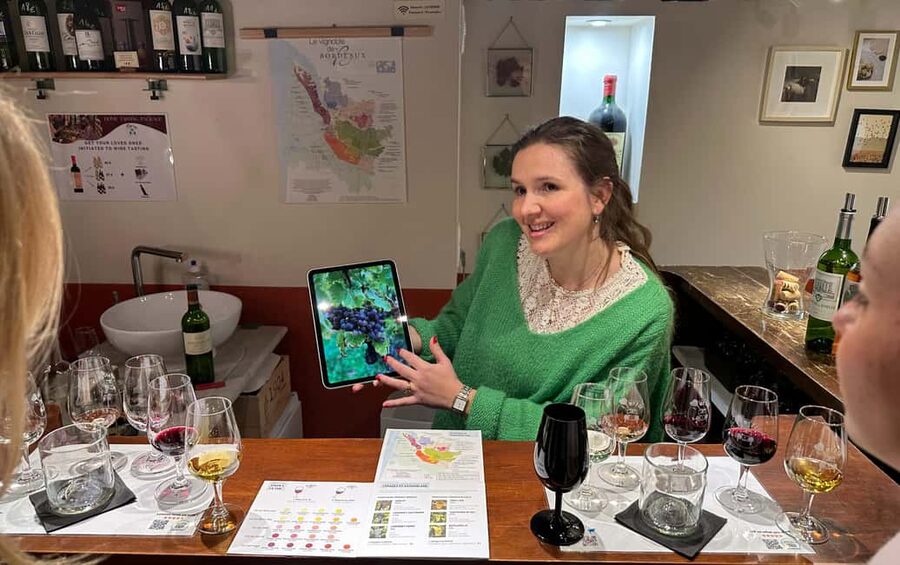
The group is limited to six participants. This small size matters. You can ask why one wine feels firmer than another, compare impressions with the people at your table, and get more direct help with tasting terms. It also keeps the room from feeling like a formal lecture.
More Food Tours in Bordeaux
- Bordeaux: Cité du Vin Entry Ticket and Wine Tasting
★ 4.6 · 3,885 reviews - From Bordeaux: Afternoon Saint-Emilion Wine Tasting & snack
★ 4.8 · 1,581 reviews - Medoc or Saint Emilion Wine Tasting and Chateau from Bordeaux
★ 5.0 · 1,415 reviews
A one-hour class with a clear purpose
The session is short, but it has a sensible arc. You begin with the basic method of tasting, then move into Bordeaux’s main ideas: grape varieties, appellations, blends, terroir, vinification, aroma, texture, and ageing.
You are not expected to arrive with technical wine knowledge. The class is designed for curious beginners, yet it has enough detail to interest people who already know a little about wine. That balance is one of its strongest features. You learn the vocabulary, but you also use it immediately with a glass in hand.
The guides, Cécilia and Mathilde, are certified wine experts trained at the Université du Vin. Their teaching style is friendly and approachable. Cécilia has been praised for making food pairing feel understandable, while Mathilde is especially good at creating a calm atmosphere where beginners feel comfortable asking questions.
The class includes an aroma game, which gives you a practical way to think about what you smell. Instead of simply being told that a wine has fruit, spice, wood, or earthy notes, you get a chance to identify aromas yourself. That can make the process less intimidating. You do not need an impressive nose. You only need to pay attention and compare your impressions with the group.
Four Bordeaux reds, each with a job to do
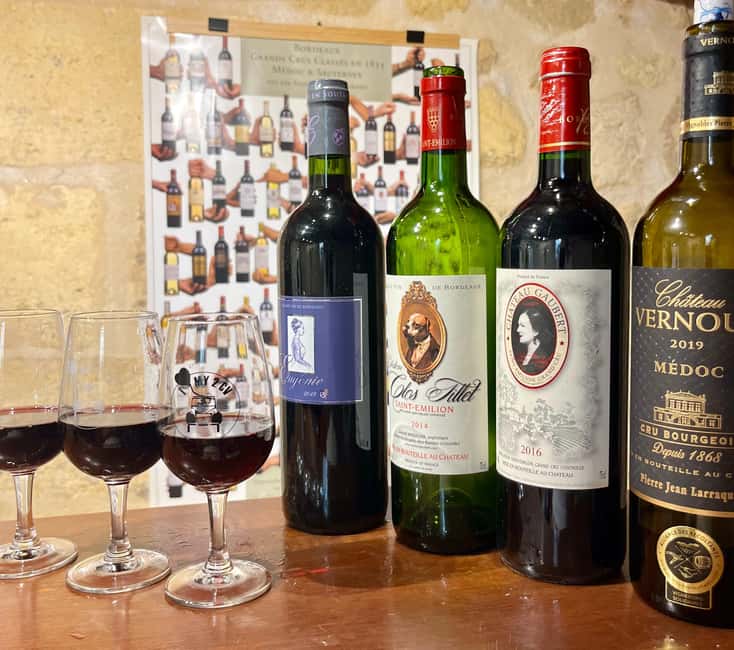
The wines are selected to show different sides of Bordeaux rather than give you four versions of the same bottle. You taste four red wines, plus one mystery glass, and each pour helps explain a particular choice made by a grower or winemaker.
Some wines are single-varietal examples. These help you notice the personality of grapes such as Merlot and Cabernet Sauvignon without a blend getting in the way. A Merlot-led wine may feel rounder and more fruit-forward, while Cabernet Sauvignon can bring firmer structure and a longer ageing path.
The class then places those grape traits in the context of Bordeaux’s two famous riverbanks. On the Left Bank, including the Médoc, Cabernet Sauvignon often plays a leading role. These wines can feel more structured, with tannins that may soften as the bottle ages. On the Right Bank, particularly around Saint-Émilion, Merlot often has a larger role, producing wines that can seem smoother and more generous when young.
That comparison is useful because Bordeaux is not one single style. The region is better understood as a collection of places, grapes, soils, blends, and winemaking choices. The tasting gives you a compact way to see those differences without spending a full day visiting several estates.
You also taste blends from family-run organic estates and wines connected with prestigious Grand Cru production. The point is not simply to rank expensive wine against modest wine. It is to notice how grape balance, origin, farming, cellar work, and age affect the final drink.
One mature wine is included. This is particularly valuable if you have mostly tasted young red wine. Older Bordeaux can show how fruit changes over time and how the texture becomes more integrated. You may not suddenly become an expert in ageing, but you will have a reference point for why people store Bordeaux and what they hope to find in a mature bottle.
The mystery glass and the value of comparison
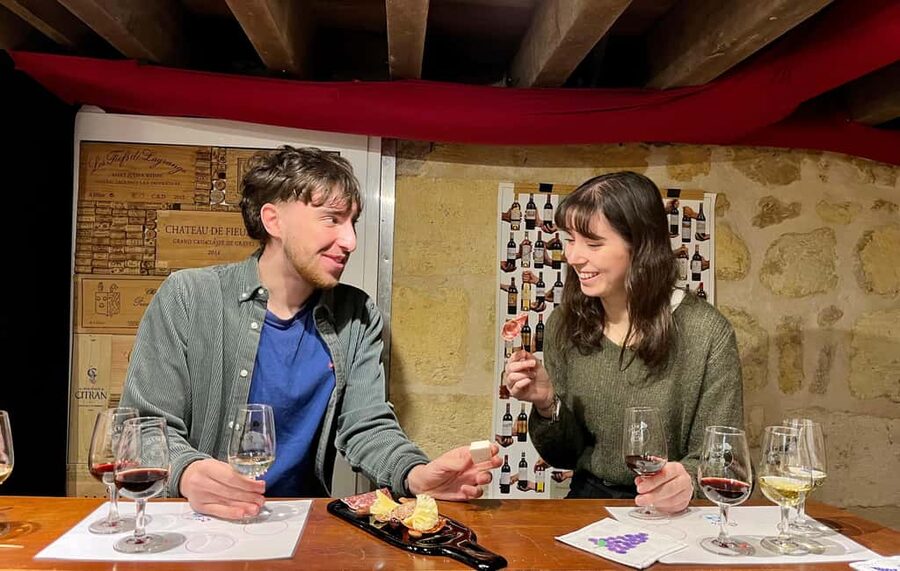
The mystery glass adds a small game to the class. You taste before you know exactly what is in front of you, then use the clues from aroma, body, acidity, tannin, and finish to form an opinion.
That exercise is more useful than it may sound. Labels can influence expectations. A familiar appellation or impressive producer name can make you think a wine tastes better before you have actually tasted it. A blind-style comparison asks you to start with your senses.
The session also includes a blending exercise. You can see how combining wines changes flavor and depth, which is central to understanding Bordeaux. A blend is not simply a compromise between grape varieties. It can be a deliberate way to balance fruit, tannin, acidity, aroma, and ageing potential.
This is where the class offers something beyond a standard tasting flight. You are not just receiving information about Bordeaux. You are testing how winemaking decisions affect what you feel in the glass.
More Wine Tours in Bordeaux
- Saint Emilion Day Trip with Sightseeing Tour & Wine Tastings from Bordeaux
★ 5.0 · 1,120 reviews - Saint-Émilion: Grand Cru Classé Winery Visit and Tasting
★ 4.6 · 1,118 reviews - Saint Emilion Half-Day Trip with Wine Tasting & Winery Visit from Bordeaux
★ 4.5 · 1,034 reviews - From Bordeaux: St. Emilion Village Half-Day Wine Tour
★ 4.7 · 728 reviews
Charcuterie makes the wine lessons practical
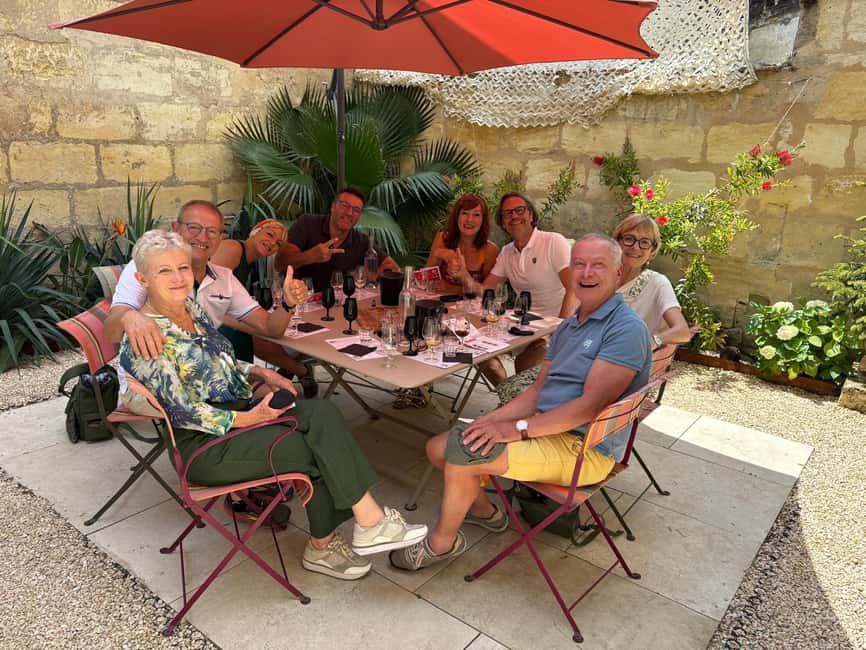
Each wine is paired with artisanal charcuterie. The pairing is designed to show how food changes your impression of wine, not merely to provide snacks between pours.
Fat and salt can soften the impression of tannin. A structured red may seem easier to drink with food, while a softer wine can feel more fruit-forward beside the same bite. The precise charcuterie selection can vary, but the central lesson remains clear: wine is often judged at the table, not in isolation.
I especially like this approach for people who want useful advice for meals back home. You learn to ask practical questions. Is the wine too firm for this dish? Does the food need more acidity? Does a richer wine work better with a salty or fatty bite? Those are more useful questions than simply deciding if a bottle is good or bad.
The food also gives the hour a social rhythm. You taste, nibble, discuss, and return to the glass. That helps the class feel relaxed rather than academic.
The setting changes with the season
The tasting can happen in one of three settings: a stone-built tasting room, a private courtyard, or an underground cellar. Each has a different feel.
The cellar setting gives the experience a traditional Bordeaux mood, with cool air and old-world atmosphere. A courtyard may feel lighter and more open, especially in pleasant weather. The indoor room offers a dependable setting when conditions are less favorable.
You do not choose the room in advance based on the information provided, so I would treat the setting as a pleasant variable rather than the main reason to book. The real value is in the teaching and the comparison of wines. Still, the small cellar has been a memorable part of the experience for some people, especially when paired with the aroma game and close conversation.
What you take home besides wine
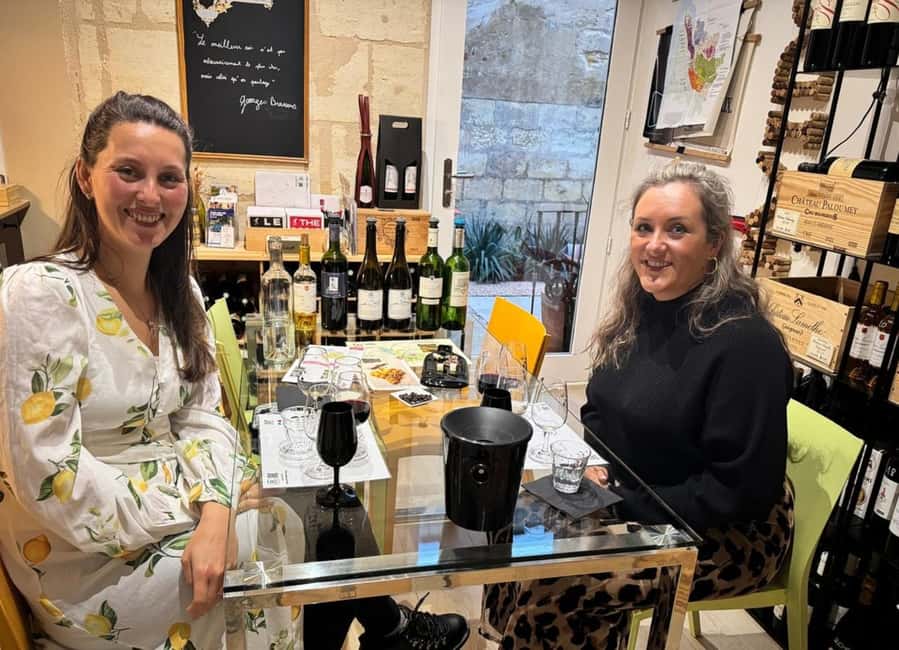
A personal tasting booklet is included. It covers Bordeaux wines and the basic tasting method, giving you something concrete to refer to after the class.
This is a modest but useful addition. Wine information can disappear quickly after a holiday, especially when you have visited several châteaux and tasted many bottles. A booklet lets you record what you liked, review the main terms, and continue practicing at home.
Wines tasted during the class are available for purchase on site. That is handy if one of the bottles suits your taste or you want to share the discovery with friends and family. You are not required to buy anything, and the purchase option works best as a convenience rather than a sales pitch.
If someone in your party prefers white wine, the provider can arrange a Bordeaux white wine tasting with advance notice. That makes the experience more flexible for mixed groups, though you should contact them before booking rather than assume the red tasting will automatically change.
Is $46 good value for one hour?
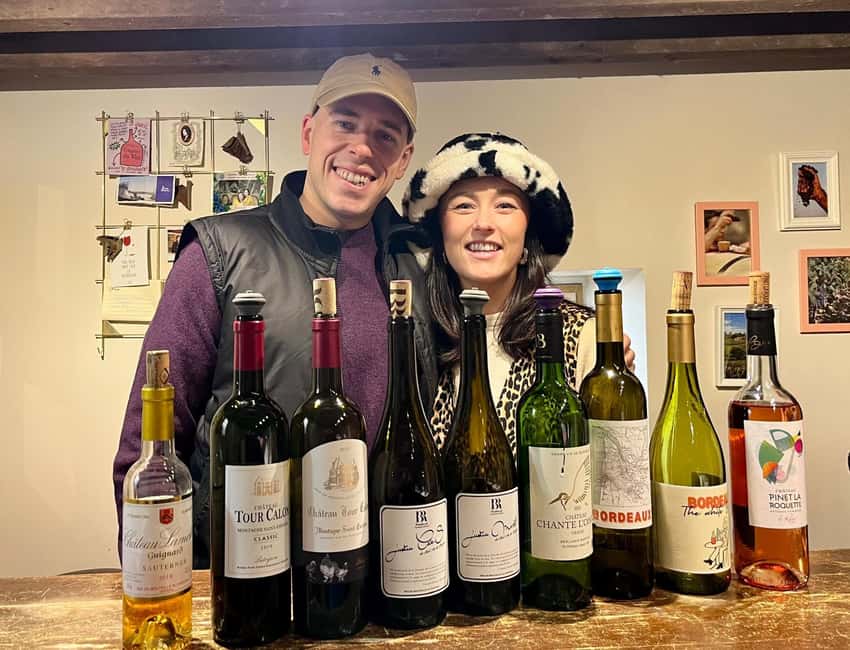
At $46 per person, the price is fair for Bordeaux, particularly because the session includes four red wine pours, a mystery glass, charcuterie, the aroma game, and a booklet.
The strongest value comes from the instruction. A simple tasting with four glasses can leave you with pleasant flavors but little understanding. Here, the wines have a teaching role, and the guide explains how appellation, grape, blending, terroir, and ageing shape the result.
The short duration keeps the commitment easy. You can fit it between sightseeing, dinner, or a longer wine-country outing. People who have already spent half a day visiting Médoc and Saint-Émilion may find this class especially useful because it pulls those regional differences together in one room.
There is a limit, of course. Four wines and a mystery glass in one hour means the pace cannot be leisurely. If you want long estate visits, vineyard walks, barrel rooms, or a full meal, this is not that kind of activity. It is a compact lesson, not a full-day wine tour.
Still, the format works well for a first introduction. The top rating of 5 out of 5 from 72 ratings reflects the experience’s strongest qualities: clear teaching, kind hosts, good wine, and a price that feels reasonable for what is included.
Who will enjoy this tasting most?
I would recommend it to first-time Bordeaux visitors who want a foundation before buying bottles or booking a larger wine-country excursion. It is also a good choice if you have limited time in the city but still want more than a quick pour at a wine bar.
Couples, solo visitors, and small groups should fit comfortably within the six-person limit. The conversational format works well if you enjoy asking questions rather than listening to a long prepared speech.
It also suits people who think wine tasting is too formal. The aroma game and charcuterie pairing make the session active and social. You can learn without pretending to detect twelve different flowers in a single sip.
Experienced wine drinkers may enjoy the mature bottle, the blending exercise, and the chance to compare Bordeaux styles in a focused way. However, if you already know the region well, you may want to ask about the exact wines being poured before booking. The class is introductory in spirit, even though the subject matter can go quite deep.
Practical booking advice
The class is offered in English, French, and Spanish. The maximum group size is six, which is worth noting if you want a quiet session or have a small private party.
The provider asks larger groups of more than six participants to get in touch directly. That does not guarantee a specific arrangement, but it is the right first step for a family gathering, wedding group, or company outing.
You can cancel up to 24 hours in advance for a full refund. A reserve-now, pay-later option is also available, which helps if your Bordeaux schedule is still shifting.
Allow enough time to find the gray door behind the building. The location is close to tram A, but the entrance is not presented as a prominent street-front shop. I would arrive a few minutes early rather than rush in while everyone is already smelling the first glass.
Should you book this Bordeaux wine class?
Book it if you want a friendly, compact lesson in Bordeaux reds rather than a grand château visit. The best reasons are the six-person group, the clear Left Bank and Right Bank comparison, the useful food pairing, and the guides’ warm teaching style.
Skip it if your priority is vineyard scenery, estate architecture, or a longer countryside excursion. You will not get hotel transport or a full meal, and one hour leaves little room for slow tasting.
For most visitors staying in Bordeaux, I think the class is a smart use of time and money. It gives you the basic map of the region, a better way to taste, and enough practical knowledge to make the rest of your wine experiences more rewarding.
FAQ
How long does the Bordeaux wine tasting last?
The class lasts one hour. Check the available starting times when booking.
How many wines will I taste?
You will taste four Bordeaux red wines and one mystery glass.
Is charcuterie included?
Yes. The experience includes wine and food pairing with artisanal charcuterie.
Where does the tasting take place?
The meeting point is 25 Avenue Thiers, 33100 Bordeaux, about 100 meters from tram A at Stalingrad. The tasting room is behind a building, beside the gray door near the Guy Hoquet panel.
What languages are available?
The live guide can conduct the experience in English, French, or Spanish.
Is the tasting suitable for beginners?
Yes. The session is designed for curious beginners as well as people who already enjoy wine. You learn basic tasting methods, grape varieties, appellations, blends, and food pairing.
Is a booklet included?
Yes. You receive your own booklet about Bordeaux wines and tasting methods.
Can I arrange a white wine tasting instead?
If someone in your group prefers white wine, a Bordeaux white wine tasting may be arranged. You should notify the provider in advance.
More Hands-On Sessions in Bordeaux
- Bordeaux: Introduction to Bordeaux Wines Tasting Workshop
★ 4.8 · 196 reviews - Bordeaux Super Saver Wine Tasting class and St Emilion region
★ 5.0 · 184 reviews - Bordeaux Wine Masterclass: Blending workshop with appetizer
★ 5.0 · 113 reviews - Bordeaux: Guided Bordeaux Wine Tasting Class with 6 Wines
★ 4.9 · 75 reviews
Recently added in Bordeaux
- Discover Braastad Cognac★ 5.0 · 52 reviews
- Au Cœur du Château – VSOP D’USSÉ & XO BARON OTARD★ 4.5 · 108 reviews
- retro road trip/ Méhari, 2CV & Burton in Rochefort, La Rochelle★ 5.0 · 28 reviews
- Saint-Emilion Food and Wine Day Tour★ 5.0 · 323 reviews
- Saint Emilion Full Day Wine and Bike Tour★ 5.0 · 167 reviews
- Bordeaux bike tour “The Best of Bordeaux”★ 5.0 · 164 reviews
- Virtual Room Bordeaux – 1st team virtual reality experience★ 5.0 · 47 reviews
- Luxurious full day Bordeaux wine tour in a Tesla★ 4.5 · 31 reviews
Wine Tours, compared.
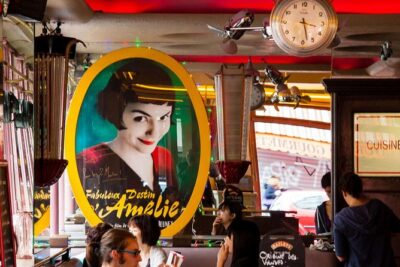
Montmartre Hill French Gourmet Food and Wine Tasting Walking Tour
Read our review →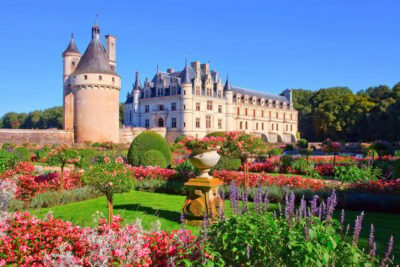
Loire Valley Castles Day Trip With Wine Tasting
Read our review →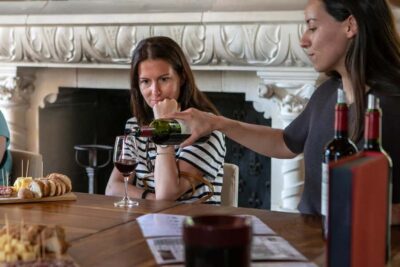
Afternoon Saint-Emilion Wine Tasting & snack
Read our review →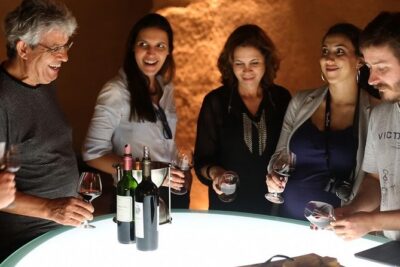
Medoc or Saint Emilion Wine Tasting and Chateau from Bordeaux
Read our review →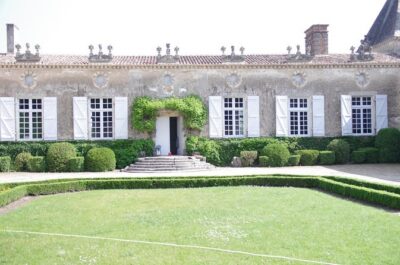
Saint Emilion Day Trip with Sightseeing Tour & Wine Tastings from Bordeaux
Read our review →
Saint-Émilion: Grand Cru Classé Winery Visit and Tasting
Read our review →
Saint Emilion Half-Day Trip with Wine Tasting & Winery Visit from Bordeaux
Read our review →Browse the lists this tour appears in