
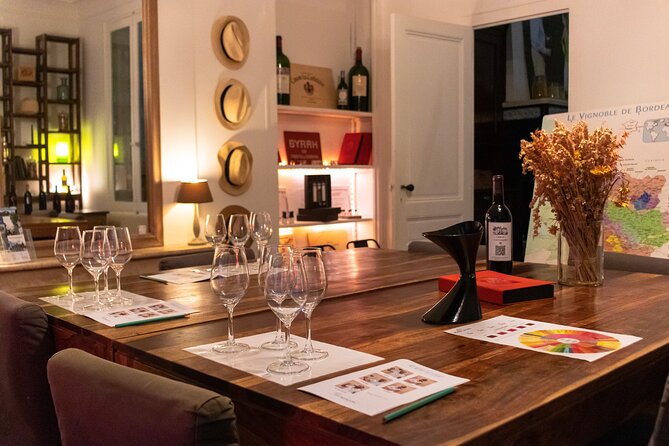
REVIEW · WORKSHOPS
Bordeaux Wine Masterclass: Blending workshop with appetizer
Wine makes Bordeaux easier to understand. This 90-minute workshop turns French wine jargon into useful skills, with regional tasting, label reading, aroma exercises, and a hands-on Bordeaux blend. I especially like the small group of up to 12 and the chance to make your own Merlot and Cabernet Sauvignon blend.
I also like the relaxed food pairing: cheese, cured meats, fresh bread, and chocolate give the tasting some welcome substance. The main caution is that the timing and wine count are not perfectly consistent: the tour is listed as about 1 hour 30 minutes, while the description calls it a 2-hour workshop, and the materials promise either seven or eight wines.
In This Review
- Key points to know before booking
- Starting at 10:30 in central Bordeaux
- French wine basics before the glasses arrive
- Tasting seven or eight French wines
- Cheese, charcuterie, bread, and chocolate
- The Bordeaux blending workshop
- A relaxed class led by a wine professional
- Is $54.42 a fair price?
- Who will get the most from this Bordeaux class?
- Booking, timing, and cancellation details
- Should you book the Bordeaux wine masterclass?
- FAQ
- Where does the Bordeaux wine masterclass begin?
- What time does the experience start?
- How long does the workshop last?
- How many wines are included?
- What regions are represented in the tasting?
- Is food included?
- Can children attend the wine tasting?
- What happens if I need to cancel?
Key points to know before booking
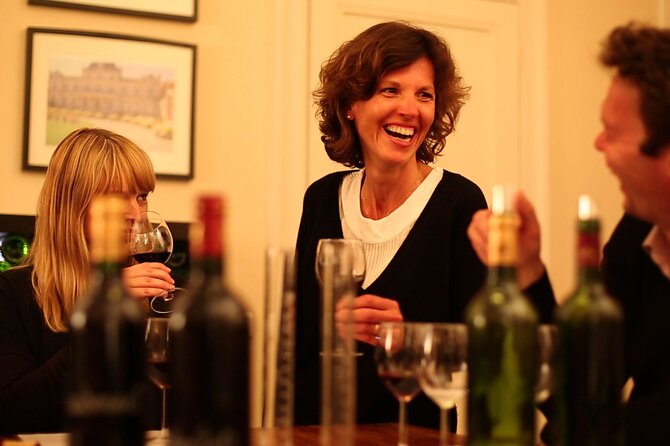
- You make your own Bordeaux blend: Compare Merlot and Cabernet Sauvignon, then create a personal combination.
- The class goes beyond Bordeaux: Tastings may include Burgundy, Côtes du Rhône, Bordeaux, and Loire Valley wines.
- Expect a seated, social lesson: The setting is relaxed, and the guide encourages questions and participation.
- Food is included, but it is an appetizer platter: Plan on cheese, cured meat, bread, and chocolate, not a full meal.
- The group is capped at 12 people: That keeps the teaching personal without making the activity feel private.
- The price is $54.42 per person: For several French wines, instruction, food, and a blending exercise, that is a fair city activity.
Starting at 10:30 in central Bordeaux
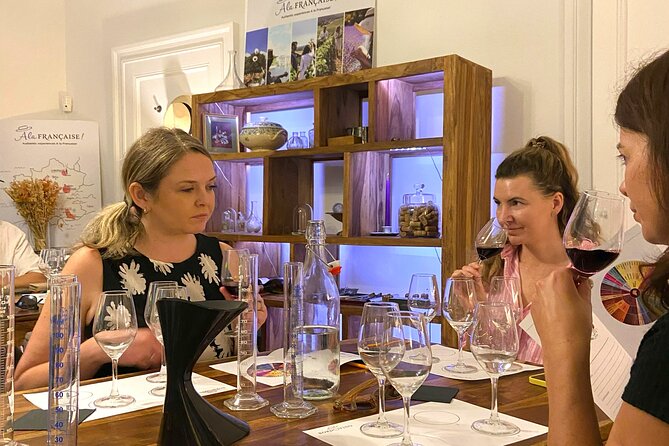
You meet at 3 Rue d’Enghien, 33000 Bordeaux, at 10:30 am. The class ends back at the same location, so you do not need to arrange a taxi, shuttle, or return transport.
That simple setup is useful on a Bordeaux morning. You can fit the class into a day of sightseeing, use it as an introduction before visiting nearby wine country, or schedule it early in your stay so the rest of your wine shopping makes more sense.
The activity is offered in English. French is not offered as part of the experience, so English-speaking visitors should be comfortable with a lesson that uses wine vocabulary, regional names, and tasting descriptions.
The operator says the class accepts most participants and limits the group to 12. That is a good middle ground. You get the energy of tasting with other wine fans, but the guide should still have time to answer individual questions.
One practical note matters here. The tour summary gives a duration of approximately 1 hour 30 minutes, while the detailed description refers to a 2-hour workshop. I would allow two hours in your schedule, especially if you have a train, lunch reservation, or museum booking afterward.
More hands-on sessions in Bordeaux:
- Bordeaux: Introduction to Bordeaux Wines Tasting Workshop
★ 4.8 · 196 reviews - Bordeaux Super Saver Wine Tasting class and St Emilion region
★ 5.0 · 184 reviews - Bordeaux: Guided Bordeaux Wine Tasting Class with 6 Wines
★ 4.9 · 75 reviews
French wine basics before the glasses arrive
The class begins with an overview of French wine regions. Instead of treating Bordeaux as an isolated wine world, the guide places it beside Burgundy, Côtes du Rhône, and the Loire Valley.
That comparison is valuable because French wine is often organized around place rather than grape variety. You will hear terms such as terroir and appellation, then connect those ideas to the wines in front of you.
For many visitors, this is the most useful part of the lesson. French labels can feel cryptic when they highlight a village or appellation instead of putting the grape in large print. Learning how to read the region, appellation, and other label details gives you a better chance of buying a bottle you actually want later.
The teaching is designed for all levels. You do not need to know the difference between the Left Bank and Right Bank before arriving, and you should not feel embarrassed if you cannot identify a wine by smell. The goal is to give you a working vocabulary, not to test your credentials.
At the same time, experienced wine drinkers are not left out. The class includes blending, blind tasting, and discussion of how grape varieties and winemaking choices affect the final wine. One especially useful part is seeing how two wines change when combined, rather than only tasting finished bottles.
Tasting seven or eight French wines
The tasting is the heart of the workshop. The included details promise seven different wines, while the main description says you will sample eight, so expect at least seven and possibly eight pours.
The selection is not limited to Bordeaux. You may taste wines connected with Burgundy, Côtes du Rhône, the Loire Valley, and Bordeaux. That wider French lineup helps you notice differences in aroma, color, body, acidity, and flavor instead of assuming every French red tastes like a Bordeaux.
The guide explains how to look at a wine before tasting it. Color can offer clues about age or grape variety, though it is not a complete answer. You will also work on identifying aromas and flavors, then learn how to describe what you like with more precision.
This is a practical skill. Saying a wine is simply good does not help much when you are choosing a bottle. Being able to say you prefer a lighter red with fresh fruit, or a fuller wine with firmer structure, is far more useful in a shop or restaurant.
The tasting can also include a blind exercise. That adds a playful challenge and helps you focus on what is actually in the glass rather than relying on the label or price. It is a good reminder that tasting is partly trained observation and partly personal preference.
The guides receive especially strong praise for making the information easy to follow. Gabriel, Victoire, Fabien, Chloé, Dorian, Carol, Hugo, Rémi, Hector, and others are mentioned by name in the feedback, with repeated approval for clear explanations, patience, humor, and comfort answering questions.
The exact guide will vary. That means you should book for the structure of the class, not for a specific instructor, unless the booking system clearly confirms who will lead your session.
Cheese, charcuterie, bread, and chocolate
Wine tastes better with something on the table, and this class includes a French appetizer platter. Expect cured meats, cheese, fresh bread, and chocolate.
I see this as a useful pairing lesson rather than a meal. Food can soften the effect of alcohol and give you a chance to notice how a wine changes beside salt, fat, cream, or sweetness. Chocolate brings a different test, since not every wine handles it well.
The platter is a welcome part of the $54.42 price, but you should not arrive expecting lunch. One piece of feedback specifically points out that the food is limited compared with the amount of wine. Have a proper meal before or after if you need something substantial.
The informal food setting also helps the class feel less like a lecture. You can talk with the people at your table, compare impressions, and ask the guide why a certain wine works better with cheese than with chocolate.
A few more Bordeaux outings to set side by side
- Bordeaux: Cité du Vin Entry Ticket and Wine Tasting
★ 4.6 · 3,885 reviews - Bordeaux: River Garonne Cruise with Glass of Wine and Canelé
★ 4.5 · 3,630 reviews - From Bordeaux: Afternoon Saint-Emilion Wine Tasting & snack
★ 4.8 · 1,581 reviews - Medoc or Saint Emilion Wine Tasting and Chateau from Bordeaux
★ 5.0 · 1,415 reviews
The Bordeaux blending workshop
The class becomes most distinctive when you create your own Bordeaux blend. You work with Merlot and Cabernet Sauvignon, two local Bordeaux varieties, and compare how each contributes to the final mixture.
This is where the earlier lessons become concrete. Instead of hearing abstract descriptions of structure, fruit, softness, or tannin, you can taste the components and see how the proportions affect the result.
The exercise also introduces the logic behind Bordeaux blends. A finished wine is not always about one grape showing off on its own. Blending can balance texture, aroma, freshness, and strength.
The activity helps explain the difference between Bordeaux’s two broad bank traditions, often discussed as the Left Bank and Right Bank. The experience does not promise a full vineyard tour or a detailed château visit, but the blending session gives you a clear reason why Bordeaux wines are often made from more than one variety.
I like this part because it replaces passive tasting with decision-making. You are not merely told that blending matters. You get to make a choice, taste the result, and decide which balance suits you.
Do not expect to produce a bottle for long-term aging or leave with a professional winemaker’s qualification. The included diploma is a keepsake from the workshop, not a formal sommelier certificate. Still, the experiment can make later tastings much more interesting because you will understand what you are looking for in the glass.
A relaxed class led by a wine professional
The atmosphere is informal, seated, and social. The guide teaches, pours, answers questions, and keeps the group involved rather than delivering a stiff presentation.
That style suits Bordeaux well. Wine can seem overly serious when every word is treated like an exam answer. Here, the emphasis is on learning enough to become more confident, while keeping the mood friendly.
The strongest praise focuses on the guides’ teaching style. Participants single out Gabriel for care and detailed answers, Victoire for friendliness, Fabien for encouraging involvement, Chloé for making the information meaningful, and Carol for patience.
The lesson also works for mixed abilities. Beginners can learn the basics without needing prior knowledge, while experienced drinkers can use the blind tasting and blending exercise to test their own assumptions. One useful detail from the feedback is that people who already knew wine still found new material in the discussion of regions, grapes, and winemaking.
There is one small point to keep in mind. The experience is advertised with a professional sommelier guide, but one person felt the instructor did not match that description. I would treat the class as a guided educational tasting rather than a guarantee that every session will be led by a certified sommelier.
Is $54.42 a fair price?
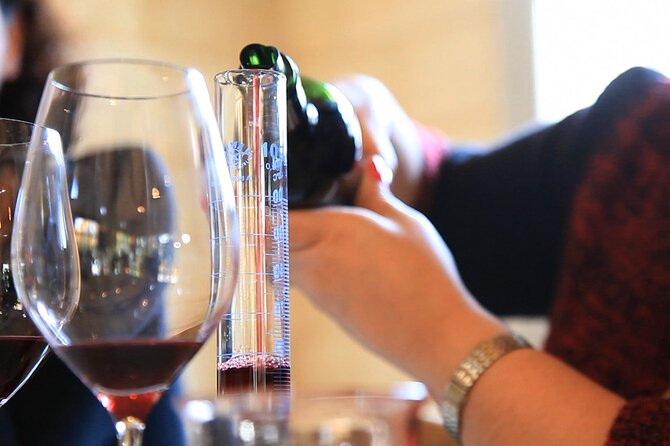
At $54.42 per person, the value is solid if you want instruction along with your wine. The fee covers the guide, at least seven wines, the appetizer platter, the blending activity, and the diploma.
A standard bar tasting might give you several pours, but not necessarily a regional lesson, label guidance, aroma practice, or a chance to make a blend. A formal vineyard excursion would offer a different setting, but it would also take much longer and usually require transport outside Bordeaux.
This class makes the most sense for someone who wants a compact introduction. It gives you enough context to understand future château visits without asking you to commit to a full day in the Médoc or Saint-Émilion.
The value is weaker if you want a large food spread, extensive vineyard scenery, or a bottle-making activity that continues beyond the session. This is a city-based workshop, not a countryside wine tour.
It is also worth booking ahead. The activity is booked, on average, 29 days before the start date. Since the group limit is 12, popular morning sessions can fill well before your arrival.
Who will get the most from this Bordeaux class?
I would recommend it most strongly to first-time visitors who want to understand French wine before buying bottles or visiting estates. It is also a good fit for couples, small groups of friends, and celebrations such as a birthday trip or hen party.
The format works particularly well if you are unsure about wine terminology. You can ask basic questions, taste several styles, and leave with language that helps you order more confidently.
Wine enthusiasts should enjoy it too, especially if they like blind tasting or want to understand blending in a hands-on way. The class is not only a beginner’s lecture.
It is less suitable for anyone under 18, since the minimum drinking age is 18. Pets are not allowed, and there is no hotel pickup or drop-off, so you must make your own way to and from Rue d’Enghien.
If you dislike group activities, the maximum of 12 may still feel too social. If you prefer a private château visit, vineyard walk, or long meal, this compact indoor workshop will not replace that.
Booking, timing, and cancellation details
You receive confirmation when you book, and the ticket can be used on a mobile device. The stated start time is 10:30 am.
Free cancellation is available up to 24 hours before the start time for a full refund. Changes or cancellations inside that 24-hour window are not accepted or refunded, and the cut-off follows local Bordeaux time.
The activity requires a minimum number of participants. If that minimum is not reached and the class is canceled, you are offered another date or experience, or a full refund.
Should you book the Bordeaux wine masterclass?
Book it if you want a friendly, compact lesson with real tasting practice and a memorable blending exercise. The strongest reasons are the small group, the range of French regions, the practical label and aroma advice, and the chance to compare Merlot with Cabernet Sauvignon in your own blend.
I would book it early, especially for a particular morning during a short Bordeaux stay. Allow two hours despite the shorter estimate, eat something before or after, and think of the food as a pairing platter rather than lunch.
Skip it if your priority is vineyard scenery, château architecture, or a full-day countryside outing. For $54.42, though, this is a sensible way to get oriented, taste widely, and make the rest of your Bordeaux wine adventures more rewarding.
FAQ
Where does the Bordeaux wine masterclass begin?
It begins at 3 Rue d’Enghien, 33000 Bordeaux, France.
What time does the experience start?
The scheduled start time is 10:30 am.
How long does the workshop last?
The tour summary gives an approximate duration of 1 hour 30 minutes, while the detailed description calls it a 2-hour workshop. Allow about two hours when planning your day.
How many wines are included?
The included details promise seven different wines. The workshop description says eight wines, so you should expect at least seven and possibly eight French wines.
What regions are represented in the tasting?
The class may include wines from Burgundy, Côtes du Rhône, Bordeaux, and the Loire Valley.
Is food included?
Yes. The included French appetizer platter contains items such as cheese, cured meat, fresh bread, and chocolate.
Can children attend the wine tasting?
No. The minimum drinking age is 18.
What happens if I need to cancel?
You can cancel up to 24 hours before the start time for a full refund. Cancellations or changes made less than 24 hours before the experience are not accepted or refunded.
Recently added in Bordeaux
- Discover Braastad Cognac★ 5.0 · 52 reviews
- Au Cœur du Château – VSOP D’USSÉ & XO BARON OTARD★ 4.5 · 108 reviews
- retro road trip/ Méhari, 2CV & Burton in Rochefort, La Rochelle★ 5.0 · 28 reviews
- Saint-Emilion Food and Wine Day Tour★ 5.0 · 323 reviews
- Saint Emilion Full Day Wine and Bike Tour★ 5.0 · 167 reviews
- Bordeaux bike tour “The Best of Bordeaux”★ 5.0 · 164 reviews
- Virtual Room Bordeaux – 1st team virtual reality experience★ 5.0 · 47 reviews
- Luxurious full day Bordeaux wine tour in a Tesla★ 4.5 · 31 reviews
Workshops, compared.
Paris Cooking Class and Lunch with Wine plus Market Visit Option
Read our review →
Paris Croissant Small-Group Baking Class with a Chef
Read our review →
Fragonard Eze: Perfume Making Class and Factory Tour
Read our review →
Grasse: Perfume Making Class and Fragonard Factory Tour
Read our review →Browse the lists this tour appears in