
REVIEW · MUSEUMS
Paris Museum Pass: 2, 4, or 6 Days
Paris rewards curiosity. The Paris Museum Pass gives you free admission to more than 60 museums and monuments, from the Louvre and Orsay to Versailles and the Arc de Triomphe. I like the freedom to pop into a museum without buying another ticket, and I like the time saved at several major sights.
The main catch is that skip the ticket line does not mean skip every queue. You must reserve a free timeslot for the Louvre, and reservations are also required at several other attractions. The pass also runs on consecutive calendar days, so a late afternoon start still counts as day one.
For $129 per person, the pass can be a strong deal if you visit several paid sights in a short stay. It is less useful if your Paris plan centers on only two or three major attractions, or if you prefer slow mornings and long café breaks.
In This Review
- Key points to know before buying
- What the Paris Museum Pass actually gives you
- Picking up the pass near the Louvre
- The Louvre: the biggest benefit with the biggest warning
- Orsay, Orangerie, and the Seine-side art route
- Arc de Triomphe and Sainte-Chapelle
- Notre-Dame, the Conciergerie, and central Paris
- The smaller Paris museums that make the pass flexible
- Versailles and the attractions outside Paris
- Choosing two, four, or six consecutive days
- Can the pass really save money?
- Adding the optional Seine river cruise
- How I would plan a pass day
- Who should buy the Paris Museum Pass?
- FAQ
- How many days is the Paris Museum Pass valid?
- Does the pass include the Louvre?
- Do I need reservations for any other museums?
- Where do I collect the pass?
- Does the pass cover Versailles?
- Is a Seine river cruise included?
- Should you book the Paris Museum Pass?
Key points to know before buying
- The Louvre still needs a reservation: Use the link on your voucher to reserve a Louvre timeslot before you go. Entry cannot be guaranteed during renovation work and heavy crowds.
- Your clock starts on a calendar day: Begin at 2:00 p.m., and that date counts as your first day, even if you only have a few hours left.
- Pickup is near the Louvre: Collect the physical pass at the tour office near the Louvre, about a 10-minute walk away. It is open seven days a week from 9:00 a.m. to 4:00 p.m.
- Versailles requires planning: The pass covers the Château de Versailles and Trianon museums, but the gardens may require an extra payment. Reserve a time in advance when required.
- Line savings can be the real value: Even when you do not save a great deal on admission fees, bypassing ticket-buying queues at the Orsay and Arc de Triomphe can save precious sightseeing time.
- The Seine cruise is optional: A river cruise is included only with the selected pass option. Check the boat company and meeting point carefully, since several cruise operators use different docks.
What the Paris Museum Pass actually gives you
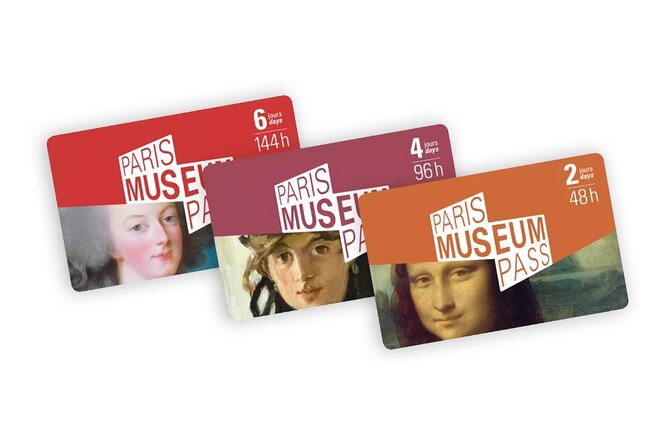
This is not a guided tour, and there is no fixed route. You receive a pass that works at participating museums and monuments during your chosen two, four, or six consecutive days.
Admission generally covers the permanent exhibitions. Temporary exhibitions, special events, audio guides, gardens, and other extras may cost more, so check each attraction before you arrive. The list includes the major Paris icons, but it also reaches smaller museums that are easy to miss when you are buying one ticket at a time.
I find that flexibility useful. You can visit the Louvre in the morning, stop at the Orangerie later, and change your plan if your feet or the weather object. The pass encourages you to try places you might otherwise skip because the individual admission fee feels too high.
The strongest value comes from combining expensive monuments with several museums. Five or more paid visits can make the cost balance work well, especially when you also use the shorter entry queues.
More museums in Paris:
- Paris: Louvre Museum Timed-Entrance Ticket
★ 4.6 · 71,977 reviews - Louvre Museum Masterpieces Guided Tour with Access
★ 4.5 · 12,023 reviews - Paris: Louvre Museum Entry Ticket With Host and River Cruise
★ 4.6 · 9,926 reviews
Picking up the pass near the Louvre
The physical pass must be collected at the tour office near the Louvre. The office is open daily from 9:00 a.m. to 4:00 p.m., and the location is convenient if the Louvre is your first stop. It is less convenient if you are arriving from another part of Paris and want to begin sightseeing early.
I would collect it the day before your planned museum schedule if your timing allows. That lets you start early on day one instead of spending part of the morning walking to the office. The pickup service is also a useful place to confirm the attractions that require reservations.
The pickup process itself is usually simple, but the physical format is a minor weakness. Several pass holders would prefer a digital version instead of making a special trip to collect it. Keep the pass safe once you have it, since losing it could disrupt your museum plans.
The Louvre: the biggest benefit with the biggest warning
The Louvre is the famous reason many people buy this pass. You can use the pass for the permanent collection, including the galleries around the Mona Lisa, but you must reserve a timeslot in advance through the link provided with your voucher.
This reservation is essential. Arriving with only the pass does not guarantee entry, and crowd levels can be intense. Renovation work and the sheer number of people visiting can also affect access.
The Louvre is too large for a casual two-hour visit if you want to see more than a few famous works. I suggest choosing a short list before you arrive, then treating everything else as a bonus. The pass makes return visits possible during its validity period, but your consecutive-day limit may not leave room for a second long Louvre session.
This is where the pass can be misunderstood. You may avoid the ordinary ticket-buying line, but you still need to follow the museum’s reservation rules and security procedures. In the busiest periods, the pass is helpful, not magical.
Orsay, Orangerie, and the Seine-side art route
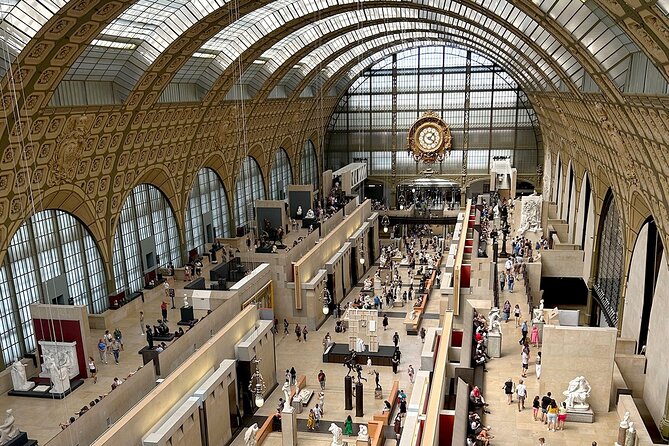
The Musée d’Orsay is one of the best stops for pass users. Its former railway-station setting and celebrated collection of Impressionist and Post-Impressionist art make it an easy choice for both first visits and repeat trips.
The pass can provide faster entry than buying a ticket on arrival, though high-season queues may still form. Some summer visitors have waited about half an hour in the sun even with the pass, while people with timed individual tickets moved faster. If you are visiting at a busy time, check the museum’s current entry procedure before you go.
The Musée national de l’Orangerie is smaller and easier to pair with another central Paris sight, but it requires a reservation. You cannot simply rely on the pass and turn up expecting immediate entry. Reserve as early as the system allows, especially for summer dates.
I like grouping Orsay and Orangerie on the same day because both fit naturally into a central Paris walking plan. Just avoid filling the whole day with large museums. Two major collections can leave you tired and less able to appreciate the art.
A few more Paris outings to set side by side
- Six day French Cooking Course in Brittany
★ 5.0 · 30 reviews
Arc de Triomphe and Sainte-Chapelle
The Arc de Triomphe is one of the pass’s most practical inclusions. Admission normally involves a ticket and a climb, while the pass can let you move past the ticket line. The rooftop view gives you a clear look at the avenues radiating from the monument and makes this stop feel different from a standard museum visit.
At peak times, that shorter entry can be worth a lot. Some pass holders have used the pass mainly for the Arc and Orsay and still felt the time savings justified the purchase.
Sainte-Chapelle is another major inclusion, but do not assume the pass guarantees a quick entrance. The chapel can have its own security and access controls, and the pass may not provide a shorter queue at busy times.
The chapel’s scale is intimate compared with Notre-Dame, but its stained glass rewards a slower visit. Pair it with the Conciergerie, which is also included, and you get two related historic sites in one compact area.
Notre-Dame, the Conciergerie, and central Paris
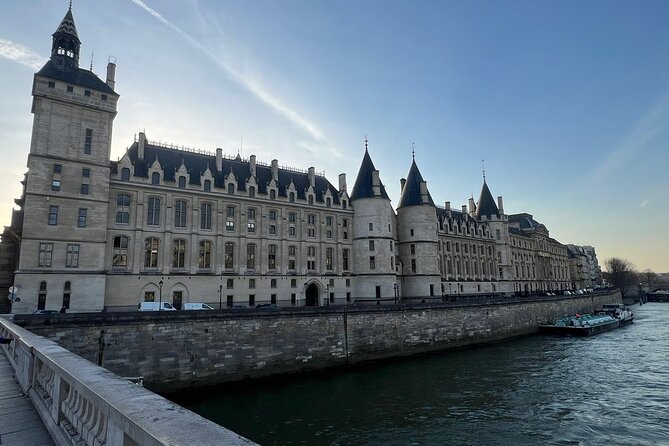
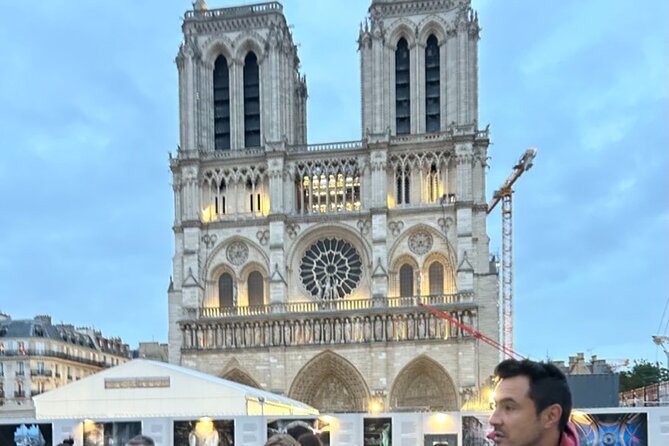
The pass includes the archaeological crypt beneath Notre-Dame and the towers of Notre-Dame, where available under current access rules. The Conciergerie is also covered, giving you an easy way to add more history around Île de la Cité.
Access conditions can change at popular monuments, so check current reservation instructions before setting your day around them. Large crowds can make Notre-Dame difficult to enter even when you hold the pass.
Nearby, you can also use the pass at the Panthéon, the Musée de Cluny, and the Musée national Eugène Delacroix. The Panthéon is especially useful for visitors who want architecture and national history without committing to another enormous art museum.
The Musée de Cluny offers a different pace, with medieval collections and the Roman baths that give the museum its full name. The pass works best here as an invitation to explore beyond the standard Paris checklist.
The smaller Paris museums that make the pass flexible
The list reaches far beyond the Louvre and Orsay. You can visit the Musée Rodin, the Musée Picasso Paris, the Musée Gustave Moreau, the Musée du quai Branly, and the Musée national d’Art moderne.
The Rodin Museum is a smart addition to a busy museum day because it offers a change of mood and setting. Picasso, Moreau, and the quai Branly each give you a different view of art and culture, so the pass is not limited to one period or style.
Other included options include:
- Musée de l’Armée and Napoleon’s tomb
- Musée des Arts et métiers
- Musée national des Arts asiatiques Guimet
- Musée de la Monnaie
- Musée de la Poste
- Musée des Égouts de Paris
- Musée de l’Ordre de la Libération
- Musée des Plans-reliefs
- Cité de l’Architecture et du Patrimoine
- Cité des Sciences et de l’Industrie
- Musée de l’Assistance Publique, Hôpitaux de Paris
- Musée de la Cinémathèque française and its cinema museum
- Chapelle expiatoire
- Crypte archéologique de Notre-Dame
- Sainte-Chapelle
You probably will not visit all of these. That is not the point. The pass gives you room to make a spontaneous choice when you are already nearby, and that can be more valuable than a rigid sightseeing schedule.
Versailles and the attractions outside Paris
The pass covers the Château de Versailles and the Trianon museums, making it a serious option for a longer Paris stay. Versailles can take much of a day, so I would be cautious about buying a two-day pass solely for this one excursion.
You should also check reservation requirements before traveling to Versailles. Arriving without the right timeslot can leave you waiting for a much later entry, or unable to enter during your valid pass period. The gardens may require an additional fee, so do not assume every part of the Versailles estate is included.
Other included destinations outside central Paris include:
- Château de Fontainebleau
- Château de Vincennes
- Château de Rambouillet
- Château de Maisons-Laffitte
- Château de Pierrefonds
- Château d’Écouen and the Musée national de la Renaissance
- Château de Compiègne
- Château de Malmaison and Bois-Préau
- Musée Condé at Château de Chantilly
- Basilique cathédrale de Saint-Denis
- Villa Savoye
- Musée de l’Air et de l’Espace
- Musée d’Archéologie nationale at Saint-Germain-en-Laye
- Musée national de la Céramique de Sèvres
- Musée départemental Maurice Denis
- Musée national de Port-Royal des Champs
- Abbaye royale de Chaalis
- Rodin’s home at Meudon
These sites are valuable if you have extra time and want more than central Paris. They are less useful if your trip is short, since travel to the outer destinations can reduce the number of Paris museums you can visit in the same pass period.
Choosing two, four, or six consecutive days
The two-day pass suits an energetic short break. You need a plan, since the pass begins on a calendar day and cannot be spread across separate dates. If you collect it late in the afternoon, you have already used day one.
The four-day pass gives you a better balance for a first Paris visit. You can fit in the Louvre, Orsay, Orangerie, Arc de Triomphe, Sainte-Chapelle, the Rodin Museum, and perhaps Versailles if you plan carefully.
The six-day pass is the easiest to use at a sensible pace. You can spread out large museums, add smaller collections, and set aside a full day for Versailles or another château. It is also the best choice if you want the pass to shape your trip rather than force every day into a race.
The missing three-day option is an odd limitation. A three-day stay can make either two days feel rushed or four days feel unnecessary, so compare the individual admission prices before choosing.
Can the pass really save money?
At $129 per person, the pass is not automatically a bargain. I would list the attractions you truly plan to visit, add their individual admission prices, and then consider the value of saved time.
The pass becomes more attractive when you visit more than five paid museums or monuments. It also works well for a six-day museum-focused trip, when several smaller visits can add up without extra payment.
The money calculation is only half the story. I value the freedom to enter a museum for a short visit without feeling that I wasted a full ticket price. Skipping ticket-selling queues at the Arc de Triomphe and Orsay can also return hours to your trip.
On the other hand, individual timed tickets may be faster than the pass queue at certain attractions during the high season. The pass can also feel expensive if you mainly want free churches, outdoor sights, shopping, cafés, or only a couple of major museums.
Children under 18 can enter public museums free, and European Union citizens under 26 may also qualify for free admission. They may still need a reserved timeslot, but they generally do not need this pass.
Adding the optional Seine river cruise
Some pass options include a Seine cruise. If you choose that version, the ride adds a pleasant break from galleries and gives you a different view of Paris.
Pay close attention to the boat company and meeting point. Several operators use different docks, and the wrong departure point can cost you time. The cruise does not necessarily need advance scheduling, depending on the operator, but you should confirm the instructions attached to your booking.
An evening ride can be particularly appealing for the city views, according to the practical advice shared by pass users. Treat it as a scenic pause rather than a substitute for the museum admission value.
How I would plan a pass day
I would reserve the Louvre first, then build the rest of the schedule around that fixed time. Add one large museum and one or two smaller sites nearby, rather than trying to conquer four enormous collections in a single day.
For example, you could pair the Louvre with the Orangerie if reservations line up, or combine the Arc de Triomphe with another museum later in the day. A Île de la Cité plan could include Sainte-Chapelle, the Conciergerie, and the Notre-Dame crypt.
Keep one flexible block in every pass period. That gives you room for a missed reservation, bad weather, a crowded entrance, or the simple need to sit down with a coffee. The pass rewards organization, but Paris is more enjoyable when your schedule has breathing space.
I would also check opening days and reservation rules immediately after booking. Different museums use different reservation systems, and some people have found country-code or language fields difficult when making online reservations. Do not leave all bookings until you are already in Paris.
Who should buy the Paris Museum Pass?
I would recommend it to you if you enjoy art, architecture, military history, royal residences, and monuments, and if you plan to visit several paid sites within two, four, or six consecutive days.
It is especially useful for first-time visitors who want the Louvre, Orsay, Arc de Triomphe, Versailles, and several additional museums. It also suits you if waiting in ticket lines irritates you more than following reservation instructions.
I would be cautious if your list contains only the Louvre and Orsay, if your trip includes long gaps between sightseeing days, or if you are traveling with children who already qualify for free public admission. The pass is also less compelling during a packed high-season period when timed individual tickets may offer faster entry at certain museums.
FAQ
How many days is the Paris Museum Pass valid?
You can choose a pass valid for two, four, or six consecutive calendar days.
Does the pass include the Louvre?
Yes, the pass includes the Louvre’s permanent exhibitions. You must reserve a Louvre timeslot in advance, and entry cannot be guaranteed during renovation work and periods of heavy attendance.
Do I need reservations for any other museums?
Yes. Reservations are mandatory for the Orangerie Museum, the Museum of the Art and History of Judaism, Hôtel de la Marine, and the Cité de l’architecture et du patrimoine. Other attractions may also have their own reservation procedures, so check before visiting.
Where do I collect the pass?
You must collect it at the tour office near the Louvre, about a 10-minute walk away. The office is open seven days a week from 9:00 a.m. to 4:00 p.m.
Does the pass cover Versailles?
Yes, it covers the Château de Versailles and the Trianon museums. The gardens may require an additional payment, and you should check whether a timed reservation is needed.
Is a Seine river cruise included?
A river cruise is included only when you select the pass option that offers it. Check the boat company and meeting point carefully because different operators use different departure locations.
Should you book the Paris Museum Pass?
Book it if you can name at least five included museums or monuments and will visit them during one continuous two, four, or six-day stretch. For a first Paris visit, the four-day pass is often the most practical compromise, while the six-day version suits a slower museum schedule and a Versailles day.
Do not buy it simply because the list is long. Make a short plan, reserve the required timeslots, and check the free-entry rules for anyone under 18 or eligible EU citizens under 26. Used with that bit of preparation, the pass can save both admission costs and the most valuable Paris currency of all, your time.
Recently added in Paris
- Private Transfers in Paris★ 5.0 · 75 reviews
- CDG – Euro Disney – CDG Two Way Private Shuttle Transfer★ 5.0 · 233 reviews
- Disneyland® Paris 1 Day Ticket with Transport from Paris★ 3.5 · 302 reviews
- Personalized Transport service from Disneyland to Paris★ 5.0 · 63 reviews
- Monet’s Gardens & House-Private Giverny Tour From Paris★ 4.5 · 137 reviews
- Guided tour Monet’s house and gardens/small group★ 4.5 · 68 reviews
- Giverny Monet House and Gardens Skip the line Walking tour★ 4.0 · 217 reviews
- Monet’s House and Garden & Giverny Village★ 4.5 · 39 reviews
Museums, compared.


Louvre Museum Masterpieces Guided Tour with Access
Read our review →
Louvre Museum Entry Ticket With Host and River Cruise
Read our review →
Les Invalides: Napoleon’s Tomb & Army Museum Entry
Read our review →
Louvre Museum – Exclusive Guided Tour (Entry Included)
Read our review →
Louvre Museum Hosted Entry and Mona Lisa Audioguide
Read our review →
Louvre Museum Tour Mona Lisa & Iconic Masterpieces
Read our review →
Louvre Museum: Skip-the-Line Small Group Guided Tour
Read our review →Browse the lists this tour appears in