
REVIEW · COOKING CLASSES
Paris: French Croissant Baking Class with a Chef
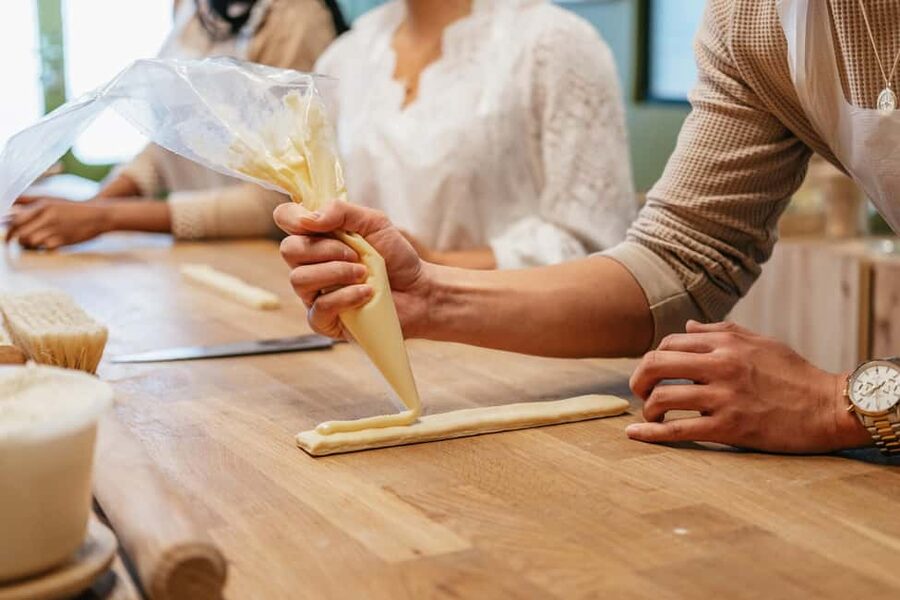
Fresh croissants are a fine way to meet Paris. At Maison Fleuret, you spend 150 minutes working with pastry, butter, chocolate, and professional chefs in a Left Bank studio. I like the small groups of up to eight and the fact that you make several pastries, not just one. The main consideration is price: at $159 per person, this is a hands-on cooking experience, not a quick demonstration.
I also like how useful the class feels. Chef Guillaume, Felix, Alice, Erika, Ke, and the other instructors are praised for clear, patient teaching, and many participants leave with pastries for the next few breakfasts. The class works well for families and teenagers, though you should know that people generally work in pairs, which can mean sharing with someone outside your group.
In This Review
- Key points before you book
- Why a croissant class is worth two and a half hours
- Arriving at Maison Fleuret on the Left Bank
- The first stage: dough, butter, and the hard part
- Shaping classic croissants and chocolate pastries
- Baking, tasting, and taking pastries home
- The value of a $159 Paris activity
- A family-friendly class with a relaxed mood
- What you can take home beyond the pastries
- How the class fits into a Paris itinerary
- Who should book this Maison Fleuret experience?
- Should you book the croissant class?
- FAQ
- Where does the croissant class take place?
- How long does the class last?
- Is the class taught in English?
- How many people are in each group?
- What pastries do you make?
- Is equipment provided?
- Is hotel transportation included?
Key points before you book
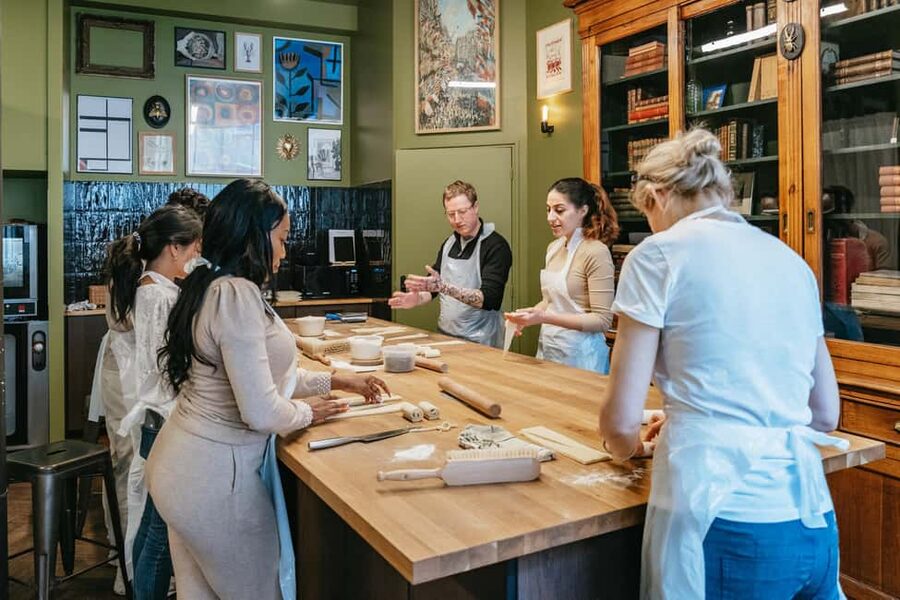
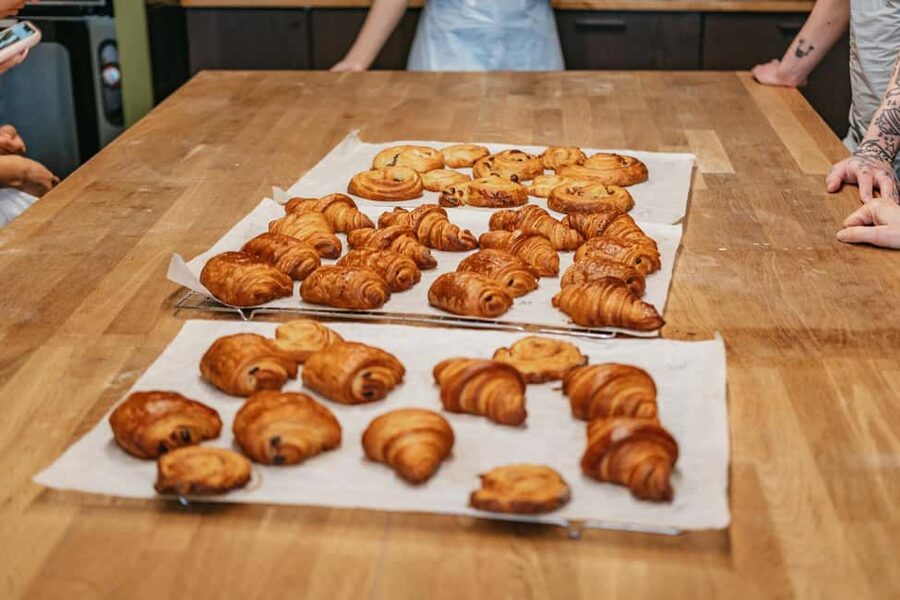
- You make more than plain croissants: The class also covers pain au chocolat and cinnamon swirls, sometimes called chocolate snails.
- The group is capped at eight: That gives you a better chance to ask questions and get help with tricky dough.
- The class is taught in English: The chef leads the full session in English and explains the process step by step.
- You take your baking with you: The class produces enough pastries to eat during your stay or carry back to your accommodation.
- The studio is near Notre Dame: The Left Bank meeting point makes this easy to pair with a day around the Île de la Cité and Latin Quarter.
- It is a good rainy-morning plan: The indoor setting, steady pace, and warm pastries make this a useful break from wet Paris weather.
Why a croissant class is worth two and a half hours
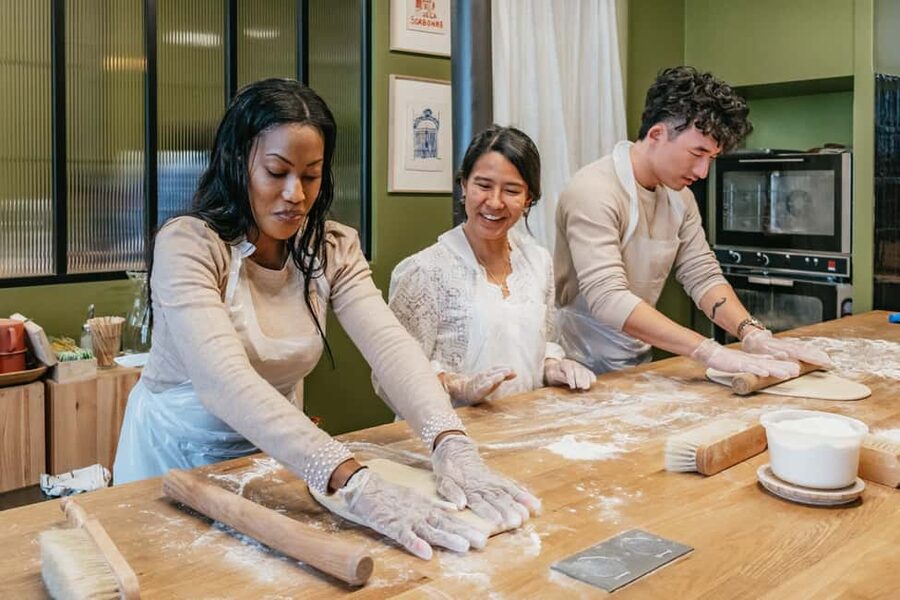
A croissant looks simple on a bakery shelf. Making one is another matter. The dough must be rolled, folded, shaped, rested, and baked so that the butter creates those delicate layers. This class gives you a practical look at the work behind one of France’s most familiar breakfast foods.
I like that the experience is not limited to eating a finished pastry. You handle the dough and practice the shaping technique yourself. That makes the croissant taste better at the end, partly because you now understand the work involved.
The class also places the pastry in a bit of French food history. You learn how the croissant gained wider popularity among Parisians and the French in the early 20th century. It is a small lesson, but it adds context to something you might otherwise grab at a bakery without a second thought.
The wider theme is French gastronomy and the French art of living. That may sound grand for a baking lesson, but the idea is practical: food is treated as a social pleasure, a craft, and a reason to slow down. You meet other people who enjoy cooking, compare techniques, and share the work at the table.
More hands-on sessions in Paris:
- Fragonard Paris: Mini Perfume Workshop
★ 4.5 · 1,924 reviews - Paris Cooking Class and Lunch with Wine plus Market Visit Option
★ 5.0 · 1,024 reviews - Paris Croissant Small-Group Baking Class with a Chef
★ 5.0 · 910 reviews
Arriving at Maison Fleuret on the Left Bank
The meeting point is 3 Rue des 3 Portes, at the Maison Fleuret space on Paris’s Left Bank. The area is close to Notre Dame, so this class fits especially well into a day spent around the cathedral, Shakespeare and Company, the Latin Quarter, or the river.
Allow time to find the entrance. A cooking class is a poor place to arrive in a panic, especially when the dough work begins on a schedule. One family arrived late because of a crowded Metro, and the chef waited rather than starting without them, but that should be treated as a kindness, not a plan.
The studio is designed to feel like a traditional French residence, with a warm, home-like character rather than the feel of a large commercial kitchen. You receive the equipment needed for the class, and the chef instructor guides the session in English.
The space is wheelchair accessible. If access is important for your group, confirm the details for your own needs before booking, since the supplied information does not describe every doorway, restroom, or route inside the building.
The first stage: dough, butter, and the hard part
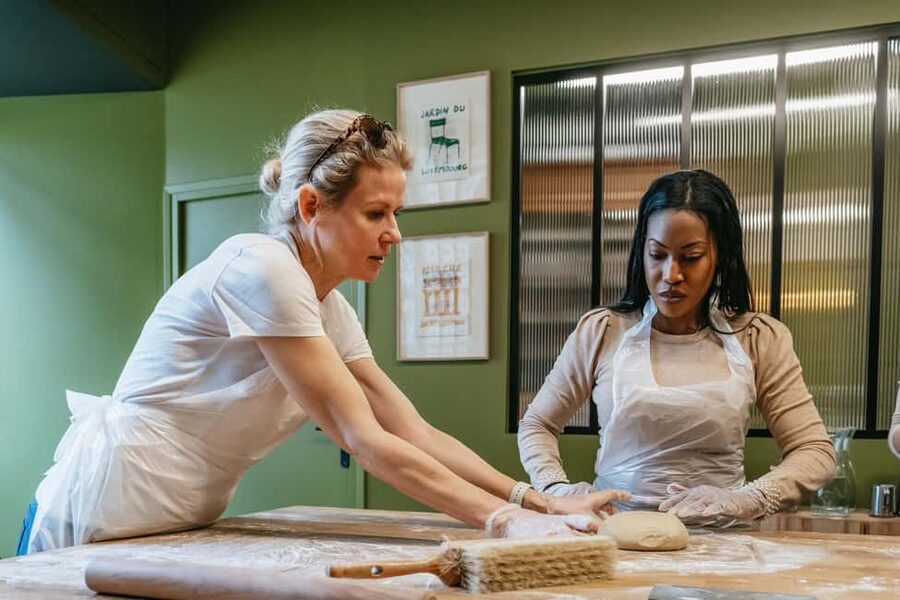
The most useful portion of the class is learning why laminated dough behaves the way it does. The chef explains how to create buttery puff pastry and how the layers form. You then practice the basic work instead of simply watching someone else perform it.
This is where a professional instructor matters. Croissant dough is not difficult because the ingredients are exotic. It is difficult because the texture, thickness, and handling all need attention. The instructors are repeatedly praised for giving clear directions and making complicated steps manageable for people with little baking experience.
Chef Guillaume is especially noted for working step by step and checking that everyone understood before moving on. Chef Felix is described as serious about the craft while keeping the mood light. Alice, Erika, Lauren, Leslie, Manel, Selma, Ines, and Ke also receive warm praise for being patient, friendly, and good at explaining.
Your results will depend partly on how carefully you follow the instructions. Do not expect every pastry to look like it came from a Paris bakery window. The point is to learn the method, and the class gives you a better chance of repeating it at home.
Shaping classic croissants and chocolate pastries
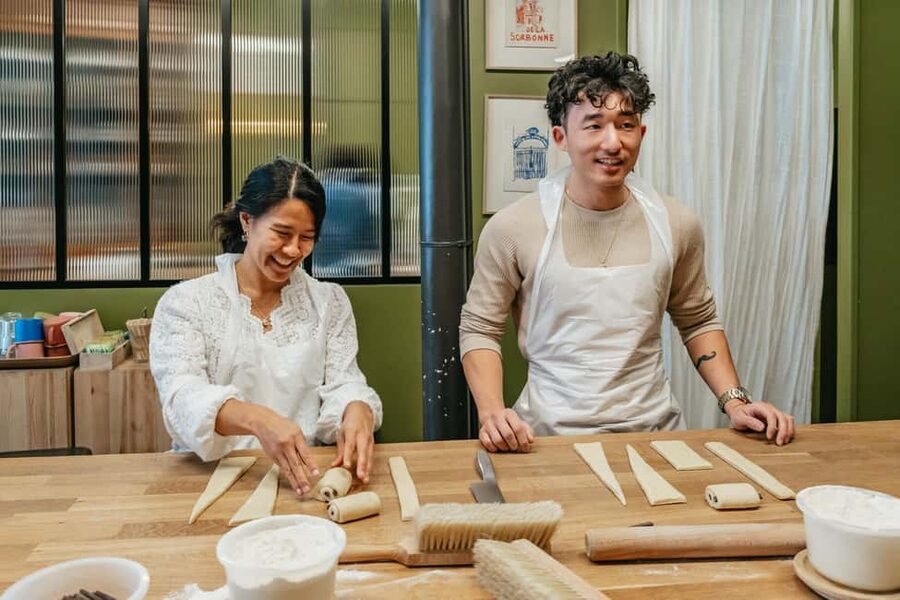
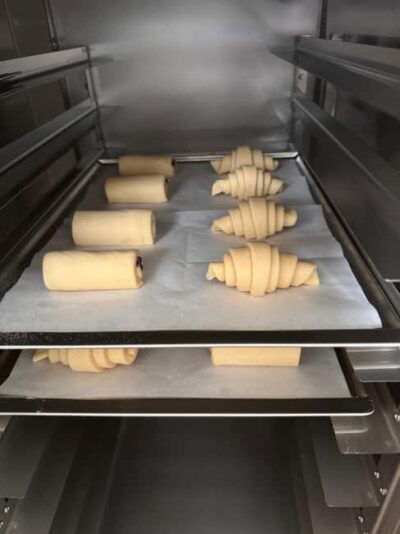
Once the dough is ready, you learn to shape the pastries. This is the moment when the flat dough becomes recognizable as a croissant, pain au chocolat, or cinnamon swirl.
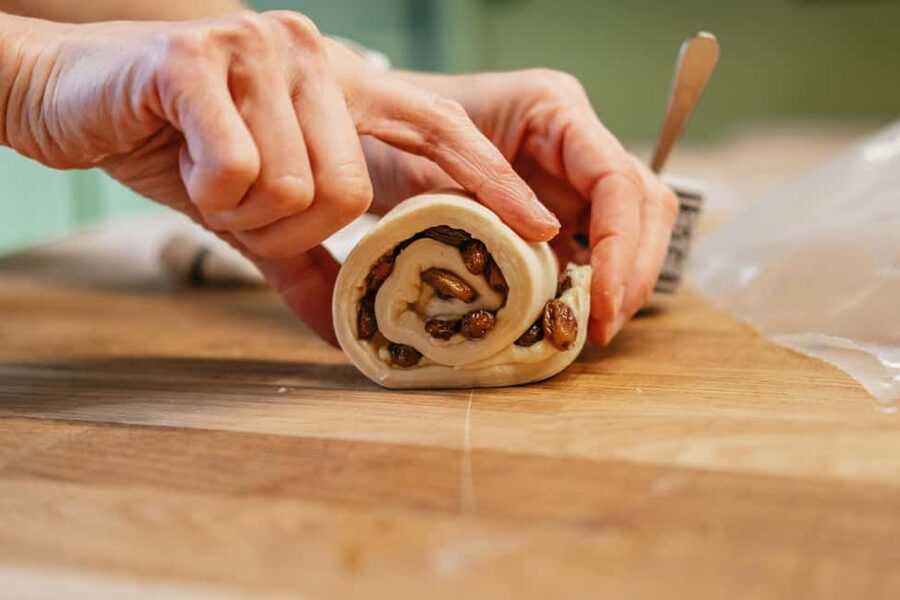
The chocolate pastries are a strong part of the session. You get to practice adding chocolate and shaping the dough in a different form. The cinnamon swirls provide another variation and give the class a little more range than a standard croissant demonstration.
Several participants describe taking home two bags of baked goods. The exact amount can vary, but the practical benefit is clear: you are not left with one small sample after spending $159. You may have enough to provide breakfast for several days, especially if you take the class early in your Paris stay.
One useful tip is to schedule this activity on your first or second day. You can use the pastries as breakfast afterward, and the class gives you an early connection to French food culture. A Saturday morning session also suits the experience well, though starting times depend on availability.
More cooking classes in Paris:
- Paris Cooking Class: Learn How to Make Macarons
★ 5.0 · 634 reviews - Paris Evening Cooking Class French Dinner and Market Visit Option
★ 5.0 · 430 reviews - Paris: Macaron Baking Class for Families and Kids
★ 4.7 · 270 reviews - Paris: Macaron Baking Class in Central Paris
★ 5.0 · 208 reviews
Baking, tasting, and taking pastries home
The final stage brings the best reward: tasting what you made. Fresh croissants straight from the oven have a crisp exterior and a warm, buttery center that is hard to match after they have cooled on a bakery shelf.
You may also be offered pastries made by the chef for tasting. One group chose to save its own baking for later, and the instructor provided fresh warm croissants so nobody missed that moment. Details like this can vary by session, but they show how the class balances instruction with the pleasure of eating.
Do not eat a large breakfast beforehand. The class includes plenty of butter and pastry, and one participant specifically found that breakfast was unnecessary. If you have dietary restrictions, the supplied information does not promise substitutions, so ask before booking rather than assuming the recipe can be changed.
Coffee and water are not guaranteed as part of the class. One participant expected refreshments after seeing them offered in another class, so bring your own drink if that matters to you.
The value of a $159 Paris activity
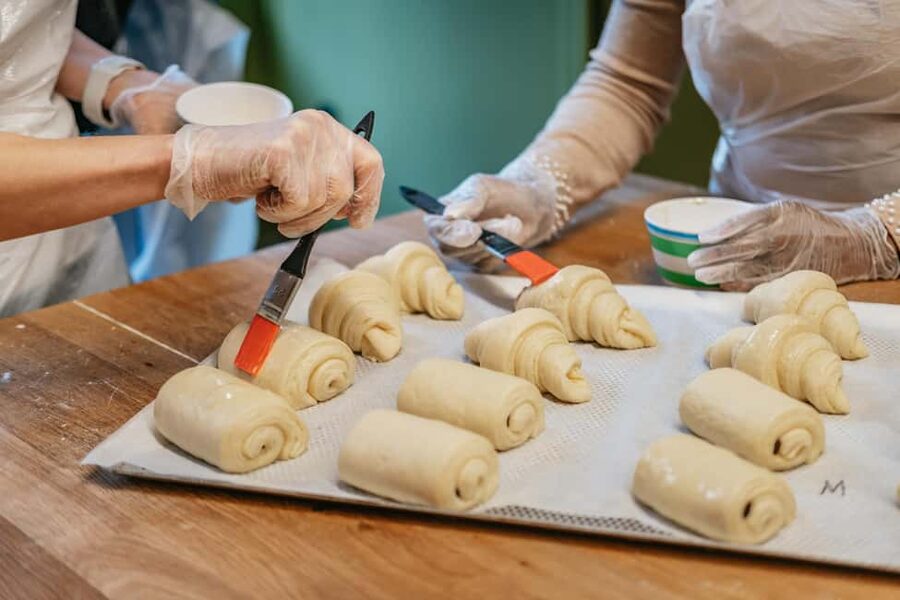
The price is high compared with simply buying a croissant. You can find a good pastry in Paris for a small fraction of this cost. The value here comes from the instruction, the equipment, the professional setting, the small group, and the food you make and take away.
For a couple, parent and teenager, or family that enjoys cooking, the class can replace a more passive sightseeing stop. You spend time learning a skill together, and the finished pastries become part of the trip rather than just another purchase.
The small group is important. With no more than eight participants, the chef can watch your shaping, answer questions, and correct mistakes before they become baked-in problems. Families should note that work is done in pairs. A family of five may need one person to partner with someone from another booking.
The experience is less valuable for someone who only wants a pastry tasting or who dislikes following detailed instructions. Croissant making takes patience. You will spend time on technique, not just on eating.
A family-friendly class with a relaxed mood
The age range is broad. Teenagers, adults, couples, parents, and children around 11 and 12 have all enjoyed the activity. One parent found it especially useful with a socially awkward teenager because the chef created a welcoming atmosphere without forcing anyone into the spotlight.
That relaxed tone seems to be one of the class’s strongest features. Instructors are described as funny, encouraging, and playful, while still taking the baking seriously. Chef Alice, in particular, is praised for bringing a lively sense of humor to the room.
Parents should still judge the activity by their child’s patience. The class lasts two and a half hours, and not every young person will want to participate in every step. The small setting helps, but this is still a structured cooking lesson.
The format also works well for couples. One adult daughter and her mother left with both pastries and the confidence to try them at home. Another couple enjoyed the class as one of the more memorable parts of their Paris visit.
What you can take home beyond the pastries
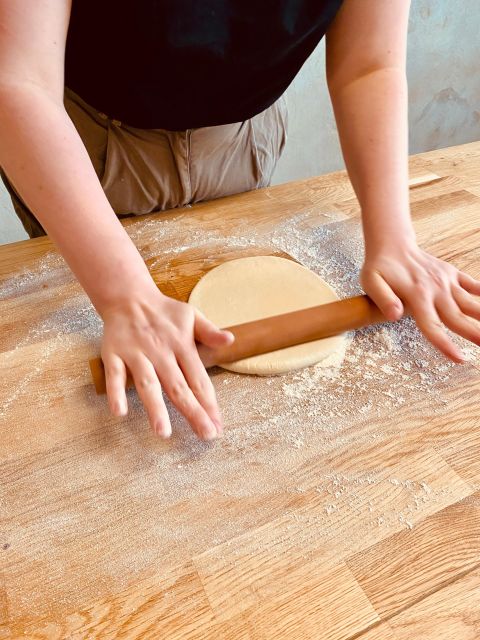
The most lasting souvenir is the method. You receive the recipe after the class, and many participants feel ready to try croissants at home. That is useful because the process can look intimidating before someone breaks it into clear stages.
Pay attention when the chef explains texture and shaping. Those details matter more than simply copying a list of ingredients. One participant noted that the later recipe did not contain exactly the same ingredients used in class, so compare the handout with your notes while the process is still fresh.
The instructors also sometimes share Paris suggestions. One chef sent a long list of restaurants, pastry shops, and souvenir shops, and another offered local ideas during the session. This extra advice is not the formal product, but it can help you plan the rest of your stay.
The class also changes how you see ordinary bakeries. After working with laminated dough, you may notice the difference between a crisp shell, an airy center, and a pastry that has lost its freshness. Paris breakfasts become more interesting when you understand what you are tasting.
How the class fits into a Paris itinerary
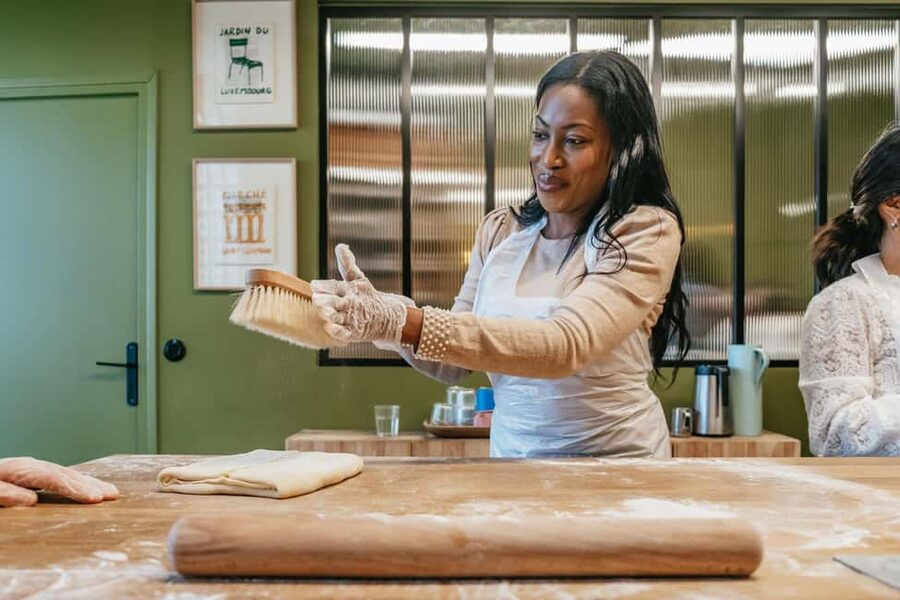
Because the class begins and ends at the same Left Bank address, it is easy to pair with nearby sightseeing. Start with the pastry lesson, then walk toward Notre Dame, browse the Latin Quarter, or continue along the Seine.
A morning class is particularly useful. You can treat the pastries as a second breakfast, save some for later, and then spend the afternoon sightseeing without adding another scheduled tour. The class also works as a rainy-day plan, since the baking takes place indoors and several participants found it a welcome escape from bad weather.
Do not schedule a major timed attraction immediately afterward. The official duration is 150 minutes, and small delays can happen when a group is shaping and baking together. Give yourself breathing room before a museum reservation or train departure.
The location is also convenient if you are staying near central Paris. Hotel pickup and drop-off are not included, so you make your own way to the Left Bank and return independently.
Who should book this Maison Fleuret experience?
I would recommend it most strongly if you meet one or more of these descriptions:
- You enjoy cooking and want a skill you can repeat at home.
- You are traveling with a teenager who needs an activity beyond museums and monuments.
- You want a social Paris experience with a small group.
- You like pastries enough to appreciate the work behind them.
- You need an indoor plan for a rainy morning.
- You want an early-trip activity that supplies breakfast for the following days.
I would be more cautious if your budget is tight or if you would rather spend $159 on several meals and bakery visits. The class is not a bargain in purely financial terms. It earns its price through participation, instruction, and the amount of food you take away.
The 4.9 rating from 712 bookings reflects unusually consistent approval, with praise focused on the chefs, the clear teaching, the friendly mood, and the delicious results. The most important pattern is not simply that people enjoy eating the pastries. They leave feeling capable of trying the recipe again.
Should you book the croissant class?
Book this if you want more than a quick taste of Paris. Maison Fleuret gives you a hands-on lesson, a warm small-group setting, several kinds of pastries, and a practical souvenir you can recreate at home.
Skip it if you dislike baking, need the cheapest possible Paris activity, or prefer a short tasting with no lengthy preparation. For everyone else, especially families, couples, and curious first-time bakers, this is a tasty and useful way to spend 150 minutes near Notre Dame.
FAQ
Where does the croissant class take place?
The class takes place at Maison Fleuret, located at 3 Rue des 3 Portes on the Left Bank in Paris.
How long does the class last?
The class lasts 150 minutes, or two and a half hours.
Is the class taught in English?
Yes. The instructor teaches the class in English.
How many people are in each group?
The group is limited to eight participants.
What pastries do you make?
You learn to make traditional French croissants, pain au chocolat, and cinnamon swirls, also described as chocolate snails.
Is equipment provided?
Yes. Cooking equipment and a chef instructor are included.
Is hotel transportation included?
No. Hotel pickup and drop-off are not included. You meet at the Maison Fleuret space on the Left Bank.
Recently added in Paris
- Private Transfers in Paris★ 5.0 · 75 reviews
- CDG – Euro Disney – CDG Two Way Private Shuttle Transfer★ 5.0 · 233 reviews
- Disneyland® Paris 1 Day Ticket with Transport from Paris★ 3.5 · 302 reviews
- Personalized Transport service from Disneyland to Paris★ 5.0 · 63 reviews
- Giverny Monet House and Gardens Skip the line Walking tour★ 4.0 · 217 reviews
- Monet’s Gardens & House-Private Giverny Tour From Paris★ 4.5 · 137 reviews
- Guided tour Monet’s house and gardens/small group★ 4.5 · 68 reviews
- Monet’s House and Garden & Giverny Village★ 4.5 · 39 reviews
Cooking Classes, compared.
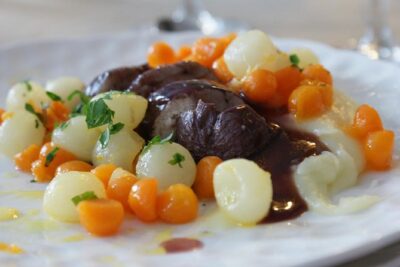
Paris Cooking Class and Lunch with Wine plus Market Visit Option
Read our review →
Paris Croissant Small-Group Baking Class with a Chef
Read our review →
Paris Cooking Class: Learn How to Make Macarons
Read our review →
Paris Evening Cooking Class French Dinner and Market Visit Option
Read our review →
Macarons Cooking Class with Pâtisserie Chef Noémie
Read our review →Browse the lists this tour appears in