
REVIEW · COOKING CLASSES
Paris Croissant Small-Group Baking Class with a Chef
Fresh pastry beats another museum. This 2.5-hour class in the Marais puts you in a working pastry studio near Place des Vosges, where a professional chef guides you from dough to oven. I like the hands-on format, and I like that you make croissants, pain au chocolat, and pain au raisin in one session. The main consideration is the $157.21 price, which is a lot for a short activity if you only want a quick pastry lesson.
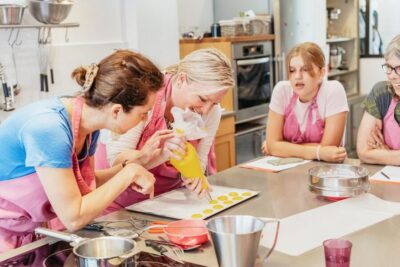
The small-group setting makes the cost easier to justify. The class is generally limited to eight people, though the booking information gives a maximum of 12, and past sessions have ranged from very small groups to 8 or 10 participants. You also receive drinks, eat what you bake, take the remaining pastries with you, and leave with an illustrated recipe booklet.
In This Review
- Key points to know before you book
- A pastry class in the Marais, not just a demonstration
- Starting with dough, kneading, and the basics
- Laminating butter into the croissant dough
- Shaping three French favorites
- The best part: pastries straight from the oven
- What the price of $157.21 really buys you
- English instruction and the human side of the class
- Timing, location, and planning your day
- Who will enjoy this class most?
- Should you book the Maison Fleuret workshop?
- FAQ
- Where does the croissant class begin?
- How long does the workshop last?
- What pastries will I learn to make?
- Is the class taught in English?
- What is included in the price?
- What is the cancellation policy?
Key points to know before you book
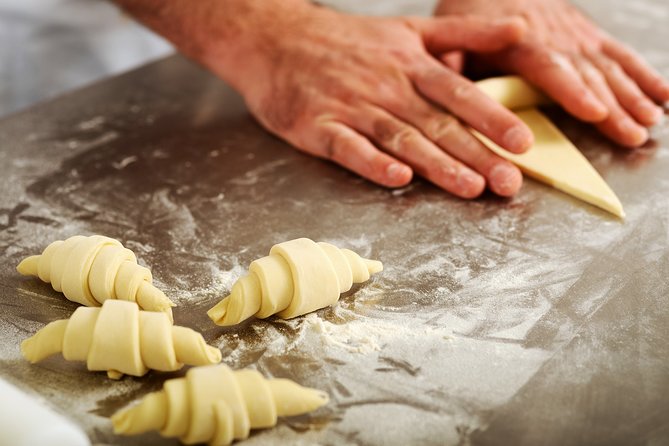
- Three French pastries in one class: You work on a classic croissant, pain au chocolat, and pain au raisin rather than watching a single demonstration.
- A central Marais location: The studio is at 7 Rue de Béarn in the third arrondissement, close to Place des Vosges and public transportation.
- Personal help matters here: Sessions are usually small, with past participants describing close instruction and plenty of chances to ask questions.
- You eat and take away the results: The pastries come out of the oven during the class, and you can enjoy them there and take the rest with you.
- English-language instruction: The class is offered in English, with guides such as Clara, Prisca, Felix, Milly, Ines, and Leslie praised for clear and friendly teaching.
- A real cancellation risk: At least one session was cancelled on the day because the pastry chef became ill, so do not schedule this immediately before an important departure.
A pastry class in the Marais, not just a demonstration
The workshop begins at 7 Rue de Béarn, in one of Paris’s most convenient areas for a half-day activity. You are right around the corner from Place des Vosges, with the Marais nearby for a walk, lunch, shopping, or a museum visit after class.
That setting gives the experience a useful Paris rhythm. You are not being taken out to a distant cooking school or placed in a large tourist kitchen. You meet at a specific address in the third arrondissement, enter a fully equipped pastry studio, and settle in with your group.
The advertised group size is small, usually up to eight people, although the formal maximum is 12. That difference is worth noting. A class of six to eight should offer the personal attention promised, while a full 12-person session may feel less intimate. One past participant described a student-to-teacher ratio of about six to one, and another found themselves in a session with only two participants.
You receive an apron and utensils before the work begins. Hot and cold drinks are available during the workshop, which is a small but welcome touch when you are concentrating on dough, butter, and timing.
More hands-on sessions in Paris:
- Fragonard Paris: Mini Perfume Workshop
★ 4.5 · 1,924 reviews - Paris Cooking Class and Lunch with Wine plus Market Visit Option
★ 5.0 · 1,024 reviews - Paris: Macaron Class at Galeries Lafayette
★ 4.3 · 905 reviews
Starting with dough, kneading, and the basics
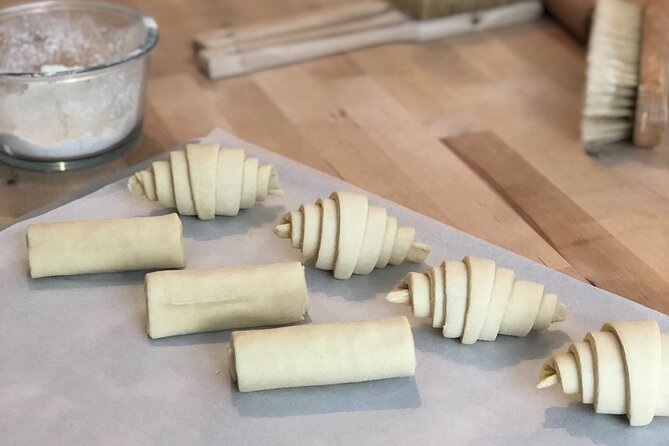
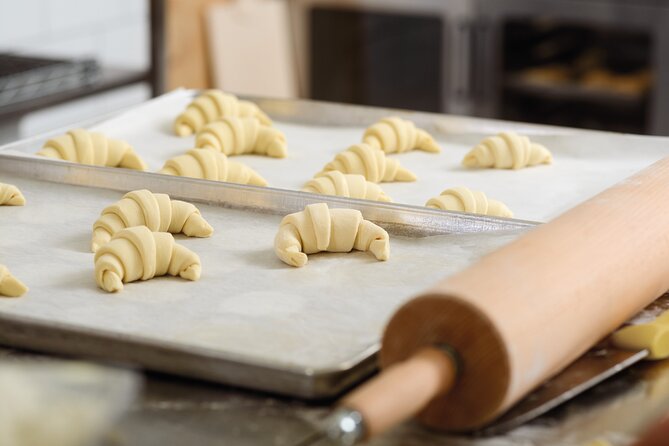
Croissant dough looks simple until you try to handle it. The class starts with making and kneading the dough, and the chef explains each stage as you work. This is where the session earns its place as a cooking class rather than a pastry show.
You are not simply standing behind a counter while someone else produces perfect pastries. You take part in the process and receive step-by-step help with the work in front of you. That makes the class useful for complete beginners, but it also gives experienced home bakers a chance to sharpen their technique.
The instructors seem to be one of the strongest parts of the experience. Clara is praised for both her teaching and her Paris recommendations. Prisca is described as patient and kind, while Milly is noted for explaining not only what to do but why each step matters. Felix is remembered for making the class interactive and fun.
Names can change from one date to another, so you should not book solely to meet a particular chef. Still, the repeated praise for individual teachers points to a consistent strength: the experience depends heavily on direct instruction, and the staff generally make that instruction clear and approachable.
Laminating butter into the croissant dough
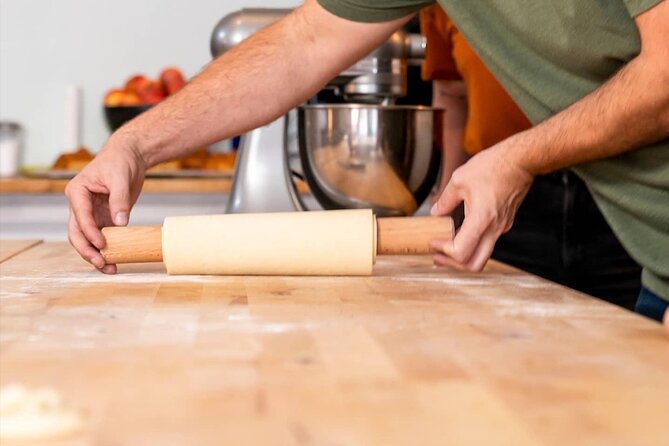
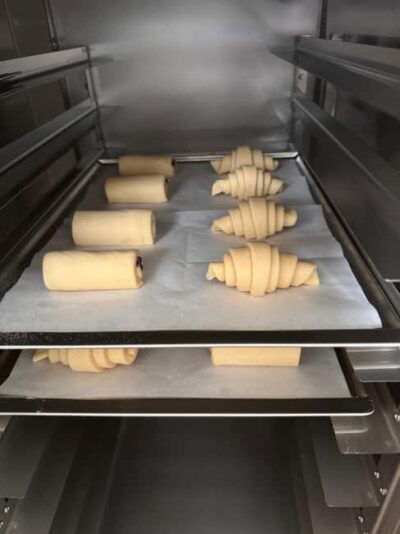
The key technical moment is lamination, when butter is worked into the dough through repeated folding and rolling. This is the part that gives a croissant its layers, lift, and delicate bite. It is also the step most likely to go wrong at home if you have only followed a recipe.
The class lets you handle this process yourself. One participant specifically appreciated that the session involved actually laminating the dough instead of watching a chef do it. That distinction matters. You leave with a better sense of how the dough should feel and how careful you need to be with the butter.
The chef demonstrates, then helps you continue. Small groups are especially useful here because you may need quick assistance with rolling, folding, or shaping. In a large class, you could easily miss a detail or wait too long for help. In this setting, you have a better chance of getting a correction before a small mistake travels through the rest of the recipe.
The class is not a professional pastry qualification. You should expect a friendly workshop rather than a highly technical masterclass. But it gives you a practical introduction to one of French baking’s most important methods, and the supplied illustrated booklet helps you repeat the process at home.
Shaping three French favorites
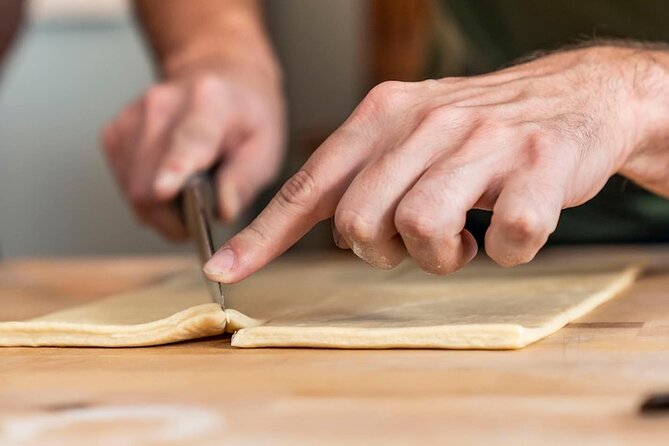
After the dough work, you shape the pastries. The session focuses on three familiar French staples:
- Croissants
- Pain au chocolat
- Pain au raisin
The croissant is the main event, but adding the other two makes the class more worthwhile. You see how one dough can become several different pastries, and you get a broader feel for classic French bakery methods in a single morning or afternoon.
Pain au chocolat gives you the chocolate-filled variation most people know from Paris bakeries. Pain au raisin adds a different shape and filling, so the session does not feel like making the same pastry three times.
The exact number of finished pastries can vary by class. Several participants report taking home two croissants and two pain au chocolat each, while another says to prepare for about four pastries per person. One class included extra pastries made from dough remnants, including cinnamon rolls, though that should be treated as an occasional bonus rather than a promised part of the program.
That quantity is generous for a 2.5-hour workshop. You will likely eat some warm pastries at the studio and take the rest with you. Plan your day accordingly. A bag full of butter-rich pastries is a fine problem, but it is still a problem if you have a long walking tour or a formal dinner immediately afterward.
More cooking classes in Paris:
- Paris: French Croissant Baking Class with a Chef
★ 4.9 · 712 reviews - Paris Cooking Class: Learn How to Make Macarons
★ 5.0 · 634 reviews - Paris Evening Cooking Class French Dinner and Market Visit Option
★ 5.0 · 430 reviews - Paris: Macaron Baking Class for Families and Kids
★ 4.7 · 270 reviews
The best part: pastries straight from the oven
The final stage is baking. Once the pastries come out of the oven, you can taste what you made. This is the payoff, but it is also a useful lesson in itself. A croissant eaten warm from the oven has a different texture from one that has been sitting in a bakery case for several hours.
You get to compare your work with the other pastries in the room and see how shaping affects the result. Some will be neater than others. That is part of the fun. The point is not to produce a display case of identical pastries. It is to understand the process well enough to repeat it.
The tasting is included, as are the pastries you take away. Drinks are served throughout the workshop, and the recipe booklet gives you something concrete to use after your trip. That combination improves the value because you are paying for instruction, food, and a skill you can continue practicing.
Several families found the class especially successful with children. A seven-year-old managed well with the instruction, and families with children aged nine, 12, 13, and 15 reported having a good time. Young children may need help with dough and utensils, but the activity has a clear result and plenty of practical work, which can hold attention better than a long sightseeing stop.
What the price of $157.21 really buys you
At $157.21 per person, this is not an inexpensive way to eat a croissant. You can buy an excellent pastry in Paris for a few euros. If your main goal is breakfast, visit a bakery instead.
The value is in the combination of small-group teaching, equipment, ingredients, tasting, take-away pastries, drinks, and the recipe booklet. You also avoid buying separate ingredients and tools for an experiment that may fail in a rental apartment. For a family or couple who genuinely want to learn French baking, the price can make sense.
I would compare it with other paid activities in Paris, not with the cost of a pastry. A two-and-a-half-hour class occupies a useful portion of your day and gives you something you cannot get from a standard sightseeing tour. You learn a technique, work with a chef, and leave with food for later.
Still, the value depends on your interest. If you dislike cooking, have limited time in Paris, or would rather spend the money on several bakery stops, this class is not the right choice. You should also remember that the group may be as large as 12, even though many sessions are smaller.
English instruction and the human side of the class
The workshop is offered in English, which removes much of the stress from a technical activity. Pastry terms can be confusing even in your own language, so clear explanations are important.
The strongest teaching comments focus on patience, warmth, and good pacing. Lizzy is praised for making every stage easy to follow. Ines received high marks for clear instruction and useful techniques, while Rosalie was described as welcoming and funny, even on her first day teaching the class.
Prisca also adds small cultural touches, including French words and information about French baking customs. Those details are not the main purpose of the workshop, but they give the activity a stronger connection to Paris. You are not just learning a recipe in a generic kitchen.
There is no guarantee that a certain chef will lead your session. The practical advice is to focus on the format and location, not a specific instructor’s name. The repeated positive comments about several chefs suggest that the teaching quality is not tied to one person alone.
Timing, location, and planning your day
The class lasts about two hours and 30 minutes and ends back at the meeting point. Since there is no private transportation, you are responsible for getting to 7 Rue de Béarn. The address is near public transportation, and its location beside Place des Vosges makes it easy to pair with other Marais activities.
Arrive with enough time to find the studio. You do not want to begin a hands-on lesson while rushing through the door. If you are late, contact the provider as soon as possible. One group arrived late and received helpful assistance, but you should not assume every session can absorb a delay.
The class is offered at different times, based on availability. A morning session can work well before sightseeing, while an afternoon class offers a break from churches, galleries, and long walks. Because you receive several pastries, you may want to keep lunch light or treat the finished baking as part of your meal.
Health and safety equipment includes face masks and hand solution. The supplied information does not give specific accessibility details, so contact Maison Fleuret before booking if you have mobility, dietary, or other needs that could affect participation.
Free cancellation is available up to 24 hours before the start time. Changes or cancellations inside that window are not accepted for a refund. One class was cancelled on the day because the pastry chef became ill, and an alternative location was offered, but the replacement did not suit the booking party. This appears to be unusual, but it is a reason not to place the class before a flight or another nonrefundable plan.
Who will enjoy this class most?
This is a strong choice for several kinds of Paris visitors:
- Couples looking for a shared activity beyond sightseeing
- Families with children who enjoy practical projects
- Home bakers who want to understand croissant lamination
- First-time visitors seeking a relaxed activity in the Marais
- Repeat visitors who have already seen the major sights
- Anyone who prefers making something to watching another demonstration
It is less suitable if you want a private lesson, a professional-level pastry course, or a quick tasting. You should also think about the amount of food. The class can leave you with several pastries per person, so it is best for people who enjoy eating them or can carry them safely afterward.
Should you book the Maison Fleuret workshop?
I would book this class if you want more than a photograph of a croissant in Paris. The small group, English instruction, friendly chefs, hands-on lamination, and fresh pastries make it a useful and enjoyable break from standard sightseeing.
I would skip it if $157.21 feels high for a short activity or if you mainly want to sample French pastries. In that case, spend the money at several respected bakeries and compare the results.
For everyone in between, look at your Paris schedule. If you can spare two and a half hours in the Marais and like the idea of returning home with a recipe you can actually use, this is one of the better food activities to add. Just confirm the meeting details, arrive early, and keep your plans flexible enough to handle an unexpected change.
FAQ
Where does the croissant class begin?
The class begins at 7 Rue de Béarn, 75003 Paris, France, in the third arrondissement near Place des Vosges.
How long does the workshop last?
The workshop lasts approximately two hours and 30 minutes.
What pastries will I learn to make?
You will learn to make a classic croissant, pain au chocolat, and pain au raisin.
Is the class taught in English?
Yes. The experience is offered in English.
What is included in the price?
Hot and cold drinks, cooking supplies, instruction, tasting of the baked pastries, pastries to take away, and an illustrated recipe booklet are included. Private transportation is not included.
What is the cancellation policy?
You can cancel up to 24 hours before the start time for a full refund. Cancellations or changes made less than 24 hours before the start time are not accepted for a refund.
Recently added in Paris
- Private Transfers in Paris★ 5.0 · 75 reviews
- Disneyland® Paris 1 Day Ticket with Transport from Paris★ 3.5 · 302 reviews
- CDG – Euro Disney – CDG Two Way Private Shuttle Transfer★ 5.0 · 233 reviews
- Personalized Transport service from Disneyland to Paris★ 5.0 · 63 reviews
- Monet’s Gardens & House-Private Giverny Tour From Paris★ 4.5 · 137 reviews
- Guided tour Monet’s house and gardens/small group★ 4.5 · 68 reviews
- Giverny Monet House and Gardens Skip the line Walking tour★ 4.0 · 217 reviews
- Monet’s House and Garden & Giverny Village★ 4.5 · 39 reviews
Cooking Classes, compared.
Paris Cooking Class and Lunch with Wine plus Market Visit Option
Read our review →
Paris Cooking Class: Learn How to Make Macarons
Read our review →
Paris Evening Cooking Class French Dinner and Market Visit Option
Read our review →
Macarons Cooking Class with Pâtisserie Chef Noémie
Read our review →Browse the lists this tour appears in