
REVIEW · CHAMPAGNE TOURS
Champagne: Canard-Duchêne Champagne House Tour
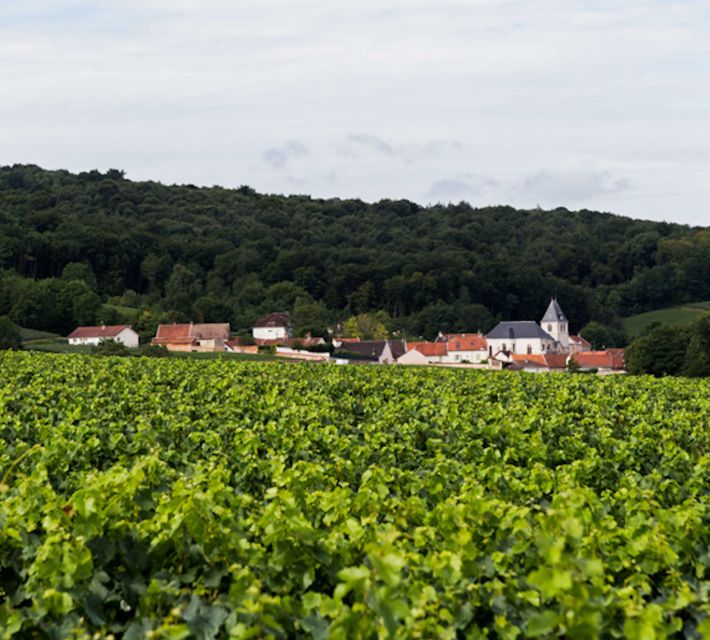
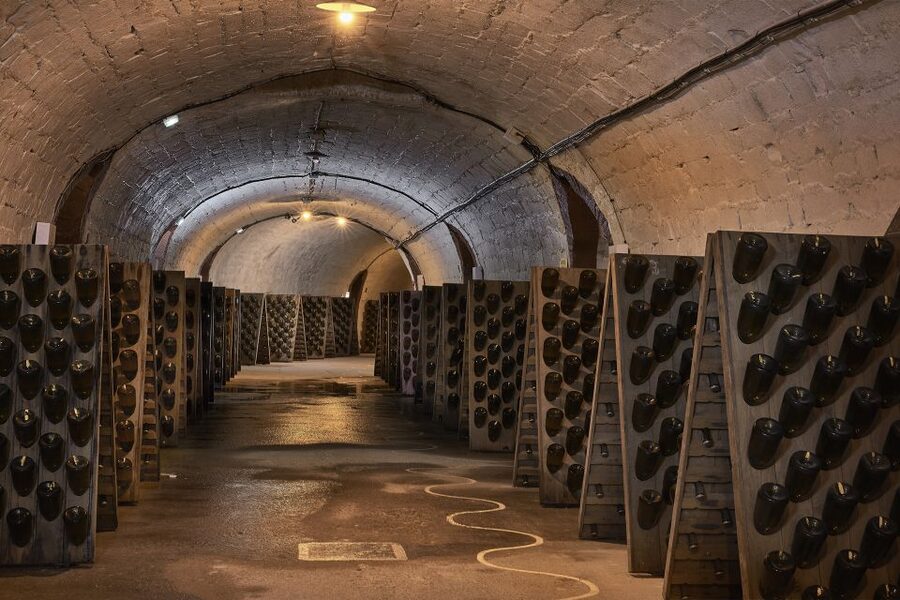
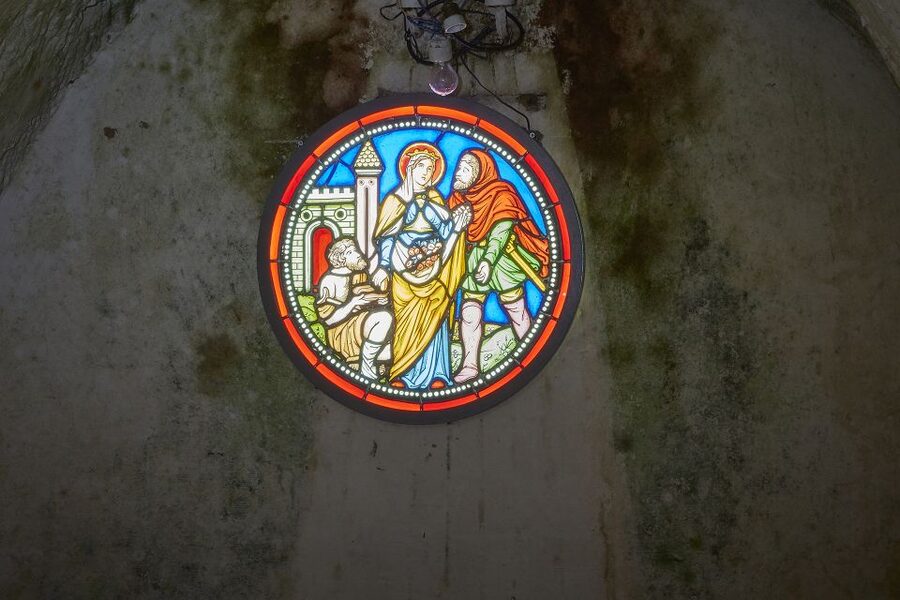
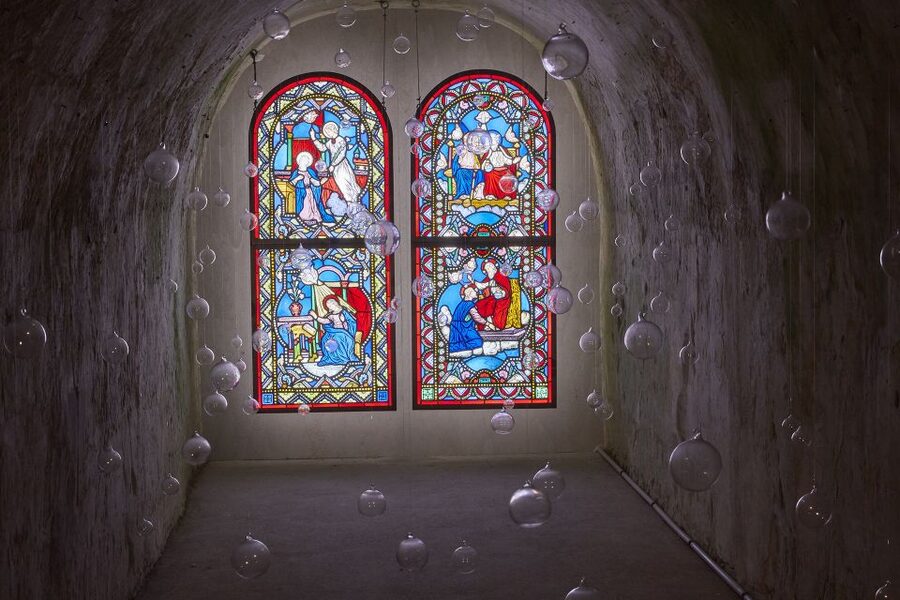
Champagne gets serious underground. The Canard-Duchêne Champagne House tour combines a guided cellar visit, a short vineyard walk, and a taste of the finished wine in a compact one-hour experience. I like the 40 to 60 feet deep cellars, where hand-carved 19th-century passages run for nearly four miles across four levels. I also like the restored chapel, especially its stained-glass windows made by the Simon-Marq workshop.
The main drawback is physical: you must manage 130 steps each way, with no lift, and the cellars stay at about 50°F. The tour is not suitable for people with mobility impairments or people over 70, so check that your legs and your coat are ready before booking.
In This Review
- Key points to know before you go
- What makes Canard-Duchêne different
- Starting with the champagne-making process
- Going 130 steps below ground
- Seeing the old chapel’s restored glass
- Walking through the Champagne vineyards
- Choosing your champagne tasting
- How the one-hour schedule works
- Who should book this Champagne House tour?
- Final verdict: a strong short visit with one big physical catch
- FAQ
- How long does the Canard-Duchêne Champagne House tour last?
- What languages are available?
- How many stairs are there in the cellars?
- How cold are the wine cellars?
- Is champagne included?
- Which tasting options are available?
- Is lunch included?
- Can I cancel the booking?
Key points to know before you go
- Nearly four miles of cellars: Explore a large underground network set across four levels, with historic hand-carved details.
- A real production lesson: Follow the main stages of champagne making and learn why cool, humid cellars help the wine mature.
- Vineyards included: The tour does not stop indoors. You also walk through the vines where the grapes are grown.
- A small architectural surprise: The renovated old chapel has stained-glass windows restored by the Simon-Marq glassmaking workshop.
- Three tasting choices: Pick one or two glasses depending on the option you book, from a basic brut or demi-sec to named Canard-Duchêne cuvées.
- Strong guide service: Recent praise focuses on friendly, clear guiding and the amount learned during the visit.
What makes Canard-Duchêne different
The Champagne region has no shortage of cellar tours. Some focus on grand rooms, some on famous labels, and some on tasting several wines in a polished setting. Canard-Duchêne offers a more grounded mix: production, underground architecture, vineyards, chapel art, and a glass of champagne.
That balance matters. You are not simply shown a bottle and told that it is special. You get a sense of the place where the wine is made, stored, and presented. In one hour, the tour covers several parts of the house without asking you to commit to a half-day program.
The house is in the Grand Est region of France, in the Champagne area. If you are already visiting the vineyards and cellar towns, this tour can fit neatly into a busy day. It is also a sensible choice for anyone who wants a focused introduction rather than a long tasting class or a meal with wine.
I especially like the way the experience connects the working side of champagne with the visual side. The cellars show the labor and patience behind the bottles. The chapel windows give you something entirely different: color, craft, and a reminder that champagne houses often carry layers of local culture beyond the drink itself.
A few more Champagne outings to set side by side
- From Reims: Champagne and Family-Run Wineries Tour
★ 4.8 · 671 reviews - Reims afternoon tour Champagne and family growers
★ 5.0 · 535 reviews - From Reims: Morning Champagne Tour and Tastings
★ 4.8 · 463 reviews
Starting with the champagne-making process
The visit begins with an introduction to the Champagne House and its production facilities. Your English- or French-speaking guide explains the main stages involved in creating champagne, from the grapes grown in the vineyards to the work that takes place underground.
The value here is in the sequence. You can ask questions as the tour moves through the facilities, then see where the bottles spend time reaching maturity. This makes the tasting more useful later because you have a basic framework for understanding what is in your glass.
Do not expect a technical wine course in just 60 minutes. The tour is designed as a broad introduction. You learn how the cellars support the wine, how the house developed, and how the vineyard contributes to the finished product. That is enough to give first-time visitors a clear picture without turning the hour into a lecture.
The guide service is one of the strongest parts of the experience. The available languages are English and French, and recent feedback describes the guiding as friendly, pleasant, and full of useful information. That makes a difference in a cellar, where the setting can be impressive but the details can blur together without a good explanation.
Going 130 steps below ground
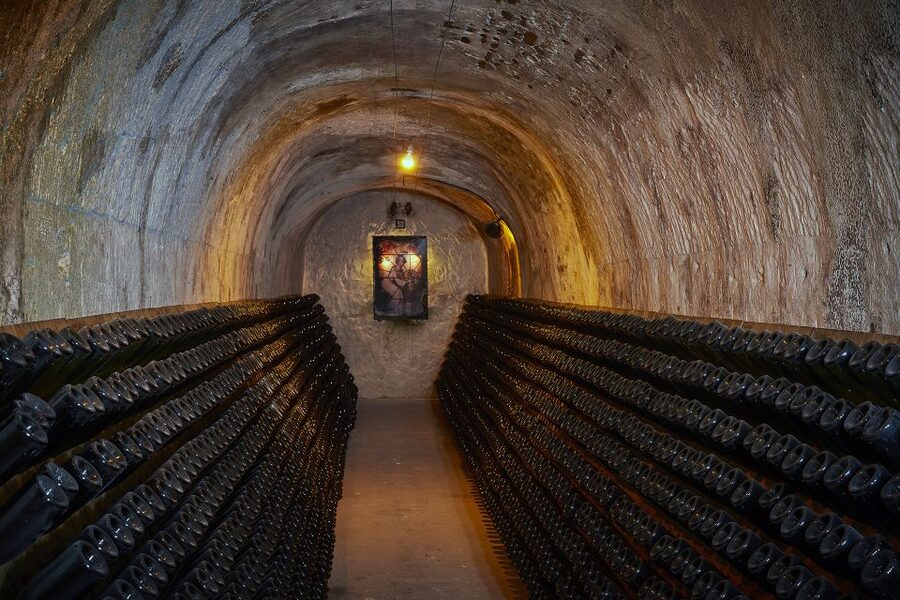
The cellar section is the heart of the tour. You descend 130 steps to reach the underground areas, then climb the same number back up. There is no elevator access, so take this detail seriously rather than treating it as a minor note.
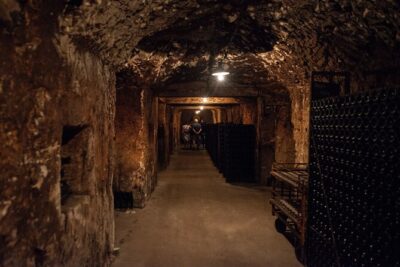
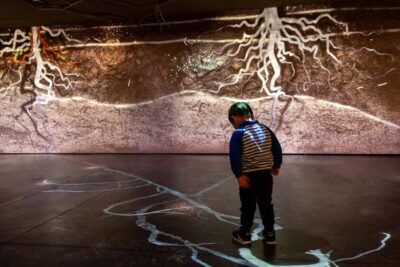
Once below ground, you find a network that reaches nearly four miles across four levels. The passages sit 40 to 60 feet underground and include hand-carved 19th-century architecture. This is not just a modern storage room filled with bottles. The age and shape of the underground spaces give the visit a strong sense of place.
The cellars remain at a maximum temperature of about 50°F. Bring warm clothing, even if the day above ground feels mild. Comfortable clothes and sturdy, sensible footwear are also a good idea, since the tour involves stairs and walking through an underground setting.
The cool temperature and humidity are not just atmospheric details. Your guide explains how these conditions help champagne mature. The steady underground environment allows the wines time to develop taste and complexity, while the darkness and stillness create the quiet mood you expect from a traditional cellar.
I find this part most useful for visitors who want to understand why champagne takes time. The bottle on your table may look simple, but the route from vineyard to cellar involves patience, controlled conditions, and careful production. The underground setting makes that process easier to picture.
Still, the cellar is not comfortable for everyone. If you dislike cold spaces, have trouble with stairs, or need frequent access to a lift, this is the point where the tour may become a poor match. The cellar is a major reason to book, but also the clearest reason not to.
Seeing the old chapel’s restored glass
Canard-Duchêne’s old chapel adds an unexpected art stop to the visit. You pause to admire its restored stained-glass windows, renovated by the Simon-Marq workshop, a master glassmaking studio.
This is a short part of the experience, but it helps break up the production talk and cellar walk. The windows give the house a more personal character. You are seeing a building with decorative details and local craft, not only a brand name attached to bottles.
The chapel is also useful for anyone who enjoys architecture. You should not expect a full museum visit or a long art history presentation. Instead, treat it as a compact visual highlight within the larger tour. The stained glass is worth a pause, particularly if you enjoy places where wine production and historic buildings share the same setting.
The restored glass also shows why the tour is more than a tasting with a quick look around. You get several different ways to understand the house: through its wine, its underground spaces, its vineyard, and its buildings.
Same city, a slower kind of day:
- Champagne: Champagne Tasting Class with Lunch
★ 4.9 · 384 reviews - Aÿ-Champagne: Pressoria Champagne Museum with Tasting
★ 4.7 · 239 reviews - Aÿ-Champagne: Champagne House Tour and Tasting Class
★ 4.9 · 209 reviews - From Reims: Champagne Day Trip to 3 Family Domains & Lunch
★ 4.8 · 194 reviews
Walking through the Champagne vineyards
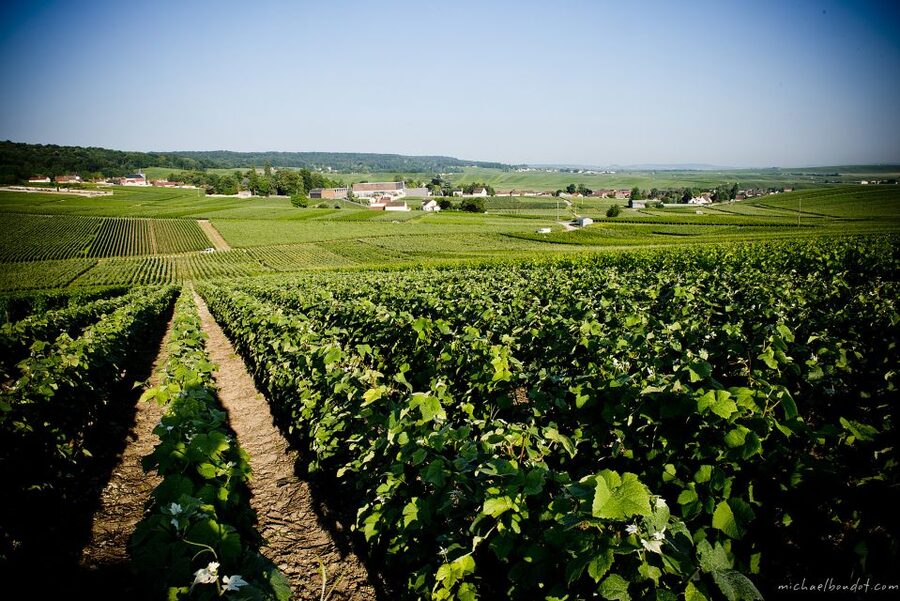
The guided vineyard walk takes you outside to see how the grapes are grown. This is an important part of the experience because champagne begins in the field, not in the cellar.
Your guide connects the vines with the production process explained earlier. You can look at the setting where the grapes are raised, then compare that open-air environment with the cool underground rooms where the wine later matures.
The walk is not described as a long hike, and the whole activity lasts only one hour. That makes it approachable for someone who wants a brief look at vineyard life without committing to a full countryside excursion. At the same time, you should not book this expecting an extensive trek through many vineyard sites. It is a guided introduction that complements the cellar visit.
I like this combination because it prevents the tour from feeling too enclosed. After the cool, dim cellars, the vineyard gives you a different sense of the region. You see the source of the grapes and gain a clearer picture of how closely the house depends on its growing area.
The vineyard portion may be less appealing in poor weather, since the tour includes time outdoors. Comfortable clothing is the practical answer. The experience does not include lunch, so plan a separate meal if you need more than a tasting after the tour.
Choosing your champagne tasting
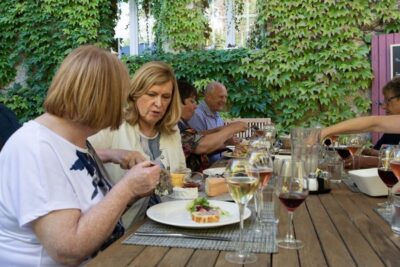
The tasting depends on the option you select. The Decouverte choice includes one tasting of a brut or demi-sec. The Liberté option includes Cuvée Léonie Brut and Cuvée Léonie Rosé, or Cuvée Bio P181. The Charles VII option includes a tasting of Cuvée Charles VII.
The number of glasses varies by option, with one or two included. Read the exact choice carefully when you book, since the tasting is not identical across the available packages.
The Decouverte option is the simplest choice. It suits you if your main goal is to see the house and cellar, with a basic glass at the end. A brut gives you the familiar dry champagne style, while a demi-sec offers a sweeter direction.
The Liberté option gives you more comparison. Tasting a brut and a rosé lets you notice how the style changes while remaining within the same house. Cuvée Bio P181 provides another point of interest for someone curious about the house’s different wine choices.
The Charles VII option focuses on Cuvée Charles VII. Choose it if a named house cuvée matters more to you than comparing several styles.
At $25 per person, the value is good for a one-hour experience if you want cellar access, a guide, a vineyard walk, and a tasting in one package. The price is less compelling if you mainly want several generous pours or a long lesson about wine. This is an orientation tour, not a full afternoon of drinking and food.
One practical point comes from the tasting itself: no food is included. A small toast or biscuit with the champagne would make the experience feel more complete, especially for anyone arriving hungry. Plan lunch separately rather than treating the included glasses as a meal.
How the one-hour schedule works
The short duration is both a strength and a limit. One hour keeps the activity easy to fit into a day of sightseeing, especially if you have other Champagne towns, houses, or meals planned.
You begin with the house and production story, move into the cellars, see the chapel details, walk through the vineyard, and finish with champagne. The precise order may vary, but the overall shape gives you several distinct stops rather than one long indoor talk.
Because the schedule is compact, arrive 15 minutes before the start time. That gives you time to find the meeting point and be ready when the group begins. A late arrival could matter more here than on a loose museum visit, since every part of the tour has to fit into a tight schedule.
The pace should suit you if you prefer short, focused activities. If you like stopping often for photographs, asking many questions, or studying every architectural detail, the hour may feel quick. You can still enjoy the highlights, but you should not expect unlimited time in each area.
Free cancellation up to 24 hours in advance and the option to reserve now and pay later make the booking less risky when your Champagne plans are still shifting. These are useful practical terms, particularly on a trip where weather or transport can affect the day.
Who should book this Champagne House tour?
I would recommend Canard-Duchêne to first-time Champagne visitors who want more context than a tasting room can provide. You get the cellar conditions, production story, vineyard setting, house history, and architecture in one compact visit.
It is also a good fit for couples and small groups with mixed interests. One person can enjoy the wine, another can focus on the old cellar design, and someone else can appreciate the vineyard and stained glass. The tour has enough variety to keep it from feeling like a single-subject stop.
The experience suits you especially well if you:
- Want a one-hour introduction rather than a half-day excursion
- Prefer learning how champagne is made before tasting it
- Enjoy historic buildings and craft details
- Want to compare different Canard-Duchêne cuvées
- Can comfortably manage 130 steps down and 130 steps back up
- Do not mind a cellar temperature of about 50°F
I would choose another activity if you need step-free access, dislike cold underground spaces, or want a substantial meal with your tasting. This is not suitable for people with mobility impairments or people over 70, according to the stated restrictions. You should take that policy seriously.
The tour also may not satisfy a serious champagne student who wants a long masterclass. For that, a longer tasting class or a food-and-wine experience would provide more time for comparison. Canard-Duchêne works best as a clear, well-rounded introduction.
Final verdict: a strong short visit with one big physical catch
Canard-Duchêne gives you a lot in 60 minutes. The underground cellars are the main draw, but the experience gains value from the vineyard walk, the restored chapel windows, and the choice of tasting styles.
The guide service deserves particular praise. A friendly guide who explains the production process clearly can turn a cellar into a useful lesson rather than a dim walk through old passages. The positive feedback about pleasant, informative guiding matches what you should want from this kind of visit.
At $25, I consider it a fair buy for the combination of cellar access, vineyard guiding, and champagne. Just remember that the price does not include lunch, and the tasting comes as one or two glasses depending on your selected option.
Book it if you want a focused introduction to champagne and can handle the stairs and cold. Skip it if accessibility is a concern or if you want an extended tasting with food. For the right visitor, it is a practical way to connect the bottle in your hand with the vines above and the patient work below.
FAQ
How long does the Canard-Duchêne Champagne House tour last?
The tour lasts one hour. Starting times vary, so check availability when booking.
What languages are available?
The tour is offered with a live guide in English or French.
How many stairs are there in the cellars?
There are 130 steps each way. You descend into the cellars and then climb 130 steps to return, with no elevator access.
How cold are the wine cellars?
The maximum temperature in the cellars is about 50°F. Bring warm clothing.
Is champagne included?
Yes. The experience includes one or two glasses, depending on the tasting option selected.
Which tasting options are available?
Decouverte includes a brut or demi-sec. Liberté includes Cuvée Léonie Brut and Cuvée Léonie Rosé or Cuvée Bio P181. Charles VII includes Cuvée Charles VII.
Is lunch included?
No. Lunch is not included, so make separate plans for a meal.
Can I cancel the booking?
You can cancel up to 24 hours before the activity for a full refund. You can also reserve now and pay later.
Recently added in Champagne
- The Must-sees 3h30 from Epernay (Private Half day Champagne Tour)★ 5.0 · 30 reviews
- From Epernay: Champagne Small-Group tour with tastings & Lunch★ 5.0 · 93 reviews
- Food & Champagne Experience from Epernay (Private tour)★ 4.5 · 28 reviews
- The Connoisseurs from Epernay (Private Half day Champagne Tour)★ 5.0 · 59 reviews
- Champagne experience with a vintage van from Epernay – 3 hours★ 5.0 · 108 reviews
- Bubble Champagne Tour from Epernay (Small group half day tour)★ 5.0 · 58 reviews
- Champagne Munoz Bruneau : Half Day Visit and Tasting★ 5.0 · 50 reviews
- From Epernay Full day Electric bike Champagne and lunch★ 5.0 · 36 reviews
Champagne Tours, compared.
Reims afternoon tour Champagne and family growers
Read our review →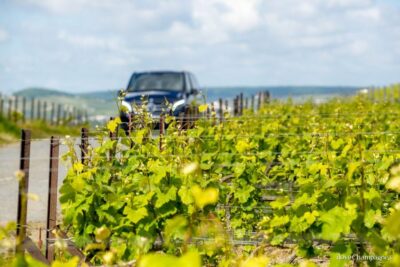
Aÿ-Champagne: Pressoria Champagne Museum with Tasting
Read our review →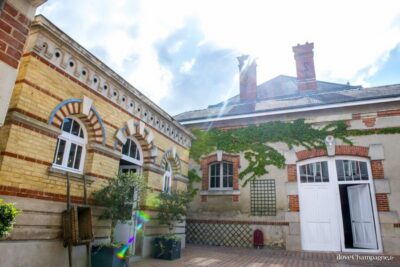
Aÿ-Champagne: Champagne House Tour and Tasting Class
Read our review →
Champagne Day Trip to 3 Family Domains & Lunch
Read our review →
Champagne: E-Bike Champagne Day Tour with Tastings and Lunch
Read our review →Browse the lists this tour appears in