
REVIEW · WALKING TOURS
Lyon’s History and Must-Sees with a Local! (English Walking Tour)
Lyon reveals itself through passageways. This lively walking tour with Quentin Dubourg links the old town, food traditions, wartime stories, and modern city life in just 1 hour and 45 minutes. I like the strong mix of major sights and lesser-known details, plus the route’s easy finish at Place Bellecour.
I also like the personal touch. Quentin brings humor, local knowledge, and practical ideas for the rest of your stay. The main consideration is pace: at seven stops and a fixed 2 p.m. start, you will see many places quickly rather than study each one at length.
In This Review
- Key points to know
- Why this short Lyon tour works
- Place Saint-Jean and Lyon’s ancient beginnings
- Vieux Lyon and the famous traboules
- Rue du Bœuf and Lyon’s serious food traditions
- The Saône, the courthouse, and Lyon during World War II
- Place des Jacobins and the modern city center
- Hôtel-Dieu, from hospital to shopping center
- Place Bellecour and Antoine de Saint-Exupéry
- What $4.64 really gets you
- Timing, group size, and who should book
- Should you book Quentin’s Lyon walk?
- FAQ
- Where does the Lyon walking tour start?
- Where does the tour finish?
- What time does the tour begin?
- How long does the tour last?
- How much does the tour cost?
- What places are covered?
- Is the tour suitable for most people?
- Can you cancel for a refund?
Key points to know
- Starts beside Lyon Cathedral: Meet at Place Saint-Jean in the heart of Vieux Lyon.
- Traboules are part of the route: You’ll use Lyon’s famous passageways while exploring the Renaissance old town.
- History has real weight: The tour covers Lugdunum, the Resistance, Jean Moulin, and Klaus Barbie.
- Food is more than a tasting stop: Rue du Bœuf introduces bouchons, Paul Bocuse, and Mère Brazier.
- Ends in a useful location: Place Bellecour puts you close to restaurants and transport across Lyon.
- The price is unusually low: The listed cost is $4.64 per person, with tipping invited if you feel the tour earned it.
Why this short Lyon tour works
Lyon can feel scattered at first. Its Roman roots sit above the city, its medieval and Renaissance quarters line the Saône, and its grand nineteenth-century center stretches across the Presqu’île. This tour gives you a clear route through those layers without asking you to spend half a day on your feet.
The path runs from Place Saint-Jean to Place Bellecour. That is a useful west-to-east introduction, moving from Vieux Lyon into the city center. You finish in the Presqu’île, an area well placed for restaurants and for reaching other parts of Lyon.
The strongest feature is the variety. In one outing, you get a cathedral, old-town lanes, private passageways, French food culture, the Saône, a courthouse tied to wartime justice, a grand square, a former hospital, and a literary connection to The Little Prince. That is a lot of Lyon in a compact package.
Quentin’s approach also matters. The praise for him centers on energy, humor, and his ability to connect a building or street with the larger story of the city. This is not a silent march from monument to monument. You should expect jokes, questions, and a guide who tries to bring the group together.
The group can contain up to 20 people. That is small enough to feel manageable, though not intimate in the way a private tour would be. If you prefer a quiet, highly detailed architectural lecture, this may feel lively rather than scholarly. If you want history explained in plain language, with a good deal of personality, it is a better fit.
More Walking Tours in Lyon
- Vieux Lyon Cultural & Historical Walking Guided Tour (English)
★ 5.0 · 942 reviews - Lyon: Private Walking Tour of “Traboules” in the Old Town
★ 5.0 · 866 reviews - Lyon: City Highlights Walking Tour
★ 4.9 · 847 reviews
Place Saint-Jean and Lyon’s ancient beginnings
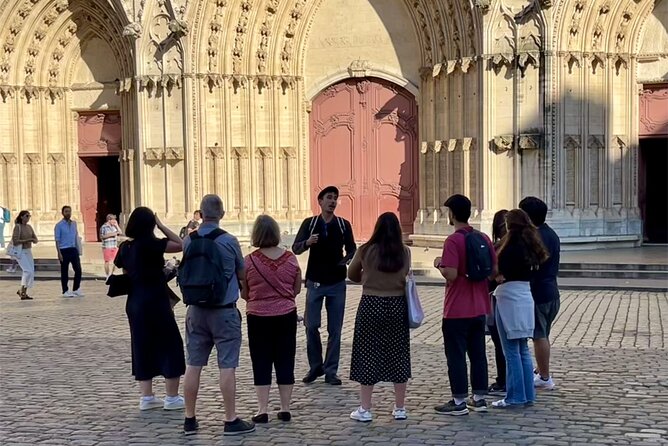
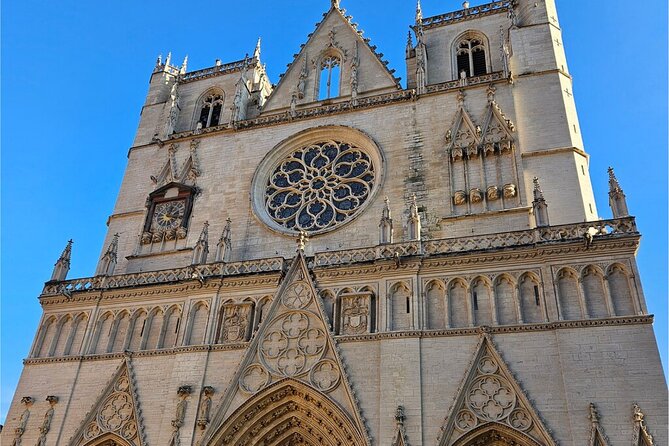
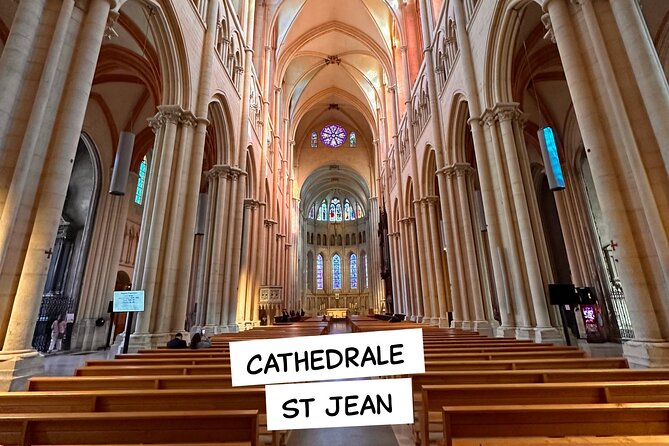
The meeting point is Place Saint-Jean, beside Cathédrale Saint-Jean-Baptiste de Lyon. Starting here places you directly in Vieux Lyon, so there is no wasted time walking from a modern meeting area into the historic quarter.
The first stop connects present-day Lyon with Lugdunum, the Roman-era city that became the capital of the Gauls. That context helps you understand why Lyon matters beyond its attractive streets. You are not simply looking at old stone. You are standing in a city with a long political and commercial role in France.
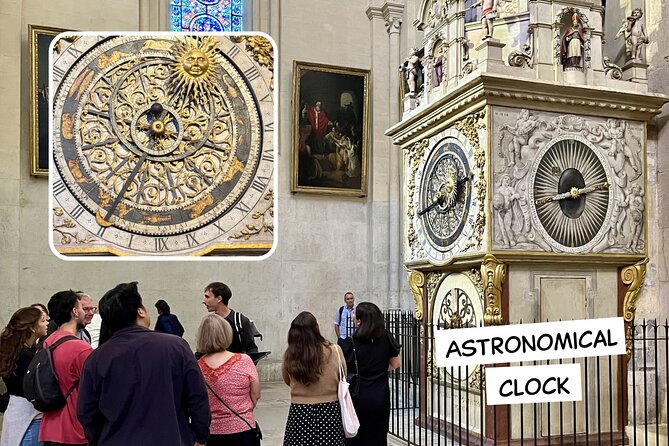
Quentin also introduces the Basilica of Fourvière before taking you inside the cathedral. The scheduled time here is about 10 minutes, including the discussion of Lyon’s early development and the basilica. That is enough for orientation and a few key facts, but not enough for a slow inspection of every architectural detail.
Admission is free at this stop. Still, remember that free entry does not mean the cathedral is the main focus of the outing. The value here is the explanation of how Lyon’s religious buildings and hilltop setting fit into the city’s story.
Vieux Lyon and the famous traboules
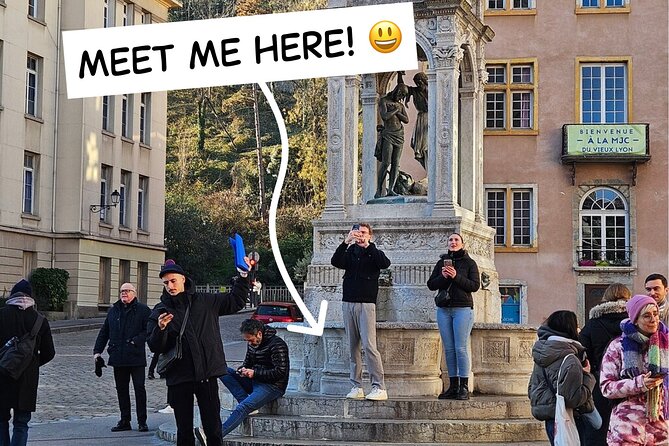
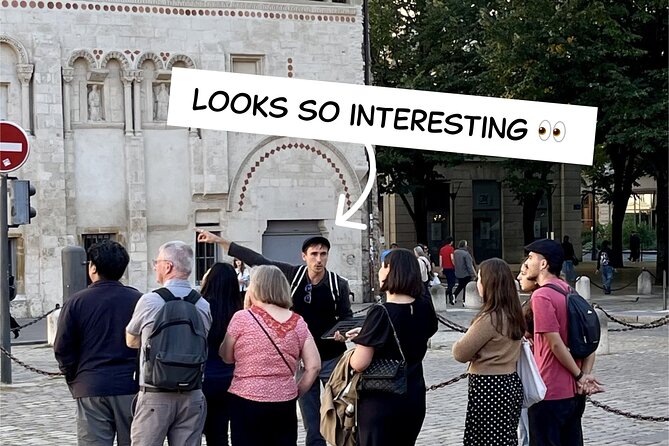
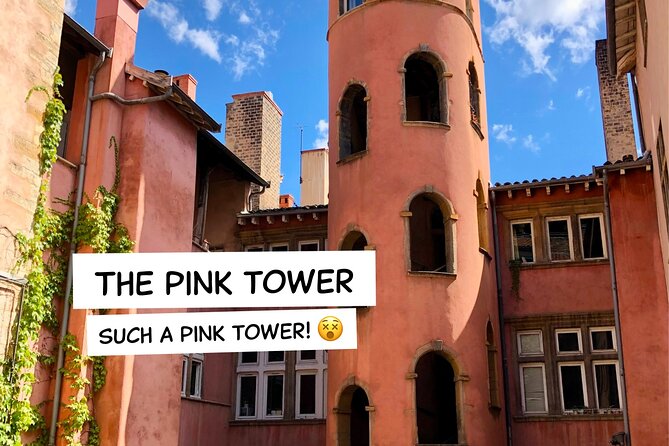
The largest block of time goes to Vieux Lyon, with about 30 minutes among streets mainly shaped during the Renaissance. This is the part many people picture when they think of Lyon: old facades, narrow lanes, and passageways that cut through buildings.
The traboules are the star. These covered routes let you pass from one street to another through courtyards and buildings. Their appeal is practical as well as atmospheric. They show how Lyon’s neighborhoods developed inward, with shared spaces that are easy to miss if you simply follow the main road.
Quentin promises secret corners and local stories here, so this section should feel more exploratory than a standard street walk. The tour does not just point at a pretty facade and move on. It uses the passageways to explain how the old town works.
You should keep your expectations sensible. The route includes several traboules, but the whole Vieux Lyon section lasts about half an hour. You will get an introduction, not an exhaustive tour of every passageway in the quarter. The best approach is to note places you want to revisit later.
This section should suit families and first-time visitors especially well. Passageways give the walk a sense of discovery, and the route avoids the dry feel of a long timeline lecture. The old town also gives you plenty to look at while Quentin talks.
Rue du Bœuf and Lyon’s serious food traditions
At Rue du Bœuf, the subject shifts to Lyon’s food culture. You will hear about bouchons, the traditional restaurants associated with the city, along with typical recipes and the people who helped make Lyon famous for cooking.
Paul Bocuse is included, as is Mère Brazier. Their names matter because Lyon’s food reputation was shaped by both grand culinary personalities and the everyday traditions of local restaurants. This stop gives you a better reason to seek out a bouchon later, rather than choosing a restaurant only because the menu looks French.
The food section lasts about 10 minutes. It does not include a meal or tasting, so plan to eat separately. That limitation is worth noting, but the short talk is still useful. Food is one of Lyon’s defining features, and a few pointers can make your dinner choices more informed.
I like the way this stop breaks up the historical material. After Roman origins and Renaissance streets, you get a practical subject you can use that same evening. Since the tour ends near the city center, you can continue the conversation over dinner if you wish.
More history-led days in Lyon:
- Historical and naughty tour of Lyon in french
★ 4.5 · 49 reviews - Lyon: Music History Tour with Wine Tasting
★ 4.9 · 34 reviews - Paris: Louvre Museum Entry with History of Mona Lisa
★ 3.9 · 2,823 reviews - Paris: Dark History and Ghostly Guided Walking Tour
★ 4.7 · 1,000 reviews
The Saône, the courthouse, and Lyon during World War II
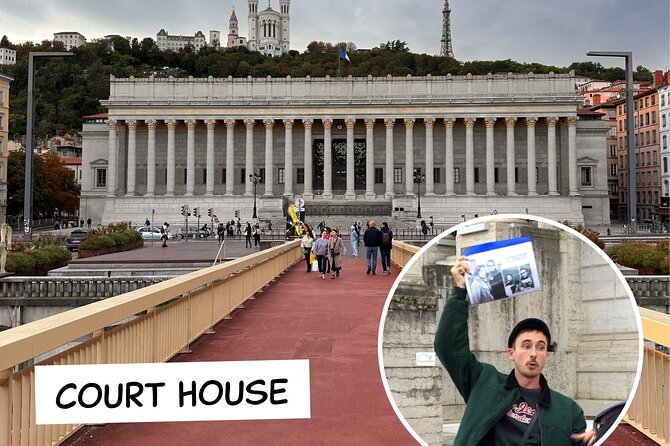
The stop at the historic Palais de Justice brings the tour into the twentieth century. From here, you will see the Saône and learn why Lyon became an important center for the French Resistance during World War II.
Jean Moulin is a central figure in this section. Quentin also discusses Klaus Barbie, the Gestapo chief who was later tried in this courthouse more than 30 years after the war. That link between the place and the legal reckoning gives the story a direct physical setting.
This is one of the more serious parts of the walk. The tour does not treat Lyon as a collection of handsome streets and pleasant restaurants. It also asks you to think about the city’s role during a brutal period of French history.
The scheduled time is about 10 minutes. That is enough to introduce the people and the setting, but not enough for a full study of the Resistance or the trial. If this subject matters greatly to you, treat the stop as an introduction and seek out more detailed museums or historical sites on your own.
For a general city tour, though, this is a valuable inclusion. You get a reminder that the same streets used for shopping and dining also carry memories of occupation, resistance, and justice.
Place des Jacobins and the modern city center
The route then moves toward Place des Jacobins, where the focus shifts to Lyon’s nineteenth-century expansion. This renovated neighborhood reflects the city built for wealthy residents during that period, with grand squares and a more formal urban design than the old quarter.
The stop lasts about 15 minutes, making it one of the longer pauses after Vieux Lyon. That extra time lets Quentin move beyond architecture and talk about life in Lyon today. You are not only looking backward. You are also getting a local view of how the city functions now.
This is useful for anyone considering where to stay, eat, or spend time after the tour. The guide’s comments may help you see the center as a lived-in place rather than a museum display.
There is also a helpful contrast here. Vieux Lyon can feel intimate and enclosed, while the area around Place des Jacobins opens into broader squares and central streets. Seeing both in one route makes Lyon’s different moods easier to understand.
Hôtel-Dieu, from hospital to shopping center
The Hôtel-Dieu is another example of Lyon changing with the times. For centuries, it served as a major hospital. Today, the building has been transformed into a shopping center.
That change gives Quentin a natural way to explain how historic buildings can survive by taking on a new role. You will see an impressive old structure, but the point is not simply its appearance. It is also about how Lyon adapts its built heritage for present use.
The visit here lasts about 10 minutes. As with the cathedral and courthouse, you should expect an overview rather than a long interior visit. The stop works best as part of the larger story: ancient city, Renaissance quarter, nineteenth-century center, and modern commercial Lyon.
Because Hôtel-Dieu is near the end of the route, it also helps you transition from sightseeing to your own plans. You can continue through the central area after the tour without needing another long transfer.
Place Bellecour and Antoine de Saint-Exupéry
The tour concludes at Place Bellecour, one of Lyon’s main squares. This is a practical endpoint, especially if you are still getting your bearings. From here, you are in the Presqu’île, with access to restaurants and routes toward other parts of the city.
Quentin uses the final 10 minutes to share lesser-known facts about the square and to visit the statue honoring Antoine de Saint-Exupéry. The Lyon-born author of The Little Prince is an appealing final connection because it adds a literary note to a tour otherwise full of architecture, politics, and food.
The statue is not the kind of major sight every visitor automatically seeks out. That makes it a fitting finale. You leave with one more detail to notice and a simple story to tell when someone asks what you saw in Lyon.
The ending also gives the tour a practical advantage. You do not finish in an isolated neighborhood or need to retrace your steps. You can find dinner nearby, continue exploring the Presqu’île, or use public transport to reach another part of the city.
What $4.64 really gets you
At $4.64 per person, this is an unusually inexpensive way to get a guided introduction to Lyon. The amount is low enough that the real financial question is not admission cost. It is whether you are comfortable with a tip-based model.
Quentin asks you to tip what you feel the experience was worth. That means you should think of the listed price as access to the walk, with the guide’s earnings partly depending on gratuities. If Quentin gives you the entertaining, useful introduction described by the tour, a tip is an important part of the exchange.
The value is strongest if you are new to Lyon and want orientation before exploring on your own. You receive nearly two hours of context, a route through several major areas, and ideas for what to revisit. The cost also makes it a low-risk choice if you are unsure how much guided sightseeing you want.
There are limits. You do not receive paid admissions, food, or a long stop at any single monument. You also cover several subjects quickly. I would choose this for breadth, local color, and a lively guide, not for detailed art history or a quiet private experience.
Timing, group size, and who should book
The tour starts at 2 p.m. and lasts approximately 1 hour and 45 minutes. That timing works well if you want a morning for Fourvière, a market, or independent exploring before meeting Quentin. It also leaves the evening open for a bouchon meal.
The route is a walking experience, so comfortable shoes are sensible. The provided information does not specify the exact walking distance or the number of stairs. You should be prepared for ordinary city walking through old streets and passageways.
Most people can take part, and service animals are allowed. The meeting point is near public transportation. Confirmation arrives when you book, and free cancellation is available if you cancel at least 24 hours before the start time. Changes or cancellations inside that window are not accepted for a refund.
This tour suits you best if:
- You want a broad introduction to Lyon in under two hours.
- You enjoy history delivered with humor and personality.
- You are curious about traboules and Vieux Lyon.
- You want food recommendations and local context without booking a food tour.
- You like finishing near restaurants and central transport.
- You are happy with a tip-based arrangement.
I would look elsewhere if you want a private guide, museum entry, food samples, or a specialist tour focused only on Roman Lyon, the Resistance, architecture, or cuisine.
Should you book Quentin’s Lyon walk?
Book it if you want to get your bearings fast and hear Lyon explained by an engaging local. The strongest reasons are the varied route, the traboules, the clear links between place and history, and Quentin’s lively style. The five-star rating from 86 reviews and 100 percent recommendation record support that choice, especially since the praise repeatedly focuses on his humor, energy, storytelling, and ability to bring the group together.
The main tradeoff is speed. You will not linger long at each stop, and the tour does not include food or paid attractions. But at $4.64, with a suggested tip rather than a large upfront cost, it offers strong value as a first look at the city.
I would book this near the start of a Lyon stay. Pay attention to the restaurants, passageways, and neighborhoods Quentin points out, then return to your favorites after the walk. That is where this tour earns its keep: it gives you a useful map of Lyon, along with enough stories to make the city feel more personal.
FAQ
Where does the Lyon walking tour start?
The tour starts at Place Saint-Jean, beside Cathédrale Saint-Jean-Baptiste de Lyon, at Pl. Saint-Jean, 69005 Lyon, France.
Where does the tour finish?
The tour ends at Place Bellecour in the Presqu’île of Lyon, at Pl. Bellecour, 69002 Lyon, France.
What time does the tour begin?
The scheduled start time is 2:00 p.m.
How long does the tour last?
The walking tour lasts approximately 1 hour and 45 minutes.
How much does the tour cost?
The listed price is $4.64 per person. Quentin also invites you to leave a tip based on what you feel the tour was worth.
What places are covered?
The route includes Cathédrale Saint-Jean-Baptiste de Lyon, Vieux Lyon, Rue du Bœuf, the historic Palais de Justice, Place des Jacobins, Grand Hôtel-Dieu, and Place Bellecour.
Is the tour suitable for most people?
Most people can participate, and service animals are allowed. The tour is near public transportation and has a maximum group size of 20 people.
Can you cancel for a refund?
Yes. You can cancel at least 24 hours before the start time for a full refund. Cancellations or changes made less than 24 hours before the start time are not accepted for a refund.
Recently added in Lyon
- 1 or 2-Hour Pedicab tour of Lyon★ 5.0 · 213 reviews
- Northern Rhône Valley Wine tour from Lyon Half Day★ 4.5 · 113 reviews
- Taste Wine in Lyon: Burgundy, Beaujolais, Rhône, and more★ 5.0 · 211 reviews
- Storytelling tour of Old Lyon★ 5.0 · 39 reviews
- Segway Tour by ComhiC – Presqu’île – 1h★ 5.0 · 26 reviews
- Lyon Old Town Private Food Tour with 6 French Delicacies & Wines★ 5.0 · 85 reviews
- Segway – Ride along the rivers 1h30★ 5.0 · 43 reviews
- Northern Rhône Valley From Lyon Full day★ 5.0 · 150 reviews
Walking Tours, compared.

Paris Top Sights Half Day Walking Tour with a Fun Guide
Read our review →
Montmartre Hidden Gems and Scenic Highlights Walking Tour
Read our review →
Montmartre Hill French Gourmet Food and Wine Tasting Walking Tour
Read our review →
Paris Île de la Cité and Notre-Dame Walking Tour With Crypt
Read our review →
Montmartre Cheese, Wine & Pastry Guided Walking Tour
Read our review →
Paris in a Day: Louvre or Orsay, Eiffel Tower, City Walk & Cruise
Read our review →
Montmartre Highlights Walking Tour with a Local Guide
Read our review →
Paris City Center Free Walking Tour (Tip-Based)
Read our review →Browse the lists this tour appears in