
REVIEW · WALKING TOURS
Montmartre & Sacré Coeur: 2.5-Hour Walking Tour
Montmartre rewards slow steps and curious eyes. This 2.5-hour walking tour brings together the neighborhood’s cobbled lanes, famous artists, Belle Époque cabarets, and the white dome of Sacré Coeur. I like the strong mix of art history and local stories, and I like that the route includes small corners you could easily miss on your own.
The guides are another clear strength. Tamari, François, Fred, Anastasia, Elena, Alex, Felix, and Liliyana have all been praised for their warmth, storytelling, and grasp of Parisian art and culture. The main drawback is the walking itself: Montmartre sits on a hill, with narrow streets and steps, so this is not a good fit if you have serious mobility limits.
In This Review
- Key points to know before booking
- Why Montmartre works best on foot
- From the Moulin Rouge into Montmartre
- Following Van Gogh, Picasso, and Toulouse-Lautrec
- Place du Tertre and the artist quarter
- Café des 2 Moulins and everyday Montmartre
- Entering Sacré Coeur Basilica
- What the guides add to the experience
- Hills, shoes, and practical comfort
- Is $53 a fair price?
- Who should book this Montmartre walk?
- My verdict on the Montmartre and Sacré Coeur tour
- FAQ
- How long does the Montmartre and Sacré Coeur tour last?
- What sights are included?
- Is entry to Sacré Coeur included?
- Does the tour include food or drinks?
- Is transportation included?
- How many people are in each group?
- Is a private tour available?
- What languages are offered?
- Can I bring luggage?
- Is the tour suitable for people with mobility impairments?
- What should I bring?
- What happens if Sacré Coeur is unexpectedly closed?
Key points to know before booking
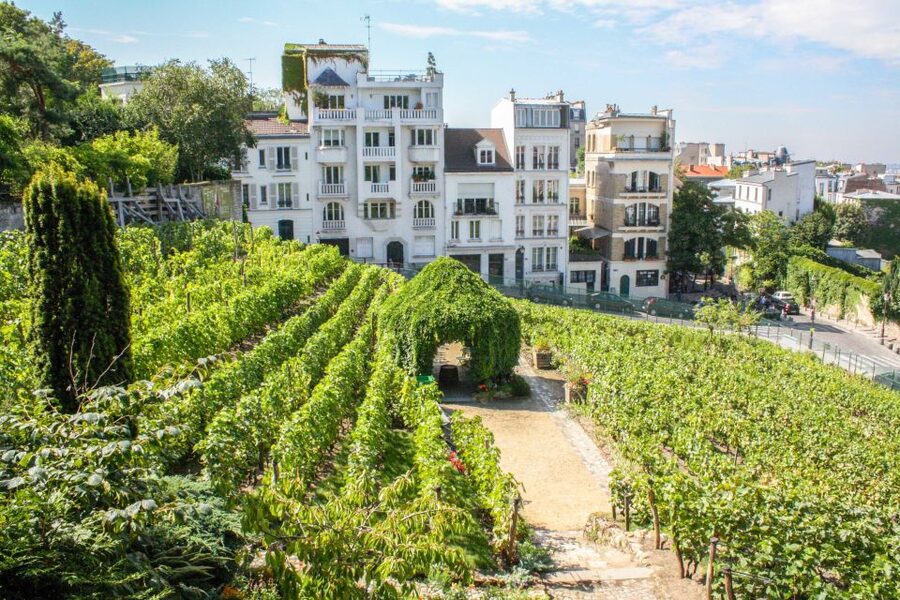
- Montmartre’s famous names come to life: Follow links to Van Gogh, Picasso, Toulouse-Lautrec, and the artists who shaped the quarter.
- Place du Tertre is a central stop: See the square where artists still gather, though its fame also makes it one of the more touristy parts of the neighborhood.
- The Moulin Rouge adds Belle Époque drama: Learn about the cabaret’s place in Parisian nightlife and the stories surrounding the area.
- Sacré Coeur finishes the tour on a high note: Step inside the basilica and take in the broad view across Paris.
- Small groups make a difference: The tour is limited to 12 people per guide, with private-group options available.
- Wear proper shoes: The route includes a moderate amount of walking, hills, and cobbled streets.
Why Montmartre works best on foot
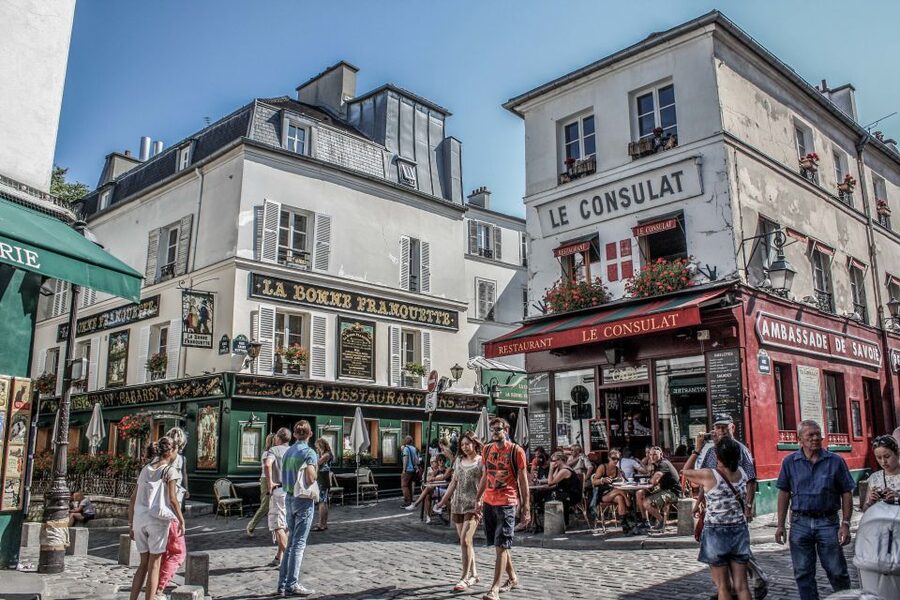
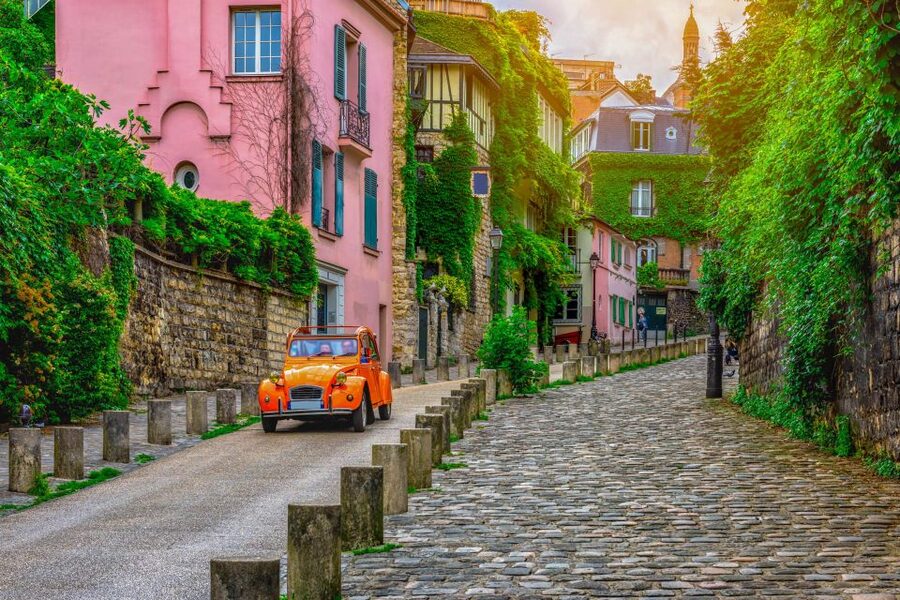
Montmartre feels different from the grand boulevards and formal monuments found elsewhere in Paris. The old quarter climbs the hill above the city, and its streets can change character within a few minutes. One stretch may feel quiet and residential, while the next opens onto an artist-filled square or a famous cabaret.
That contrast is the main reason I think a guided walk is useful here. You can certainly visit Sacré Coeur alone, but it is easier to miss the stories tucked between the major sights. A guide can connect a doorway, café, studio, or street corner to the artists and performers who made Montmartre famous.
The tour lasts 2.5 hours, which gives you enough time for context without turning the outing into an all-day commitment. You will be on your feet for most of it, so plan this for a time when you still have energy for hills. Montmartre is not difficult for most reasonably mobile walkers, but it is not flat Paris.
More Walking Tours in Paris
- Paris Top Sights Half Day Walking Tour with a Fun Guide
★ 5.0 · 2,893 reviews - Montmartre Hidden Gems and Scenic Highlights Walking Tour
★ 5.0 · 2,684 reviews - Montmartre Hill French Gourmet Food and Wine Tasting Walking Tour
★ 5.0 · 2,588 reviews
From the Moulin Rouge into Montmartre
The Moulin Rouge provides a lively starting point for the neighborhood’s cabaret story. Its red windmill is one of Paris’s instantly recognizable signs, but the real value here is the explanation of what surrounded it during the Belle Époque.
Your guide discusses the cabaret culture that helped give Montmartre its reputation for music, dance, satire, and late-night entertainment. Henri de Toulouse-Lautrec is an important part of that story, since his posters helped fix the image of the Moulin Rouge in the public imagination.
This section is especially useful if you want more than a photo stop. The Moulin Rouge can be crowded and visually quick to understand, but the history gives it weight. You begin to see Montmartre not simply as a pretty hilltop quarter, but as a place where painters, writers, performers, and pleasure seekers crossed paths.
The tour does not include a Moulin Rouge show. It is a walking visit and historical introduction, so you should not book it expecting entry to the cabaret or an evening performance.
Following Van Gogh, Picasso, and Toulouse-Lautrec
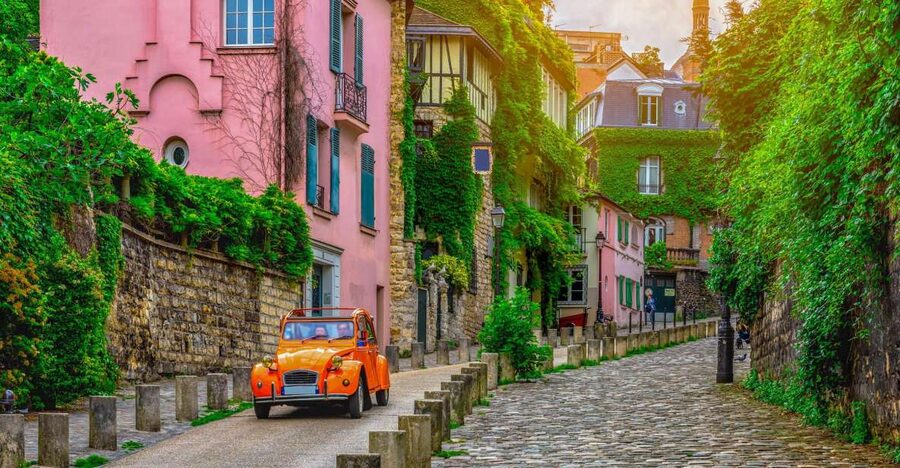
The artists’ connection to Montmartre is one of the best reasons to choose this tour. You visit the former home of Vincent Van Gogh, see the location associated with Pablo Picasso’s art studio, and hear about Toulouse-Lautrec’s links to the district.
These stops help explain why artists were drawn to Montmartre. The quarter offered a village-like setting above Paris, with studios, cabarets, cafés, and a loose creative crowd. The streets were not just backdrops for paintings. They were part of the working life and social world of the artists.
The guide’s storytelling matters here. Liliyana, for example, has been praised for connecting art history to the actual places along the route. Anastasia has also been noted for bringing color and context to the landmarks through her art history background. That kind of explanation can turn a simple building into a meaningful stop.
Felix used a tablet to show before-and-after images of parts of Montmartre, making it easier to see how the quarter has changed. This is a useful touch because the modern streets do not always look like the Montmartre captured in old photographs and paintings.
Do not expect a museum visit dedicated to the artists. The focus is on streets, former homes, studios, and stories. If you want to see major original paintings, you will need a separate museum visit.
Place du Tertre and the artist quarter
Place du Tertre is one of Montmartre’s most recognizable squares. Artists gather here with portraits, sketches, and paintings, continuing a tradition that has made the area famous around the world.
I like this stop because it gives the walk a direct link to Montmartre’s artistic identity. At the same time, you should know that its fame makes it one of the more commercial and crowded parts of the hill. The square is worth seeing, but it is not the whole neighborhood.
The guide helps you read the place with more perspective. Instead of simply seeing rows of easels, you learn how this part of Montmartre became associated with artists and how that reputation shaped the quarter. If you are tempted to buy a portrait, remember that food, drinks, and purchases are not included in the tour price.
The route also moves through quieter pockets that are often missed when you head straight from the Moulin Rouge to Sacré Coeur. This is where the walking format earns its keep. A vehicle would get you between landmarks, but it would erase the small-scale feel that makes Montmartre special.
Same city, a slower kind of day:
- Paris: Louvre Museum Timed-Entrance Ticket
★ 4.6 · 71,977 reviews - Disneyland® Paris 1-Day Ticket
★ 4.6 · 49,412 reviews - Paris: Versailles Palace and Gardens Full Access Ticket
★ 4.6 · 41,579 reviews - Paris: Evening River Cruise with Music
★ 4.4 · 22,721 reviews
Café des 2 Moulins and everyday Montmartre

One review specifically praised a stop at Café des 2 Moulins, the café recognized by many people from the film Amélie. The café adds a modern pop-culture layer to the route, alongside the older stories of painters and cabaret performers.
The stop is useful because Montmartre has several identities at once. It is an artists’ quarter, a former nightlife center, a film setting, a religious destination, and a working Paris neighborhood. The tour’s appeal comes from bringing these strands together rather than presenting only one postcard version of the hill.
The information provided does not promise a meal or a long café break. Food and drinks are not included, so treat this as a point of interest rather than a dining experience. You can always return later if you want to sit down.
Felix’s baguette stop is another detail worth noting. He treated his group to a taste of a traditional baguette from an award-winning bakery. That sounds like a guide-specific addition, not something every departure guarantees, so I would view it as a pleasant possibility rather than part of the advertised inclusions.
Entering Sacré Coeur Basilica
Sacré Coeur is the tour’s grand finish. The white basilica crowns Montmartre and gives the hill its unmistakable profile. The walk leads you to the building, includes a visit inside, and gives you time to take in its religious and architectural presence.
The basilica is more than a scenic viewpoint. It is an active place of worship, so you should expect certain interior spaces to require quiet or limit conversation. Some rooms or collections may also be unavailable at times, and occasional closures can happen without advance warning.
The tour includes entry to Sacré Coeur, but it does not promise access to every room or collection on every date. If a closure affects the planned visit, an appropriate alternative may be offered when the delay is more than an hour. Refunds or discounts are not provided in those circumstances.
The panorama over Paris is one of the strongest payoffs. The view is especially appealing if your departure is timed toward sunset, as the experience description suggests. Sunset timing depends on the scheduled start, the season, and the pace of the group, so check the available departure time rather than assuming every tour ends at sunset.
The view also explains Montmartre’s place in the city. From the hilltop, Paris spreads below you in a broad sweep, giving you a useful sense of how the quarter sits above the central city.
What the guides add to the experience
A walking tour succeeds or fails on the guide. Here, the strongest praise centers on guides who make the history conversational rather than turning it into a list of dates.
François has been praised for his command of Parisian history, architecture, and culture, along with an energetic style that kept the group engaged. Fred has been described as casual, friendly, and highly personal, with a strong feel for Montmartre’s history.
Tamari’s art background and enthusiasm helped connect famous people to the places on the route. Alex was praised for his passion for Parisian history, while Elena was described as warm and generous. Eden also received praise for creating a very pleasant experience.
That range of names matters because guide quality can vary from one departure to another. The overall pattern is encouraging, but you are not guaranteed a particular guide unless the booking specifically confirms one. The available languages are English, Spanish, Italian, French, Russian, and German.
The maximum of 12 people per guide keeps the group small enough for questions and conversation. A private group is available, which may be worth considering if you want to set the pace or keep the experience focused on your family or friends.
Hills, shoes, and practical comfort
Wear walking shoes or sneakers. The route uses cobbled streets and includes hills, and Liliyana’s practical advice about proper footwear is worth following.
The tour involves a moderate amount of walking. It is not suitable for wheelchair users or people with walking disabilities, and the semi-private option is specifically unavailable to those with mobility impairments. Montmartre’s topography is the reason, not a lack of interest in accommodating visitors.
Leave luggage and large bags behind. Suitcases are not allowed, and the activity is easier when you can move through narrow streets without carrying bulky items. You should also bring a passport or ID card, as that is listed among the required items.
Transportation is not included. You need to reach the meeting point yourself, and the exact starting location can vary with the option you book. The tour ends back at the meeting point, so do not plan a tightly timed connection immediately afterward.
Provide a mobile phone number and an email address that work during your trip. This is especially important when the meeting point depends on the selected option or when the operator needs to contact you.
Is $53 a fair price?
At $53 per person, this is not the cheapest way to see Montmartre. You can walk up to Sacré Coeur without paying for a guide, and the streets around Place du Tertre are open to everyone.
The value comes from the interpretation. You are paying for 2.5 hours of organized walking, a guide who connects the artists and cabarets to actual places, a visit inside Sacré Coeur, and a group capped at 12 people per guide. For a first stay in Paris, that can be a sensible use of money, especially if you want to understand the neighborhood instead of simply photographing it.
The price makes less sense if you already know Montmartre well or prefer to wander without a schedule. It also does not include food, drinks, transportation, shopping, or a Moulin Rouge performance. Think of it as a history and orientation walk, not a full day of paid attractions.
A private group option can offer stronger value for families or small parties who want a more personal pace. If you are booking the semi-private departure, at least two participants are required for it to run. If that minimum is not met, an alternative date or a full refund is offered.
Who should book this Montmartre walk?
I would recommend it to first-time Paris visitors who want an introduction to Montmartre without spending half a day planning a route. It also suits anyone interested in artists, cabaret history, architecture, or film locations.
Families can benefit from the stories and manageable 2.5-hour length, provided everyone can handle the hills. Art lovers should pay close attention to the guide’s explanations around Van Gogh, Picasso, and Toulouse-Lautrec.
You may want to skip it if you have limited mobility, dislike walking uphill, or want a deep interior visit at Sacré Coeur. It is also not the right booking if your main goal is a Moulin Rouge show, a meal, or extensive free time for shopping.
Cancellation is flexible up to 24 hours before the tour for a full refund, and you can reserve now and pay later. Those terms help if your Paris schedule is still shifting, but you should still check the exact meeting point and departure time before committing.
My verdict on the Montmartre and Sacré Coeur tour
I think this is a strong introduction to one of Paris’s most atmospheric quarters. The best parts are the small group size, the art connections, the cabaret context, and the final view from Sacré Coeur. The guides appear to be the biggest reason the walk works so well, particularly when they use personal storytelling, art background, or old photographs to explain what you are seeing.
Book it if you want Montmartre to make sense, not just look pretty. Skip it if hills are a serious problem or if you prefer to explore at your own pace. For most first-time visitors who can walk comfortably, $53 is a reasonable price for a focused neighborhood tour with a strong finish.
FAQ
How long does the Montmartre and Sacré Coeur tour last?
The walking tour lasts 2.5 hours.
What sights are included?
The route includes Montmartre, Place du Tertre, the Moulin Rouge, the former home of Vincent Van Gogh, the location of Pablo Picasso’s art studio, and Sacré Coeur Basilica.
Is entry to Sacré Coeur included?
Yes. A visit to Sacré Coeur Cathedral is included.
Does the tour include food or drinks?
No. Food and drinks are not included in the price.
Is transportation included?
No. You must make your own way to the meeting point, and the tour ends back there.
How many people are in each group?
The tour has a maximum of 12 participants per guide.
Is a private tour available?
Yes. A private group option is available.
What languages are offered?
The live guide options are English, Spanish, Italian, French, Russian, and German.
Can I bring luggage?
No. Large bags and suitcases are not allowed.
Is the tour suitable for people with mobility impairments?
No. The tour involves a moderate amount of walking and is not suitable for people with mobility impairments or wheelchair users.
What should I bring?
Bring a passport or ID card, and wear comfortable walking shoes.
What happens if Sacré Coeur is unexpectedly closed?
An appropriate alternative may be provided if the opening is delayed by more than one hour from the tour’s scheduled start. Refunds or discounts are not provided for these unexpected closures.
Recently added in Paris
- Private Transfers in Paris★ 5.0 · 75 reviews
- CDG – Euro Disney – CDG Two Way Private Shuttle Transfer★ 5.0 · 233 reviews
- Disneyland® Paris 1 Day Ticket with Transport from Paris★ 3.5 · 302 reviews
- Personalized Transport service from Disneyland to Paris★ 5.0 · 63 reviews
- Monet’s Gardens & House-Private Giverny Tour From Paris★ 4.5 · 137 reviews
- Guided tour Monet’s house and gardens/small group★ 4.5 · 68 reviews
- Giverny Monet House and Gardens Skip the line Walking tour★ 4.0 · 217 reviews
- Monet’s House and Garden & Giverny Village★ 4.5 · 39 reviews
Walking Tours, compared.

Paris Top Sights Half Day Walking Tour with a Fun Guide
Read our review →
Montmartre Hidden Gems and Scenic Highlights Walking Tour
Read our review →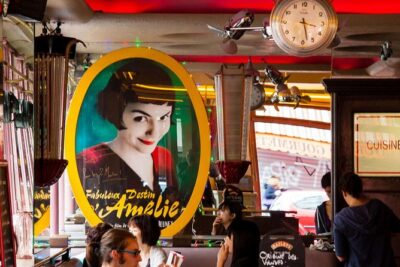
Montmartre Hill French Gourmet Food and Wine Tasting Walking Tour
Read our review →
Paris Île de la Cité and Notre-Dame Walking Tour With Crypt
Read our review →
Montmartre Cheese, Wine & Pastry Guided Walking Tour
Read our review →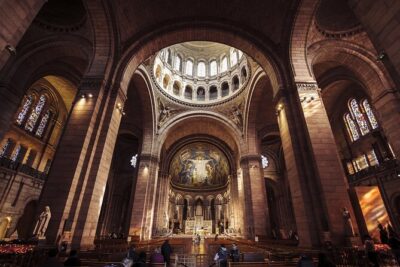
Paris in a Day: Louvre or Orsay, Eiffel Tower, City Walk & Cruise
Read our review →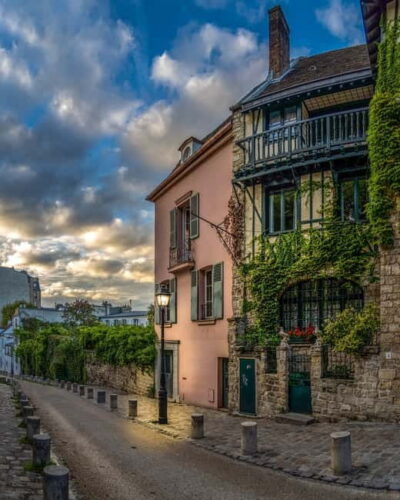
Montmartre Highlights Walking Tour with a Local Guide
Read our review →
Paris City Center Free Walking Tour (Tip-Based)
Read our review →Browse the lists this tour appears in