
REVIEW · WALKING TOURS
Paris by Night Walking Tour: Ghosts, Mysteries and Legends
Paris gets stranger after sunset. This two-hour walk turns central Paris into a stage for murders, massacres, plagues, royal intrigue, and revolution. I like the nighttime setting and the chance to hear stories at places many daytime tours pass without much thought. I also like the small group limit of 20, which makes it easier to hear the guide in busy streets. The main drawback is clear: the tour often feels more like dark history than a true ghost tour.
You start near Pont Neuf and finish close to Hôtel de Ville, walking through the Île de la Cité and the streets of central Paris. Guides such as Sophia, Daniel, Thelma, Sylvia, Ami, and Kritika have all led versions of this experience, so the tone can vary. Plan on close to 10,000 steps, comfortable shoes, and a willingness to listen while moving between stops.
In This Review
- Key points to know before booking
- What this Paris night walk is really about
- Starting at Henri IV near Pont Neuf
- Square du Vert-Galant and the Knights Templar
- Saint-Germain-l’Auxerrois and the 1572 massacre
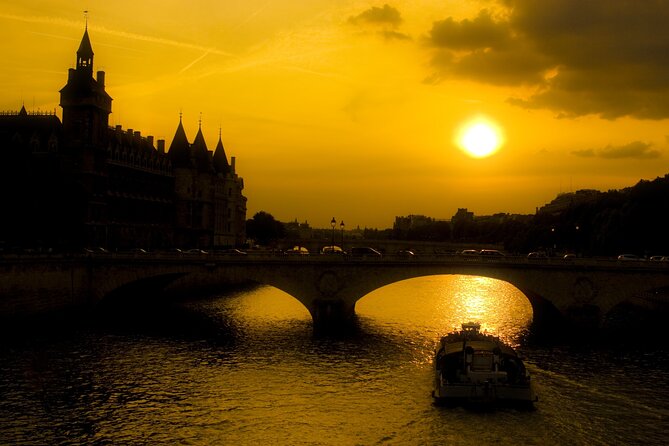
- The Île de la Cité and the Conciergerie
- The Palais de Justice and revolutionary punishment
- Ending at Hôtel de Ville
- Guide quality can shape the whole evening
- How much walking should you expect?
- Is $18.10 a fair price?
- Accuracy and entertainment deserve a closer look
- Who should book this evening walk?
- Should you book Paris by Night?
- FAQ
- How long does the Paris by Night Walking Tour last?
- Where does the tour start?
- Where does the tour end?
- Is the tour offered in English?
- How large is the group?
- Are entrance tickets included?
Key points to know before booking
- The route links Parisian history with grim stories: Expect accounts of executions, torture, religious violence, war, plague, and political unrest.
- The Conciergerie is a major stop: You see the former prison associated with Marie Antoinette, though this is an exterior visit rather than a museum admission.
- The Square du Vert-Galant adds an unusual setting: This peaceful riverside park is tied to the execution of the last Knights Templar.
- The ghost element is uneven: Some guides include spirits and local legends, but the walk usually leans toward documented or semi-documented history.
- The value is strong at $18.10: Two hours of guided walking in central Paris costs little compared with most evening activities.
- The walk is best for curious first-time visitors: It works well if you want a lively introduction to Paris’s darker past, but serious history fans may want more precision.
What this Paris night walk is really about
The title promises ghosts, mysteries, and legends. The actual experience is broader. You get a guided walk through the violent side of Paris, with supernatural stories mixed into accounts of royal power, religious conflict, public punishment, and occupation.
That distinction matters. If you want actors, jump scares, haunted interiors, or a steady stream of ghost stories, this may disappoint you. Several people found it only mildly spooky, and some left early because the walk felt like a standard history lesson.
If you enjoy stories about how a city was shaped by fear and power, the tour has more to offer. The French Revolution, the St. Bartholomew’s Day Massacre, the Paris Commune, and the Nazi occupation all appear in the wider narrative. The guide also brings up murders, plagues, torture, and public executions.
The nighttime setting helps. Paris is quieter in some areas after dark, and familiar monuments take on a different mood when their normal crowds thin out. Still, the tour takes place outdoors, so the atmosphere depends partly on the weather, the group, and the guide’s storytelling skill.
More Walking Tours in Paris
- Paris Top Sights Half Day Walking Tour with a Fun Guide
★ 5.0 · 2,893 reviews - Montmartre Hidden Gems and Scenic Highlights Walking Tour
★ 5.0 · 2,684 reviews - Montmartre Hill French Gourmet Food and Wine Tasting Walking Tour
★ 5.0 · 2,588 reviews
Starting at Henri IV near Pont Neuf
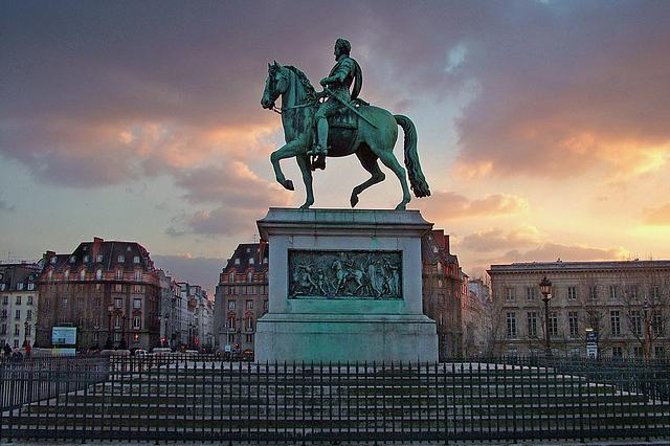
The meeting point is the Equestrian Statue of Henri IV at 15 Place du Pont Neuf. This is a practical location in central Paris, near public transportation and easy to connect with from other parts of the city.
The opening subject, Henri IV, sets the tone for the walk. He was a king tied to religious conflict, political compromise, and a colorful private life. The nearby Square du Vert-Galant was created in his honor, including a reference to his mistresses. In daylight, it is a pleasant green space at the tip of the Île de la Cité. At night, the guide presents a far darker memory.
This opening is a good example of what the tour does best: place an unsettling story beside a calm, attractive corner of Paris. You are not simply looking at old buildings. You are being asked to picture what happened there before the city became a symbol of romance and style.
The meeting area can be busy, so arrive with the guide’s name and exact meeting details ready. There is no hotel pickup or drop-off. You make your own way to the statue and leave the group at the end near Hôtel de Ville.
Square du Vert-Galant and the Knights Templar
The first formal stop is Square du Vert-Galant, with about five minutes allotted to it. Admission is free because the visit is outdoors.
The park offers a striking contrast. It is a romantic spot beside the Seine, yet the story attached to it concerns the last Knights Templar, who were burned at the stake. That contrast gives the tour its strongest visual idea: a beautiful modern city built over scenes of punishment and political violence.
The Templars are among the most famous medieval subjects in Paris, and the story naturally attracts legends. Listen carefully to the guide’s wording here. One concern raised about this stop is that some physical details may be presented too literally, such as pointing to a modern pillar or stair structure as if it were the exact site of a medieval execution.
That does not ruin the setting, but it is a reminder to treat dramatic details as storytelling rather than unquestioned fact. If you have a serious interest in medieval history, you may want to check specific claims later.
Saint-Germain-l’Auxerrois and the 1572 massacre
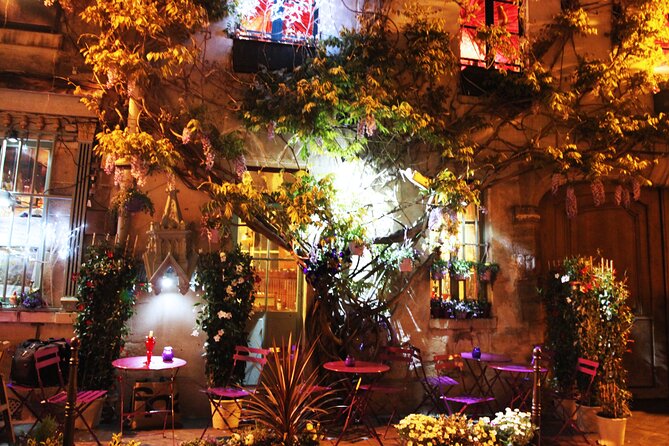
The walk continues to Eglise St-Germain l’Auxerrois, a church with roots reaching back to the seventh century. The stop lasts about five minutes and is free.
Here the guide discusses the St. Bartholomew’s Day Massacre of 1572, when tens of thousands of Huguenots were killed. The event grew out of the long and bitter conflict between Catholics and Protestants in France. It is one of the tour’s most important historical episodes, and the church gives the discussion a strong sense of place.
This part is less about ghosts than about collective violence. The guide may focus on Catherine de’ Medici, Henri IV, the royal wedding that preceded the massacre, and the political tension surrounding the French court.
The topic is powerful, but accuracy matters. Different guides may tell the political story with varying degrees of detail, and some past presentations have been criticized for mixing up dates, motives, and family relationships. If you already know sixteenth-century French history, listen for the guide’s interpretation rather than assuming every colorful detail is settled fact.
For most first-time visitors, this is still a useful introduction to the religious wars that shaped France. It also gives you a better sense of why Henri IV’s conversion and later political choices mattered.
Same city, a slower kind of day:
- Paris: Louvre Museum Timed-Entrance Ticket
★ 4.6 · 71,977 reviews - Disneyland® Paris 1-Day Ticket
★ 4.6 · 49,412 reviews - Paris: Versailles Palace and Gardens Full Access Ticket
★ 4.6 · 41,579 reviews - Paris: Evening River Cruise with Music
★ 4.4 · 22,721 reviews
The Île de la Cité and the Conciergerie
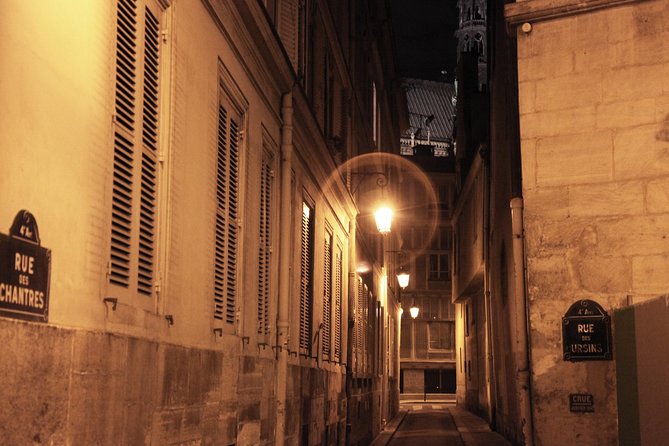
The route passes through the Île de la Cité, the island at the center of the Seine. In the fourth century, it held the fortress of the Roman governor, and it later became a major seat of royal and judicial power.
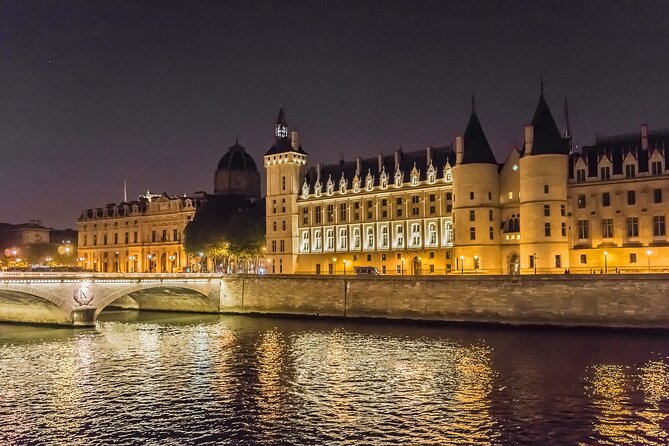
The Conciergerie, also called the Hotel de Concierge in the tour description, is one of the most evocative buildings on the route. It served as a prison during the French Revolution, and Marie Antoinette was held there before her execution.
You see the building from the outside rather than entering for a museum visit. That limits what you can experience, but the exterior still works well for the guide’s story. The heavy medieval architecture and the site’s association with prisoners, trials, and the Revolution give the stop a natural sense of menace.
If you want to visit Marie Antoinette’s prison cells or see the interior, you will need a separate admission. This walking tour does not include entrance tickets.
The Palais de Justice and revolutionary punishment
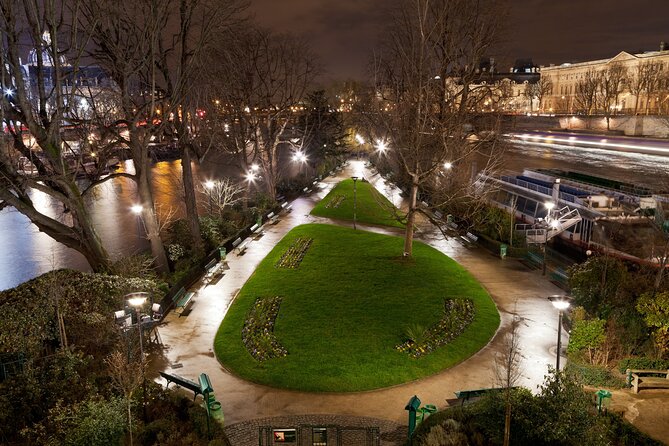
The Palais de Justice provides the clearest connection to the French Revolution. The guide explains how accused people were tried, sentenced, and sent to the guillotine. Public executions drew crowds, and the spectacle could include kings, political enemies, and revolutionaries who had once held power themselves.
The building also received the Grand Prix de l’Empereur as the greatest work of art produced in France during that decade. That detail adds another layer to the stop. The same judicial complex can be viewed as a major work of architecture and as a place connected to fear, imprisonment, and death.
This is one of the better sections for understanding how public punishment worked in revolutionary Paris. The guillotine was not hidden away. It was part of public life and political theater.
The drawback is pacing. The walk has long stretches between major points, and some people found that these sections felt like nothing more than moving from one speech to the next. A strong guide fills the gaps with short stories or questions. A less engaging guide may simply keep walking and talking.
Ending at Hôtel de Ville
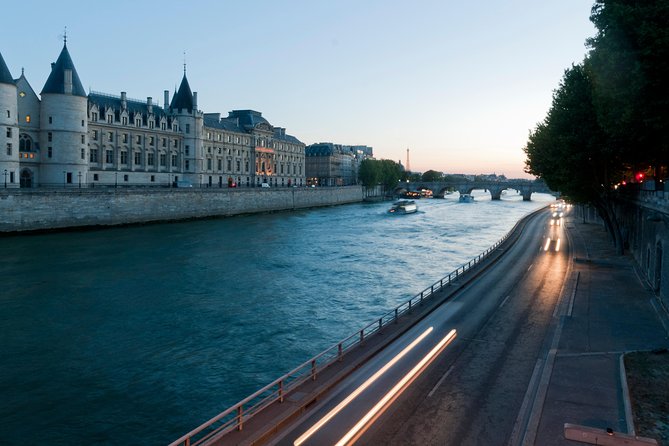
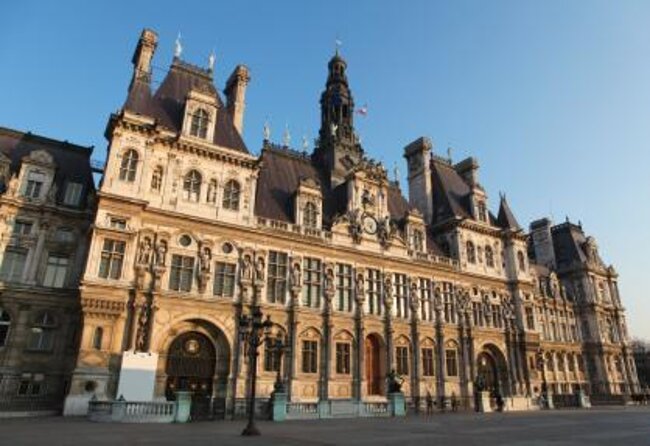
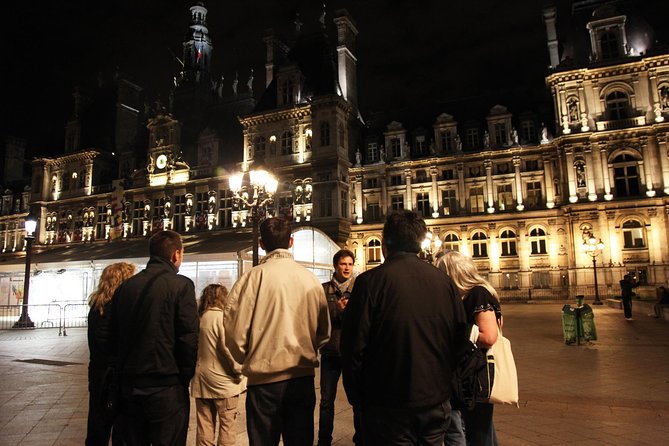
The walk ends near Place de l’Hôtel de Ville, at Hotel La Ville, 70 Rue de Rivoli. This is a useful finish because you are close to transportation, restaurants, and more central Paris sights.
The square has a double identity. The municipality once used it for celebrations, including royal births and marriages. It was also the site of important executions from 1310 to 1830, including those of François Ravaillac and Marie-Madeleine-Marguerite de Brinvilliers.
That contrast makes the final stop a fitting close. Public celebration and public death took place in the same civic space. Parisian history often works this way: grand ceremony is only a few steps from punishment and unrest.
Some people hoped for a stronger final ghost story. A more macabre ending could have included La Voisin, the poisoner and accused witch who rose close to the French court before being burned at the stake. Her story would suit the title well, but it is not listed as a guaranteed part of the route, so do not book expecting it.
Guide quality can shape the whole evening
The guide matters a great deal here. Sophia has been praised for her warmth, storytelling, answers to questions, and suggestions for other places to visit, including Père Lachaise Cemetery. Daniel has been praised for his humor, clear facts, and steady pace. Thelma and Sylvia have also been described as personable and effective at presenting the darker material.
The strongest guides connect each stop to the next. They explain why Henri IV matters at the first stop, how religious conflict leads to royal politics, and how those struggles eventually feed into revolutionary violence. That connective thread makes the walk feel like one story instead of a string of unrelated facts.
Other guides may be more passive. You might get a long monologue with little interaction, or a fast-paced walk where the group has limited time to absorb each point. Since the company says guides bring their own approach, you should expect some variation.
The group limit is 20 people or fewer. That is small enough for a guide to answer questions and keep the group together, though busy streets can still make hearing difficult. English is the only listed language.
How much walking should you expect?
The tour lasts about two hours, but the distance can feel substantial. One account estimated roughly 10,000 steps, so do not treat this as a short stroll between monuments.
Wear comfortable shoes. The route uses city streets and outdoor public spaces, and you will spend much of the time standing while the guide talks. Since it is an evening activity, bring clothing suited to the forecast. The tour does not include a hotel transfer, food, or entrance tickets.
Most people can participate, but the format may not suit anyone who dislikes steady walking or standing. The tour is also not ideal for young children. The subjects include murder, torture, executions, massacres, and plague.
Is $18.10 a fair price?
At $18.10 per person, the price is one of the tour’s strongest points. You receive about two hours with a local guide, a central route, and a small group limit. For an evening in Paris, that is a modest cost, especially if you want something beyond a restaurant meal or another monument visit.
The value depends on what you expect. If you think of it as a guided introduction to the darker side of Paris, the price is good. You get a substantial amount of history and several locations that you might otherwise walk past without understanding.
If you are paying specifically for supernatural entertainment, the value drops. The title sets a high expectation, while much of the content concerns documented violence and political history. A self-guided walk through the same streets would cost nothing, although you would miss the guide’s explanations and the links between the places.
At this price, I would see it as an accessible orientation walk rather than a specialist ghost experience.
Accuracy and entertainment deserve a closer look
The most serious concern is historical precision. Some accounts describe errors involving Catherine de’ Medici, Henri IV, the Hundred Years’ War, the St. Bartholomew’s Day Massacre, and the Knights Templar.
For example, a guide should not place Catherine de’ Medici in events that happened before her birth, or suggest that Henri IV became king solely through marriage. The history of his succession involved male-line descent and French Salic law. The royal wedding before the St. Bartholomew’s Day Massacre was also arranged as part of an effort to reduce Catholic and Protestant conflict, not simply as a trap from the beginning.
These points matter because the tour deals with subjects where political motives and dates are central. A dramatic story is fine, but changing the basic facts can leave you with a false picture of French history.
That said, the experience can still be enjoyable if you approach it as popular storytelling. Ask questions when something sounds uncertain. A guide who welcomes questions and explains the limits of a legend can turn a weak point into a useful discussion.
Who should book this evening walk?
I would recommend it to a first-time Paris visitor who wants a low-cost evening activity and enjoys stories about crime, royal power, religion, and revolution. It is also a good choice for families with older teenagers who can handle grim subjects.
You are likely to enjoy it if you like walking, outdoor sightseeing, and the way a guide can make ordinary streets feel loaded with meaning. The nighttime setting, free public stops, and central finish add practical value.
I would hesitate to recommend it to a specialist in French history or to anyone seeking a serious paranormal tour. You may already know many of the stories, and you may find some versions too simplified or historically loose.
Free cancellation is available if you cancel at least 24 hours before the start time. If the minimum number is not reached and the tour is canceled, you are offered another date or experience, or a full refund.
Should you book Paris by Night?
Book it if you want an inexpensive, English-language walk through Paris’s darker past, and you can accept that the ghost stories may be secondary. The best guides, including Sophia and Daniel, appear to add humor, warmth, and clear storytelling to the route.
Skip it if you want haunted buildings, theatrical scares, or tightly researched medieval and revolutionary history. For most curious first-timers, the $18.10 price makes this a reasonable way to spend two evening hours. Just bring good shoes and set your expectations correctly: this is a dark history walk with legends, not a full-time ghost hunt.
FAQ
How long does the Paris by Night Walking Tour last?
The tour lasts approximately two hours.
Where does the tour start?
It starts at the Equestrian Statue of Henri IV at 15 Place du Pont Neuf, 75001 Paris.
Where does the tour end?
The walk ends near Hotel La Ville at 70 Rue de Rivoli, 75004 Paris.
Is the tour offered in English?
Yes. English is the listed language for this experience.
How large is the group?
The group is limited to 20 people or fewer.
Are entrance tickets included?
No. The tour includes a local guide, but hotel transfers and admission tickets are not included.
More Evenings Out in Paris
- Paris: Day or Sunset Cruise with Drink, Ice Cream or Dessert
★ 4.4 · 4,225 reviews - Paris: Big Bus Panoramic Night Tour by Open-Top Bus
★ 4.4 · 4,168 reviews - Paris: Illuminated Evening River Cruise & Waffle Tasting
★ 4.1 · 2,697 reviews - Paris: Evening Sightseeing Tour and Moulin Rouge Show
★ 4.0 · 1,394 reviews
Recently added in Paris
- Private Transfers in Paris★ 5.0 · 75 reviews
- CDG – Euro Disney – CDG Two Way Private Shuttle Transfer★ 5.0 · 233 reviews
- Disneyland® Paris 1 Day Ticket with Transport from Paris★ 3.5 · 302 reviews
- Personalized Transport service from Disneyland to Paris★ 5.0 · 63 reviews
- Monet’s Gardens & House-Private Giverny Tour From Paris★ 4.5 · 137 reviews
- Guided tour Monet’s house and gardens/small group★ 4.5 · 68 reviews
- Giverny Monet House and Gardens Skip the line Walking tour★ 4.0 · 217 reviews
- Monet’s House and Garden & Giverny Village★ 4.5 · 39 reviews
Walking Tours, compared.

Paris Top Sights Half Day Walking Tour with a Fun Guide
Read our review →
Montmartre Hidden Gems and Scenic Highlights Walking Tour
Read our review →
Montmartre Hill French Gourmet Food and Wine Tasting Walking Tour
Read our review →
Paris Île de la Cité and Notre-Dame Walking Tour With Crypt
Read our review →
Montmartre Cheese, Wine & Pastry Guided Walking Tour
Read our review →
Paris in a Day: Louvre or Orsay, Eiffel Tower, City Walk & Cruise
Read our review →
Montmartre Highlights Walking Tour with a Local Guide
Read our review →
Paris City Center Free Walking Tour (Tip-Based)
Read our review →Browse the lists this tour appears in