
REVIEW · WALKING TOURS
Paris: French Revolution Walking Tour
History gets better on the street. This two-hour walk turns central Paris into a living map of the French Revolution, linking old stones, political plots, church conflicts, executions, and the road to the storming of the Bastille. I like the way the tour makes a complicated subject easy to follow, and I especially like its lively English guides, including François, Louis, Fran, and Sam. The main drawback is its limited reach: at two hours, it cannot cover every major revolutionary site, and some visitors may wish it included more about Place de la Concorde or the Champs de Mars.
I also like the flexible booking terms, with cancellation up to 24 hours before departure and the option to reserve now and pay later. You meet in front of the Fontaine au Sphinx on Place du Châtelet, an easy central starting point, but you should look carefully for the guide because one person had trouble finding the group and reported no clear tour logo or introduction.
In This Review
- Key points at a glance
- Starting at Place du Châtelet
- Making sense of 1789 in two hours
- Following the pressure before the Bastille
- Louis XVI, Marie Antoinette, and the guillotine
- Churches, La Marais, and overlooked corners
- A guide makes or breaks the experience
- Pace, comfort, and accessibility
- What the $46 price buys you
- Who should book this walk?
- Booking tips for a smoother start
- Should you book the French Revolution Walking Tour?
- FAQ
- How long is the French Revolution Walking Tour?
- What language is the tour conducted in?
- Where does the tour meet?
- Is hotel pickup included?
- How much does the tour cost?
- Is the tour wheelchair accessible?
- Can I cancel the booking?
- Do I have to pay when I book?
- Does the tour cover the storming of the Bastille?
- Does the tour include Place de la Concorde and the Champs de Mars?
Key points at a glance
- Two hours through revolutionary Paris: A compact walk that explains how the events of 1789 transformed the city and France.
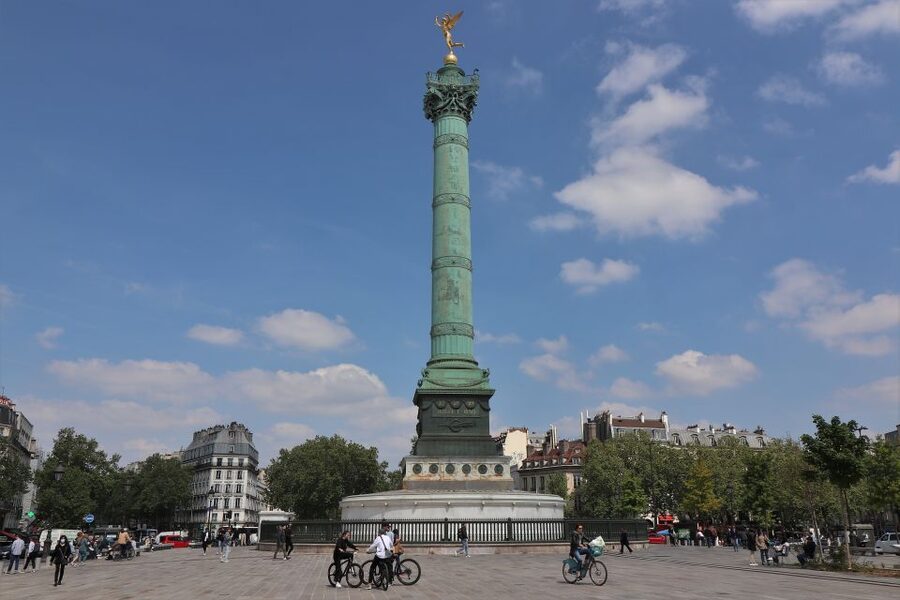
- The Bastille story gets special attention: The tour builds toward the storming of the Bastille, including a day-by-day account of the tension before 14 July 1789.
- Guides bring the politics to life: François, Louis, Fran, Guillaume, Amber, Sam, and others have been praised for clear English, energy, humor, and careful answers.
- More than famous names: You hear about conspiracy, murder, church disputes, mass violence, Louis XVI, Marie Antoinette, and the prophecy linked to a revolutionary death.
- A good central Paris introduction: The walk includes parts of the historic center and La Marais, with places you might skip without a guide.
- Worth considering at $46: The price makes sense if you want a strong historical explanation, but less so if you prefer a quick sightseeing walk with many landmarks.
Starting at Place du Châtelet

The meeting point is in front of the Fontaine au Sphinx on Place du Châtelet. This puts you in the heart of Paris, close to the Seine and within easy reach of several central neighborhoods.
Give yourself a few extra minutes to find the fountain. The meeting instructions are precise, but the guide may not always be obvious in the crowd. One participant had difficulty locating the group because there was no visible company logo and the guide did not immediately introduce himself. That is a small problem, but it can feel large when you are standing in a busy square wondering if you have found the right people.
Once the walk begins, the location works well. You are not starting in an isolated corner or spending the first part of the tour getting across town. The setting helps establish the central theme: revolutionary Paris was a city of political pressure, public argument, fear, and sudden violence, not just a collection of grand monuments.
The guide leads in English, and the strongest praise has gone to guides who speak clearly enough to be heard over noisy streets. François received especially warm comments for his ability to explain difficult events without turning the tour into a lecture. Louis was also praised for showing small features along the route that added meaning to the larger story.
More Walking Tours in Paris
- Paris Top Sights Half Day Walking Tour with a Fun Guide
★ 5.0 · 2,893 reviews - Montmartre Hidden Gems and Scenic Highlights Walking Tour
★ 5.0 · 2,684 reviews - Montmartre Hill French Gourmet Food and Wine Tasting Walking Tour
★ 5.0 · 2,588 reviews
Making sense of 1789 in two hours
The French Revolution can become a blur of dates and names. Louis XVI, Marie Antoinette, the Estates-General, the Bastille, the guillotine, the Terror, Robespierre, and the rise and fall of different political factions are a lot to fit into any walking tour.
The best part of this experience is its effort to impose order on that confusion. The guide connects events to places and uses the walk to show how Paris itself shaped the story. You are not simply asked to memorize a timeline. You are encouraged to picture the city as it might have felt when anger over food, taxes, privilege, religion, and royal power became impossible to contain.
The tour description promises a treasure-hunt style experience, with hidden objects and lesser-known tales. That does not mean you should expect a theatrical show at every stop. Instead, the value comes from noticing details that would otherwise pass without comment and hearing the story attached to them.
François has been praised for offering both older interpretations and newer ideas about the Revolution. That matters because the French Revolution is not a simple tale of good people against bad rulers. A strong guide needs to explain the hopes behind the movement as well as the fear, revenge, and mass killing that followed. The most effective guides on this walk appear to keep that balance.
Following the pressure before the Bastille
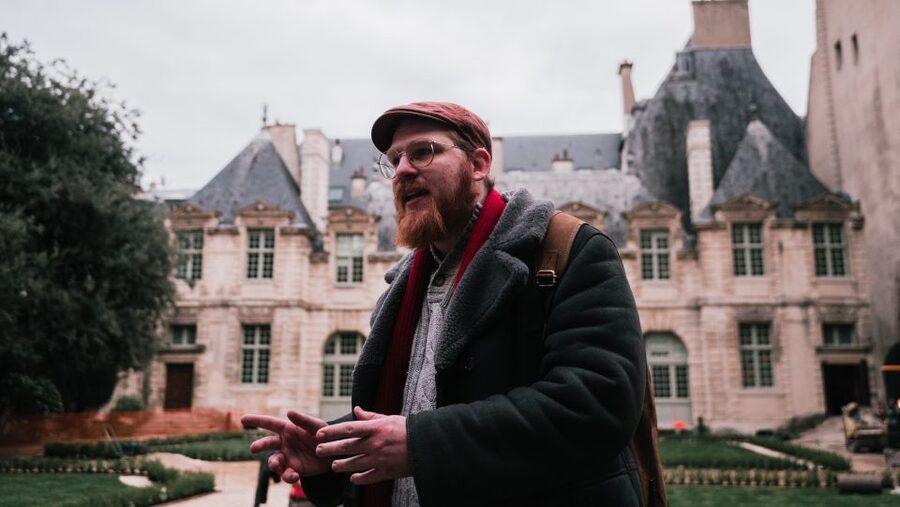
The walk gives particular attention to the days leading up to the storming of the Bastille. One guide presented the build-up in a day-by-day fashion, helping the group feel how quickly events moved toward a crisis.
That approach is useful. Many visitors know 14 July as a national holiday, but the date can seem like an isolated explosion if you do not understand the pressure that came first. The tour places the Bastille within a chain of decisions, rumors, fears, and public action.
The Bastille itself has enormous symbolic power, even though the prison no longer dominates the city as it once did. A walking guide can explain how the site became more than a military or prison target. It became a symbol of royal authority, and its capture gave the Revolution a dramatic victory that could not easily be reversed.
One participant particularly liked following the route associated with the journée, or day of action, on 14 July 1789. That focus gives the story a physical shape. You are not only hearing that a crowd moved through Paris. You are thinking about how people occupied streets, confronted power, and changed the direction of the country.
The drawback is that the route is not always chronological as you walk it. That is understandable. Paris streets do not arrange themselves into a perfect history textbook, and a practical route may require the guide to explain events out of order. François was praised for keeping the sequence clear despite the walking pattern, but you may still want to jot down a few dates if you are eager to remember the details.
Louis XVI, Marie Antoinette, and the guillotine
The tour also covers the final days of Louis XVI and Marie Antoinette. Expect grim material. The story includes the guillotine, political betrayal, murder, massacre, and the wider violence that consumed the Revolution.
This section suits you if you want the human drama behind the political story. The guide does not treat the royal couple as decorative figures from a palace tour. Their fate becomes part of the larger question of how a movement for freedom and political representation turned toward punishment and execution.
The description also refers to a dark prophecy linked to the death of a key revolutionary. That detail adds the sort of personal mystery that can make a familiar story feel less distant. Still, the value of such a tale depends on how carefully the guide explains it. The strongest guides, such as François and Fran, have been praised for separating popular stories from more careful historical interpretation.
You should expect some gruesome details, but the tone is not presented as pure spectacle. The better approach is to connect the violence to the political pressures of the time. The Revolution changed Paris physically and emotionally, and the executions were not isolated events. They became public messages about who held power and what happened to those labeled enemies.
Same city, a slower kind of day:
- Paris: Louvre Museum Timed-Entrance Ticket
★ 4.6 · 71,977 reviews - Disneyland® Paris 1-Day Ticket
★ 4.6 · 49,412 reviews - Paris: Versailles Palace and Gardens Full Access Ticket
★ 4.6 · 41,579 reviews - Paris: Evening River Cruise with Music
★ 4.4 · 22,721 reviews
Churches, La Marais, and overlooked corners
The walk includes churches and parts of La Marais. These stops help widen the story beyond kings, politicians, and military events.
Religion mattered greatly during the Revolution, and a church can reveal how far the upheaval reached into ordinary life. One participant specifically liked learning about the effect of the Revolution on churches. That is an important addition because a basic tour can focus too heavily on the Bastille and the guillotine while ignoring changes to religious institutions and public belief.
La Marais also gives the walk a useful sense of place. You are exploring an older part of Paris rather than moving only between the best-known monuments. Several people appreciated seeing areas they might not have found on their own. That is one of the practical benefits of this format: the guide gives you a reason to look closely at streets that might otherwise become background scenery.
Do not expect every stop to have a surviving revolutionary building or a perfectly marked plaque. Much of the experience depends on the guide explaining what changed, what disappeared, and what traces remain. If you prefer visible monuments at every turn, you may find parts of the tour less dramatic. If you enjoy connecting ordinary streets with major events, this is where the walk earns its place.
A guide makes or breaks the experience
The most important part of this tour is not the meeting square or the route. It is the person holding the story together.
François has been praised repeatedly for his command of the subject, strong English, relaxed manner, and ability to answer questions without losing the main thread. He has also been credited with presenting a careful, unbiased account and explaining modern French views of the Revolution. That is a real strength.
Louis has received similar praise for his enthusiasm and ability to point out small details along the way. Fran was described as bringing dry facts to life through scene-setting, local information, and wider reading. Sam was appreciated for being easygoing and willing to answer questions, including questions outside the main topic.
Other guides named in positive comments include Guillaume, Amber, Ilan, and Louie. The descriptions vary slightly from guide to guide, but the repeated strengths are clear:
- Strong command of French revolutionary history
- Clear spoken English
- Enthusiasm without rushing
- Patience with questions
- A relaxed and engaging manner
- An ability to simplify complex events
One guide used the first person often when describing events, which made the past feel close at hand. That can work well on a history walk, though the success depends on delivery. A good guide uses imagination to help you picture the scene without pretending that every dramatic detail is certain.
The group size is described as comfortable by one participant, but no fixed maximum is provided. That means the atmosphere may vary by date. A smaller group gives you more room to ask questions and hear the guide. A larger group can make street-side explanations harder to catch, especially in noisy areas.
Pace, comfort, and accessibility
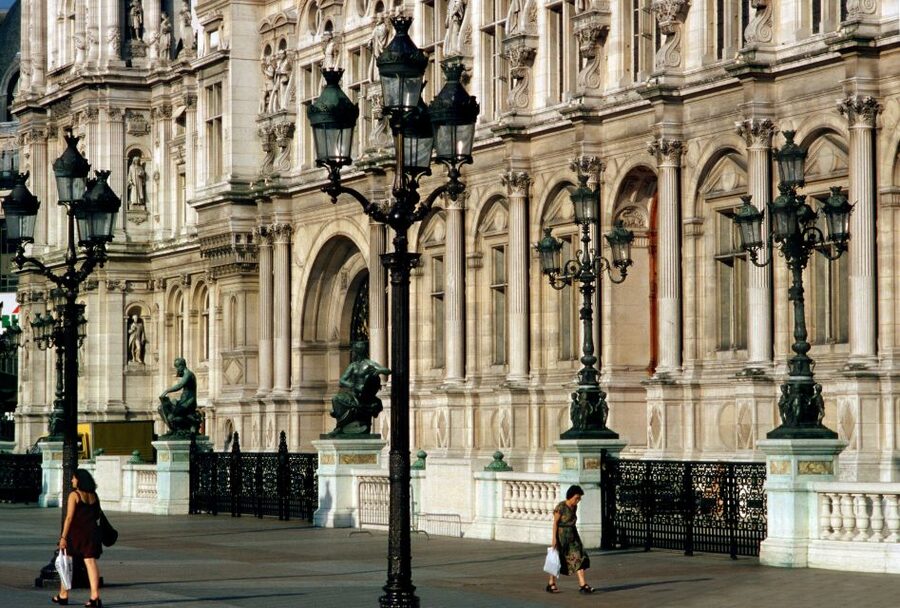
The tour lasts two hours, which is long enough to build a serious story but short enough to fit into a busy Paris day. You should still wear comfortable shoes. This is a walking tour through central streets, and the experience depends on moving from place to place rather than standing in one indoor room.
The pace appears to be moderate. Guides have been praised for keeping people moving while noticing when the group needed a rest. A comfort break in the middle has also been mentioned, which is useful on a warm day or when you have already spent hours sightseeing.
The activity is listed as wheelchair accessible. Because the exact street conditions and route details are not provided, you should confirm any personal mobility concerns before booking. The walk takes place outdoors, so weather and street conditions can affect comfort.
What the $46 price buys you
At $46 per person, this is not the cheapest way to spend two hours in Paris. You can walk through central Paris for free. The question is what you want from the time.
I think the price is fair if you want a focused explanation of the Revolution from a strong English-speaking guide. You are paying for structure, context, and interpretation. The guide helps you connect churches, streets, political conflicts, royal deaths, and the Bastille rather than seeing them as disconnected facts.
The value is strongest for visitors who know the broad outline but want to understand how the pieces fit. It also works well for families with older children and teenagers. One family with a 13-year-old and an 18-year-old enjoyed the experience and found the guide friendly and informative.
The price is less attractive if you only want landmark photos or a quick orientation walk. The tour is centered on one historical subject, and the emotional tone includes execution, massacre, and mass murder. You should choose it because you want that subject, not because you need a generic introduction to Paris.
Who should book this walk?
I would choose this tour for you if you enjoy history, political stories, and the idea of seeing Paris through a particular period. It is especially useful if your school lessons left you with names but not much understanding.
You will get the most from it if you ask questions. Guides such as François and Sam have been praised for adapting to questions while still covering the main story. Ask about the role of the churches, the meaning of the Bastille, the experiences of ordinary Parisians, or how modern France remembers the Revolution.
Families with teenagers should consider it, particularly if the young people can handle serious material. The vivid storytelling may hold attention better than a museum label, although the subject is not light.
You might skip it if you want to visit Place de la Concorde, the Champs de Mars, or other major revolutionary sites in the same outing. One participant specifically wished those areas had been covered, but adding them would have required a longer tour. This experience has a defined focus, and that is both its strength and its limit.
Booking tips for a smoother start
Meet at the Fontaine au Sphinx on Place du Châtelet and arrive early enough to identify the guide. Since the lack of a clear logo caused confusion for one person, do not simply join the first group that looks like a walking tour.
The tour is offered in English with a live guide. Check the available start times before booking because the duration is fixed at two hours, but the departure time can vary.
The booking terms are useful for uncertain schedules. You can cancel up to 24 hours in advance for a full refund, and you can reserve now and pay later. Hotel pickup and drop-off are not included, so plan your own way to Place du Châtelet.
Should you book the French Revolution Walking Tour?
Book it if you want a lively, focused history walk led by a guide who can explain complicated events in plain English. The repeated praise for François, Louis, Fran, and the other guides suggests that the quality of the storytelling is the experience’s main asset.
At $46, it is a good buy for history-minded visitors who want more than a list of dates. It is also a smart choice early in your Paris stay because it can give later walks through La Marais and the central city more meaning.
Skip it if you want a broad tour of every revolutionary landmark, a chronological route from start to finish, or a sightseeing outing with little dark material. For everyone else, this is a thoughtful way to see Paris as the stage for a political earthquake, with enough drama to keep the guillotine from feeling like another dull textbook chapter.
FAQ
How long is the French Revolution Walking Tour?
The tour lasts two hours.
What language is the tour conducted in?
The live tour is conducted in English.
Where does the tour meet?
Meet your guide in front of the Fontaine au Sphinx on Place du Châtelet.
Is hotel pickup included?
No. Hotel pickup and drop-off are not included.
How much does the tour cost?
The listed price is $46 per person.
Is the tour wheelchair accessible?
Yes, the activity is listed as wheelchair accessible.
Can I cancel the booking?
Yes. You can cancel up to 24 hours in advance for a full refund.
Do I have to pay when I book?
No. The reserve now and pay later option lets you hold a place without paying immediately.
Does the tour cover the storming of the Bastille?
Yes. The walk builds toward the storming of the Bastille and discusses the events leading up to it.
Does the tour include Place de la Concorde and the Champs de Mars?
Those sites are not listed as part of the tour. The walk focuses on central Paris, La Marais, churches, and locations connected with the Revolution and the Bastille.
Recently added in Paris
- Private Transfers in Paris★ 5.0 · 75 reviews
- CDG – Euro Disney – CDG Two Way Private Shuttle Transfer★ 5.0 · 233 reviews
- Disneyland® Paris 1 Day Ticket with Transport from Paris★ 3.5 · 302 reviews
- Personalized Transport service from Disneyland to Paris★ 5.0 · 63 reviews
- Monet’s Gardens & House-Private Giverny Tour From Paris★ 4.5 · 137 reviews
- Guided tour Monet’s house and gardens/small group★ 4.5 · 68 reviews
- Giverny Monet House and Gardens Skip the line Walking tour★ 4.0 · 217 reviews
- Monet’s House and Garden & Giverny Village★ 4.5 · 39 reviews
Walking Tours, compared.

Paris Top Sights Half Day Walking Tour with a Fun Guide
Read our review →
Montmartre Hidden Gems and Scenic Highlights Walking Tour
Read our review →
Montmartre Hill French Gourmet Food and Wine Tasting Walking Tour
Read our review →
Paris Île de la Cité and Notre-Dame Walking Tour With Crypt
Read our review →
Montmartre Cheese, Wine & Pastry Guided Walking Tour
Read our review →
Paris in a Day: Louvre or Orsay, Eiffel Tower, City Walk & Cruise
Read our review →
Montmartre Highlights Walking Tour with a Local Guide
Read our review →
Paris City Center Free Walking Tour (Tip-Based)
Read our review →Browse the lists this tour appears in