
REVIEW · WORKSHOPS
Paris: Graffiti and Street Art Workshop
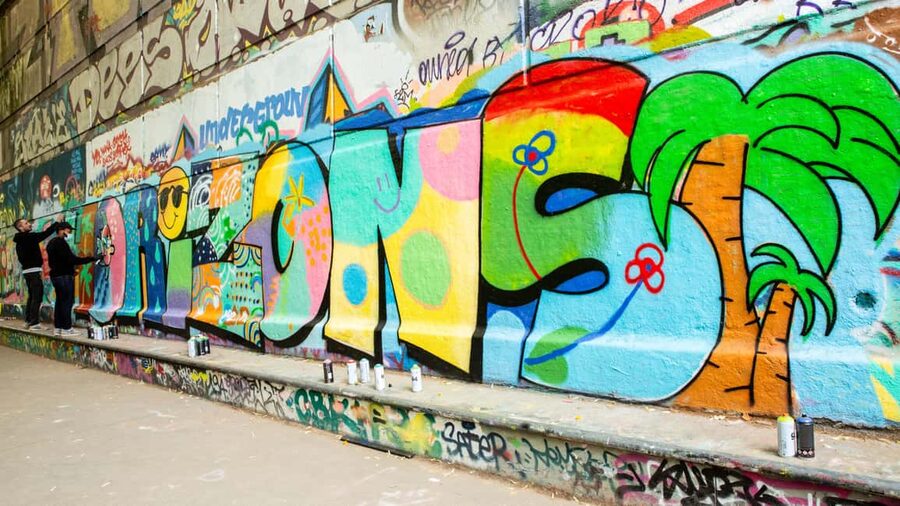
Grab a can and make Paris louder. This two-hour workshop puts you beside real street artists, where you learn clean lines, lettering, stripes, and spray effects before helping with a large group mural. I like the patient, practical teaching, and I love that you leave with more than photos: you take part in a shared piece of Paris street art. The main consideration is that the final artwork is collaborative, so you have less control than you would with a private canvas.
The activity costs $70 per person, which feels fair for two hours of instruction, paint, protective gear, and access to artists who use these techniques professionally. It is aimed at ages 12 and up, and younger children may struggle with the spray cans, so families should take the age guidance seriously.
In This Review
- Key points to know before you book
- What this Paris graffiti workshop is really like
- Meeting the artists opposite Café Poinçon
- First sprays, fine lines, and wall exercises
- Choosing lettering and finding your own style
- Adding your piece to the large mural
- Why the team format works well
- What the $70 price includes
- The instructors make the difference
- Who should book this activity
- Practical details for a smoother session
- Should you book the Paris graffiti workshop?
- FAQ
- How long does the Paris graffiti workshop last?
- How much does the activity cost?
- What age is the workshop suitable for?
- Is the workshop suitable for beginners?
- Are paint and protective equipment provided?
- Which languages are available?
- Where is the meeting point?
- Can I cancel the booking?
Key points to know before you book
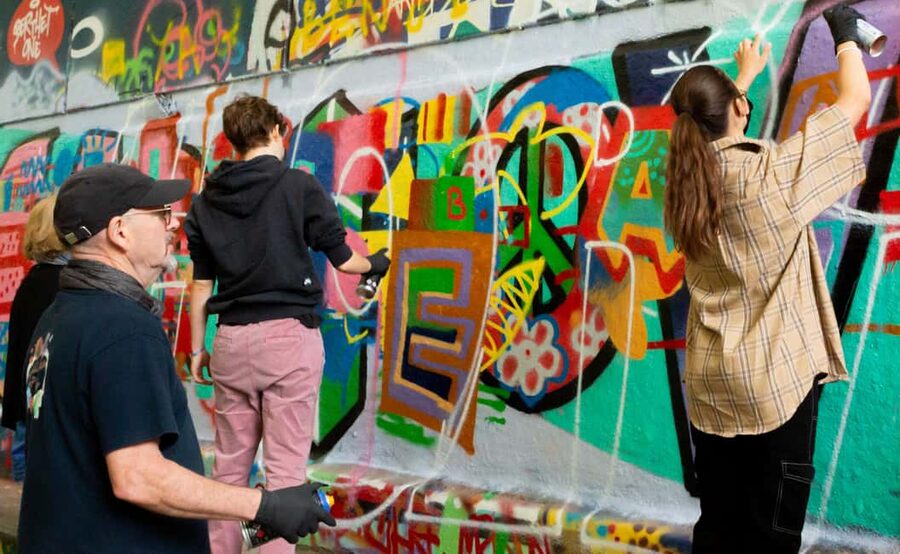
- You learn by spraying, not just watching: The session begins with hands-on practice using spray cans, including fine lines, lettering, stripes, and other effects.
- The final artwork is shared: You first work on your own section, then help add details to a much larger collective mural.
- Real artists lead the session: Instructors such as Benjamin, Walter, Marianne, Paul, and Burns have been praised for their clear, friendly guidance.
- It works well for families and teams: The activity suits groups of different sizes and has been used for family outings and team-building events.
- Bring practical clothing: You will be working outdoors with paint, so wear comfortable clothes that can handle a little artistic risk.
- The meeting point matters: Meet opposite Café Poinçon. Do not enter the building. The artist will identify himself outside.
What this Paris graffiti workshop is really like
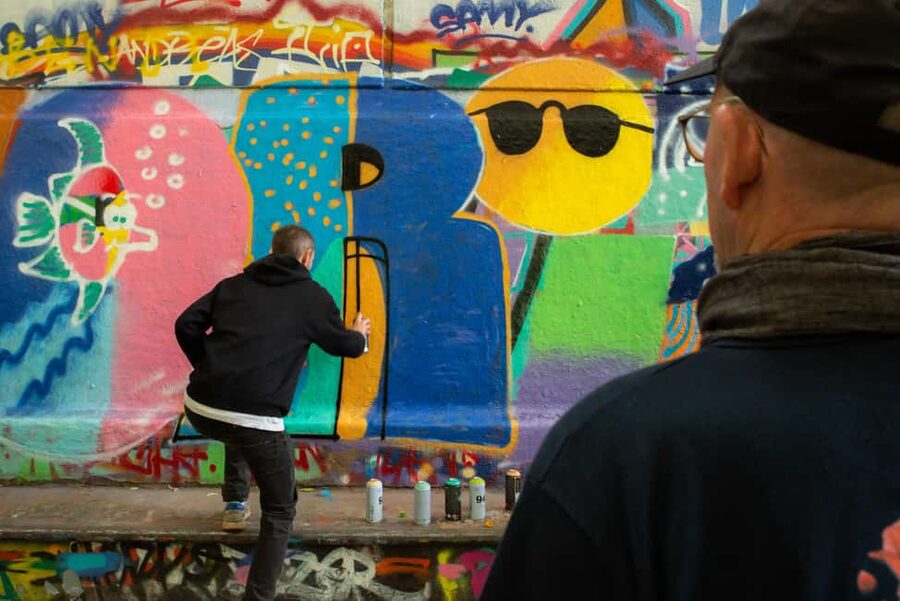
This is not a walking tour of famous murals followed by a quick demonstration. You come to make street art yourself.
That distinction matters. If you want to photograph notable graffiti around Paris, this is not the right choice. If you have ever wondered how artists create sharp lettering and controlled lines with a spray can, the workshop gives you a direct answer.
The experience lasts two hours. You work with English- or French-speaking instructors, and all materials are supplied. Paint, brushes, pencils, gloves, and masks are part of the setup, so you do not need to arrive with art supplies or any previous skill.
The teaching is built for beginners. You do not need to know your tags from your throw-ups, and you do not need an art-school portfolio. You need curiosity and a willingness to put paint on a wall.
A few more Paris outings to set side by side
- Paris: Montmartre Street Art Tour with an Artist
★ 4.8 · 58 reviews - Paris: Street Art Open-Air Museum Bike Tour
★ 4.8 · 51 reviews - Paris: Street Art Walking Tour with a Street Artist Guide
★ 4.5 · 39 reviews
Meeting the artists opposite Café Poinçon
Your first practical task is finding the right person. The meeting point is opposite Café Poinçon, and the instructions are clear: do not go into the building. The artist will present himself outside.
I would arrive a little early, especially if you are carrying bags or trying to meet a group. The information provided does not specify a precise street address beyond the café reference, so having the meeting details available on your phone is sensible.
Once the instructor gathers the group, the tone is informal and encouraging. The artists are not simply handing out cans and telling you to get started. They explain what the paint can do, how to control it, and how small changes in distance and pressure affect the mark.
Benjamin, in particular, has been praised for explaining how clean lines come from holding the can at the right distance from the wall. That is the sort of useful detail that changes the activity from random spraying into a genuine lesson.
Depending on the session, your instructor may be someone else. Past instructors named in the supplied material include Walter, Marianne, Paul, Burns, and Nicholas. The repeated praise is less about one particular personality and more about the calm, supportive way the artists help beginners find their footing.
First sprays, fine lines, and wall exercises
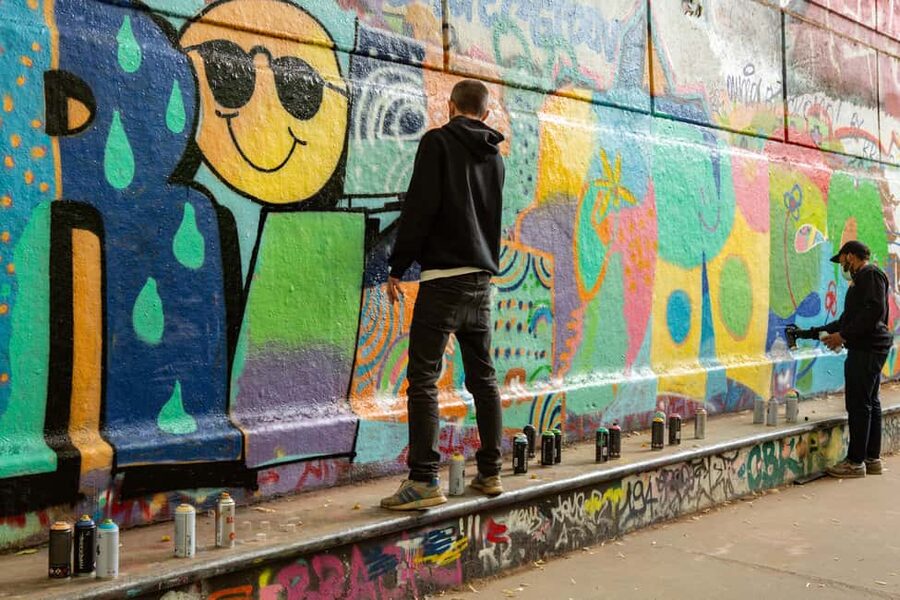
The workshop starts with the basics of spray paint. You learn how to hold the can, how close to stand to the wall, and how to make different marks.
This first practice is important because spray paint behaves differently from a pencil or brush. Move too far away and the paint spreads. Get too close and the line can become heavy. The workshop lets you test those mistakes on practice areas before they become part of the finished mural.
You work through effects such as fine lines and stripes. These may sound simple, but they require control. The activity shows you why polished graffiti takes more than a quick burst of color. Line width, pressure, movement, and distance all matter.
The supplied materials include spray cans, brushes, pencils, protective gloves, and masks. The mask is a useful part of the kit because you are working directly with paint spray. Comfortable clothing is also important. This is not the time for your best Paris dinner outfit.
The teaching appears to be especially strong for mixed-language groups. English and French can be used, and Benjamin has been praised for switching between both languages so everyone could follow the instructions. If your group includes speakers of both languages, that flexibility should make the lesson easier to follow.
Choosing lettering and finding your own style
After the first exercises, you choose a lettering design with help from the artist. This gives the session a clear creative goal.
You are not expected to invent a full mural from nothing. The instructor helps you select and shape a lettering style, then shows you how to transfer that idea onto the wall. For a beginner, this is a smart approach. A blank wall can be intimidating, while a guided design gives you somewhere to begin.
The lettering stage also makes the workshop more personal. You are not simply copying a symbol or filling in a pre-drawn image. You make choices about the form of your letters and the way you want them to look.
I would pay attention here and ask questions. The instructors are there to help, and the activity is designed around learning techniques. If your first line looks uneven, that is part of the lesson, not a disaster.
Several people arrived unsure of their ability and found the process easier once they started. That is one of the best reasons to book this activity with a teenager or a family member who enjoys drawing. It gives you a creative challenge without the pressure of producing a perfect work of art.
More hands-on sessions in Paris:
- Fragonard Paris: Mini Perfume Workshop
★ 4.5 · 1,924 reviews - Paris Cooking Class and Lunch with Wine plus Market Visit Option
★ 5.0 · 1,024 reviews - Paris Croissant Small-Group Baking Class with a Chef
★ 5.0 · 910 reviews - Paris: Macaron Class at Galeries Lafayette
★ 4.3 · 905 reviews
Adding your piece to the large mural
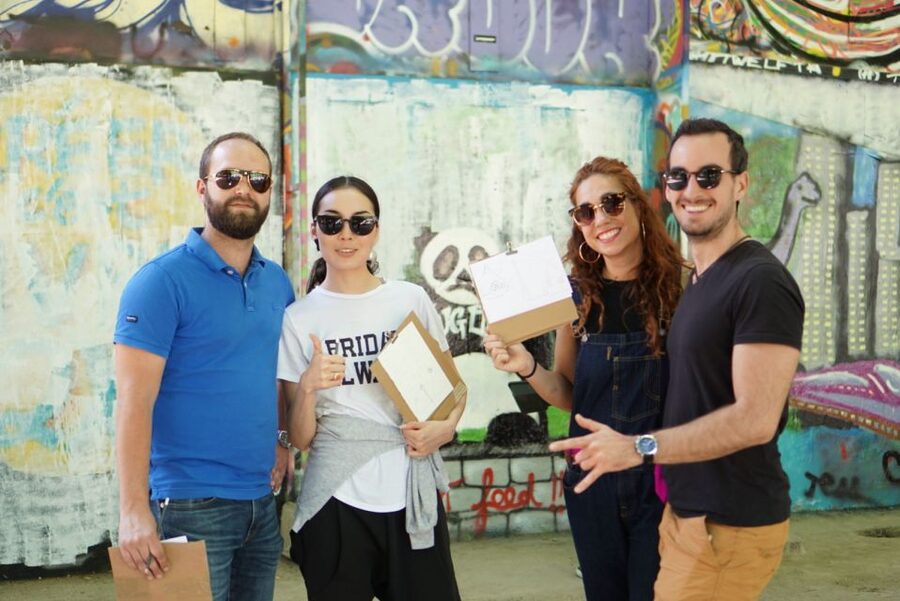
Once you have practiced and settled on a design, you work on your own part of the wall. This lets you concentrate on the techniques while the instructor offers corrections and suggestions.
The scale is part of the fun. You are not making a tiny souvenir on paper. You are contributing to a much larger piece that depends on several people working together.
At the end, the group adds the last details to the collective mural. This is where the activity shifts from individual practice to teamwork. You see how separate sections can be brought together through color, outlines, patterns, and finishing touches.
That shared result is also the activity’s main limitation. One person may work faster, prefer a different style, or leave their section unfinished while others continue. A past participant wished there had been an option to make an individual piece at the end, particularly because one member of the group preferred working alone.
If you want complete artistic control, this format may frustrate you. If you enjoy making something with family, friends, or colleagues, the shared wall is the point. A little compromise is built into the experience.
Why the team format works well
The workshop has a natural team-building quality. Everyone gets a section, learns the same basic methods, and then contributes to one final image.
That makes it a good option for a family that wants something different from museums and monuments. It also works for workplace groups, and one session was described as a successful team-building activity enjoyed by the entire group.
You do not have to be an outgoing person to take part. The work gives everyone a task, so conversation develops naturally around the wall. You can focus on your own lettering, watch someone else try a new effect, or ask the artist for help.
For parents, the activity offers a useful balance. Teenagers get something hands-on and modern, while adults can learn alongside them rather than simply waiting nearby. Several parents initially booked it mainly for their children and ended up enjoying the spraying themselves.
The official minimum age is 12. That is the rule to follow when booking. One family also found that smaller fingers may have trouble handling the spray cans, and suggested that children under about 9 or 10 might find the tools difficult. Since the stated age limit is higher, this is mainly a reminder not to treat the workshop as a young-child activity.
What the $70 price includes
At $70 per person, the workshop is not a cheap filler activity. It costs more than a self-guided afternoon with a pencil and sketchbook, but you are paying for instruction, materials, protective equipment, and a place in a structured creative session.
The value comes from access to working street artists. You can buy paint elsewhere, but you would not automatically know how to create clean lines, control overspray, build lettering, or finish a wall as part of a coordinated piece.
The two-hour length also helps the price make sense. You have enough time to learn the basic methods, practice, design lettering, work on your section, and contribute to the final mural. A shorter session would likely feel rushed.
All materials are provided, including paint and brushes, plus gloves and a mask. You should still wear clothes suitable for outdoor painting, since protective gear does not guarantee that every stray mark will miss your sleeves or shoes.
For a family or small group, the cost buys a shared memory as well as a lesson. You can compare your first practice lines with the finished work and remember who painted which part. For a solo participant, the value depends on how much you enjoy hands-on art and group projects.
The instructors make the difference
The strongest part of the experience is the teaching. The artists are described as patient, friendly, enthusiastic, and supportive. Those qualities matter more here than a long lecture about street art.
You need someone who can explain a physical technique, watch you try it, and offer a quick correction without making you feel clumsy. The feedback about Benjamin, Walter, Marianne, Paul, Burns, and Nicholas suggests that the instructors understand this balance.
Marianne was praised after a session with a 12-year-old niece. Walter was singled out for helping create a strong finished piece. Paul was appreciated for his knowledge of street painting, while Burns was remembered for making the activity especially enjoyable.
Instructor names can change, so I would not book solely because you hope for one particular guide. Book because the format gives you direct support from a practicing artist.
The language choice is English or French. That makes the activity practical for international groups, and the bilingual teaching described in the supplied material is a useful sign for mixed groups.
Who should book this activity
I would recommend it most strongly for:
- Families with children aged 12 and up
- Couples who want a creative break from sightseeing
- Teenagers who like drawing, design, or urban culture
- Friends who enjoy doing something slightly outside their comfort zone
- Workplace groups looking for a shared project
- Beginners who want instruction without a formal art-class atmosphere
You do not need to be good at drawing. In fact, the activity may be more enjoyable if you arrive without fixed expectations. The artists break the process into manageable parts, and everyone gets a chance to practice before working on the main wall.
It may be less suitable if you want a quiet activity, dislike paint fumes, or prefer to create alone. It is also not the best choice for anyone expecting a tour of Paris street-art sites. The focus is making art, not sightseeing.
Practical details for a smoother session
Check the available start times when you book, since the activity does not list one fixed daily schedule. The duration is two hours, so leave enough time before a timed museum entry, restaurant reservation, or train.
Wear comfortable outdoor clothing. Choose shoes and clothes that you would not mourn if they picked up a speck of paint.
The artist provides the paint, brushes, pencils, gloves, and mask. You do not need to bring your own spray cans. It is still sensible to bring water, particularly if the weather is warm, though the supplied details do not specify refreshments.
The activity is listed for all group sizes. That makes it flexible for couples, families, and larger team outings, but the exact number of participants in a particular session is not given. If group size is important to you, ask before booking.
You can cancel for a full refund up to 24 hours in advance. The reserve-now, pay-later option also lets you hold a place without paying immediately, which is useful while your Paris plans are still changing.
Should you book the Paris graffiti workshop?
Book it if you want to make something in Paris rather than simply look at something. The workshop is friendly to beginners, well suited to families and teams, and practical enough to teach real spray-paint control in two hours.
I especially like the balance between instruction and freedom. You learn the basics, choose lettering, develop your own section, and then help finish a large shared mural. The result will not be entirely yours, but that shared process is what gives the activity its character.
Skip it if you are seeking a street-art sightseeing tour, a private art lesson, or an individual finished canvas. For everyone else, $70 buys a lively, hands-on break from standard Paris sightseeing and a chance to leave your mark without getting arrested for it.
FAQ
How long does the Paris graffiti workshop last?
The workshop lasts two hours.
How much does the activity cost?
The price is $70 per person.
What age is the workshop suitable for?
The activity is open to participants aged 12 and up.
Is the workshop suitable for beginners?
Yes. The session is designed for budding artists and beginners, with step-by-step instruction in spray-paint techniques, effects, lettering, fine lines, and stripes.
Are paint and protective equipment provided?
Yes. Paint, brushes, pencils, spray cans, protective gloves, and a mask are provided.
Which languages are available?
The instructors teach in English and French.
Where is the meeting point?
Meet opposite Café Poinçon. Do not enter the building. The artist will meet you outside and identify himself.
Can I cancel the booking?
Yes. You can cancel up to 24 hours in advance for a full refund. You can also reserve now and pay later.
Recently added in Paris
- Private Transfers in Paris★ 5.0 · 75 reviews
- CDG – Euro Disney – CDG Two Way Private Shuttle Transfer★ 5.0 · 233 reviews
- Disneyland® Paris 1 Day Ticket with Transport from Paris★ 3.5 · 302 reviews
- Personalized Transport service from Disneyland to Paris★ 5.0 · 63 reviews
- Monet’s Gardens & House-Private Giverny Tour From Paris★ 4.5 · 137 reviews
- Guided tour Monet’s house and gardens/small group★ 4.5 · 68 reviews
- Giverny Monet House and Gardens Skip the line Walking tour★ 4.0 · 217 reviews
- Monet’s House and Garden & Giverny Village★ 4.5 · 39 reviews
Workshops, compared.
Paris Cooking Class and Lunch with Wine plus Market Visit Option
Read our review →
Paris Croissant Small-Group Baking Class with a Chef
Read our review →
Fragonard Eze: Perfume Making Class and Factory Tour
Read our review →


Grasse: Perfume Making Class and Fragonard Factory Tour
Read our review →Browse the lists this tour appears in