
REVIEW · LE MARAIS WALKING TOURS
Paris: Le Marais Highlights Guided Small Group Walking Tour
Paris keeps its oldest stories in plain sight. This 135-minute walk through Le Marais links royal squares, medieval defenses, grand mansions, churches, Jewish heritage, and lively shopping streets in one compact route. I especially like the small group limit of nine, which makes it easier to hear the guide and ask questions, and the way the walk mixes famous sights with details you could easily miss alone.
I also like the strong focus on people and place, from Louis XIII and Catherine de Medici to the Jewish quarter and the Holocaust memorial. Guides such as Yazid and Jean-Baptiste have earned praise for their warmth, humor, and passion for Paris. The main drawback is practical: this is a fairly active walking tour over cobbled streets, with no hotel pickup, food, or drinks included, and it is not suitable for people with mobility impairments.
In This Review
- Key points to know before booking
- Why Le Marais makes such a good walking district
- Starting beneath Louis XIII at Place des Vosges
- Hôtel de Sully and the world of private mansions
- Saint-Paul Church and a quieter side of the district
- Following the wall of Philippe Auguste
- Hôtel de Sens and the old aristocratic quarter
- Rue des Rosiers and Jewish Paris
- Saint-Gervais and the final approach to Hôtel de Ville
- What the small group changes
- Is $58 a fair price?
- Who should book this walk?
- My verdict on the Le Marais walking tour
- FAQ
- How long does the Le Marais walking tour last?
- What language is the tour conducted in?
- How many people are in the group?
- Where does the tour meet?
- Is Saint-Paul Church included?
- Is the tour suitable for children or people with mobility impairments?
Key points to know before booking
- Nine people maximum: The small party keeps the tour personal and makes it easier to follow explanations in busy streets.
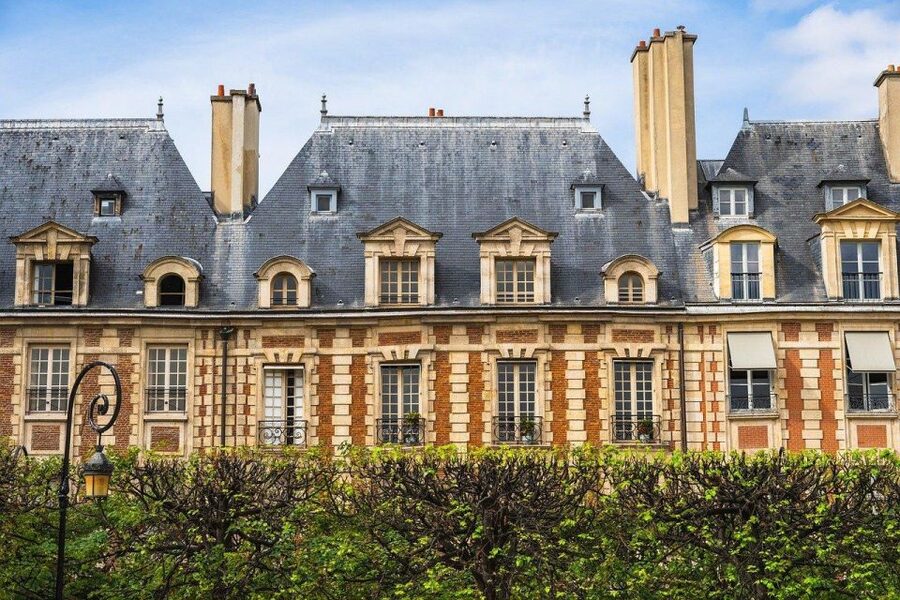
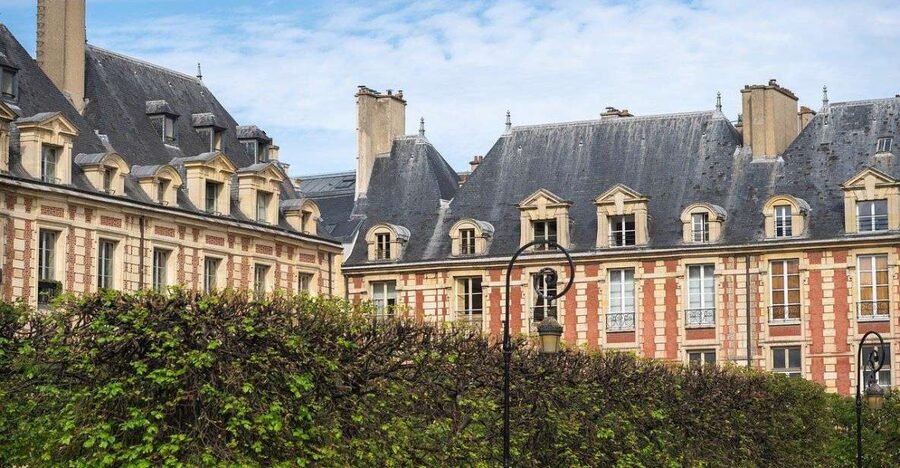
- Place des Vosges sets the tone: You begin beneath the arcades and greenery of one of Paris’s most elegant historic squares.
- The route covers several layers of Paris: Royal history, medieval fortifications, aristocratic mansions, religious life, Jewish heritage, and modern neighborhood culture all appear.
- Saint-Paul Church is included: This is more than an exterior photo stop, since the tour includes a visit inside.
- Rue des Rosiers adds a present-day pause: You have time for shopping and a look at the Jewish quarter.
- Expect weather and pavement: The walk runs rain or shine, so comfortable shoes and warm clothing matter.
Why Le Marais makes such a good walking district
Le Marais means the marsh, a reminder that this part of Paris began as wet ground outside the old city center. Over time, it became a district of royal residences, aristocratic town houses, religious institutions, workshops, shops, and immigrant communities.
One reason the area feels different from much of central Paris is that it escaped the major rebuilding carried out under Baron Haussmann in the 19th century. Much of Paris was cut through with broad boulevards and rebuilt in a more uniform style. Le Marais kept narrower streets, older buildings, courtyards, and irregular corners.
That makes it a fine place to explore on foot. You are not simply moving from one monument to another. You are reading the neighborhood as you go. A doorway, wall fragment, mansion facade, or street name can open a small window onto another period.
I would choose this tour early in a Paris stay. It gives you a useful map of the district and helps you notice details when you return on your own for lunch, shopping, museums, or a slower wander.
More Walking Tours in Paris
- Paris Top Sights Half Day Walking Tour with a Fun Guide
★ 5.0 · 2,893 reviews - Montmartre Hidden Gems and Scenic Highlights Walking Tour
★ 5.0 · 2,684 reviews - Montmartre Hill French Gourmet Food and Wine Tasting Walking Tour
★ 5.0 · 2,588 reviews
Starting beneath Louis XIII at Place des Vosges
The meeting point is under the statue of Louis XIII in Place des Vosges. Look for the Paris Tours Experiences sign and a guide wearing a white shirt, then check in by showing your voucher.
This detail matters because Place des Vosges has several entrances and plenty of people passing through. Arrive with enough time to find the statue rather than rushing in at the last minute.
The square itself is a fine opening scene. Green space fills the center, while uniform red-brick and pale-stone buildings form a graceful frame around it. Arcades run along the edges, giving you shelter and a clear sense of the square’s design.
The guided portion here lasts about 30 minutes. That is enough time to look at the architecture without reducing the stop to a quick photograph. Your guide can also use the square to introduce the district’s royal connections and explain how the surrounding buildings fit into the story of old Paris.
Place des Vosges is one of the tour’s most attractive stops, but it is also a reminder that this experience is not a museum tour. You will hear stories outdoors, often while standing. If the weather is cold or wet, warm layers make a real difference.
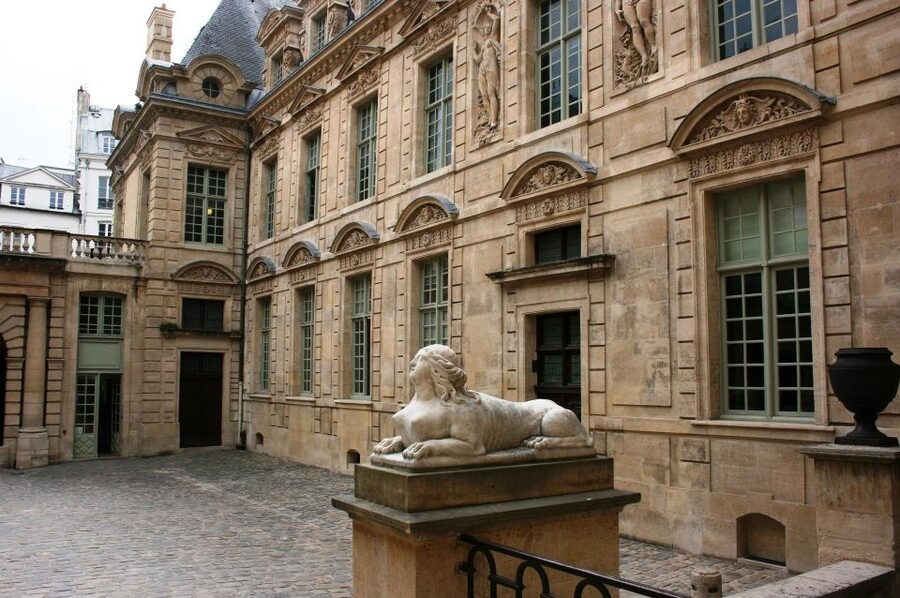
Hôtel de Sully and the world of private mansions
From the square, the route continues to Hôtel de Sully, a 17th-century mansion with the polished appearance that defines much of historic Le Marais. The stop includes a photo opportunity and about 30 minutes of explanation.
The word hôtel in this setting does not mean a hotel for visitors. It refers to a grand private town house built for an important family. Le Marais contains many of these buildings, often tucked behind formal entrances and large doors.
This is where a good guide adds real value. Walking alone, you may notice a handsome facade but not understand who lived there, how the building functioned, or why the district attracted wealthy families. The tour connects architecture to the people who shaped the neighborhood.
Several reviews praise guides for answering questions well and pointing out entrances, passages, and small details that are easy to overlook. Yazid is often singled out for his energy and storytelling, while Jean-Baptiste, also called JB, is praised for his humor, clear English, and useful restaurant and bakery suggestions.
Guide assignments can vary, so you should not book on the assumption that one specific person will lead your departure. Still, the repeated praise for Yazid, Jean-Baptiste, and other guides suggests that the experience depends heavily on a strong personal storyteller.
Saint-Paul Church and a quieter side of the district
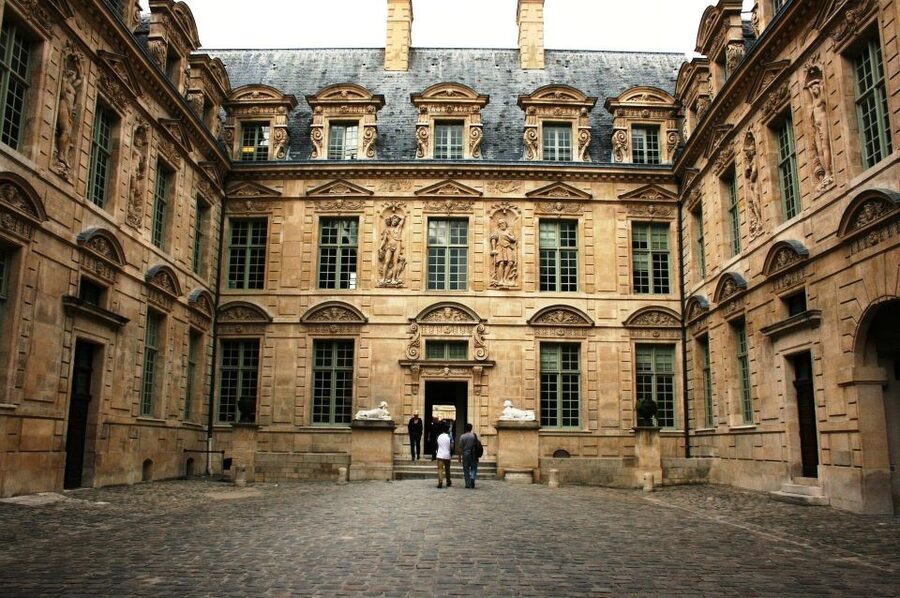
The visit to Paroisse Saint-Paul Saint-Louis lasts about 20 minutes. This church offers a change of pace after the streets and mansions. Inside, the setting is quieter, and the guide can explain the building’s place in the religious and political story of Paris.
The church stop is included in the price, which is useful for anyone who wants more than exterior architecture. It also gives you a chance to pause, look up, and absorb the scale of the interior.
One review specifically appreciated the guide’s respectful behavior in churches. That is worth noting because a good walking tour should explain a religious building without treating it as just another backdrop for photographs.
You should still dress sensibly and behave as you would in any active place of worship. The tour description does not promise an extended visit or special access, so expect a focused introduction rather than a lengthy church lecture.
More walks through Le Marais:
- Award-Winning Paris French Bakery Experience — Le Marais, 4th Arr
★ 4.5 · 1,186 reviews - Paris Le Marais Food Tour With 10+ Tastings, Cheese, Wine & More
★ 5.0 · 985 reviews - Paris Le Marais District Original Food and Wine Tasting Tour
★ 4.5 · 880 reviews - Paris Bike Tour Hidden Secrets in the Latin Quarter & Le Marais neighborhoods
★ 5.0 · 766 reviews
Following the wall of Philippe Auguste
One of the most valuable parts of the route is the look at the surviving remains of the wall of Philippe Auguste. This wall once marked the edge of medieval Paris and helped protect the city.
Today, a fragment can seem modest beside Paris’s grand monuments. Its importance comes from what it reveals. The medieval city was smaller, more enclosed, and more defensive than the Paris you see today. The wall helps you picture a time when the city’s limits were close at hand.
This is exactly the sort of feature I would likely pass without a guide. A walking tour earns its price when it explains why an ordinary-looking stone remnant matters.
The itinerary allows around 20 minutes for part of the guided route between the major named stops. The pace should suit people who want context at each location, but it will not feel like a completely unstructured stroll. You move steadily through the district, with regular pauses for stories and questions.
Hôtel de Sens and the old aristocratic quarter
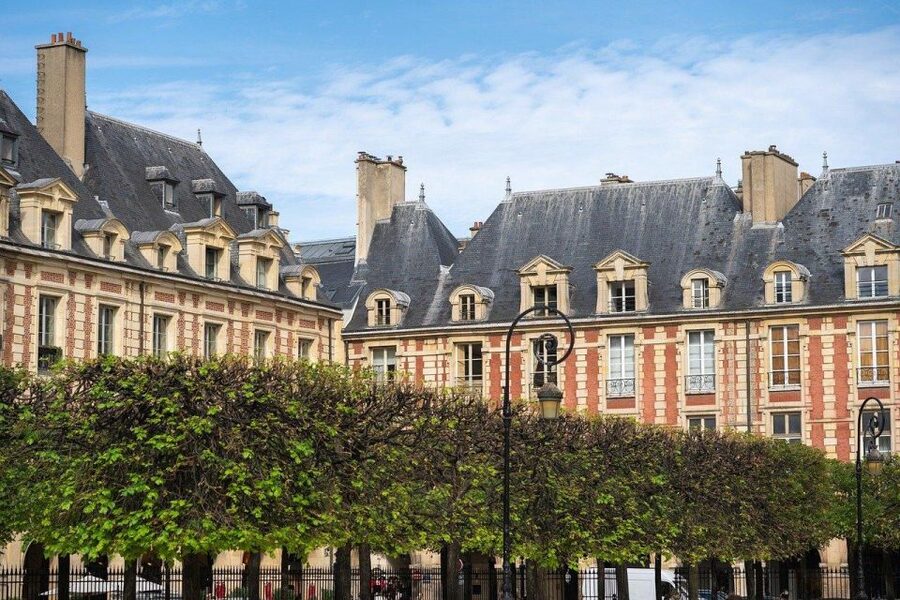
Hôtel de Sens is another private mansion that shows how much power and money once gathered in Le Marais. The guided stop lasts about 20 minutes.
The route uses buildings such as Hôtel de Sully and Hôtel de Sens to show a pattern rather than treating each mansion as an isolated monument. You begin to understand Le Marais as an old residential quarter for influential families, not simply a collection of pretty facades.
The tour also brings in royal figures including Louis XIII, Henry II, and Catherine de Medici. These names help place the architecture within the larger story of French monarchy, court life, and changing power.
The value here is interpretation. A self-guided walk can show you where to look, but it may not explain the connection between royal politics, private mansions, religious buildings, and the changing shape of Paris. The guide’s anecdotes give the route a human scale.
Rue des Rosiers and Jewish Paris
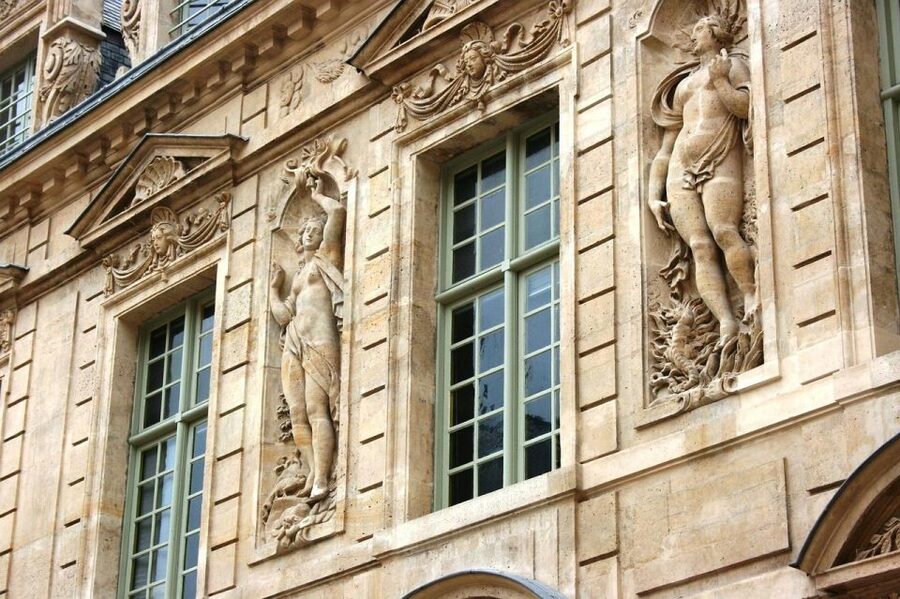
Rue des Rosiers brings the walk into the Jewish quarter of Le Marais. This is one of the route’s most useful contrasts. The district is not frozen in the age of kings and aristocrats. It is also a living neighborhood shaped by Jewish culture, food, shops, memory, and daily life.
The stop includes guided explanation and time for shopping, with roughly 20 minutes allocated. Do not expect a dedicated meal break, since food and drinks are not included. If you want to eat here, plan to return after the tour or ask your guide for suggestions.
Several guides have been praised for offering practical recommendations for restaurants, bars, bakeries, and museums. Patricia specifically valued the food advice, while other participants appreciated bakery recommendations and tips for continuing their Paris visit.
The route also pauses at the Holocaust memorial, a serious site connected to the Jewish community of Paris. This section adds moral weight to the tour. It shows how the neighborhood’s story includes not only royal splendor and attractive streets, but also persecution, loss, remembrance, and survival.
You may find this part emotionally heavier than the earlier stops. That is appropriate. The tour’s value comes partly from presenting Le Marais as a place with many eras and communities, rather than reducing it to an elegant shopping district.
Saint-Gervais and the final approach to Hôtel de Ville
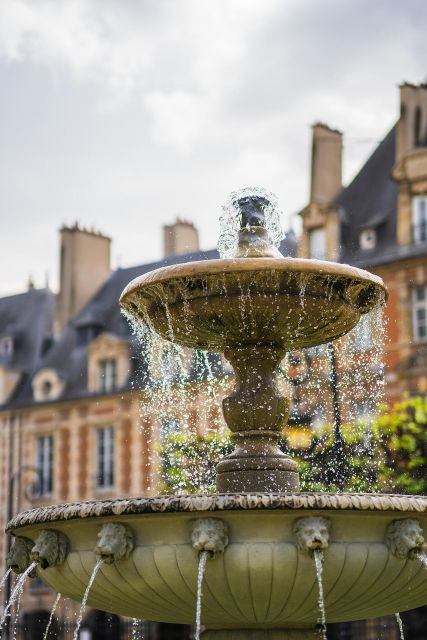
The itinerary includes about 15 minutes at Saint-Gervais Church. Like Saint-Paul, it adds religious history and another chance to step away from the street for a focused explanation.
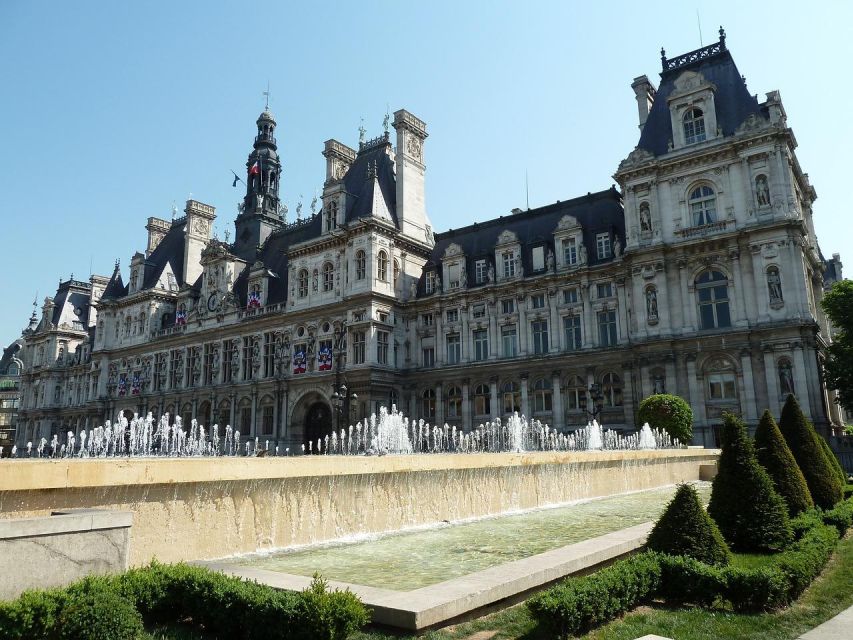
The walk then concludes near the famous Place de l’Hôtel de Ville, according to the tour description. This is a practical ending because it leaves you in a central part of Paris, with plenty of choices for continuing your day.
The exact final flow may feel slightly different depending on the guide, street conditions, and the group’s questions. The listed stops are best understood as the main points along a guided route, not a promise that every minute will follow a rigid script.
At about two hours and 15 minutes, the timing is well judged. You get enough detail to understand the neighborhood, but the tour does not consume an entire morning or afternoon. One person even found an early start useful for adjusting to the time difference, though you should choose a departure time that fits your own plans.
What the small group changes
The group never exceeds nine people. That limit is one of the strongest reasons to consider this walk instead of a large city tour.
A small party lets the guide stop in narrower streets without creating a large crowd. You are also more likely to hear explanations clearly and ask about a building, restaurant, museum, or street you want to revisit.
The experience can become even more personal if fewer people book. One participant described receiving what was essentially a private tour when no one else joined. That is not something you should assume will happen, but the small format leaves room for a more flexible conversation.
The tradeoff is that the tour remains dependent on the guide’s style. Yazid has been praised for humor, passion, and an ability to make history easy to follow. Jean-Baptiste has been described as friendly, interactive, and especially good at connecting facts with anecdotes. Daniel was praised for a clever route that avoided heavy traffic and included lesser-seen corners.
Those qualities matter more on a walking tour than a long list of stops. The buildings are important, but the guide determines how clearly the pieces fit together.
Is $58 a fair price?
At $58 per person, this is not the cheapest way to walk through Le Marais. You can explore the streets and many exterior sights for free.
The price makes more sense if you value interpretation, a very small group, and entry to Saint-Paul Church. You are paying for a local English-speaking guide who can explain the wall of Philippe Auguste, identify the role of private mansions, discuss the Jewish quarter, and connect the district to French history.
The tour also saves planning time. Instead of researching a route and trying to identify every old facade, you follow a prepared path with a clear beginning and end. For a first visit, that structure can be worth the extra cost.
I would see the tour as good value for first-time visitors, history fans, families who want an organized introduction, and repeat visitors who feel they have missed the point of Le Marais. It is less useful if you prefer wandering alone, want a food-focused tour, or already have a strong grasp of the district’s history.
Food and drinks are not included, and hotel pickup is not provided. Build those facts into your budget and schedule.
Who should book this walk?
You should consider booking if you want:
- A first look at Le Marais before exploring alone
- A history-led tour rather than a food or shopping tour
- A small group where questions are welcome
- A route that includes royal, medieval, religious, and Jewish history
- Practical recommendations for restaurants, bakeries, bars, and museums
- A family-friendly activity with a clear two-hour-plus format
You should think twice if walking on cobbled streets is difficult. The tour is not suitable for people with mobility impairments, and it runs rain or shine. Strollers and babies may be accommodated, but you need to inform the provider in advance.
Wear comfortable shoes and bring warm clothing. Since the tour is outdoors for much of its length, a wet or chilly day can affect your enjoyment even when the guide is excellent.
My verdict on the Le Marais walking tour
I would book this tour if you want Le Marais to become more than a pleasant place for lunch and shopping. Its best feature is the way it joins separate pieces of Parisian history into one walk: Place des Vosges, royal personalities, grand town houses, medieval walls, churches, Jewish heritage, remembrance, and modern street life.
The $58 price is fair for a maximum group of nine and a guide-led route with a church visit. It is not a bargain for people who only want photographs, but it offers useful context that is difficult to gain from a casual stroll.
Choose it near the start of your Paris visit, wear sturdy shoes, and keep some time afterward for your own return to Rue des Rosiers or the surrounding streets. If you want an English-language introduction that is personal, historical, and compact, this is a strong choice.
FAQ
How long does the Le Marais walking tour last?
The tour lasts 135 minutes, or two hours and 15 minutes.
What language is the tour conducted in?
The tour is conducted in English with a live English-speaking guide.
How many people are in the group?
The group is limited to nine participants and will never exceed nine people.
Where does the tour meet?
You meet at Place des Vosges under the Louis XIII statue. Look for Paris Tours Experiences and a guide wearing a white shirt. You must show your voucher when checking in.
Is Saint-Paul Church included?
Yes. The tour includes a visit to Saint-Paul Church, also called Paroisse Saint-Paul Saint-Louis.
Is the tour suitable for children or people with mobility impairments?
The tour is adapted for children, but you should inform the provider if you are bringing children, babies, or a stroller. It is not suitable for people with mobility impairments.
Recently added in Paris
- Private Transfers in Paris★ 5.0 · 75 reviews
- CDG – Euro Disney – CDG Two Way Private Shuttle Transfer★ 5.0 · 233 reviews
- Disneyland® Paris 1 Day Ticket with Transport from Paris★ 3.5 · 302 reviews
- Personalized Transport service from Disneyland to Paris★ 5.0 · 63 reviews
- Monet’s Gardens & House-Private Giverny Tour From Paris★ 4.5 · 137 reviews
- Guided tour Monet’s house and gardens/small group★ 4.5 · 68 reviews
- Giverny Monet House and Gardens Skip the line Walking tour★ 4.0 · 217 reviews
- Monet’s House and Garden & Giverny Village★ 4.5 · 39 reviews
Le Marais Walking Tours, compared.

Award-Winning Paris French Bakery Experience — Le Marais, 4th Arr
Read our review →
Paris Le Marais Food Tour With 10+ Tastings, Cheese, Wine & More
Read our review →
Paris Le Marais District Original Food and Wine Tasting Tour
Read our review →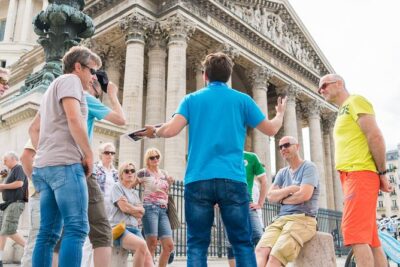
Paris Bike Tour Hidden Secrets in the Latin Quarter & Le Marais neighborhoods
Read our review →
Food and Wine Tasting Walking Tour in Le Marais
Read our review →
Le Marais/Paris – The Historic, Trendy, Jewish, LGBT district
Read our review →

Browse the lists this tour appears in