
REVIEW · LE MARAIS WALKING TOURS
Paris: Le Marais & Montmartre Jewish History Walking Tour
Paris remembers more than monuments. This three-and-a-half-hour walk connects Jewish history in Le Marais with Montmartre’s Jewish artists and writers, giving you a fuller picture of the city than a standard neighborhood stroll. I especially like the stop at the Shoah Memorial and the close look at Hector Guimard’s Agoudas Hakehilos Synagogue. The main drawback is that you see the synagogue and memorial from outside, and the long walk plus public transport may feel tiring by the end.
The tour also benefits from a small group of no more than nine people, which makes it easier to ask questions and hear the guide on busy Paris streets. Guides such as Benjamin, Benoit, Pierre-Louis, Achilles, and Pilu have been praised for clear explanations and a careful approach to painful subjects. Just arrive 15 minutes early, since late arrivals cannot join once the walk begins.
In This Review
- Key points before you book
- Why this route gives you a broader Paris story
- Starting near BHV Marais or L’Elephant Du Nil
- Le Marais and the old Jewish quarter
- Agoudas Hakehilos Synagogue and Hector Guimard’s design
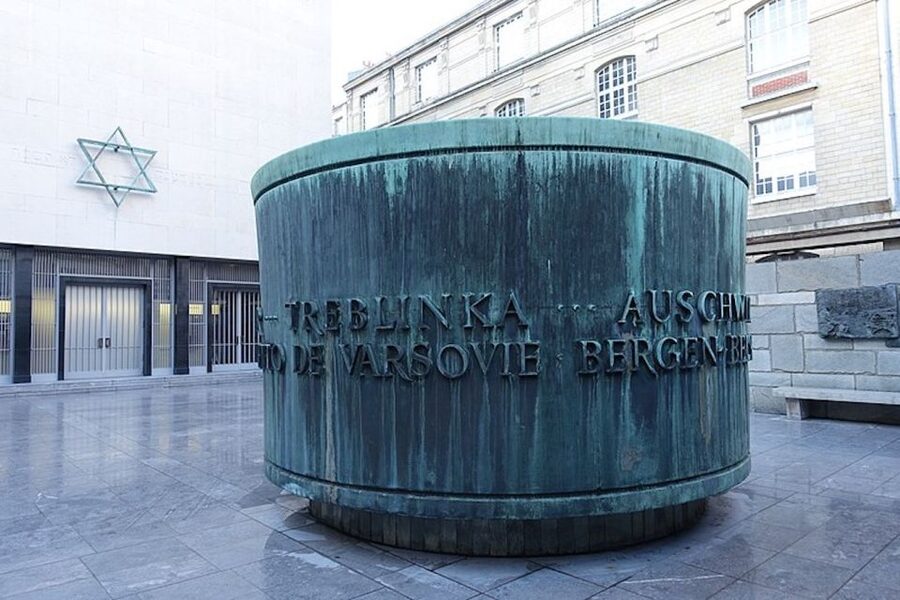
- The Shoah Memorial and the weight of memory
- The transfer from Le Marais to Montmartre
- Montmartre’s Jewish artists and creative circles
- Sacré-Cœur and the final view
- The guides make the difference
- Is $80 a fair price?
- Who should book this walk?
- Should you book it?
- FAQ
- How long does the Jewish history walking tour last?
- Where does the tour begin?
- Which neighborhoods does the tour visit?
- Is entry to the synagogues included?
- Is entry to the Shoah Memorial included?
- Does the tour include public transportation tickets?
- What language is the tour conducted in?
- How large is the group?
- Is the route suitable for wheelchair users?
Key points before you book
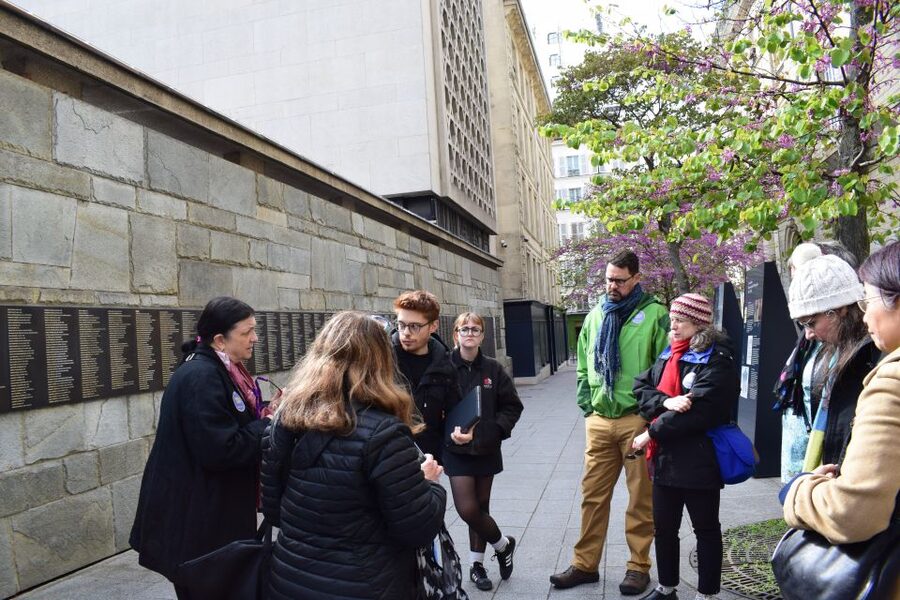
- Two neighborhoods, two sides of Jewish Paris: Le Marais focuses on community, memory, and daily life, while Montmartre links Jewish identity with art and literature.
- The Agoudas Hakehilos Synagogue is viewed from outside: You can admire Guimard’s Art Nouveau design, but an indoor synagogue visit is not part of the tour.
- The Shoah Memorial is a serious, moving stop: The exterior includes the Wall of Names and access to the memorial’s historical setting, according to the route described by participants.
- Montmartre ends at Sacré-Cœur: The final climb leads to broad views across Paris and Square Louise-Michel.
- Public transport is part of the experience: About 30 minutes of the 210-minute outing is spent traveling between the two districts, with tickets included.
- This is an active walk: The tour is not suitable for wheelchair users or people with mobility impairments.
Why this route gives you a broader Paris story

Many Paris walks stop after the Marais, and that makes sense. The neighborhood is the city’s best-known Jewish quarter, with familiar food shops, restaurants, synagogues, and traces of older community life. This route adds Montmartre, a useful change of subject and scenery.
I like that structure. In Le Marais, you consider where Jewish communities lived, worked, worshiped, and suffered. In Montmartre, you look at Jewish artists, writers, and intellectuals who helped shape the neighborhood’s creative life in the late 19th and early 20th centuries.
The connection is not always visible in the buildings. Much of the tour involves listening to what once happened in places that have changed. One participant found the Marais too gentrified and homogenized to resemble Jewish neighborhoods in other major cities. That is a fair warning. You are not walking through a preserved historical quarter where every doorway tells its original story.
Instead, the guide supplies the missing context. The value comes from learning how to read modern Paris alongside the traces that remain.
More Historical Tours in Paris
- Paris: Louvre Museum Entry with History of Mona Lisa
★ 3.9 · 2,823 reviews - Paris: Dark History and Ghostly Guided Walking Tour
★ 4.7 · 1,000 reviews - Le Marais/Paris – The Historic, Trendy, Jewish, LGBT district
★ 5.0 · 341 reviews
Starting near BHV Marais or L’Elephant Du Nil
You begin at one of two possible meeting points, depending on the option you reserve: BHV Marais or L’Elephant Du Nil. The BHV location can be confusing because the department store has four entrances. Give yourself extra time and confirm the exact entrance before setting out.
One participant had trouble identifying the guide because an expected orange flag was not being used. That confusion took about ten anxious minutes to sort out. The practical lesson is simple: check the meeting instructions carefully, arrive early, and call the local operator if you cannot spot the guide.
The small group size matters right away. With up to nine people, the guide can usually keep the pace together and respond to questions without turning the walk into a lecture delivered to a crowd. English is the stated tour language.
Le Marais and the old Jewish quarter
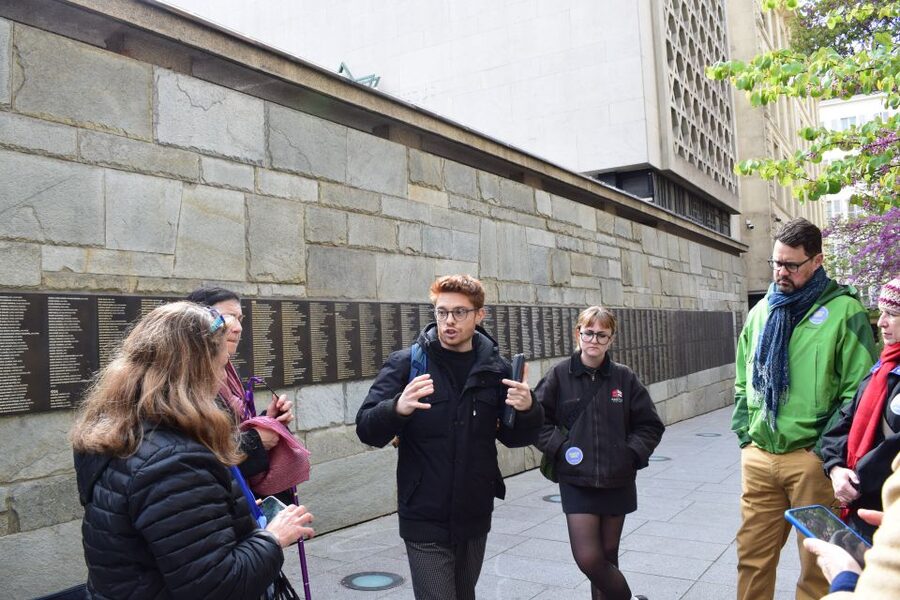
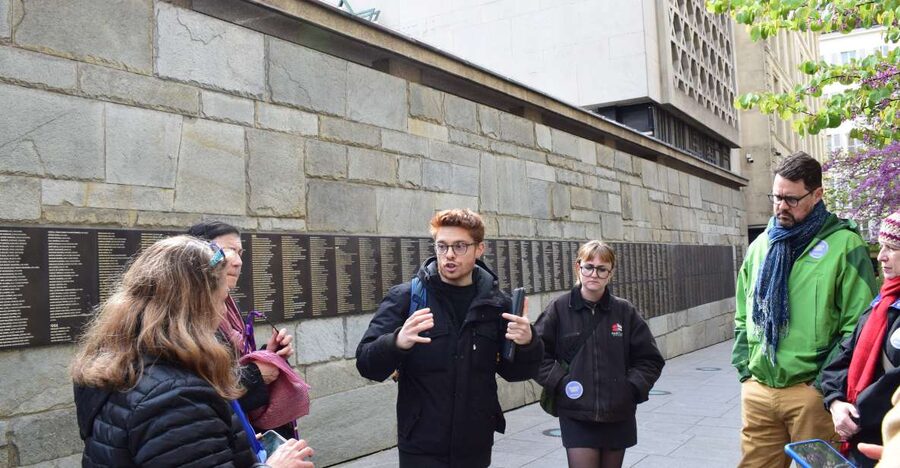
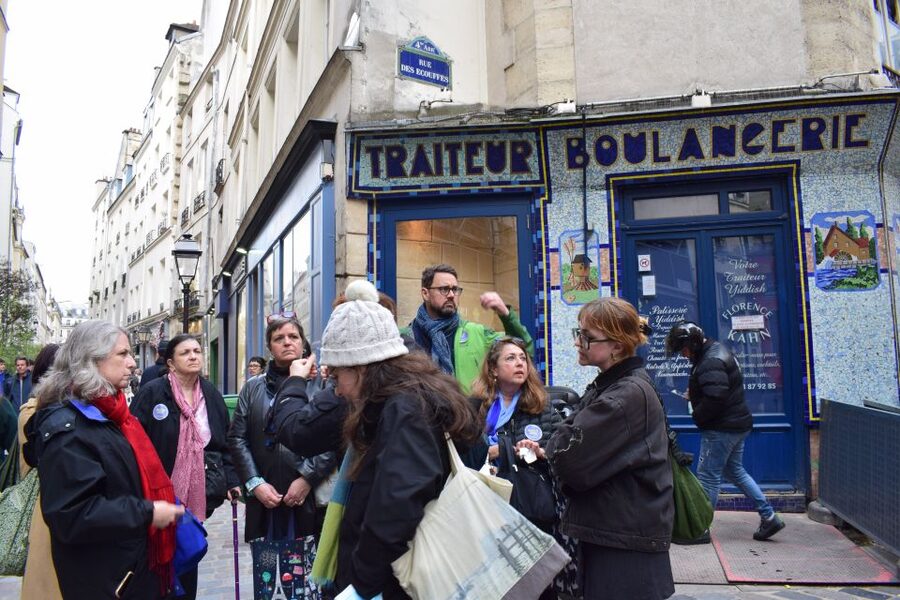
The first walking section lasts about 90 minutes. It covers Le Marais, Le Village Saint-Paul, the Agoudas Hakehilos Synagogue, and the Shoah Memorial.
Le Marais is now one of Paris’s most fashionable districts, filled with independent shops, cafés, galleries, food businesses, and attractive old architecture. Its current style can distract from the Jewish story beneath it. The guide’s job is to connect today’s streets with the communities that lived here across the centuries.
You hear about Jewish life from the Middle Ages to the present, including trade, neighborhood life, religious practice, discrimination, and the upheavals that changed the community. The strongest guides do not treat this as a string of dates. They explain how political decisions and changing attitudes affected ordinary families.
Le Village Saint-Paul adds another layer to the walk. The route passes through streets that retain some of the atmosphere associated with older Paris, even though the area has changed. You might find that the physical evidence is modest. A doorway, street alignment, business, or architectural detail may need a careful explanation before its importance becomes clear.
That is why this tour works best for you if you enjoy history told through place rather than a procession of grand interiors.
Agoudas Hakehilos Synagogue and Hector Guimard’s design
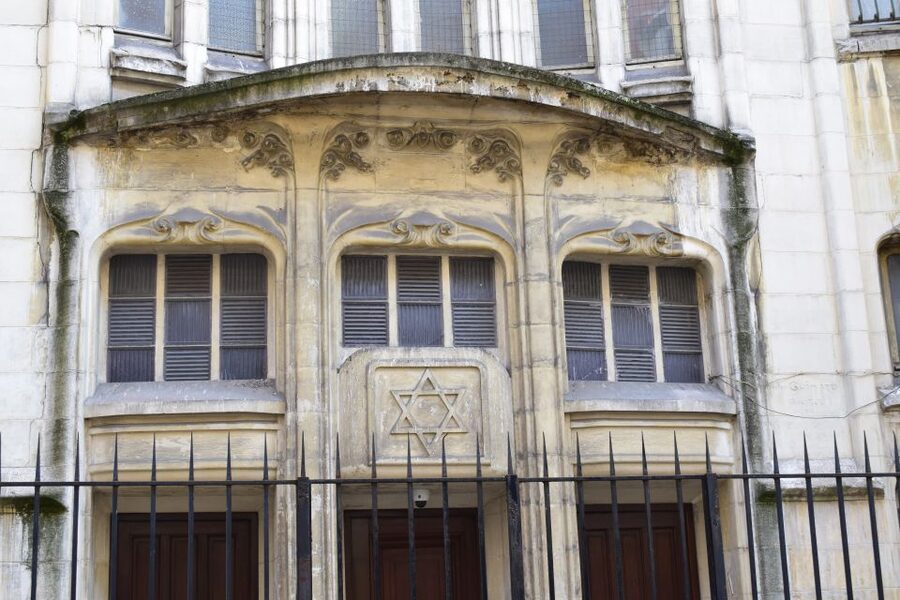
The Agoudas Hakehilos Synagogue is one of the route’s most distinctive visual stops. Hector Guimard, best known for the Art Nouveau entrances to the Paris Métro, designed it. The exterior has the flowing, organic character associated with his work.
You stop outside and learn about the synagogue, its design, and the community connected with it. The building gives the discussion a physical focus, but you should not expect to enter. Indoor synagogue visits are not included, and entry to monuments and historical sites is also excluded.
That limitation is important for anyone hoping for an interior tour. Still, the exterior visit is worthwhile because it brings together two subjects that Paris does unusually well: Jewish communal history and early modern architecture.
Take a moment to study the building rather than only photographing it. The design is not a standard classical Paris façade. Its curves and decorative details make it easy to understand why this is one of the tour’s memorable stops.
More Walking Tours in Paris
- Paris Top Sights Half Day Walking Tour with a Fun Guide
★ 5.0 · 2,893 reviews - Montmartre Hidden Gems and Scenic Highlights Walking Tour
★ 5.0 · 2,684 reviews - Montmartre Hill French Gourmet Food and Wine Tasting Walking Tour
★ 5.0 · 2,588 reviews - Paris Île de la Cité and Notre-Dame Walking Tour With Crypt
★ 5.0 · 2,272 reviews
The Shoah Memorial and the weight of memory
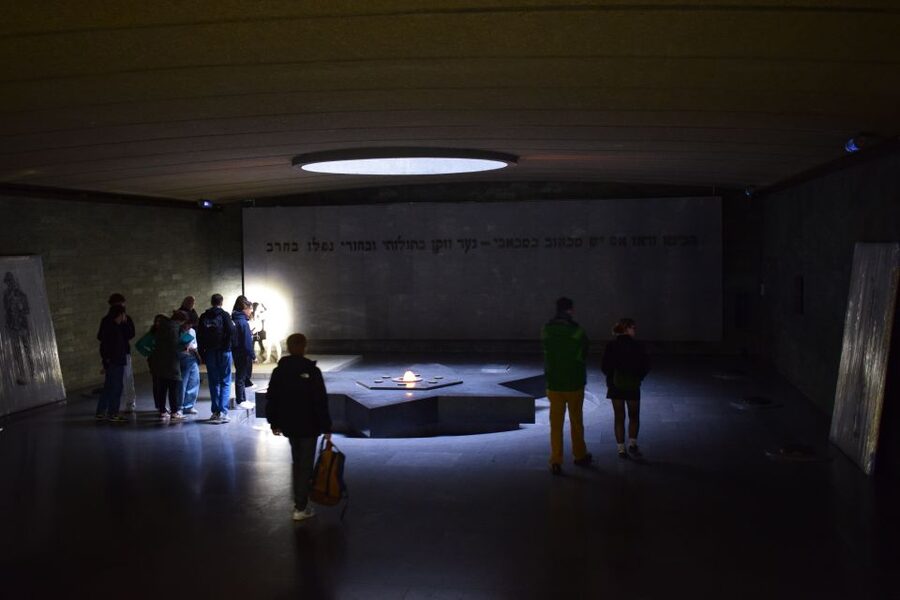
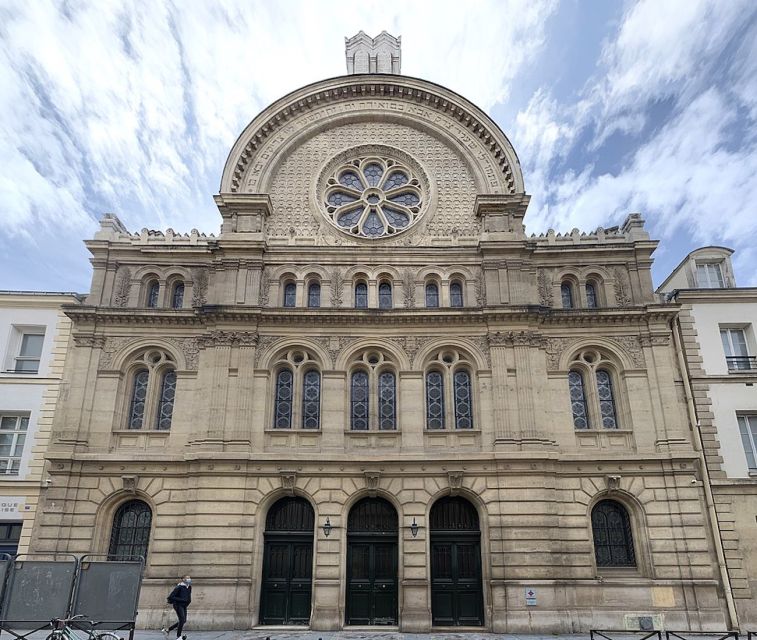
The Shoah Memorial is the emotional center of the Le Marais section. The guide discusses its significance from the exterior, including the Wall of Names and the memorial’s crypt area as described along the route.
This is not a light sightseeing stop. The memorial recalls Jews murdered during the Holocaust and honors French people who helped Jews escape or survive. A good guide must explain the facts without rushing past the human cost, and this is where the tour’s careful tone matters most.
Several guides, including Benjamin, Benoit, and Pierre-Louis, have been praised for handling difficult subjects with sensitivity. You should still expect a serious pause in the day. The memorial may be especially meaningful if you have family connections to European Jewish history, but it also provides essential context for anyone trying to understand France during the Second World War.
The memorial is viewed as part of the walking route, not as a full museum visit. If you want extended time inside, plan a separate visit rather than assuming the tour includes admission.
The transfer from Le Marais to Montmartre
After the Marais, you use public transportation to reach Montmartre. The transfer takes about 30 minutes, and tickets are included.
This break is useful. It gives your feet a rest and lets the subject shift from community history and wartime memory to art, literature, and urban culture. It also means the tour is not one continuous walk across Paris.
You will need to stay close to the guide during the transfer. Paris streets and crossings can be hectic, and one participant suggested that guides keep an eye on the group’s pace around bikes and traffic. That is sound advice for you as well. Pay attention at crossings, especially if you are taking photographs or walking with children.
Montmartre’s Jewish artists and creative circles
The second walking section lasts roughly 90 minutes. Montmartre brings steep streets, famous views, artists’ studios, cafés, and the area’s long association with writers and painters.
The Jewish story here is different from the one in Le Marais. The focus is on Jewish artists, writers, and thinkers who took part in the creative circles that helped shape modern Paris. The guide explains how cafés, studios, and informal artistic communities became places where new ideas developed.
The stops include 7 Rue Ravignan, Le Bateau-Lavoir, the Musée de Montmartre, and 16 Rue du Mont-Cenis. You pass by the Musée de Montmartre rather than entering it. Le Bateau-Lavoir is especially useful as a point for discussing the artists who worked and gathered in Montmartre, though the route is presented as a guided exterior walk rather than a museum tour.
This part will suit you if you like cultural history and biographies. It is less about formal Jewish institutions and more about the role of Jewish people in Paris’s artistic life. If you booked expecting every stop to be specifically religious or communal, the Montmartre section may feel broader than expected.
One participant preferred more Jewish content and less time discussing church architecture. That is a useful expectation check. The tour connects Jewish history to the wider story of Paris, so not every stop will have a narrowly Jewish subject.
Sacré-Cœur and the final view
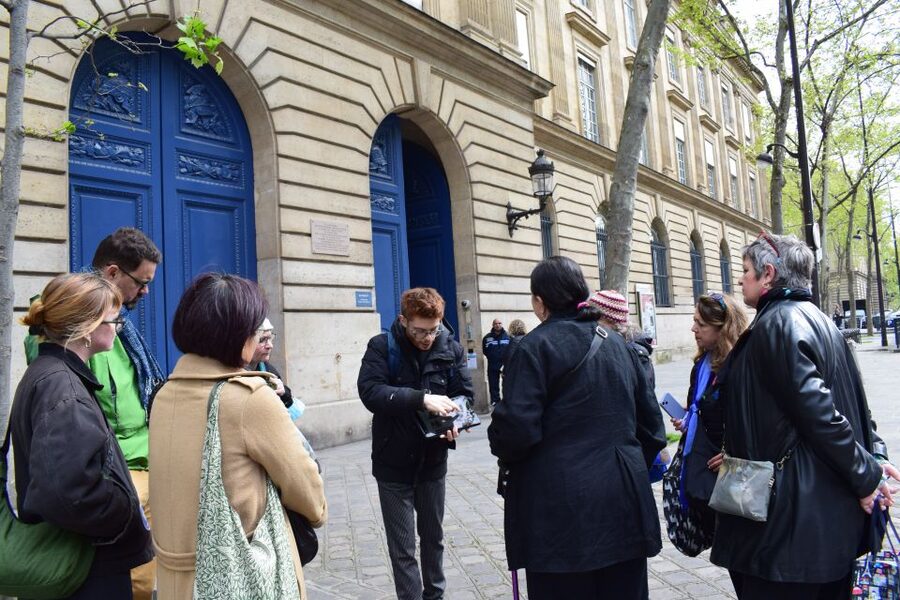
The route finishes at Sacré-Cœur Basilica and Square Louise-Michel. You take in wide views over Paris while the guide draws together the themes of identity, memory, creativity, and survival.
Sacré-Cœur itself is a major Paris sight, but this tour treats it mainly as the endpoint and viewpoint. It is not described as an interior visit to the basilica. The open view is a pleasant contrast to the more solemn memorial stop earlier in the day.
The final walk through Montmartre can be tiring. You have already covered about three hours of walking and transit, and the neighborhood includes uphill streets and stairs. The tour is therefore a poor match for anyone with mobility limitations, and wheelchair users should not book it.
Square Louise-Michel makes a sensible ending point. From there, you can continue exploring Montmartre, rest after the climb, or make your own plans. The tour does not include a meal, but guides have sometimes offered food advice near the end. Falafel and kosher dining suggestions came up as especially useful recommendations, so you may want to ask about nearby food if you are hungry.
The guides make the difference
The strongest feature of this experience is the guide. The route covers a large amount of material, from medieval Jewish life to the Holocaust and modern artistic culture. Without a skilled storyteller, it could become a tiring list of names and dates.
The guides repeatedly praised by participants include Benjamin, Benoit, Pierre-Louis, Achilles, Pilu, Pierre, and others. Their strengths are described in similar terms: clear English, strong command of French and Jewish history, warmth, energy, and the ability to answer questions.
Names and assignments can change, so you should not book on the assumption that one particular guide will lead your group. Still, the pattern is encouraging. Benjamin is noted for connecting the historical Marais with its present-day character. Benoit is praised for explaining the Wall of Names and recommending food. Pierre-Louis is remembered for making the past feel relevant, while Achilles is credited with covering centuries of history without trying to cram in too much.
Sensitive topics need a calm approach. The best guides appear to acknowledge the mistreatment of Jews in France directly rather than softening the subject. That honesty is one reason this tour can feel more substantial than a standard neighborhood walk.
Is $80 a fair price?
At $80 per person, this is not the cheapest way to see Le Marais or Montmartre. You can walk both neighborhoods on your own for little money, and public transportation is inexpensive.
The price makes more sense if you want the historical links explained as you go. You are paying for a live English-speaking guide, a small group, the planned route through two districts, and public transport tickets. A group capped at nine also offers a more personal setting than a large coach tour.
You are not paying for museum admission, synagogue entry, food, or a private car. If you want interiors, additional tickets, or a slower private experience, the total cost will be higher.
I consider the price fair for a first-time visitor who wants Jewish Paris presented with care and who values questions and discussion. It is less attractive if you already know the subject well or mainly want photographs of Montmartre.
Who should book this walk?
I would recommend it to you if you want Jewish history placed within the wider story of Paris. It is particularly useful for people interested in French history, Holocaust memory, architecture, literature, and the relationship between identity and city life.
It also suits first-time visitors who want two major neighborhoods handled in one outing. The route gives you a practical introduction to Le Marais and Montmartre, though you will not have much free time for shopping, museums, or long café stops.
You should think twice if you dislike long walks, hills, public transport, exterior-only sightseeing, or emotionally serious subjects. The tour is also not suitable for wheelchair users or people with mobility impairments.
Wear comfortable shoes, keep the group in sight during crossings, and allow extra time to find the meeting point. If rain is forecast, bring proper protection. Participants have enjoyed the tour even in heavy rain, but wet weather can make a long walk feel much longer.
Should you book it?
Book this tour if you want context, not just landmarks. The Agoudas Hakehilos Synagogue, Shoah Memorial, artist addresses, and Sacré-Cœur view create a varied day, but the guide’s explanations are what hold it together.
I would choose it over a basic Le Marais walk if Jewish Paris is a real priority. I would skip it if you need indoor access, a gentle route, or a tightly focused religious history tour. For most active visitors with an interest in the subject, the small group, strong guiding, and thoughtful route make $80 a reasonable investment.
FAQ
How long does the Jewish history walking tour last?
The tour lasts 210 minutes, or three and a half hours.
Where does the tour begin?
The available starting points are BHV Marais and L’Elephant Du Nil. The exact meeting point depends on the option booked.
Which neighborhoods does the tour visit?
The walk visits Le Marais and Montmartre, with public transportation between the two areas.
Is entry to the synagogues included?
No. The synagogue visits are exterior only, and indoor synagogue access is not included.
Is entry to the Shoah Memorial included?
The route includes a guided exterior stop at the Shoah Memorial. Entry to monuments and historical sites is not included.
Does the tour include public transportation tickets?
Yes. Public transportation tickets for the transfer between Le Marais and Montmartre are included.
What language is the tour conducted in?
The live tour guide speaks English.
How large is the group?
The experience is offered as a private tour or a small-group tour, with small groups limited to up to nine people.
Is the route suitable for wheelchair users?
No. The tour is not suitable for wheelchair users or people with mobility impairments.
More Walks through Le Marais
- Award-Winning Paris French Bakery Experience — Le Marais, 4th Arr
★ 4.5 · 1,186 reviews - Paris Le Marais Food Tour With 10+ Tastings, Cheese, Wine & More
★ 5.0 · 985 reviews - Paris Le Marais District Original Food and Wine Tasting Tour
★ 4.5 · 880 reviews - Paris Bike Tour Hidden Secrets in the Latin Quarter & Le Marais neighborhoods
★ 5.0 · 766 reviews
Recently added in Paris
- Private Transfers in Paris★ 5.0 · 75 reviews
- CDG – Euro Disney – CDG Two Way Private Shuttle Transfer★ 5.0 · 233 reviews
- Disneyland® Paris 1 Day Ticket with Transport from Paris★ 3.5 · 302 reviews
- Personalized Transport service from Disneyland to Paris★ 5.0 · 63 reviews
- Monet’s Gardens & House-Private Giverny Tour From Paris★ 4.5 · 137 reviews
- Guided tour Monet’s house and gardens/small group★ 4.5 · 68 reviews
- Giverny Monet House and Gardens Skip the line Walking tour★ 4.0 · 217 reviews
- Monet’s House and Garden & Giverny Village★ 4.5 · 39 reviews
Le Marais Walking Tours, compared.

Award-Winning Paris French Bakery Experience — Le Marais, 4th Arr
Read our review →
Paris Le Marais Food Tour With 10+ Tastings, Cheese, Wine & More
Read our review →
Paris Le Marais District Original Food and Wine Tasting Tour
Read our review →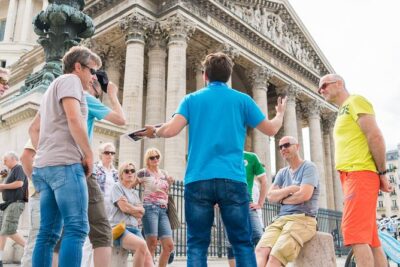
Paris Bike Tour Hidden Secrets in the Latin Quarter & Le Marais neighborhoods
Read our review →
Food and Wine Tasting Walking Tour in Le Marais
Read our review →
Le Marais/Paris – The Historic, Trendy, Jewish, LGBT district
Read our review →

Browse the lists this tour appears in