
REVIEW · WALKING TOURS
Paris: Montmartre Private Walking Tour
Paris gets more interesting uphill. This private Montmartre walk follows old lanes, cabarets, artists’ cafés, and village-like corners that reveal how a rough suburb became Paris’s bohemian address. In two hours, you move from Metro Blanche to Sacré-Cœur, with plenty of stories between.
I like the focus on local character and layered history, especially the mix of illegal liquor, Can-Can dancers, Impressionist painters, and struggling artists. I also like the one-guide format, which gives you a chance to ask questions and adjust the pace. The main drawback is simple: two hours is a brisk introduction, and the hillier streets may feel tiring in poor weather.
In This Review
- Key points at a glance
- Why Montmartre works so well as a walking tour
- Starting beneath the Moulin Rouge at Metro Blanche
- Climbing Rue Lepic through old Montmartre
- Moulin de la Galette and the artist’s Montmartre
- Lapin Agile and the drinking dens of Picasso
- Place du Tertre and the village in the city
- The vineyards and Sacré-Cœur
- What the private format adds for families and small groups
- Guides, language, and the right pace
- Is two hours enough for Montmartre?
- Who should book this Montmartre walk?
- Should you book it?
- FAQ
- Where does the Montmartre private walking tour start?
- Where does the tour end?
- How long does the tour last?
- What languages are available?
- Is this a private group tour?
- What happens if it rains?
Key points at a glance
- Start at Metro Blanche: Meet your guide by the exit, identifiable by a red canvas tote bag.
- Follow Rue Lepic uphill: This old street connects major Montmartre sights with stories of painters, cabarets, and ordinary neighborhood life.
- See famous entertainment landmarks: The route includes Moulin Rouge, the former Maison Blanche at Metro Blanche, Moulin de la Galette, and Lapin Agile.
- Reach village-like Place du Tertre: Street artists and café terraces give this square a very different feel from the city below.
- Hear personal stories from private guides: Boris, Isabella, and other guides have been praised for clear English, warmth, and keeping children engaged.
- Plan for all-weather walking: The tour runs rain or shine and returns to the starting point.
Why Montmartre works so well as a walking tour
Montmartre is one of those Paris districts that rewards context. If you simply climb to Sacré-Cœur, take a few photos, and leave, you see the postcard version. This walk aims to show you the less polished story beneath it.
The district was once outside Paris’s official jurisdiction. That mattered. Taxes and city rules did not apply in quite the same way, helping Montmartre attract taverns, cabarets, cheap lodging, and people looking for fewer restrictions. The result was a neighborhood with both elegant villas and rough slums, religious landmarks and questionable nightlife.
Your guide connects those contrasts as you walk. You hear about illegal alcohol, obscene Can-Can performances, and the artists who made the area famous. The point is not simply to collect names. It is to understand why painters, writers, performers, and drinkers kept turning up here.
I especially like that this is a private group rather than a large procession. Montmartre’s streets can be crowded, and a smaller party makes it easier to stop without blocking the pavement. It also gives you room to ask about the artists, cabarets, and buildings that catch your eye.
More Walking Tours in Paris
- Paris Top Sights Half Day Walking Tour with a Fun Guide
★ 5.0 · 2,893 reviews - Montmartre Hidden Gems and Scenic Highlights Walking Tour
★ 5.0 · 2,684 reviews - Montmartre Hill French Gourmet Food and Wine Tasting Walking Tour
★ 5.0 · 2,588 reviews
Starting beneath the Moulin Rouge at Metro Blanche
The meeting point is by the exit of Metro Blanche. Look for the guide carrying a red canvas tote bag, a small but useful detail in a busy part of Paris. The tour ends back at the same meeting point, so you do not need to figure out a separate return route.
Metro Blanche puts you near the lower edge of Montmartre’s entertainment quarter. From the first minutes, the setting helps explain the district’s old reputation. This was the zone of cabarets, music halls, drink, and nightlife, not the quiet hilltop image many people carry in their heads.
The nearby Moulin Rouge is an obvious landmark, but the tour places it within a wider story. The Can-Can developed in the cabaret world, where dancers and performers pushed against respectable social rules. Your guide also points out the former Maison Blanche at the Blanche Metro area, linking the modern station with the older neighborhood.
This is a good starting point if you want the tour to begin with atmosphere rather than architecture alone. The tradeoff is that the lower streets can feel more commercial and crowded than the upper lanes. You are not starting in the calmest part of Montmartre, but you are starting where much of its nightlife story makes sense.
Climbing Rue Lepic through old Montmartre
Rue Lepic is one of the tour’s most useful stretches because it gives you a physical sense of Montmartre. You climb the ancient street toward the hill, passing through an area tied to the artistic movements that shaped Paris in the 19th century.
The climb matters. Montmartre is not a flat neighborhood that happens to contain a basilica. Its slope, winding routes, and changing views help explain why it can feel like a separate village inside a major capital. You get a gradual shift from the entertainment district below to the quieter, more residential streets higher up.
Your guide uses the street to explain the birth of Impressionism and the artists who worked and socialized in Montmartre. The focus is not limited to famous paintings. You also hear about the daily world behind the art, including cheap drinking places, uncertain incomes, and the mix of people who made the area their home.
For you, the practical point is to wear shoes with good grip and allow for a steady uphill walk. The route is only two hours, so there is not much time for a slow pace or extended rests. If you have limited mobility, ask about the route before booking, since the supplied details do not promise a step-free path.
Moulin de la Galette and the artist’s Montmartre
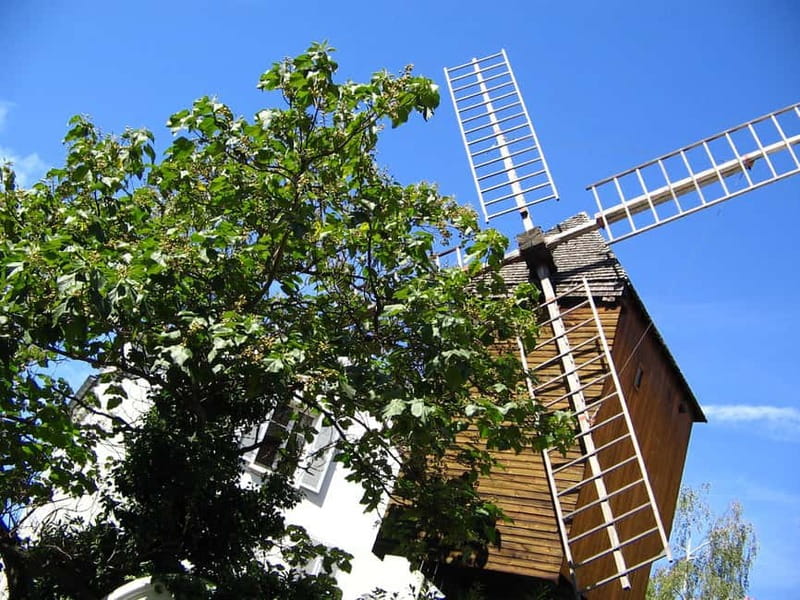
Moulin de la Galette adds another side to the district. Its name recalls the windmills that once marked the hill, before modern Paris spread around Montmartre. It also connects with the social world that painters tried to capture in their work.
A stop here is valuable because it ties art to a real place. Impressionist scenes of Montmartre were not invented in a studio far away. They grew from streets, dance halls, gardens, and ordinary gathering points around the hill.
Do not expect a long museum visit as part of this walk. The experience is built around outdoor storytelling and the relationship between places. If you want to spend serious time with paintings, this tour works better as a way to add meaning before or after a museum visit.
The guide’s role is especially important here. A flat list of painter names would be easy to forget. A well-told explanation of where artists drank, met, and worked can make the neighborhood easier to read. Boris has been praised for his broad command of Paris and its past, while Isabella has been described as both informative and fun. Those comments suggest that the human quality of the guide is a major part of the value.
Same city, a slower kind of day:
- Paris: Louvre Museum Timed-Entrance Ticket
★ 4.6 · 71,977 reviews - Disneyland® Paris 1-Day Ticket
★ 4.6 · 49,412 reviews - Paris: Versailles Palace and Gardens Full Access Ticket
★ 4.6 · 41,579 reviews - Paris: Evening River Cruise with Music
★ 4.4 · 22,721 reviews
Lapin Agile and the drinking dens of Picasso
Lapin Agile is one of the more distinctive stops because it moves the story away from grand monuments. This cabaret was a favored place for struggling artists and writers, including Picasso and Modigliani.
That detail gives the tour a useful corrective. Montmartre was not only a place of famous masterpieces and romantic views. Many artists were short of money, and the cafés and cabarets were social centers where people exchanged ideas, made contacts, and passed time.
You also hear about other drinking dens linked with Picasso and his circle. The exact appeal of these places becomes clearer when you see Montmartre as a working neighborhood rather than a museum display. Artists did not merely arrive to pose in front of pretty streets. They ate, drank, argued, performed, and tried to build careers there.
For me, this is one of the strongest reasons to choose a private tour. You can ask follow-up questions about Picasso, Modigliani, the cabaret scene, or the difference between the neighborhood’s artistic legend and its rougher reality. A standard sightseeing route may show you the buildings. A good guide helps you understand how people used them.
Place du Tertre and the village in the city
Place du Tertre is the classic Montmartre stop. Street artists work around the square, and the setting has a village quality that feels far removed from the traffic below.
The charm is real, but you should keep your expectations sensible. This is one of the best-known points on the hill, so it can be busy and commercial. The private tour helps by giving you context rather than leaving you to judge the square only by first impressions.
Your guide can explain why this area became tied so closely to artists and portrait painters. You may find the square more appealing once you understand its place in Montmartre’s long artistic story. It is not simply a pretty plaza. It represents the way the neighborhood turned its creative past into a living public image.
This is also a useful place to pause mentally and compare the different Montmartres you have seen. Down at Blanche, the emphasis is cabaret and nightlife. Along Rue Lepic, it is streets and painters. At Place du Tertre, it is village charm and public art. The short route covers several personalities without requiring a full day.
The vineyards and Sacré-Cœur
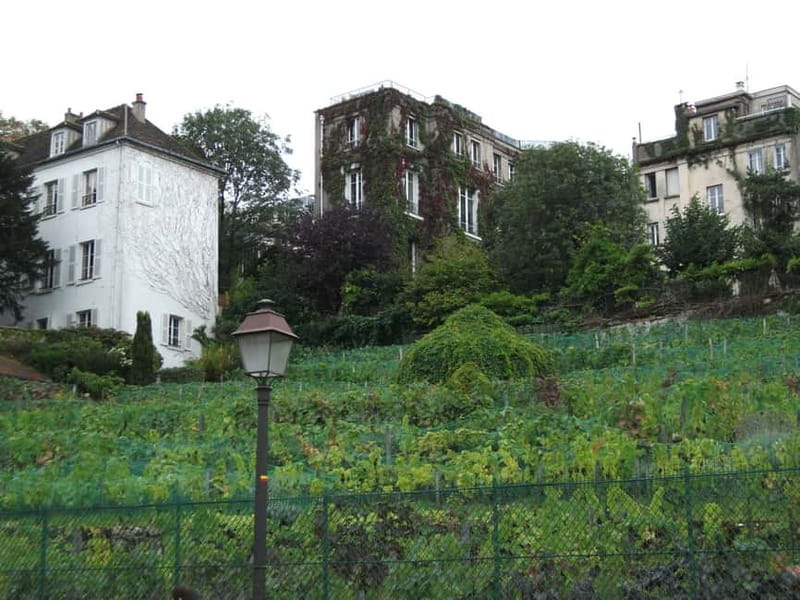
The Vigne de Montmartre, the neighborhood’s vineyard, is another reminder that the hill was once less urban than it is now. It gives the route a small agricultural note, a contrast to the cabarets and apartment streets.
You do not need to expect a wine tasting. Food and drinks are not included, and the supplied details describe the vineyard as a sightseeing stop. Its value is visual and historical: it helps you picture Montmartre as a former suburb with open land, gardens, and local production.
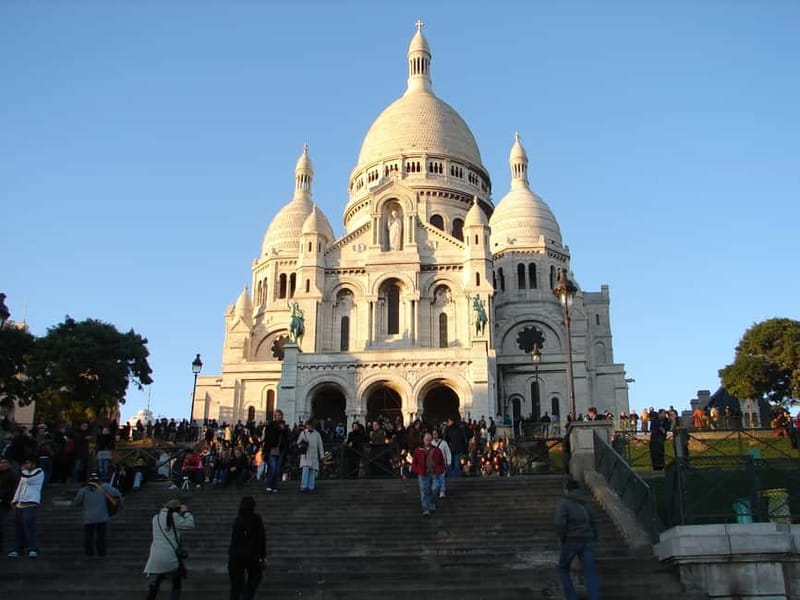
The walk continues toward the white façade of Sacré-Cœur. The basilica is the major visual finish to the uphill section, and its bright exterior is easy to spot from much of Paris. The tour does not list an interior visit, so you should treat this as an exterior landmark and viewpoint stop rather than a church tour.
Sacré-Cœur can be crowded, especially around the broad approaches and lookout areas. Still, it is an effective ending to the story because the basilica represents another change in Montmartre’s identity. The district moved from fringe suburb and nightlife center to one of Paris’s most visited quarters.
What the private format adds for families and small groups
At $171 per person, this is not a casual walk you book only for directions. The price makes the most sense when you value a private guide, focused storytelling, and the freedom to ask questions.
The private setup can be particularly useful for families. Boris reportedly kept two children, ages 10 and 12, interested throughout the walk, and also entertained two young daughters during another tour. That does not guarantee every child will love the experience, but it suggests the guides can adjust their delivery instead of giving a fixed lecture.
A two-hour length is another advantage with children. You get a clear introduction without committing half a day to steep streets and repeated stops. The short format also works well on a first Paris visit when you want Montmartre explained before exploring it on your own.
The limitation is cost. A large group tour usually spreads the guide fee across more people, while this price pays for privacy. If you are traveling alone or as a pair on a tight budget, you should compare the cost with a shared walk. If you are a family or small group that wants personal attention, the value is easier to justify.
Guides, language, and the right pace
Live guiding is available in English, French, and Serbo-Croatian. The comments about Boris point to strong English and wide knowledge of Paris, while Isabella receives praise for being both informative and enjoyable to spend time with.
That matters in Montmartre because the neighborhood’s appeal depends on stories. You can recognize Moulin Rouge or Sacré-Cœur without help. What you cannot easily see is how illegal liquor, cabaret culture, Impressionism, and artists’ poverty fit together. The guide supplies that thread.
You should also tell your guide what interests you most. The supplied format is private, so you may have more room to ask about painting, nightlife, architecture, family-friendly stories, or the people connected with Lapin Agile. The experience is strongest when you treat it as a conversation rather than a race between landmarks.
The tour is offered rain or shine. Montmartre in wet weather may be less comfortable, especially on sloping or uneven streets, so check the forecast and dress for walking. Since food and drinks are not included, plan any café stop or meal separately unless your guide suggests a place during the route.
Is two hours enough for Montmartre?
Two hours is enough for an overview, not a complete study of the district. You can visit the principal story points, hear the major legends, and understand the route from the cabaret quarter to the hilltop.
It is not enough for long visits inside several attractions, extended photography, and leisurely café time. The listed route includes many stops: Metro Blanche, Moulin Rouge, Rue Lepic, Moulin de la Galette, Place du Tertre, the vineyard, Lapin Agile, and Sacré-Cœur. That is a full schedule for a short walk.
I would use this tour early in a Paris stay. Afterward, you can return to the places that caught your attention, spend more time at Place du Tertre, or explore nearby streets with a better sense of what you are seeing. The return to Metro Blanche also makes it easy to continue elsewhere in Paris.
The tour has a 4.9 rating from 45 reviews, with praise centered on guide quality, clear English, atmosphere, and the ability to keep children engaged. Those are the areas that matter most here. Montmartre is easy to photograph, but far harder to understand without good narration.
Who should book this Montmartre walk?
I would recommend it if you want:
- A private experience rather than a large group
- A short introduction to Montmartre’s art and cabaret past
- Stories about Picasso, Modigliani, and the local drinking culture
- A guide who can speak English, French, or Serbo-Croatian
- A family-friendly walk with room for questions
- A route that includes both famous sights and less obvious details
I would hesitate if you want a slow museum-style visit, a food tour, or a full day devoted to Montmartre. Food and drinks are not included, and the two-hour route keeps moving. The uphill streets may also be a concern if walking is difficult.
Free cancellation is available up to 24 hours before the start, and you can reserve now while paying later. Those terms help if your Paris schedule is still shifting, but the more important decision is whether personal guiding is worth the $171 per person.
Should you book it?
Book this tour if you want Montmartre to feel like a real neighborhood with a complicated past, not just a hill topped by Sacré-Cœur. The strongest features are the private format, the route through Rue Lepic and the cabaret quarter, and guides such as Boris and Isabella who appear to bring warmth as well as facts.
Skip it if you already know Montmartre well or prefer to wander without a set route. For a first visit, though, this is a focused and useful way to understand the artists, performers, vineyards, and old drinking places that shaped the district. Bring comfortable shoes, allow for rain, and expect a brisk walk with a lot of history packed into two hours.
FAQ
Where does the Montmartre private walking tour start?
Meet your guide by the exit of Metro Blanche. The guide will be carrying a red canvas tote bag.
Where does the tour end?
The activity ends back at the meeting point by Metro Blanche.
How long does the tour last?
The walking tour lasts two hours. Starting times vary, so check availability when booking.
What languages are available?
The live guide can conduct the tour in English, French, or Serbo-Croatian.
Is this a private group tour?
Yes. The experience is organized as a private group with a personal guide.
What happens if it rains?
The tour takes place rain or shine. Food and drinks are not included.
Recently added in Paris
- Private Transfers in Paris★ 5.0 · 75 reviews
- CDG – Euro Disney – CDG Two Way Private Shuttle Transfer★ 5.0 · 233 reviews
- Disneyland® Paris 1 Day Ticket with Transport from Paris★ 3.5 · 302 reviews
- Personalized Transport service from Disneyland to Paris★ 5.0 · 63 reviews
- Guided tour Monet’s house and gardens/small group★ 4.5 · 68 reviews
- Giverny Monet House and Gardens Skip the line Walking tour★ 4.0 · 217 reviews
- Monet’s Gardens & House-Private Giverny Tour From Paris★ 4.5 · 137 reviews
- Monet’s House and Garden & Giverny Village★ 4.5 · 39 reviews
Walking Tours, compared.

Paris Top Sights Half Day Walking Tour with a Fun Guide
Read our review →
Montmartre Hidden Gems and Scenic Highlights Walking Tour
Read our review →
Montmartre Hill French Gourmet Food and Wine Tasting Walking Tour
Read our review →
Paris Île de la Cité and Notre-Dame Walking Tour With Crypt
Read our review →
Montmartre Cheese, Wine & Pastry Guided Walking Tour
Read our review →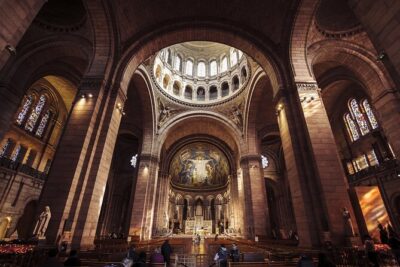
Paris in a Day: Louvre or Orsay, Eiffel Tower, City Walk & Cruise
Read our review →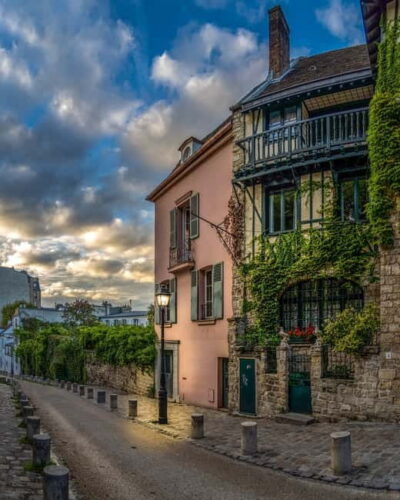
Montmartre Highlights Walking Tour with a Local Guide
Read our review →
Paris City Center Free Walking Tour (Tip-Based)
Read our review →Browse the lists this tour appears in