

REVIEW · SKIP THE LINE
Paris: Musée d’Orsay Guided Tour with Skip-the-Line Tickets
A railway station makes a marvelous art museum. This 1.5-hour guided visit brings you face to face with Monet, Renoir, Manet, Cézanne, and Van Gogh while explaining how Paris turned a grand train terminal into an art museum. I like the clear focus on Impressionism and the chance to see the old station’s famous clock views. The main drawback is time: with entry and headset setup taking about 30 minutes, the art portion can feel brisk.
At $55 per person, I think the tour offers fair value if you want a planned route and lively commentary rather than wandering on your own. Guides such as Merve, Gabriella, Thibeault, Laetitia, Isabelle, and Erlon have earned especially strong praise for their art knowledge and storytelling. Still, heavy crowds, a possible 15-minute security wait, and no access to temporary exhibitions are worth noting.
In This Review
- Key points to know before you book
- Why the Musée d’Orsay works so well for a guided tour
- Meeting beside the horse statue
- Entering through the separate entrance
- The former station and its great clock
- Following Impressionism from Paris to Provence
- The famous paintings and the pace of the route
- What the guides add
- The optional Louvre afternoon
- Price, value, and who should book
- Final verdict: a strong first look at Orsay
- FAQ
- How long does the Musée d’Orsay tour last?
- What language is the tour conducted in?
- Does the ticket let me skip all waiting?
- Where do I meet the guide?
- Are temporary exhibitions included?
- Can I bring luggage or a large bag?
- Is cloakroom service included?
- Can I reenter the museum after leaving?
- What does the Louvre upgrade include?
Key points to know before you book
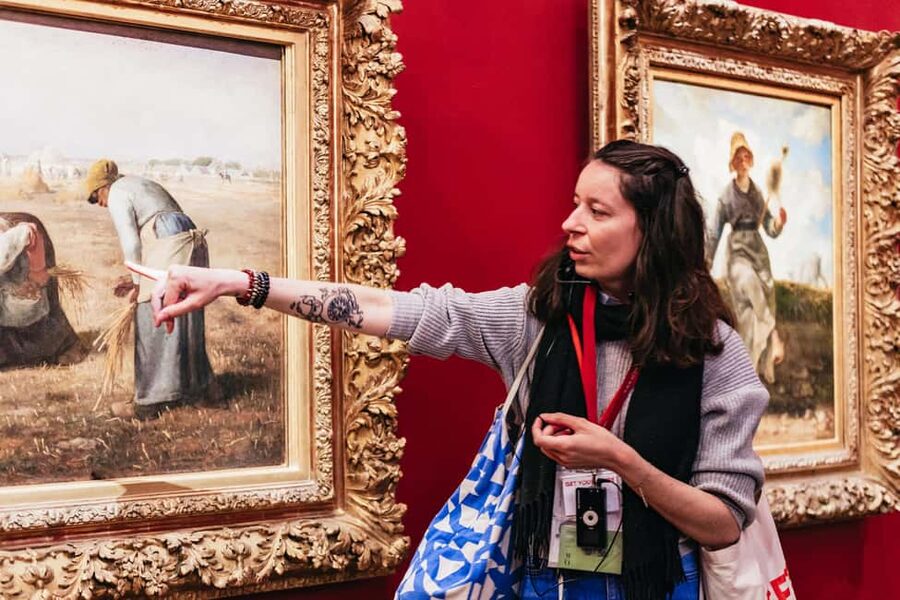
- The building is part of the show: You hear how a former train station and hotel became the Musée d’Orsay.
- The route centers on major artists: Expect works by Monet, Manet, Renoir, Cézanne, Van Gogh, Gauguin, Degas, and others.
- The museum clock offers a Paris view: You get a memorable look through one of the station’s great clock faces.
- Skip-the-line means smoother entry, not instant entry: A separate entrance is provided, but security can still take up to 15 minutes.
- The tour is a highlights visit: It does not attempt to cover every gallery, and the 1.5-hour museum route may feel rushed to serious art fans.
- The Louvre upgrade fills the afternoon: The optional combination includes a separate two-hour guided Louvre visit.
Why the Musée d’Orsay works so well for a guided tour
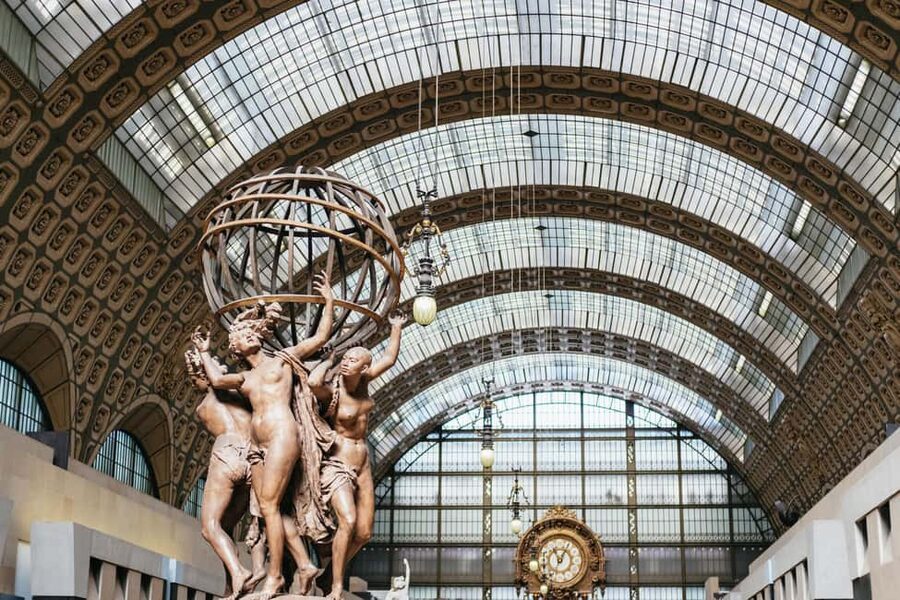
The Musée d’Orsay is easier to enjoy when you understand what you are looking at. Its paintings are familiar from books and screens, but seeing them in person raises practical questions. Why did Impressionist artists paint outdoors? Why did loose brushwork upset critics? What changed in Paris as factories, railways, and new city life reshaped daily experience?
A good guide gives those questions a place in the story. Instead of treating each painting as an isolated masterpiece, the tour links art to the Industrial Revolution, changing social habits, and the city around you.
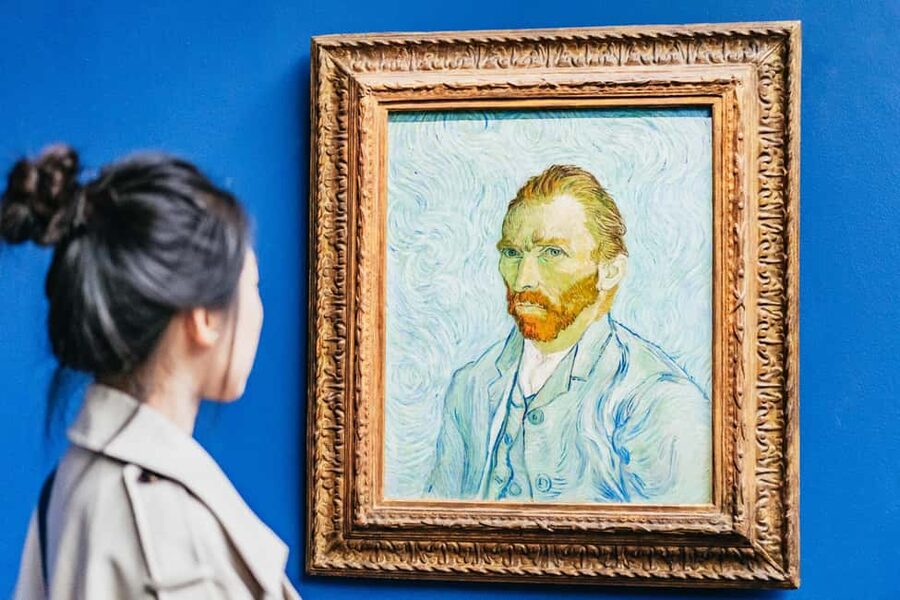
I like this approach because the museum can otherwise feel like a parade of famous names. Monet, Manet, Renoir, Degas, Cézanne, Van Gogh, and Gauguin are all important, but it helps to know what each artist was trying to do differently.
The tour also gives the building proper attention. The Musée d’Orsay began life as a railway station and hotel, and its grand interior still carries that identity. The huge central hall, great clock, and open sense of space make it unlike the Louvre or a standard gallery.
More reserved-entry tickets in Paris:
- Versailles: Skip-the-Line Tour of Palace with Gardens Access
★ 4.7 · 9,778 reviews - Versailles: Skip-the-Line Guided Palace Tour and Full Access
★ 4.6 · 5,214 reviews - Louvre Museum: Skip-the-Line Small Group Guided Tour
★ 4.6 · 3,960 reviews
Meeting beside the horse statue
Your meeting point is next to the entrance of the Musée d’Orsay, beside the horse statue. Give yourself extra time to find this spot, especially if you do not know the museum or are arriving during a busy period.
One practical issue deserves attention: finding the guide has not always been effortless. A 2025 review described difficulty locating the group because there was no obvious GetYourGuide flag or card. The guide did appear in clothing that was easy to spot in the crowd, but I would still keep your phone handy and check the exact meeting instructions before leaving.
Arrive early. The booked time may be the meeting time rather than the moment you enter the galleries. One review noted a 10:15 meeting time with the tour starting at 10:30. The organizers allow around 30 minutes for group organization, museum entry, and distributing the audio headsets.
That buffer is not wasted time, but it does reduce the time spent looking at art. The advertised duration is 1.5 hours, and the museum portion is also described as lasting 1 hour and 30 minutes, with organization handled around it. Plan your day on the assumption that the full appointment will take longer than the gallery talk alone.
Entering through the separate entrance
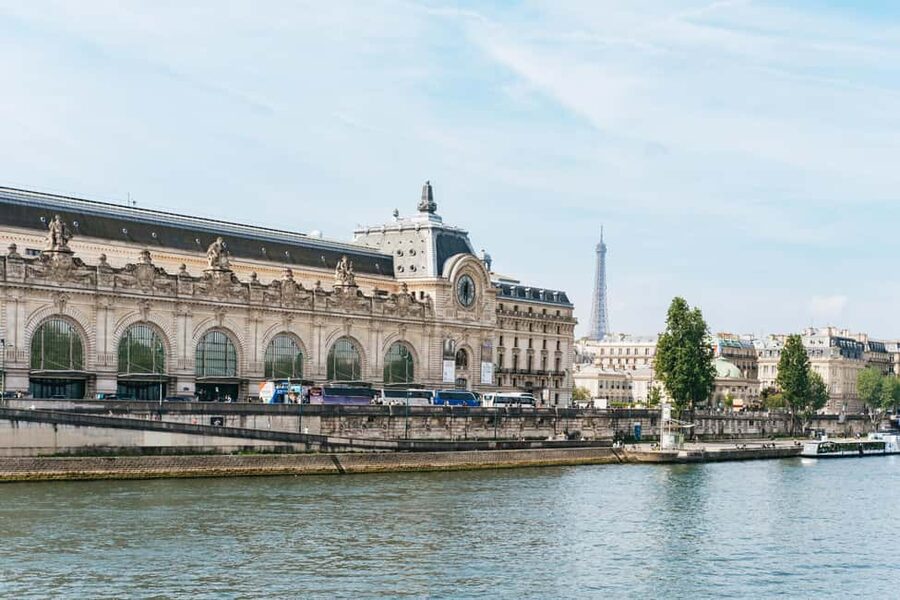
The skip-the-line ticket is one of the tour’s most useful features. You use a separate entrance rather than joining the regular ticket queue. That matters at a museum where a long wait can drain energy before you even reach the paintings.
Skip-the-line does not mean skipping every delay. Security checks remain in place, and the expected wait can reach 15 minutes. Large bags and luggage are not allowed, and you cannot bring selfie sticks or tripods. Small bags and clothes can be left with the cloakroom service included in the tour.
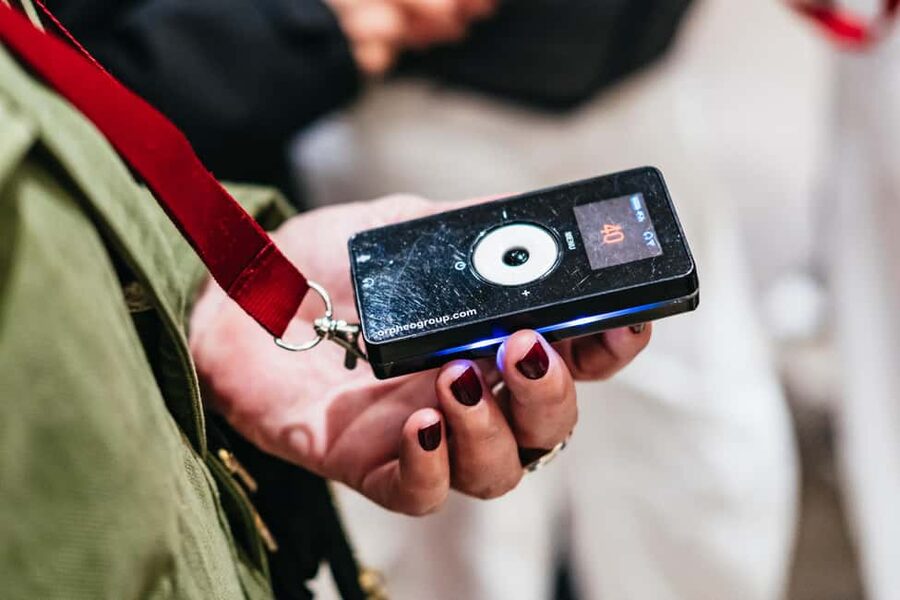
The audio device is also included. That small detail matters in crowded rooms, where standing close to a guide does not always guarantee that you will hear every word. It also lets the guide speak at a normal volume instead of shouting across the gallery.
Once you leave the museum, you cannot reenter on the same ticket. I would use the cloakroom and restroom before departure, and I would not plan to step outside for lunch and return later.
The former station and its great clock
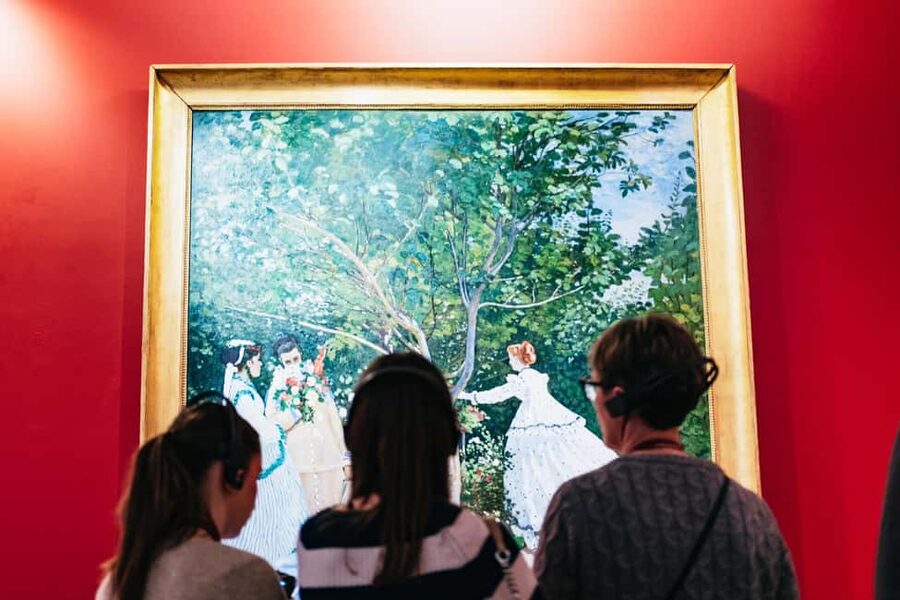
The building deserves your attention before the tour reaches the paintings. The former station was created for rail travel and later transformed into a museum. Its structure gives the visit a sense of scale that many art museums lack.
The great clock is one of the most memorable features. You can take in views of Paris through one of the old station’s clock faces, an especially nice pause after moving through several galleries.
The building also helps explain the period shown in the art. The museum’s collection presents a 19th century shaped by new transport, industry, urban growth, and changing leisure. The station is not just a container for the paintings. It is part of the same story.
This is where the guide’s contribution can make a real difference. Thibeault was praised for explaining both the station’s past and the development of Impressionism. Gabriella received similar praise for joining the building’s story to the art. Those details make the visit feel like a connected tour rather than a fast march between famous canvases.
A few more Paris outings to set side by side
- Paris: Louvre Museum Timed-Entrance Ticket
★ 4.6 · 71,977 reviews - Disneyland® Paris 1-Day Ticket
★ 4.6 · 49,412 reviews - Paris: Versailles Palace and Gardens Full Access Ticket
★ 4.6 · 41,579 reviews - Paris: Evening River Cruise with Music
★ 4.4 · 22,721 reviews
Following Impressionism from Paris to Provence
The central portion of the tour introduces the movement through selected works. You may look at scenes of industrial Paris, country life, and the changing effects of light. The route then reaches beyond the capital, taking you toward the south of France with artists such as Cézanne, Van Gogh, and Monet.
Gauguin provides another shift, sending the story farther from metropolitan France. These geographical changes matter because Impressionism and Post-Impressionism were not one fixed style. Artists responded to different places, subjects, colors, and ideas.
The guide may explain brushwork, color, composition, and the social reaction to new painting methods. One particularly strong feature in the praise for Merve was her ability to explain both artistic technique and the artists behind the canvases. That is the sort of detail that helps you see why a painting looks the way it does, rather than simply being told that it is famous.
The tour also touches on scandals and social tension in Paris. The art did not appear in a calm vacuum. Industrial change, new public spaces, shifting class life, and arguments over what counted as serious art all shaped the period.
The famous paintings and the pace of the route
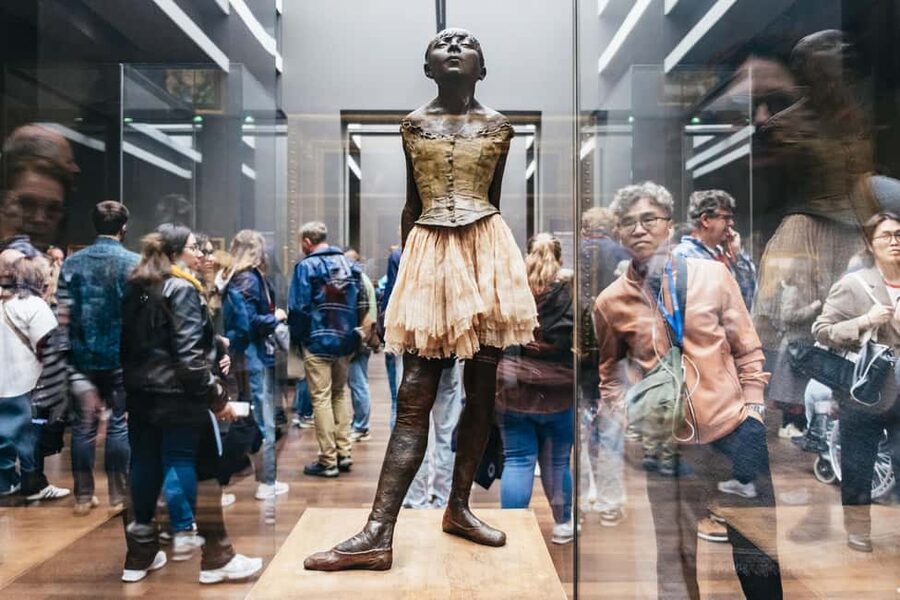
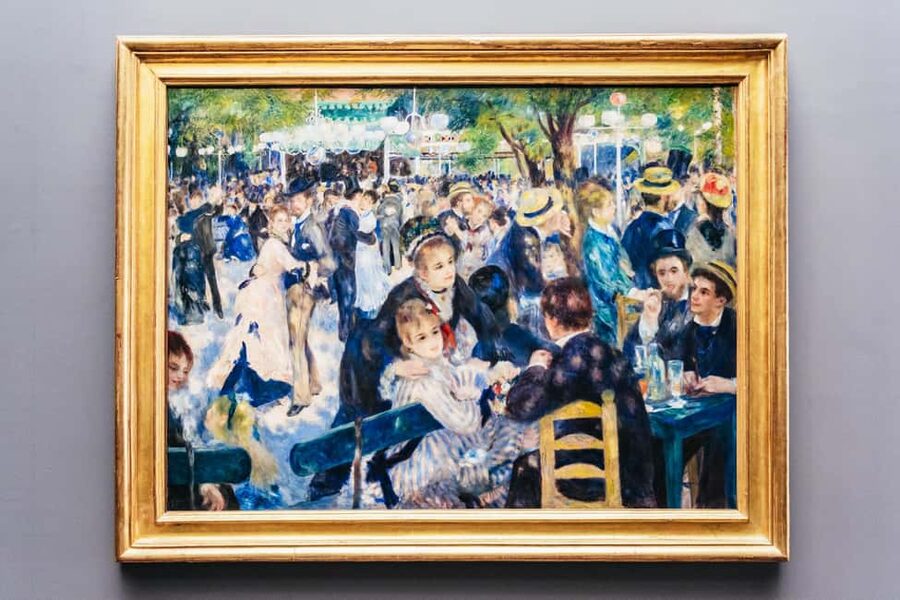
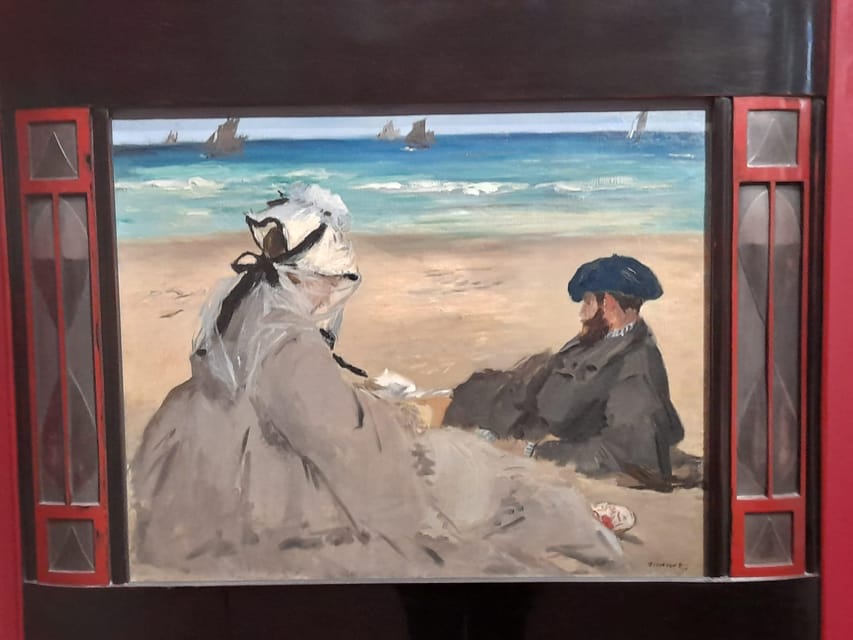
This is best understood as a highlights tour. You will see major works by artists such as Monet, Manet, Renoir, and Van Gogh, along with other important names, but you will not cover the entire museum in 90 minutes.
That is a strength if you have limited time. Eddie described the route as a way to see the most important works without giving the museum a full day. I agree with that logic. The Musée d’Orsay is large enough to fill many hours, and a focused introduction can prevent you from losing time in unfamiliar rooms.
The tradeoff is depth. One June review found the tour a little rushed, with less discussion of individual paintings than expected. Another review praised the guide for spending the right amount of time on a carefully chosen group of works. Both impressions can be true. The pace depends on the guide, the size of the group, and the crowds around the paintings.
I especially like the advice implied by one April review: pause in the rooms and allow people time to look before moving on. A good guide does not talk nonstop. The strongest guides named in the feedback, including Merve, Laetitia, Isabelle, and Erlon, seem to balance explanation with time to study the art.
Crowds remain a real issue. Heavy attendance can make the most famous rooms noisy and hard to approach. The separate entry helps with the first hurdle, but it cannot clear the galleries for you.
What the guides add
The guide is the main reason to choose this tour instead of a basic admission ticket. The ticket gets you inside, but the guide gives you a route, context, and a chance to ask questions.
The praise is consistent across many guide names. Merve is repeatedly described as passionate, engaging, and strong on technique. Gabriella is praised for the building’s story and her enthusiasm. Thibeault combines an explanation of the station with a useful introduction to Impressionism. Laetitia and Isabelle are noted for linking paintings together and offering ideas for other art museums in Paris.
Erlon is described as engaging throughout the route and able to explain the artists and paintings in detail. Other guides received praise for friendliness, energy, and clear explanations. That range suggests the provider has several capable guides, though no group tour can promise a specific person unless your booking says so.
If you are already an art specialist, you may want a private tour with an art historian or a longer format. This group visit is aimed more at helping you see the key works and understand the period without turning the museum into a full academic course.
The optional Louvre afternoon
You can upgrade to a combination with a two-hour guided tour of the Louvre in the afternoon. The Louvre portion includes major works such as the Mona Lisa, Venus de Milo, and Winged Victory of Samothrace, along with less famous works.
The pairing makes sense for first-time Paris visitors who want a single art-filled day. The two museums offer a useful contrast. The Louvre is associated with royal scale, classical art, and celebrated monuments. The Musée d’Orsay moves into later 19th century painting and a different set of artistic arguments.
I would be cautious about the combo if you prefer slow museum visits. A 1.5-hour Orsay tour followed by a two-hour Louvre tour creates a packed day, especially with travel, security, meals, and the mental effort of looking at art for hours.
Lunch is not included. If you choose the upgrade, plan food and a rest break rather than treating the afternoon as one continuous tour.
Price, value, and who should book
At $55, this is not the cheapest way into the Musée d’Orsay. You are paying for the admission, the separate entrance, a licensed English-speaking guide, the headset, and a prepared route.
I think the price is reasonable for a first visit if you value structure. The tour can save you from arriving without a plan, missing key rooms, or spending 20 minutes trying to understand the difference between Impressionism and Post-Impressionism.
The value is weaker if you already know the collection well or want to spend long periods with individual paintings. In that case, a standard ticket or digital audio guide may give you more freedom.
This tour suits you best if:
- You are visiting the Musée d’Orsay for the first time.
- You want famous works explained in plain language.
- You have only part of a day for the museum.
- You enjoy learning about artists, technique, and social context.
- You prefer a guide to an app or printed guidebook.
It is less suitable for wheelchair users and people with mobility impairments, according to the activity information. Children need their own paid tickets. Large bags and luggage are not allowed.
Cancellation is flexible up to 24 hours before the tour for a full refund, and you can reserve now and pay later. Those terms are useful if your Paris schedule is still shifting, but punctuality remains essential. If you are late, the group booking does not allow the provider to issue an individual ticket afterward.
Final verdict: a strong first look at Orsay
I would book this tour for a first visit, especially if the paintings by Monet, Renoir, Manet, or Van Gogh are high on your Paris list. The building story, clock views, audio equipment, and focused route give the visit more shape than a simple ticket.
Go in expecting a highlights lesson, not a complete museum study. Arrive early, pack light, accept that security and crowds may slow things down, and plan extra time afterward if you want to explore alone.
Choose the Louvre upgrade only if you want a full art day and can keep your pace steady. For most people, the standalone Musée d’Orsay tour offers the better balance of cost, time, and attention.
FAQ
How long does the Musée d’Orsay tour last?
The guided museum tour lasts 1.5 hours. Allow about 30 additional minutes for organization, museum entry, and receiving the audio headsets.
What language is the tour conducted in?
The live tour guide speaks English.
Does the ticket let me skip all waiting?
You enter through a separate entrance, but you may still wait up to 15 minutes at the security check.
Where do I meet the guide?
Meet next to the entrance of the Musée d’Orsay, beside the horse statue.
Are temporary exhibitions included?
No. The tour does not provide access to temporary exhibitions.
Can I bring luggage or a large bag?
No. Luggage and large bags are not allowed. Selfie sticks and tripods are also prohibited.
Is cloakroom service included?
Yes. Cloakroom service for small bags and clothes is included.
Can I reenter the museum after leaving?
No. Once you exit the museum, you cannot enter again with the tour ticket.
What does the Louvre upgrade include?
The upgrade includes a separate two-hour guided tour of the Louvre in the afternoon, featuring works such as the Mona Lisa, Venus de Milo, and Winged Victory of Samothrace.
Recently added in Paris
- Private Transfers in Paris★ 5.0 · 75 reviews
- CDG – Euro Disney – CDG Two Way Private Shuttle Transfer★ 5.0 · 233 reviews
- Disneyland® Paris 1 Day Ticket with Transport from Paris★ 3.5 · 302 reviews
- Personalized Transport service from Disneyland to Paris★ 5.0 · 63 reviews
- Monet’s Gardens & House-Private Giverny Tour From Paris★ 4.5 · 137 reviews
- Guided tour Monet’s house and gardens/small group★ 4.5 · 68 reviews
- Giverny Monet House and Gardens Skip the line Walking tour★ 4.0 · 217 reviews
- Monet’s House and Garden & Giverny Village★ 4.5 · 39 reviews
Skip the Line, compared.

Skip-the-Line Tour of Palace with Gardens Access
Read our review →
Skip-the-Line Guided Palace Tour and Full Access
Read our review →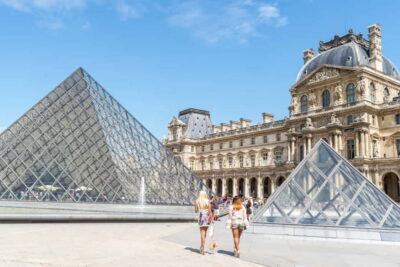
Louvre Museum: Skip-the-Line Small Group Guided Tour
Read our review →
Versailles Skip-the-Line Tour & Gardens Access
Read our review →
Versailles Guided Tour with Skip-the-Line Entry
Read our review →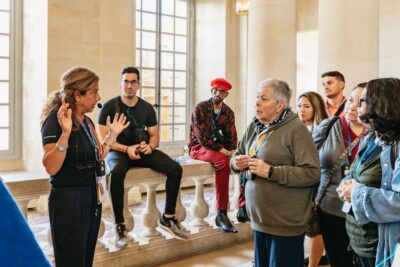
Palace of Versailles Skip-the-Line Guided Tour
Read our review →
Musée d’Orsay Skip-the-Line Tour with Expert Guide
Read our review →
Musée d’Orsay Skip-the-Line Tour with Expert Guide
Read our review →Browse the lists this tour appears in