
REVIEW · WALKING TOURS
Marseille: Essential Guided Walking Tour of the City
Marseille rewards walkers who like their cities layered. This small-group tour with Charles links Greek and Roman origins, wartime stories, street art, harbor views, and local neighborhoods in one well-paced route. I like the personal feel of a group limited to eight, and I like that the walk covers both famous sights and quieter streets.
The main consideration is the distance. The route covers about 5 kilometers and includes hills, uneven pavement, and long periods on foot. You will need comfortable shoes, water, and sensible clothing, especially in strong summer sun. Wheelchair users cannot take this tour.
In This Review
- Quick takeaways for this Marseille walking tour
- Starting beneath La Major Cathedral
- Le Panier, where the walk becomes local
- Church of Accoules and Marseille’s older layers
- Rue de la République and the route to the port
- Cannebière and Cours Honoré d’Estienne d’Orves
- Saint-Victor Abbey and a useful rest stop
- Finishing at Le Pharo
- What makes Charles such a strong guide
- Is $41 a fair price?
- Practical advice before you go
- Who should book this walk?
- Should you book the Marseille Essential Guided Walking Tour?
- FAQ
- Where does the Marseille walking tour start?
- How do I identify the guide?
- How long does the tour last?
- How far do you walk?
- What languages does the guide speak?
- How large is the group?
- Is food included?
- Is the tour suitable for wheelchair users?
- Where can the tour finish?
- Can I cancel for a refund?
Quick takeaways for this Marseille walking tour
- Charles makes the history easy to follow: His English and French, humor, old photographs, maps, and local knowledge help turn dates and monuments into clear stories.
- Le Panier gives you Marseille’s character: Street art, small lanes, the Vieille Charité, and Windmill Hill offer more atmosphere than a simple monument checklist.
- The 5-kilometer route covers a lot: You see La Major, the Old Port, Cannebière, Saint-Victor Abbey, and Le Pharo in 150 minutes.
- The group stays intimate: With no more than eight people, you can ask questions and receive personal restaurant and museum suggestions.
- The finish has excellent views: Le Pharo looks over the harbor and gives the walk a strong scenic ending.
- It is a good first-day activity: The route helps you understand Marseille’s layout before exploring alone.
Starting beneath La Major Cathedral

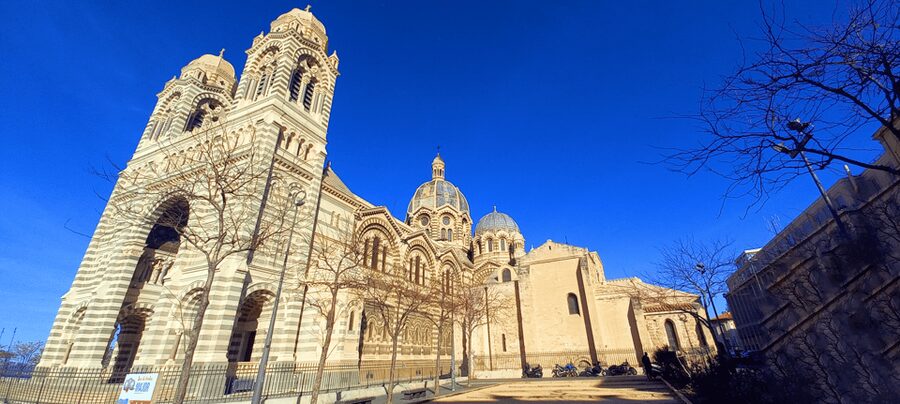
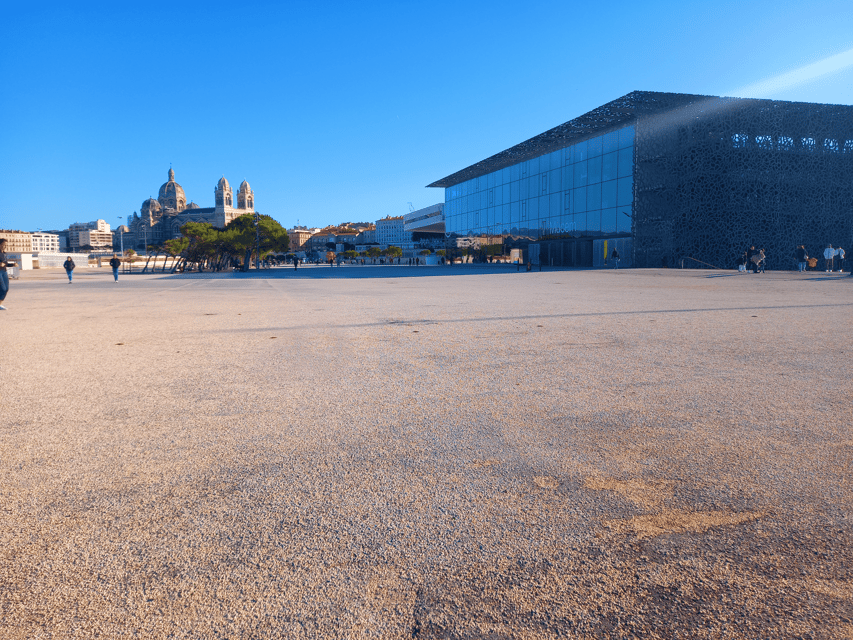
Your meeting point is in front of Cathédrale Basilique Sainte-Marie-Majeure, usually called La Major. Look for the guide wearing a white cap. The cathedral’s Neo-Byzantine and Romanesque design gives you an impressive first landmark, and Charles begins by placing Marseille within its 2,600-year story.
This opening is useful because Marseille can feel scattered at first. The city mixes ancient foundations, grand nineteenth-century buildings, working docks, hillside lanes, and modern public spaces. A guide can connect those pieces in a way a map cannot.
The cathedral visit lasts about 10 minutes and is listed as a guided walk. You should think of this as an orientation stop rather than a long interior visit, since entry tickets are not included. The focus is on the building, its setting, and Marseille’s place as one of France’s oldest cities.
More Walking Tours in Marseille
- Marseille: Half-Day City Highlights Guided Walking Tour
★ 5.0 · 273 reviews - Marseille: No-Diet Club Local Food Tasting and Walking Tour
★ 4.8 · 173 reviews - Marseille: Walking Food Tour with Full Meal
★ 4.7 · 137 reviews
Le Panier, where the walk becomes local
From La Major, you head into Le Panier for roughly 30 minutes. This is one of the oldest parts of Marseille, built on a hillside above the Old Port. The streets are narrow, the route rises and falls, and the neighborhood feels very different from the broad harborfront.
I especially like this section because it shows a less polished side of Marseille. You may see colorful murals, small lanes, old façades, and the quiet corners around Windmill Hill. The area has a bohemian, artistic feel, but it is not presented only as a photo stop. Charles uses the streets to explain how the city grew and changed.
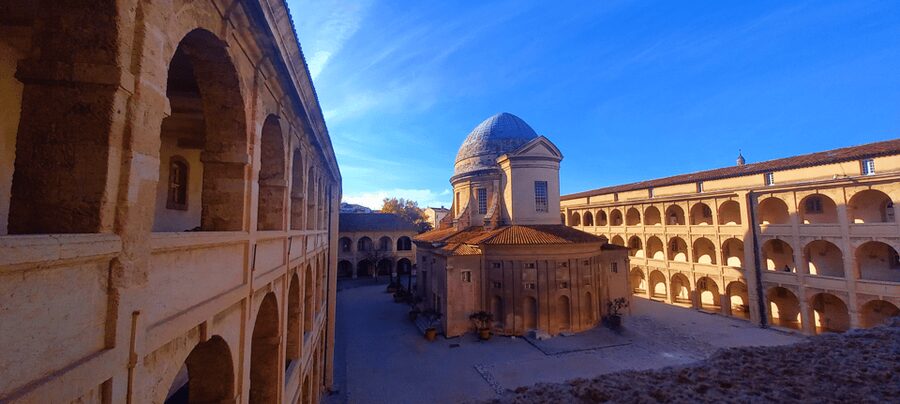
The Vieille Charité is another important stop in Le Panier. This former hospital is one of the district’s major historic buildings. You will learn about its purpose and place in the neighborhood, while the surrounding streets give you a sense of everyday Marseille.
Le Panier is also where the route’s physical demands become clear. The pavement can be uneven, and the hillside means you should not expect a flat promenade. The pace is described as relaxed, but the walk still requires a reasonable level of mobility.
Church of Accoules and Marseille’s older layers
The Church of Accoules receives about 10 minutes of guided attention. This short stop helps fill in the city’s religious and architectural story without turning the tour into a long church circuit.
The value here is the context. Instead of seeing isolated buildings, you move through a sequence of places that show Marseille at different points in time. Charles is praised for explaining the ancient Greek and Roman foundations alongside more recent events, so the church fits into a wider story rather than taking over the tour.
That balance matters in a city with so many possible subjects. In 150 minutes, you cannot study every monument in detail. You can, however, leave with a clear sense of how Marseille’s neighborhoods relate to one another and why its old center looks the way it does.
Rue de la République and the route to the port
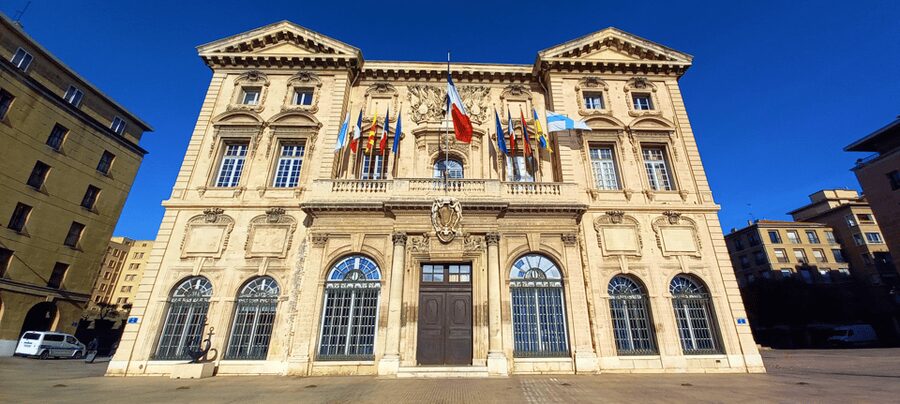
The walk continues along Rue de la République for around 10 minutes. This broad street provides a contrast to Le Panier’s tight lanes. It also helps you see the changing scale of Marseille, from small hillside passages to grand urban planning.
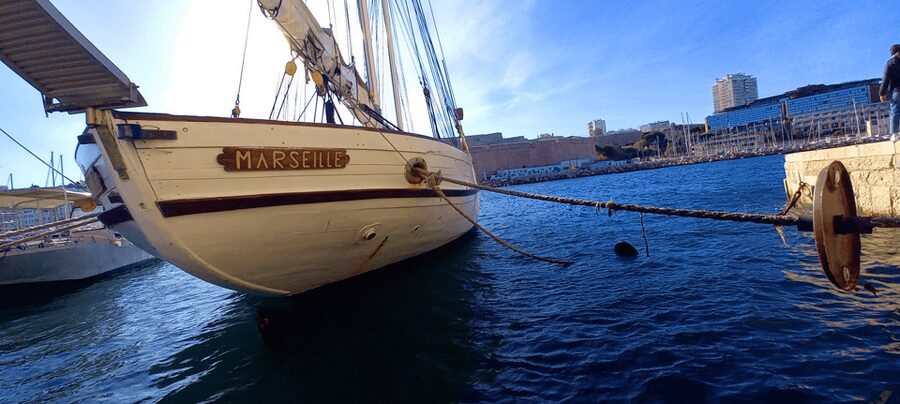
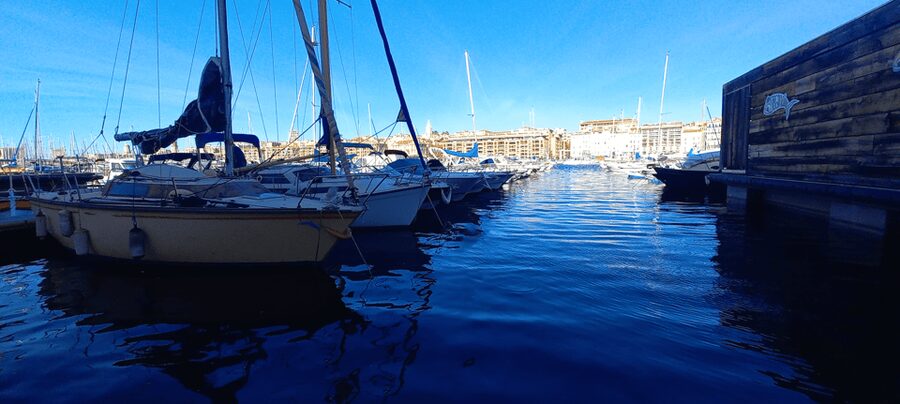
Next comes the Old Port, with about 15 minutes of sightseeing and explanation. The Vieux Port has been central to Marseille since ancient times, and the water remains the city’s visual anchor. Boats and yachts fill the harbor, while Fort Saint-Jean and Fort Saint-Nicolas guard the entrance.
This is a good place to pause and get your bearings. If you arrived in Marseille by train, cruise ship, or public transport, the port may already be familiar. The guide adds meaning by explaining why this stretch has mattered for so long and how maritime activity shaped the city.
Do not expect a boat ride or a long free period by the water. This is a walking tour, so the harbor stop is about views, history, and orientation. You can return later for a slower wander, a meal, or more time beside the boats.
Same city, a slower kind of day:
- Marseille: City Sightseeing Hop-On Hop-Off Bus Tour
★ 3.8 · 2,820 reviews - Marseille: Côte Bleue Calanques Half-Day Kayak Tour
★ 4.7 · 877 reviews - Marseille Food Tour – Full Meal of Local Tastes by Do Eat Better
★ 5.0 · 530 reviews - Marseille: Calanques National Park Guided Hike with Picnic
★ 4.9 · 516 reviews
Cannebière and Cours Honoré d’Estienne d’Orves
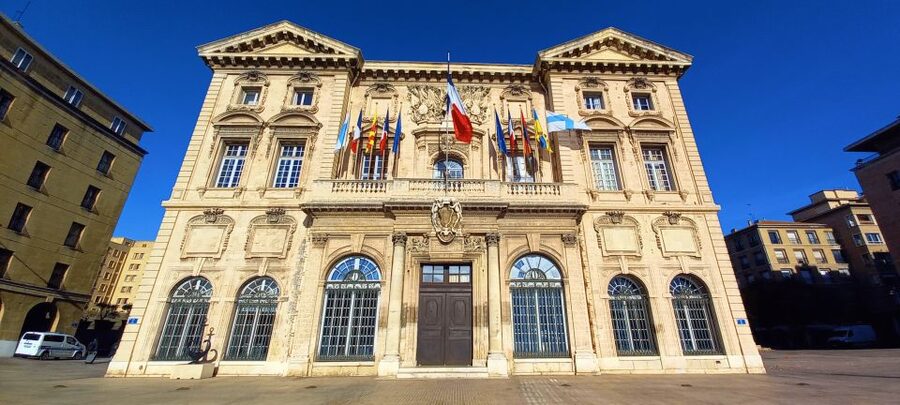
The route takes you along the Cannebière, one of Marseille’s best-known streets. Galleries, workshops, boutiques, cafés, bistros, and restaurants line the area, giving you a useful look at the city’s public life.
I like the change of mood here. Le Panier feels intimate and hilly, while the Cannebière opens the city toward commerce and movement. You are not simply ticking off another street. You are watching Marseille shift from old lanes to a wider urban center.
Cours Honoré d’Estienne d’Orves adds another 10-minute sightseeing stop. This area helps connect the Old Port with the route toward Saint-Victor and Le Pharo. The walk is designed as a continuous story, not a collection of unrelated attractions.
Because there are several short stops, the guide’s delivery makes a real difference. Charles is described as funny, friendly, and easy to understand in English. He also uses pictures and maps from earlier periods to show how Marseille changed, which can be especially helpful when the modern streets no longer reveal their original purpose.
Saint-Victor Abbey and a useful rest stop
Saint-Victor’s Abbey receives about 15 minutes of guided sightseeing, followed by a 20-minute break with scenic views along the way. The abbey brings another strong historical layer to the walk, and its Roman-style architecture adds variety after the harbor and city streets.
The break is a practical feature. By this point, you have already covered several kilometers, and a pause lets you catch your breath before the final climb toward Le Pharo. Food and drinks are not included, so carry water and a small snack if you need one.
The schedule describes the break as sightseeing and scenic views rather than a restaurant stop. That means you should not count on a full meal. Bring what you need, especially in warm weather.
This portion also shows why the tour is better suited to people who enjoy walking than to anyone seeking a short, low-effort introduction. The route is not extreme, but it is active. One participant described covering closer to 8 kilometers, while the stated route is 5 kilometers, so I would plan for a substantial walk rather than relying only on the headline duration.
Finishing at Le Pharo
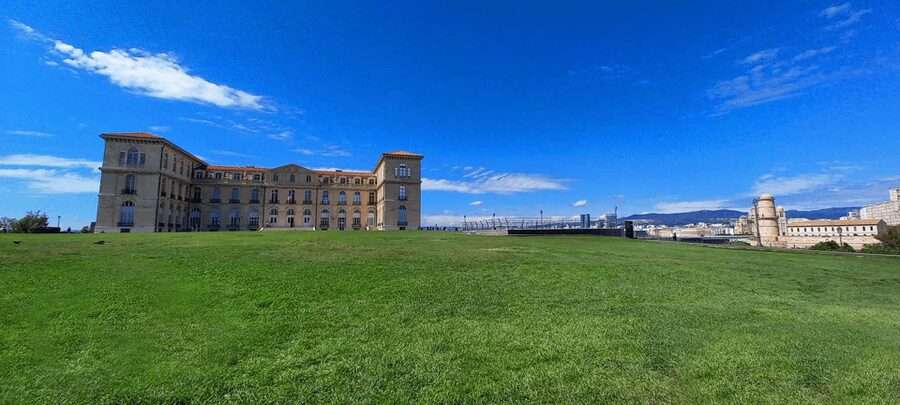
The final 30 minutes take you to Palais du Pharo, built in the mid-nineteenth century by Emperor Napoleon III for Empress Eugénie. Its ornate façade and broad terraces are a fitting finale after the older streets and religious buildings.
The views are the reward. From Le Pharo, you can look back toward the harbor and the Mediterranean. This is one of the places where the city’s parts come together visually: the forts, boats, waterfront, and dense center all make more sense from above.
The tour can finish at Le Pharo or at the Old Port, giving you a useful choice for the rest of your day. If you want to continue sightseeing, the port is convenient. If you prefer to end with the view, stay at Le Pharo and enjoy the setting after the guide leaves.
The palace visit is listed as a guided walk and sightseeing stop, not an included interior tour. You should expect to see and discuss the site rather than enter as part of the package.
What makes Charles such a strong guide
The guide is the heart of this experience. Charles is a local, bilingual guide who leads in English and French. The strongest pattern in the feedback is his ability to explain history with humor and clear storytelling.
That is important in Marseille, where the past can involve ancient settlers, Roman influence, religious institutions, port commerce, urban change, and the painful events of World War II. Charles reportedly uses diagrams, photographs, and maps to make those subjects easier to picture.
He also adjusts the walk to the people in front of him. Solo visitors have felt included, couples have received personal attention, and small groups have had time to ask questions. He has also offered suggestions for museums, restaurants, drinks, and other places to visit after the tour.
That advice can add real value. Several people used the tour as a first look at Marseille, then continued exploring with Charles’s suggestions. One particularly useful food recommendation was Chez Fonfon for bouillabaisse, though you should treat restaurant suggestions as guidance rather than part of the tour itself.
Charles also appears attentive to comfort. In hot weather, he has chosen shaded stopping places when possible. That cannot remove the heat or the walking, but it shows the kind of practical care that makes a small group work well.
Is $41 a fair price?
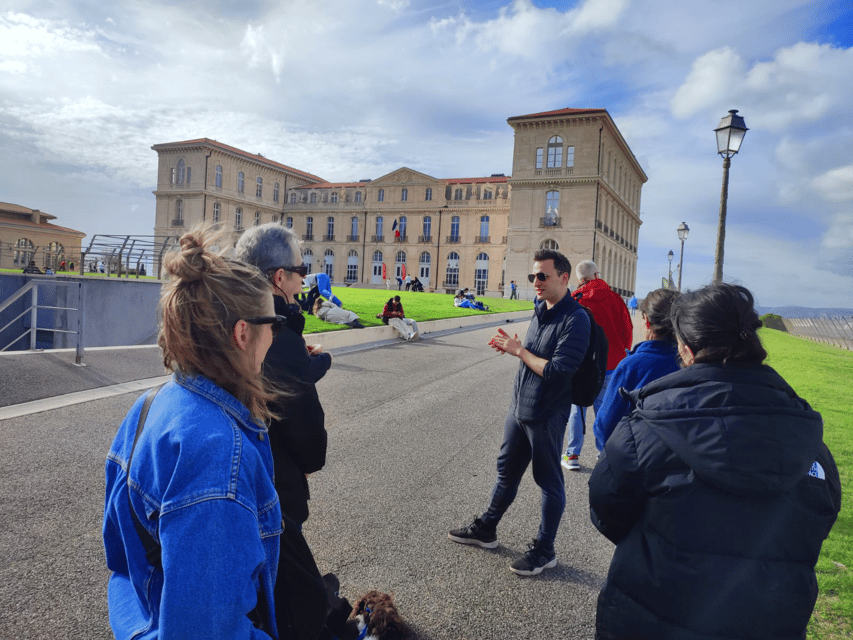
At $41 per person, the tour sits in a reasonable range for a 150-minute guided experience, especially with a maximum of eight participants. You are paying for a local guide, a carefully connected route, and the chance to ask questions rather than simply follow a large crowd.
The value is strongest if you are new to Marseille or visiting for a short stay. In two and a half hours, you cover the cathedral, Le Panier, Accoules, Rue de la République, Vieux Port, Cannebière, Saint-Victor, and Le Pharo. Reaching all of those places alone would require planning and a good sense of direction.
It is less useful if you want long museum visits, extensive free time, or a food-focused outing. Food and drinks are not included, and the tour does not promise admission to the cathedral, abbey, or palace. You are buying interpretation and route planning, not entrance tickets.
The small group improves the value. A group of eight or fewer makes it easier to hear, ask questions, and receive suggestions suited to your interests. If the group is smaller, the experience may feel close to a private walk without the cost of booking one outright.
Practical advice before you go
Wear shoes you can trust on slopes and uneven streets. The route is 5 kilometers according to the tour details, though you should allow for a longer-feeling walk because of hills, stops, and city pavement.
Bring water, sunglasses, weather-appropriate clothes, and a snack if you want one. There is a 20-minute break, but no food or drink is supplied.
Arrive at La Major Cathedral and look for the white cap. Since the cathedral is the starting point, give yourself enough time to reach the correct side of the building without rushing.
The tour lasts 150 minutes and has starting times that depend on availability. Free cancellation is offered up to 24 hours before the activity, and you can reserve now and pay later. Those terms help if your Marseille schedule is still changing.
The route is not suitable for wheelchair users. Anyone with limited mobility should also think carefully about the hills and the 5-kilometer distance, even though the pace is intended to be comfortable.
Who should book this walk?
I would choose this tour for a first visit, a short stay, or the first morning of a longer Marseille trip. It gives you a working map of the center and points out places you might otherwise pass without understanding.
It suits history fans, architecture lovers, solo visitors, couples, and small groups who enjoy conversation. It is also a good fit if you prefer a guide who can mix major sights with neighborhood details instead of delivering a fixed list of dates.
You may want another type of outing if your priority is shopping, extensive time inside museums, a flat route, or a relaxed harbor meal. This walk is active and information-led, with scenery as a welcome bonus.
Should you book the Marseille Essential Guided Walking Tour?
Book it if you want a strong introduction to Marseille in a small group and you value a guide who can explain the city with warmth, humor, and local detail. Charles receives unusually consistent praise for his communication, personal attention, history stories, and practical recommendations.
I would book it early in your stay, bring water, and keep the rest of the afternoon flexible. At $41, the route offers good value for the number of districts and landmarks covered, but you should come prepared for a real walk, not a gentle stroll.
FAQ
Where does the Marseille walking tour start?
It starts in front of Cathédrale Basilique Sainte-Marie-Majeure, also called La Major Cathedral.
How do I identify the guide?
The guide will be wearing a white cap.
How long does the tour last?
The tour lasts 150 minutes, or two and a half hours.
How far do you walk?
The stated route covers about 5 kilometers.
What languages does the guide speak?
The live guide leads in English and French.
How large is the group?
The group is limited to eight participants.
Is food included?
No. Food and drinks are not included, so bring water and anything you may want during the walk.
Is the tour suitable for wheelchair users?
No. The tour is not suitable for wheelchair users.
Where can the tour finish?
The two possible drop-off points are the Old Port of Marseille and Palais du Pharo.
Can I cancel for a refund?
Yes. You can cancel up to 24 hours in advance for a full refund. You can also reserve now and pay later.
Recently added in Marseille
- The Urban Hike of Marseille★ 5.0 · 35 reviews
- Sailing day in the heart of the Calanques★ 4.5 · 61 reviews
- Sormiou Calanques National Park Electric Bike Tour from Marseille★ 5.0 · 60 reviews
- Sunset Lavender Tour in Valensole with pickup from Marseille★ 5.0 · 41 reviews
- Marseille Highlights & Wine Tasting Day Tour from Marseille★ 4.5 · 27 reviews
- Sightseeing Tour of Marseille with a Private Driver★ 4.5 · 26 reviews
- Rando-Palmée Getaway Around an island★ 4.0 · 54 reviews
- Lavender Small-Group Tour In Valensole from Marseille★ 4.5 · 53 reviews
Walking Tours, compared.

Paris Top Sights Half Day Walking Tour with a Fun Guide
Read our review →
Montmartre Hidden Gems and Scenic Highlights Walking Tour
Read our review →
Montmartre Hill French Gourmet Food and Wine Tasting Walking Tour
Read our review →
Paris Île de la Cité and Notre-Dame Walking Tour With Crypt
Read our review →
Montmartre Cheese, Wine & Pastry Guided Walking Tour
Read our review →
Paris in a Day: Louvre or Orsay, Eiffel Tower, City Walk & Cruise
Read our review →
Montmartre Highlights Walking Tour with a Local Guide
Read our review →
Paris City Center Free Walking Tour (Tip-Based)
Read our review →Browse the lists this tour appears in