

REVIEW · MUSEUMS
Paris: Best of Orsay Museum Small Group Tour with Tickets
The old railway station is only the beginning. This two-hour Musée d’Orsay tour gives you a focused route through Monet, Renoir, Van Gogh, Cézanne, Degas, and other major artists, while explaining how their ideas changed painting. I especially like the small group format, which makes it easier to hear and ask questions, and the way the guides connect art to political and social change.
The other strong point is the pre-booked museum entry, a real help when the Orsay is crowded. You still must pass security, and the museum can be shoulder to shoulder, especially when other Paris museums are closed. Two hours is enough for the main story, but not enough to see every room at leisure.
In This Review
- Key Points to Know Before You Go
- Why the Musée d’Orsay Works So Well for a Guided Tour
- Meeting at the Elephant Statue
- The Railway Station That Became a Museum
- From Academic Rules to Manet’s Challenge
- Renoir, Monet, Degas, and the Impressionist Rooms
- Van Gogh, Cézanne, Gauguin, and the Move Toward Modern Art
- Art Nouveau, Rodin, Sculpture, and Lady Liberty
- What Two Hours Really Gets You
- Guide Quality and Language Options
- Is the $102 Price Good Value?
- Accessibility and Practical Limits
- Who Should Book the Orsay Tour?
- Should You Book This Musée d’Orsay Experience?
- FAQ
- Where does the Musée d’Orsay tour meet?
- How long does the tour last?
- What does the ticket include?
- Which languages are available?
- Is this a private tour or a group tour?
- Does the ticket skip the security line?
- What identification should I bring?
- Can I bring luggage or a backpack?
- Is the tour suitable for wheelchair users?
- What happens if the museum closes or a strike affects the tour?
Key Points to Know Before You Go
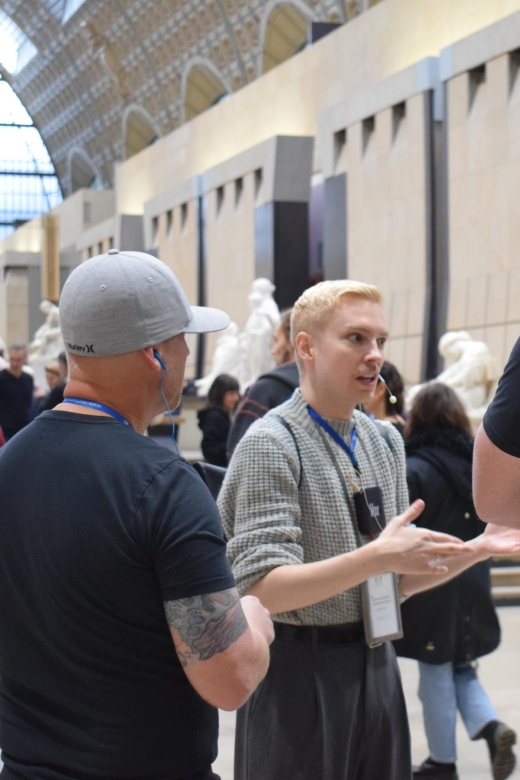
- Meet by the elephant statue: Find your guide in front of the museum at 1 Rue de la Légion d’Honneur, holding a Connecting France sign.
- Small groups make a difference: Groups of about six have been especially comfortable for hearing explanations and staying together.
- A clear art-history route: The tour begins with academic and realist painting before moving toward Impressionism and later styles.
- Major works are the priority: Expect paintings by Monet, Renoir, Manet, Degas, Van Gogh, Cézanne, Gauguin, Sisley, and Matisse.
- The building gets proper attention: You learn how a railway station became one of Paris’s great art museums.
- Crowds remain a factor: Quick access saves time, but no museum ticket can remove the security check or guarantee a quiet gallery.
Why the Musée d’Orsay Works So Well for a Guided Tour
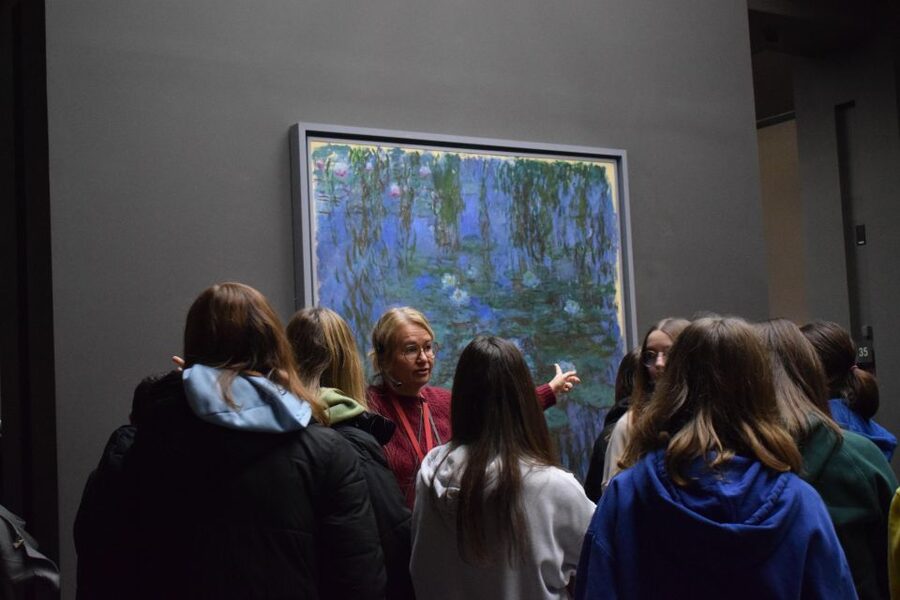
The Orsay is one of the easiest Paris museums to appreciate with a guide. Its collection covers a relatively tight period, from the middle of the 19th century to the beginning of the 20th century. That lets you follow a real artistic argument rather than simply wander from famous painting to famous painting.
You begin with the official art world, where painters were expected to follow strict rules about subjects, technique, and presentation. From there, the tour shows how artists such as Manet challenged those rules, opening the way for Degas, Monet, Renoir, Pissarro, Sisley, and others.
That order matters. If you walk into the Impressionist rooms without context, the paintings can look like a collection of pretty scenes. With the background in place, you can see the risk in them: loose brushwork, unusual viewpoints, modern city life, changing light, and ordinary people treated as worthy subjects.
I also appreciate that the tour does not stop with Impressionism. It continues toward post-Impressionism and the early modern movement, bringing in Cézanne, Van Gogh, Gauguin, and Matisse. The result is a two-hour lesson in how one artistic idea led to another, sometimes through agreement and sometimes through rebellion.
More museums in Paris:
- Paris: Louvre Museum Timed-Entrance Ticket
★ 4.6 · 71,977 reviews - Louvre Museum Masterpieces Guided Tour with Access
★ 4.5 · 12,023 reviews - Paris: Louvre Museum Entry Ticket With Host and River Cruise
★ 4.6 · 9,926 reviews
Meeting at the Elephant Statue
The meeting point is in front of the museum, by the huge elephant statue. Your guide carries a Connecting France sign, and the official address is 1 Rue de la Légion d’Honneur.
Give yourself enough time to find the statue and get organized before the start. This is central Paris, but a precise meeting point still helps when you are dealing with a large museum entrance and city crowds.
Bring your passport or another accepted photo ID. Tickets are personal, and anyone aged 17 or younger needs a photo ID card. Large bags, luggage, backpacks, and umbrellas are not allowed, so arrive with only what you need for the museum visit.
The ticket provides quick access to the collections, but it does not remove the security line. That distinction is important. On busy days, the tour can save a great deal of time at the ticket stage, while the security check may still slow everyone down.
The Railway Station That Became a Museum
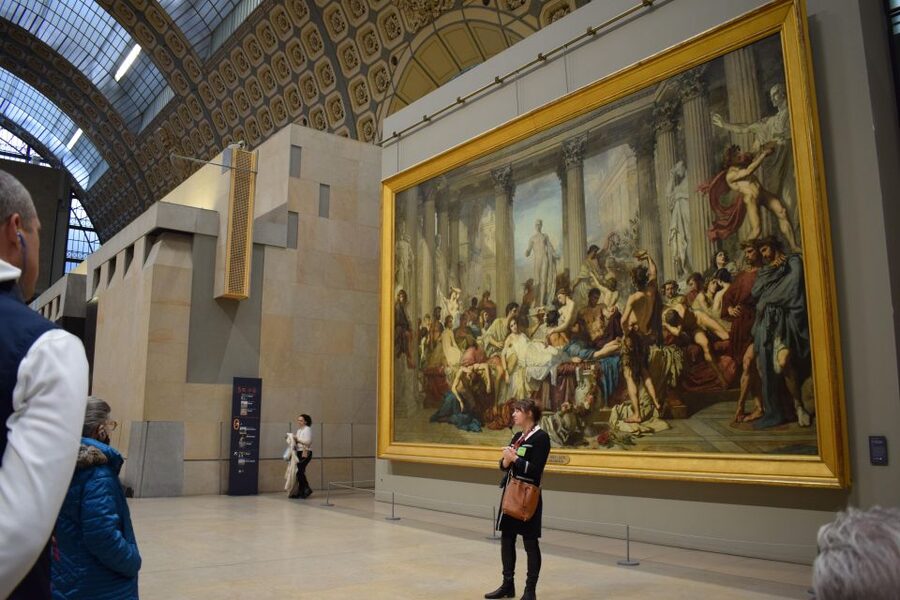
Before the paintings take over, the building itself deserves a close look. The Musée d’Orsay occupies a former railway station, and the tour explains how that station was converted into a fine-arts museum several decades ago.
This is more than a brief architectural footnote. The wide interior, grand proportions, and huge central clock help explain why the Orsay feels different from the Louvre. You are viewing paintings inside a building designed for movement, arrivals, and departures.
I find this introduction useful because it gives you a sense of place before the art-history lesson begins. The museum is not just a container for paintings. Its earlier life as a station is part of what makes the visit memorable.
The building also gives guides a natural way to talk about modern Paris. The artists represented here lived during a period of industrial growth, political upheaval, expanding cities, and changing social habits. The station and the paintings belong to the same story of a city remaking itself.
From Academic Rules to Manet’s Challenge
The tour’s route through the art begins with academic and realist painting. This starting point is one of its best features because it shows what Impressionist artists were reacting against.
Manet is especially important. His work helped open the door to the Impressionists, even though he did not fit neatly into every label later attached to him. The guide explains how his paintings questioned accepted ideas about finish, subject matter, and the relationship between artist and viewer.
From there, you move toward artists such as Degas, Pissarro, Renoir, Monet, and Sisley. Their paintings often look spontaneous, but the guide brings attention to the choices behind that effect: composition, color, light, brushwork, and the decision to paint modern life rather than only traditional historical subjects.
This is where a good guide earns the price of admission. You are not merely told who painted what. You learn to look for the clues that separate one artistic approach from another.
Several guides have been praised for making those ideas accessible rather than academic. Marine, for example, has been noted for explaining symbols and small visual details in a relaxed way. Vanina’s approach placed Impressionism within the strict academic system that came before it and also gave attention to women artists such as Berthe Morisot.
That wider view is valuable. The story of Impressionism is not only about the most famous men in the collection.
A few more Paris outings to set side by side
- Disneyland® Paris 1-Day Ticket
★ 4.6 · 49,412 reviews - Paris: Versailles Palace and Gardens Full Access Ticket
★ 4.6 · 41,579 reviews - Paris: Evening River Cruise with Music
★ 4.4 · 22,721 reviews - Paris: Eiffel Tower Entry Ticket with Optional Summit Access
★ 4.4 · 20,035 reviews
Renoir, Monet, Degas, and the Impressionist Rooms
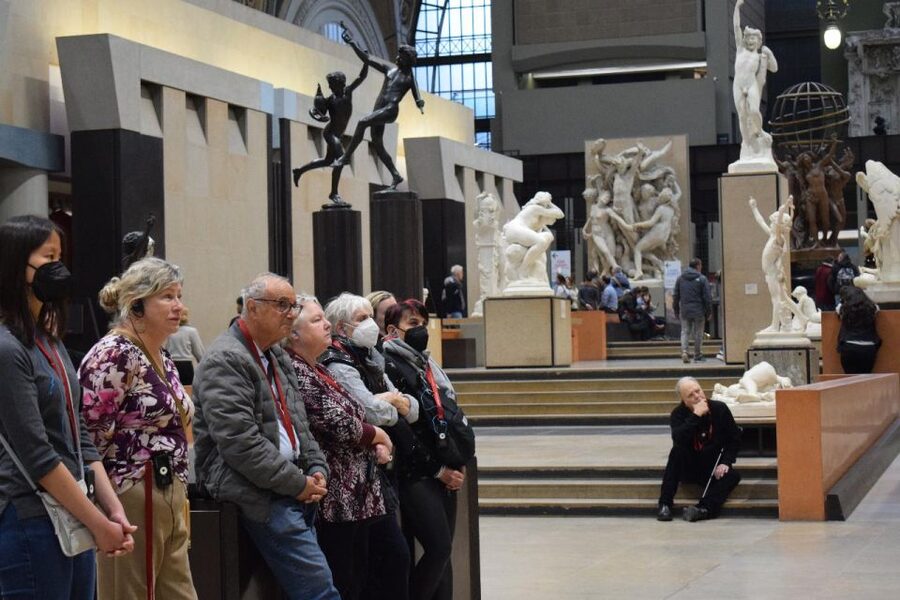
The tour includes many of the Orsay’s major Impressionist works. One key stop is likely Renoir’s Dance at Le Moulin de la Galette, a painting filled with movement, social energy, and the pleasures of Parisian life.
A guide can help you look past its cheerful surface. Consider how Renoir arranges the figures, how the light breaks across faces and clothing, and how the scene makes you feel as if you have entered a crowded outdoor gathering. The painting is both a pleasant view and a carefully built composition.
Monet receives special attention, often alongside Manet. That pairing helps clarify the difference between artists who are frequently lumped together. The tour can also connect Monet to the larger Impressionist interest in changing light, weather, and the fleeting quality of a particular moment.
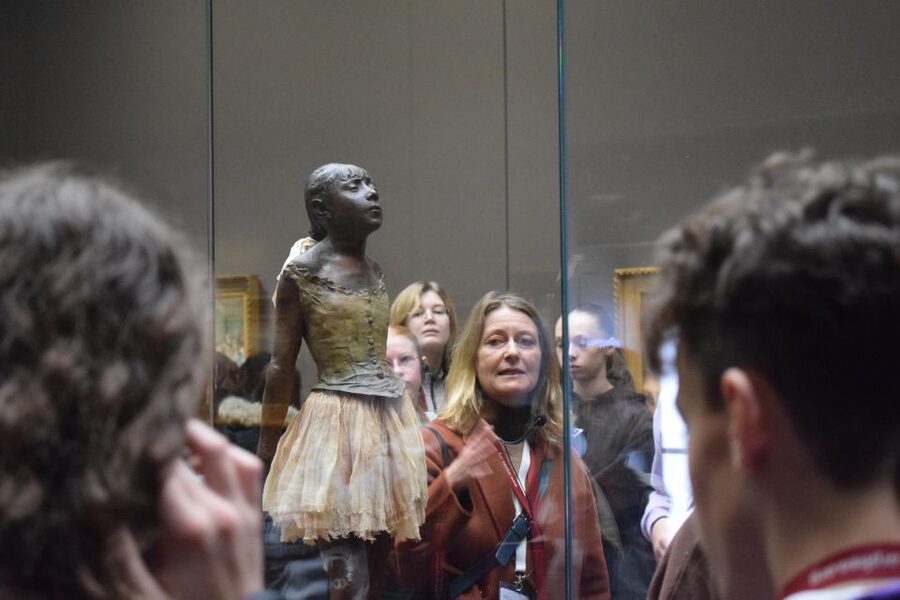
Degas offers another shift in focus. His dancers and modern scenes reveal a different interest in movement and unusual framing. Pissarro and Sisley add further variations on outdoor painting, atmosphere, and city or countryside scenes.
You should not expect a full account of every painting in the museum. The point is to see a group of major works closely and understand how they relate. If you already know Impressionism well, you may want more independent time afterward. If you are new to the period, the guided route gives you a useful framework.
Van Gogh, Cézanne, Gauguin, and the Move Toward Modern Art
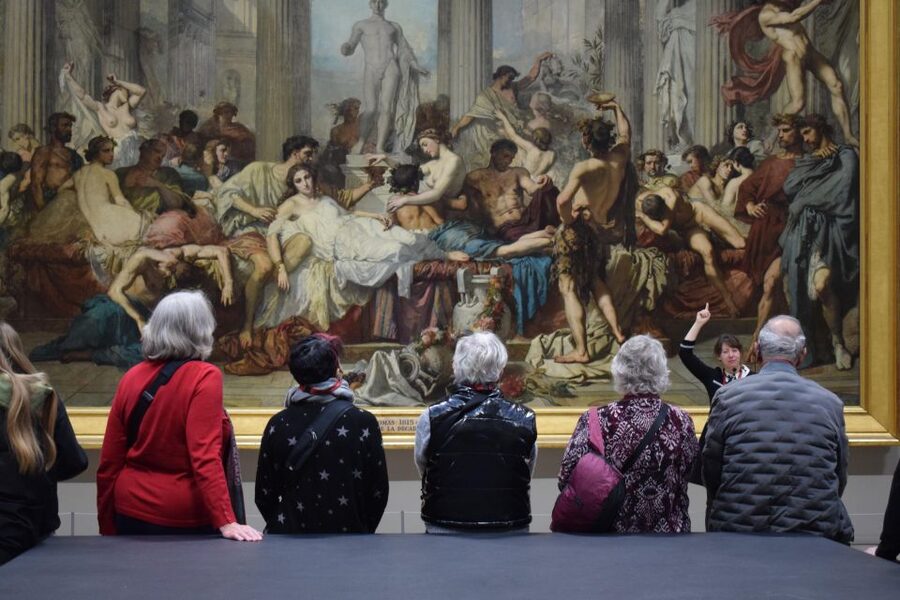
The later part of the tour turns to post-Impressionism and the artists who pushed painting in new directions. Van Gogh, Cézanne, Gauguin, and Matisse each responded to Impressionism differently.
Van Gogh is often the artist people most want to see, but the guide places his work in a broader setting. Rather than treating his paintings as isolated expressions of personality, the tour explains how color, line, brushwork, and emotional force changed the viewer’s relationship with a scene.
Cézanne is particularly important for understanding the road toward modern art. His approach to form and structure influenced later painters, and the guide can show why his work feels different from the shimmering effects associated with Monet.
Gauguin and Matisse extend the discussion into color, symbolism, and new ways of arranging a picture. The tour’s strength is the connection among these choices. You see that artistic movements did not replace one another overnight. They overlapped, argued, borrowed, and reacted.
This is also where political and artistic movements meet. Guides such as Nadia and Olga have been praised for connecting paintings to social changes and to the practical realities faced by artists. That context makes the museum feel less like a lineup of famous names and more like a record of people responding to their times.
Art Nouveau, Rodin, Sculpture, and Lady Liberty
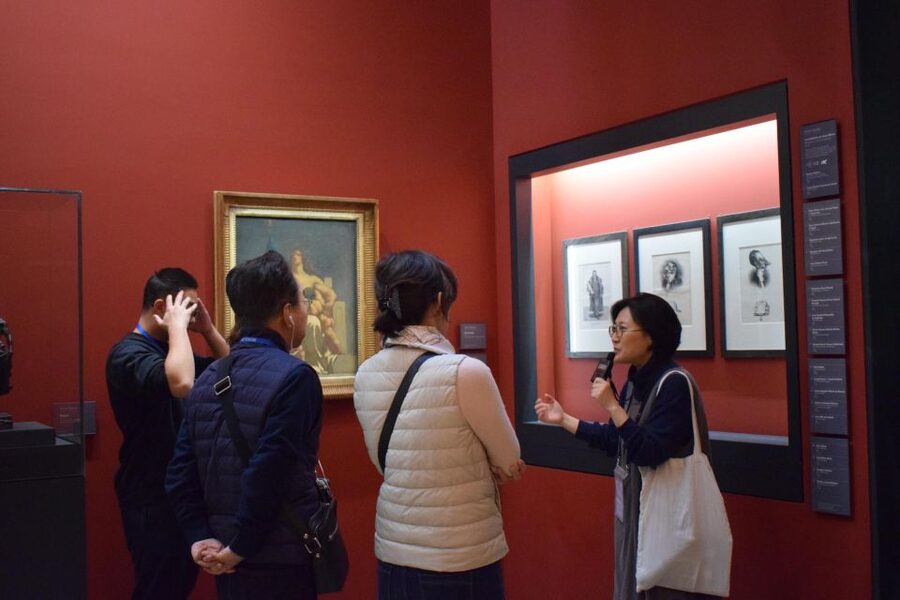
The Orsay is not only an Impressionist painting museum. The tour also includes art nouveau, sculpture by Rodin, and an original Lady Liberty.
These sections add welcome variety after a concentrated run of paintings. Art nouveau introduces decorative lines and organic forms, while Rodin’s sculpture brings attention to the body, texture, movement, and the way light changes across a three-dimensional work.
The Lady Liberty connection is an especially unusual detail. Seeing an original version in Paris gives you another link between the museum’s collection and the wider story of modern sculpture.
The exact balance among painting, sculpture, and decorative art depends on the guide, the crowds, and the route on the day. The central promise is the major 19th-century and early 20th-century collection, so do not book this expecting an equal survey of every department.
What Two Hours Really Gets You
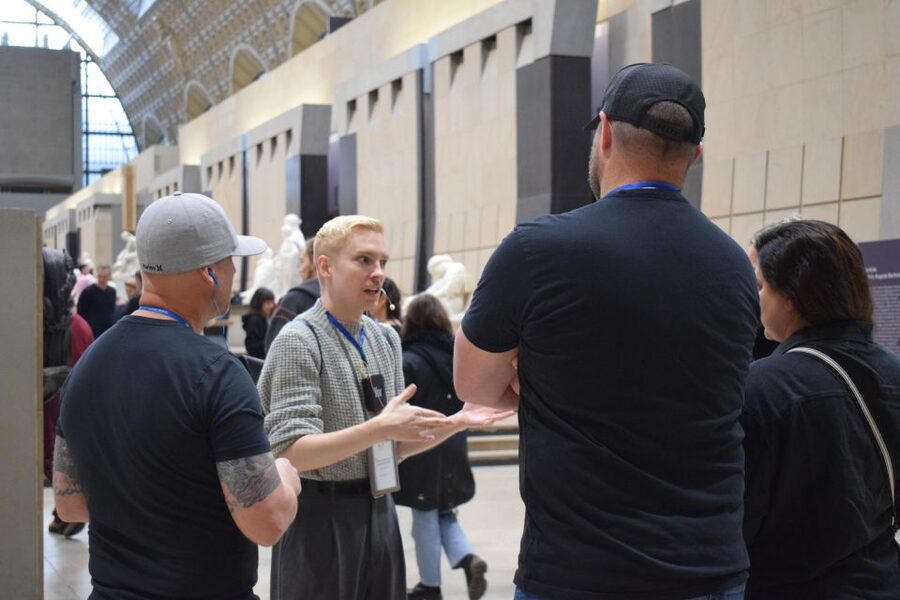
Two hours is a sensible length for a guided museum introduction. It is long enough to build a story and see major works without turning the visit into an endurance test.
Several guides have been praised for keeping a steady pace and avoiding long, dull speeches. Blerta, Olga, Patrick, Mathieu, Miriam, Marine, and others have received especially warm comments for combining clear explanations with humor, energy, and attention to questions.
The small group is crucial here. Groups of four to six make it easier to remain close to the guide and see the details being discussed. In some cases, only a few people booked, turning the visit into a private tour. That can allow the guide to adapt the route to your interests.
The tradeoff is that two hours goes quickly. You will see many highlights, but you will not inspect every gallery. At the end, some groups have been left to look around independently, which is useful if you want to revisit a favorite room.
Crowds can also affect the experience. The museum has been described as very crowded and warm on some days, and background noise has occasionally made hearing difficult. One guide was praised for handling the crowd and getting close to important paintings, but that skill cannot create space where none exists.
Guide Quality and Language Options
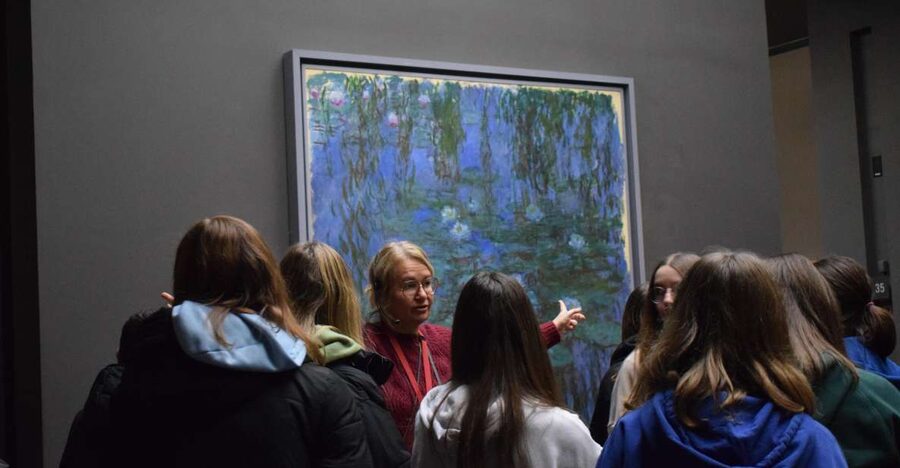
The available tour languages are English, French, Spanish, Italian, and German. A live guide leads the visit, and private or small-group options are available.
The strongest feature across the guide team is enthusiasm paired with structure. Antoine, who has been described as having an art-history degree and legal training, reportedly began with broad context and then moved into details, linking later works back to earlier discussions. That is the right method for a museum tour.
Other guides bring different strengths. Blerta has an art background and has been praised for combining art history with personal insight. Marine has used an iPad to show extra information. Emily has taken care to find the clearest English wording for questions, while Patrick has mixed humor with serious explanation.
You should not assume every guide will have the same personality or follow exactly the same route. But the tour’s consistent aim is clear: help you understand what you are looking at, not simply march you past famous paintings.
Is the $102 Price Good Value?
At $102 per person, this is not a budget museum entry. The value depends on how much you want from the visit.
For a first visit to the Orsay, I think the price can make sense because it combines admission, a two-hour guided route, and the time saved by having tickets arranged in advance. If the museum is crowded or lines are long, that saved time matters in a short Paris stay.
The small group also adds value. You can ask questions, hear the guide, and stay near the works being discussed. A private tour may be available at a higher cost, or you may find yourself with a private experience if few people book your time.
If you already have a strong background in Impressionism or want several hours of quiet, independent looking, the price may feel less attractive. You could prefer a simple museum visit and spend the difference on time inside the galleries. The tour is best understood as a guided introduction, not an all-day art course.
Free cancellation up to 24 hours before the start and reserve-now, pay-later booking make planning less rigid. Museum closures or strikes can happen in France, including at the Orsay. In those cases, alternatives may include another available time or a walking tour, with cancellation and a refund if the alternative does not suit you.
Accessibility and Practical Limits
This shared tour is not suitable for wheelchair users or people with mobility impairments. If you need a slower pace, a private tour may be the better choice, since the shared semi-private group cannot change its pace for individual needs.
Some rooms have restrictions on speaking. Your guide will warn you when that applies.
Leave large bags, luggage, backpacks, and umbrellas behind. Bring photo identification, especially for anyone aged 17 or under. These rules are easy to overlook, but they can affect your entry and comfort.
Who Should Book the Orsay Tour?
I would choose this tour if you are visiting the Orsay for the first time, want the major works explained, or find art museums overwhelming without a clear route. It is also a good fit for families and mixed-age groups because several guides have done well at keeping younger visitors involved.
Art lovers who want social and political context should also consider it. The tour does not treat paintings as decoration. It explains how artists worked within, resisted, or changed the artistic rules of their time.
I would be more cautious if you need a wheelchair-accessible experience, dislike group pacing, or plan to spend half a day examining every gallery. In those cases, a private option or independent visit may suit you better.
Should You Book This Musée d’Orsay Experience?
Book it if you want to understand the Orsay rather than simply photograph its famous paintings. The combination of reserved entry, a small group, and strong guides such as Olga, Blerta, Marine, Vanina, Patrick, and Antoine gives you a useful two-hour route through one of Paris’s most important collections.
Just set realistic expectations. Security still takes time, crowds can make some rooms noisy, and two hours covers highlights rather than the whole museum. For a first visit, though, the structure and personal explanation are worth paying for, especially when your Paris schedule is tight.
FAQ
Where does the Musée d’Orsay tour meet?
Meet in front of the museum by the huge elephant statue at 1 Rue de la Légion d’Honneur. Your guide will hold a Connecting France sign.
How long does the tour last?
The guided museum visit lasts two hours.
What does the ticket include?
The price includes entrance to the Orsay Museum, a local guide, and the guided museum tour.
Which languages are available?
The live tour can be conducted in English, French, Spanish, Italian, or German.
Is this a private tour or a group tour?
Private and small-group options are available. The shared groups can be very small, sometimes around six people or fewer.
Does the ticket skip the security line?
No. The ticket provides quick access to the collections, but everyone must still pass through museum security.
What identification should I bring?
Bring your passport or ID card. Guests aged 17 and younger must have a photo ID card because the tickets are personal.
Can I bring luggage or a backpack?
No. Luggage, large bags, backpacks, and umbrellas are not allowed.
Is the tour suitable for wheelchair users?
No. The shared tour is not suitable for wheelchair users or people with mobility impairments. A private tour may be booked for guests who need a different pace.
What happens if the museum closes or a strike affects the tour?
You may be offered another available time or a walking tour. If the alternative does not suit you, the booking can be canceled and refunded, provided arrangements are made before the 24-hour cancellation deadline.
Recently added in Paris
- Private Transfers in Paris★ 5.0 · 75 reviews
- CDG – Euro Disney – CDG Two Way Private Shuttle Transfer★ 5.0 · 233 reviews
- Disneyland® Paris 1 Day Ticket with Transport from Paris★ 3.5 · 302 reviews
- Personalized Transport service from Disneyland to Paris★ 5.0 · 63 reviews
- Monet’s Gardens & House-Private Giverny Tour From Paris★ 4.5 · 137 reviews
- Guided tour Monet’s house and gardens/small group★ 4.5 · 68 reviews
- Giverny Monet House and Gardens Skip the line Walking tour★ 4.0 · 217 reviews
- Monet’s House and Garden & Giverny Village★ 4.5 · 39 reviews
Museums, compared.
Louvre Museum Masterpieces Guided Tour with Access
Read our review →
Louvre Museum Entry Ticket With Host and River Cruise
Read our review →
Les Invalides: Napoleon’s Tomb & Army Museum Entry
Read our review →
Louvre Museum – Exclusive Guided Tour (Entry Included)
Read our review →
Louvre Museum Hosted Entry and Mona Lisa Audioguide
Read our review →
Louvre Museum Tour Mona Lisa & Iconic Masterpieces
Read our review →
Browse the lists this tour appears in