
REVIEW · MUSEUMS
Paris: Orangerie Museum Skip-the-Line Entry and Guided Tour
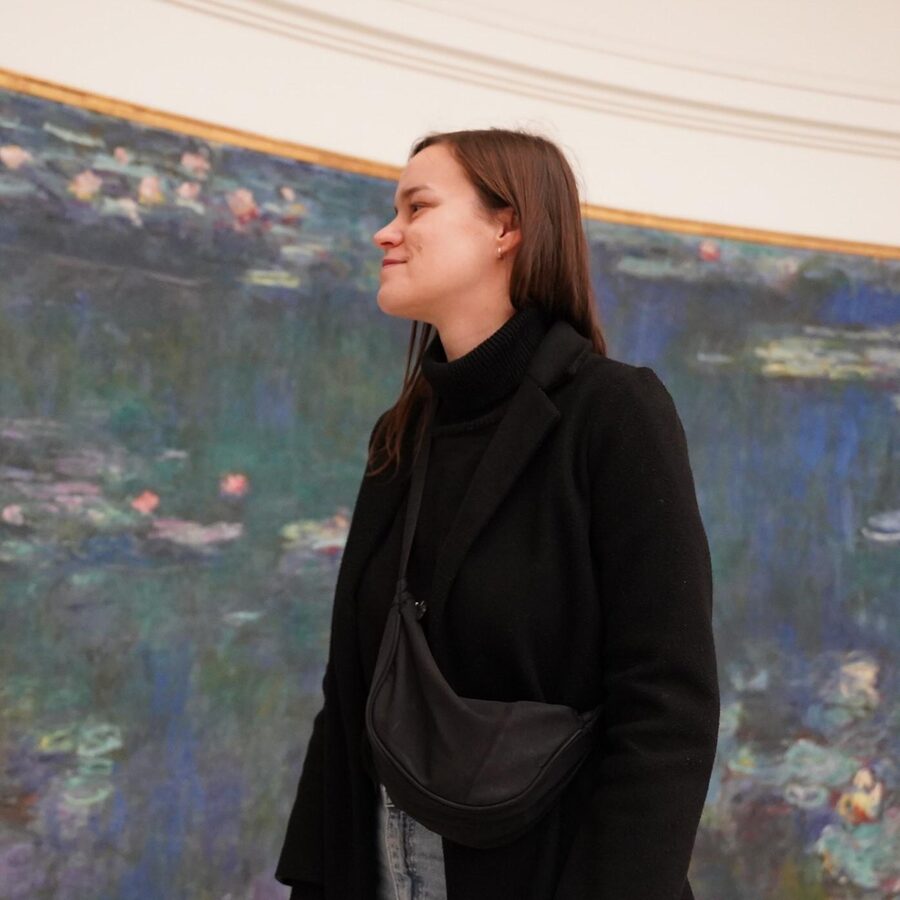
Monet’s Water Lilies deserve your full attention. This two-hour Orangerie Museum tour combines direct museum entry with an art historian’s explanation of Monet, Renoir, Cezanne, Matisse, Picasso, and other major French artists. I especially like the walk through the Tuileries Gardens before the tour and the small-group limit of eight people per guide.
The other strong point is the quality of the guiding. Guides including Hugo, Malaika, Barbara, Sunday, Belen, and Lily have been praised for making the art understandable without flattening it into a school lecture. The main drawback is the $128 price, which is a serious spend for two hours, and the semi-private format involves a moderate amount of walking and is not suited to people with mobility impairments.
In This Review
- Key points at a glance
- Walking through the Tuileries to the old Orangerie
- Entering with a skip-the-line museum ticket
- Monet’s Water Lilies in the oval rooms
- Following Impressionism beyond Monet
- Cezanne, Matisse, and Picasso in one compact collection
- Modigliani, Utrillo, and the movement toward modern art
- Why the guide makes such a difference
- Small group or private tour?
- What the $128 price really buys
- Timing, weather, and practical preparation
- Who should book this Orangerie tour?
- FAQ
- How long does the Orangerie Museum tour last?
- What does the tour include?
- Does the tour include Monet’s Water Lilies?
- How many people are in the small group?
- Which languages are available?
- Is hotel pickup included?
- Can I bring luggage or a large bag?
- Is the tour suitable for people with mobility impairments?
- Should you book it?
Key points at a glance

- Monet’s oval rooms are the centerpiece: His Water Lilies surround you in a calm, purpose-built setting that feels different from a normal gallery visit.
- The Tuileries Gardens add a pleasant approach: You walk through one of Paris’s classic formal gardens before reaching the former royal orangery.
- The tour connects many artists: Cezanne, Renoir, Matisse, Picasso, Modigliani, and Utrillo help show how French art changed from Impressionism into modern art.
- A maximum of eight people keeps it personal: You should be able to hear the guide and ask questions without fighting through a large crowd.
- Guides bring strong art knowledge and warmth: Hugo’s use of Clair de lune during the Monet presentation was especially memorable, while Barbara successfully drew a nine-year-old into the paintings.
- The $128 cost buys context, not just admission: It makes the most sense if you want help understanding the collection rather than simply seeing the museum on your own.
Walking through the Tuileries to the old Orangerie
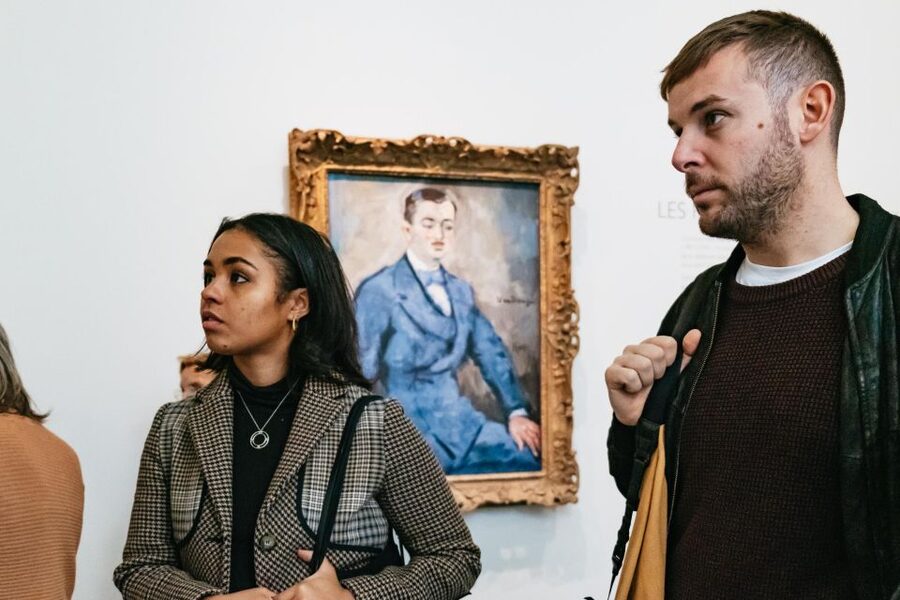
The meeting point can vary according to the option you book, so check your confirmation carefully. From there, the tour leads toward the Musee de l’Orangerie through the Tuileries Gardens. This is a good start because the walk gives you a little breathing room before entering the museum.
The building itself has an unusual past. It was once used by the royal family to protect orange trees during winter. That detail helps explain the name and gives the museum more personality than a plain modern gallery would have.
I like this opening because it connects Paris’s royal past with its later role as a center of artistic change. You are not simply being delivered to a door, scanned, and sent into a white room. You begin with the setting, the gardens, and the building’s original purpose.
The tour runs rain or shine, so bring clothing suited to the forecast. You should also avoid bringing luggage or large bags, which cannot be taken inside. If your meeting point is unfamiliar, allow enough time to find it, particularly because one participant described getting lost on the walk but still found the guide waiting at the agreed spot.
More reserved-entry tickets in Paris:
- Versailles: Skip-the-Line Tour of Palace with Gardens Access
★ 4.7 · 9,778 reviews - Versailles: Skip-the-Line Guided Palace Tour and Full Access
★ 4.6 · 5,214 reviews - Louvre Museum: Skip-the-Line Small Group Guided Tour
★ 4.6 · 3,960 reviews
Entering with a skip-the-line museum ticket
The practical appeal is simple: you do not spend your limited Paris time standing in the entrance queue. The package includes the museum admission fee and a skip-the-line entry ticket, allowing the group to go directly inside through the arranged access.
This does not mean every part of the museum will be empty. The Orangerie can still have other visitors, and temporary closures can happen without warning. Museum management may also delay opening, and some rooms have quiet rules or limits on speaking. Still, avoiding the main entrance wait is valuable, especially on a tightly planned day in Paris.
At $128 per person, the price is much higher than admission alone. You are paying for the guide, the planning, the group size, and the chance to understand the collection in a clear sequence. I would not choose it simply to save money. I would choose it if you want an informed companion to explain why these paintings changed art.
The tour is available as a private or small-group experience. The small-group option has a maximum of eight people per guide, and it requires at least two participants to operate. If that minimum is not reached, an alternative date or a full refund is offered.
Monet’s Water Lilies in the oval rooms
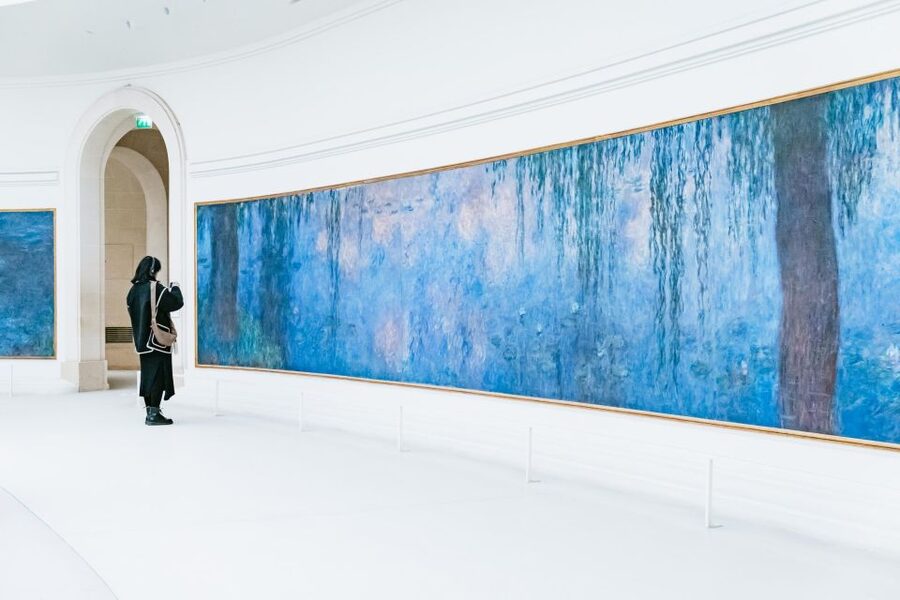
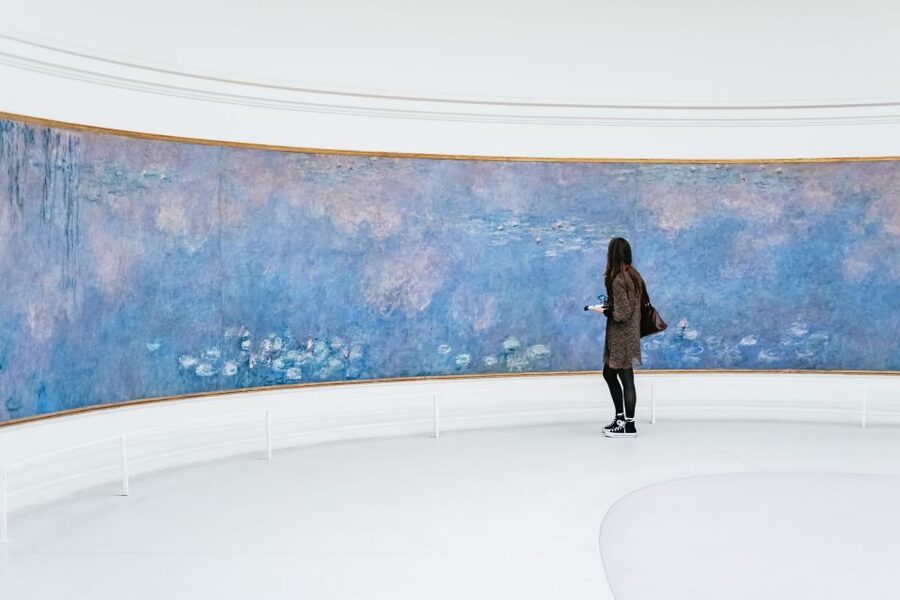
The Orangerie is best known for Monet’s Water Lilies, displayed in its iconic oval rooms. These large paintings were designed to surround the viewer, so the experience is less like looking at one framed canvas and more like entering a continuous view of water, plants, light, and reflection.
The setting rewards quiet attention. Monet’s subject is familiar from posters and books, but the scale changes everything. Standing within the curved room lets you notice how the paintings relate to one another and how the scene shifts as you move along the wall.
One guide, Hugo, made this section particularly atmospheric by playing Clair de lune while the group looked at the paintings. Music is not part of every tour, so you should not expect that exact presentation, but the detail shows how a strong guide can make the room feel like an event rather than a checklist stop.
The guide’s job here is not to tell you that Monet painted pretty flowers. It is to help you think about the way he treated color, light, distance, and the changing boundary between a recognizable scene and near-abstraction. Even if you already like Monet, this kind of explanation can give you a new way to look.
Following Impressionism beyond Monet
After the Water Lilies, the tour places Monet within a larger story. The museum’s 19th and early 20th-century paintings show how Impressionism developed, changed, and eventually led toward more radical forms of modern art.
You may study Renoir’s delicate brushwork and compare his approach with the sharper experiments of later painters. The guide can also explain why Impressionism was considered innovative and defiant in its own time. These artists challenged established ideas about finish, subject matter, and how a painting should represent the world.
This historical thread is one of the tour’s best features. Without it, a museum visit can become a parade of famous names. With it, you can see connections between artists who did not all paint in the same way.
I especially value the way the tour moves from familiar paintings toward less immediately approachable works. You may begin with Monet’s gardens and Renoir’s softness, then encounter artists who distort the figure, simplify form, or use color in ways that once seemed shocking.
More museums in Paris:
- Paris: Louvre Museum Timed-Entrance Ticket
★ 4.6 · 71,977 reviews - Louvre Museum Masterpieces Guided Tour with Access
★ 4.5 · 12,023 reviews - Paris: Louvre Museum Entry Ticket With Host and River Cruise
★ 4.6 · 9,926 reviews - Les Invalides: Napoleon’s Tomb & Army Museum Entry
★ 4.6 · 9,185 reviews
Cezanne, Matisse, and Picasso in one compact collection
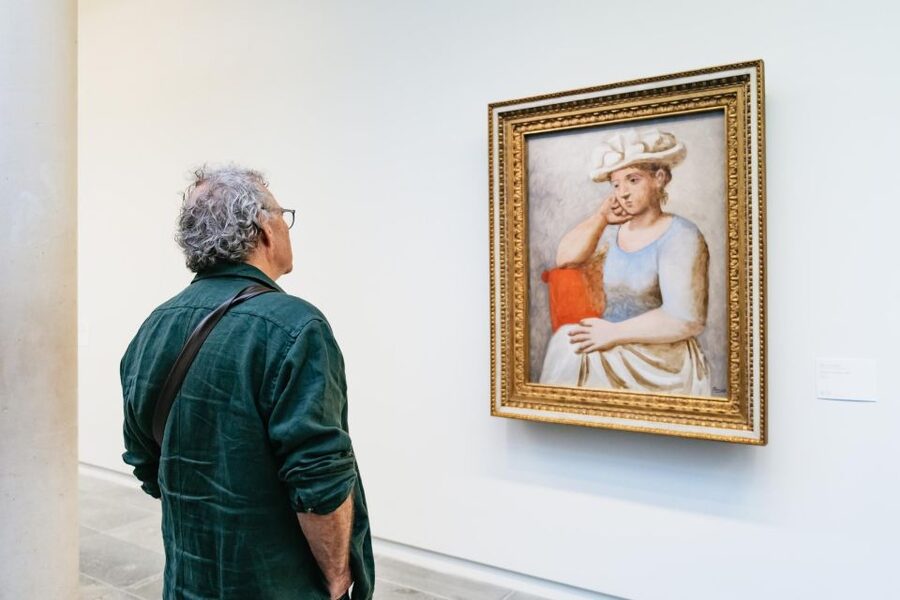
The Orangerie collection lets the guide widen the story beyond Impressionism. Cezanne’s fruit and flower paintings provide a useful lesson in structure. His subjects may look ordinary, but the arrangement of shapes, surfaces, and viewpoints shows a careful rethinking of how objects occupy a painting.
Matisse brings a different kind of energy. His portraits use an exotic style and seductive color, and the guide can help you see how those choices affect the mood of the sitter. This is a good place to ask questions, since a guide can point out details you might otherwise pass without noticing.
Picasso’s changing interpretations of nude models show the artist moving through different stages. Rather than treating Picasso as one fixed style, the tour presents him as an artist who kept testing new ways to handle the human body.
That makes the collection useful even if you are not an expert in modern art. You can watch the figure change from naturalistic representation toward fragmentation and distortion. The point is not to memorize dates. It is to notice how artists kept asking what a painting was allowed to do.
Modigliani, Utrillo, and the movement toward modern art

Works by Modigliani and Utrillo help carry the story into another phase. Their paintings show that the changes begun by Impressionist artists did not stop with sunlight and outdoor scenes.
The guide may connect Modigliani’s treatment of the figure with the broader development of modern portraiture. Utrillo, meanwhile, offers a different mood and approach to place. Together with the other artists, they show that there was no single route from Impressionism to modern art.
This part of the visit matters because the museum is not only a Monet destination. If you rush through after seeing the Water Lilies, you will miss the way the collection explains artistic change across several generations.
The two-hour format gives the guide enough time to tell a connected story, but not enough time for every painting to receive equal attention. That is a fair trade. A tour that tried to cover every work in detail would likely become tiring and hard to remember.
Why the guide makes such a difference
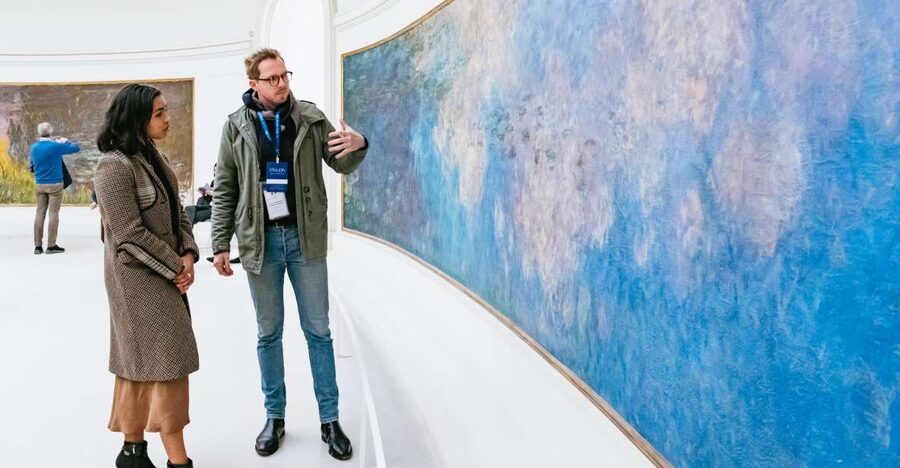
A good museum guide should do three things: explain the art, place it in its time, and help you look for yourself. The strongest feedback about this tour points to all three.
Hugo was praised for explaining the artists, their circumstances, their patrons, and the realities of their era. That wider setting is useful because art does not appear in a vacuum. Sunday was also praised for showing how the exhibits changed the way people thought about art, which is exactly the kind of larger idea that can make a museum visit stick.
Malaika received praise for being informed, engaging, and responsive to questions. Barbara successfully included a nine-year-old granddaughter by connecting the paintings with the artists’ lives. That is a helpful sign for families, though the tour is still built around art discussion and moderate walking.
The available guide languages are French, English, Russian, Italian, Spanish, and German. Confirm your preferred language when booking, since the guide assigned to your departure will depend on the option and schedule.
Some rooms require quiet or restrict speaking. Do not expect a nonstop lecture from the first gallery to the last. The guide may need to pause, lower their voice, or let the paintings speak for themselves for a moment.
Small group or private tour?
The small-group option is likely the best value for most people who want guidance but do not need a completely custom visit. With no more than eight people per guide, the group should feel manageable, and you have a better chance to ask questions than on a large coach tour.
A private option makes more sense if you are traveling with family, have a strong interest in a particular artist, or want the guide to adjust the pace. It will cost more than a standard small group, but the added control can matter inside a museum where different people have very different levels of interest.
The tour is not suitable for people with mobility impairments according to the supplied information. A moderate amount of walking is involved, and you should contact the provider before booking if you have specific mobility needs.
What the $128 price really buys
The $128 fee is not a bargain admission ticket. The Orangerie is a compact museum, and some visitors will prefer to enter independently, read at their own pace, and spend extra time with Monet.
I see the value in three parts. First, you avoid the entrance line. Second, an art historian gives you a route through the collection instead of leaving you to guess which works matter most. Third, the small group keeps the explanation more personal.
The price is easiest to justify if you are new to Impressionism or want historical context. It is also useful if you have only a short window in Paris and want a focused museum visit.
I would skip it if you already know the Orangerie well, prefer solitude, or mainly want to sit with the Water Lilies without commentary. Temporary exhibits are not included, and food, drinks, hotel pickup, and drop-off are also outside the package.
Timing, weather, and practical preparation
The tour lasts two hours, with starting times available according to the date you select. Since the meeting point can vary, read the booking details rather than relying on a familiar Paris landmark.
Bring a passport or other identification, along with weather-appropriate clothing. You will walk through the Tuileries, and the tour operates in all weather.
Large bags and luggage are not allowed. Travel light and leave bulky belongings elsewhere before meeting the guide.
Free cancellation is available up to 24 hours before the activity for a full refund. You can also reserve now and pay later, which is useful if you are still arranging a Paris schedule.
Occasional museum closures can occur without advance notice. If opening is delayed by more than one hour, an alternative is provided, but the supplied terms say that refunds or discounts are not available from GetYourGuide in those circumstances.
Who should book this Orangerie tour?
I would recommend it to first-time Paris visitors who want more than a quick look at Monet. It suits couples, families with older children, and small groups who enjoy art but do not want to prepare a museum lecture for themselves.
It is also a good fit if you want to understand how Impressionism connects with Cezanne, Matisse, Picasso, Modigliani, and Utrillo. The strongest guides make the museum feel like a story about changing ideas, not just a room full of famous paintings.
I would be more cautious if you have mobility limits, dislike guided pacing, or only want the Water Lilies. In those cases, independent admission may offer better control and lower cost.
FAQ
How long does the Orangerie Museum tour last?
The guided tour lasts two hours. Starting times vary, so check availability for your chosen date.
What does the tour include?
It includes skip-the-line entry, the museum admission fee, an art historian guide, and a guided museum tour. Private and small-group options are available.
Does the tour include Monet’s Water Lilies?
Yes. The tour includes the oval rooms where Monet’s Water Lilies are permanently displayed.
How many people are in the small group?
The tour has a maximum of eight participants per guide. The semi-private option requires at least two participants to operate.
Which languages are available?
Guiding is available in French, English, Russian, Italian, Spanish, and German.
Is hotel pickup included?
No. Hotel pickup and drop-off are not included. The activity begins and ends at the designated meeting point.
Can I bring luggage or a large bag?
No. Luggage and large bags are not allowed inside the museum.
Is the tour suitable for people with mobility impairments?
The semi-private tour is not considered suitable for people with mobility impairments because a moderate amount of walking is involved. Contact the activity provider to discuss specific mobility requirements.
Should you book it?
Book this tour if you want Monet’s Water Lilies placed in the larger story of French art. The guide is the main reason to pay the premium, and the small group, direct entry, and strong record of warm, engaging guides make the visit easier and more rewarding.
Skip it if your priority is the lowest price or complete freedom to wander. For everyone else, especially first-time visitors who want to understand what they are seeing, the Orangerie is a strong setting for a focused two-hour art lesson in the heart of Paris.
Recently added in Paris
- Private Transfers in Paris★ 5.0 · 75 reviews
- CDG – Euro Disney – CDG Two Way Private Shuttle Transfer★ 5.0 · 233 reviews
- Disneyland® Paris 1 Day Ticket with Transport from Paris★ 3.5 · 302 reviews
- Personalized Transport service from Disneyland to Paris★ 5.0 · 63 reviews
- Monet’s Gardens & House-Private Giverny Tour From Paris★ 4.5 · 137 reviews
- Guided tour Monet’s house and gardens/small group★ 4.5 · 68 reviews
- Giverny Monet House and Gardens Skip the line Walking tour★ 4.0 · 217 reviews
- Monet’s House and Garden & Giverny Village★ 4.5 · 39 reviews
Museums, compared.

Louvre Museum Masterpieces Guided Tour with Access
Read our review →
Louvre Museum Entry Ticket With Host and River Cruise
Read our review →
Les Invalides: Napoleon’s Tomb & Army Museum Entry
Read our review →
Louvre Museum – Exclusive Guided Tour (Entry Included)
Read our review →
Louvre Museum Hosted Entry and Mona Lisa Audioguide
Read our review →
Louvre Museum Tour Mona Lisa & Iconic Masterpieces
Read our review →
Browse the lists this tour appears in