
REVIEW · MUSEUMS
Paris: Paradox Museum Entrance Tickets
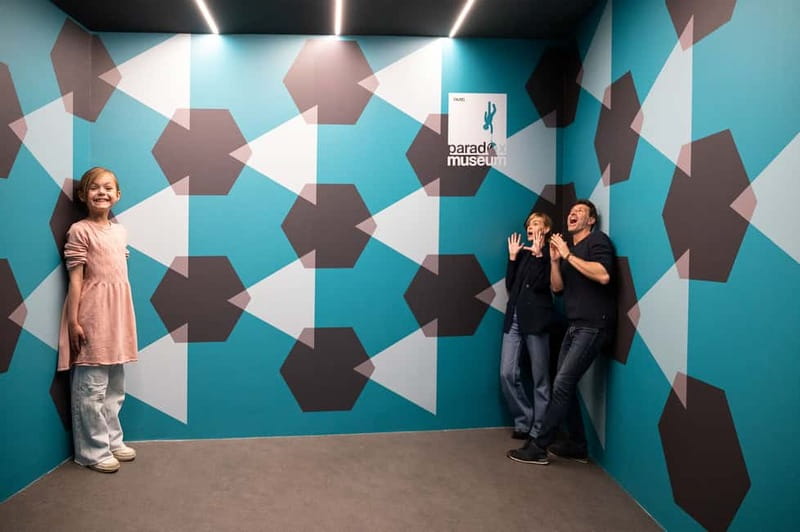
Reality gets pleasantly unreliable here. Paris’s Paradox Museum turns optical illusions into an active, photo-friendly outing, and I like the sheer number of exhibits plus the clear explanations of the science behind them. The marked photo points are another strong touch, since they help you find the right angle instead of guessing your way into a blurry family photo.
I also like that the visit works for several ages at once, from children who simply enjoy the tricks to adults who want to understand why their eyes and brain disagree. The main consideration is crowding: each exhibit is designed for photos and interaction, so a busy visit can mean waiting your turn.
In This Review
- Key points to know before you go
- What the Paradox Museum Paris actually offers
- Following the one-way route through 90 illusions
- Why the photo spots matter
- The science behind the tricks
- A family outing that keeps children involved
- Timing, group size, and the visit’s pace
- Is the $33 admission good value?
- Accessibility and practical limits
- The Paradox Boutique and café at the end
- Who will enjoy this museum most?
- Should you book the Paradox Museum Paris?
- FAQ
- How long does the Paradox Museum Paris visit take?
- How many optical illusions are inside?
- Is the museum suitable for children?
- Can I take photos inside the museum?
- Will staff help take group photos?
- Is the Paradox Museum wheelchair accessible?
- What languages are available?
- Is the museum suitable for people with epilepsy?
Key points to know before you go

- Ninety optical illusions: Follow a one-way route through the museum’s large collection of paradox-based exhibits.
- About 90 minutes inside: The listed duration is 84 minutes, while the typical visit takes around an hour and a half.
- Photo points at key exhibits: Marked spots show you where to stand for the intended effect and better pictures.
- Useful science explanations: Each display explains what to do and what is happening, with extra information available through QR codes.
- Good for families and small groups: The experience is interactive, wheelchair accessible, and limited to groups of 10.
- A practical final stop: The Paradox Boutique and café are included with admission, so you can browse before leaving.
What the Paradox Museum Paris actually offers
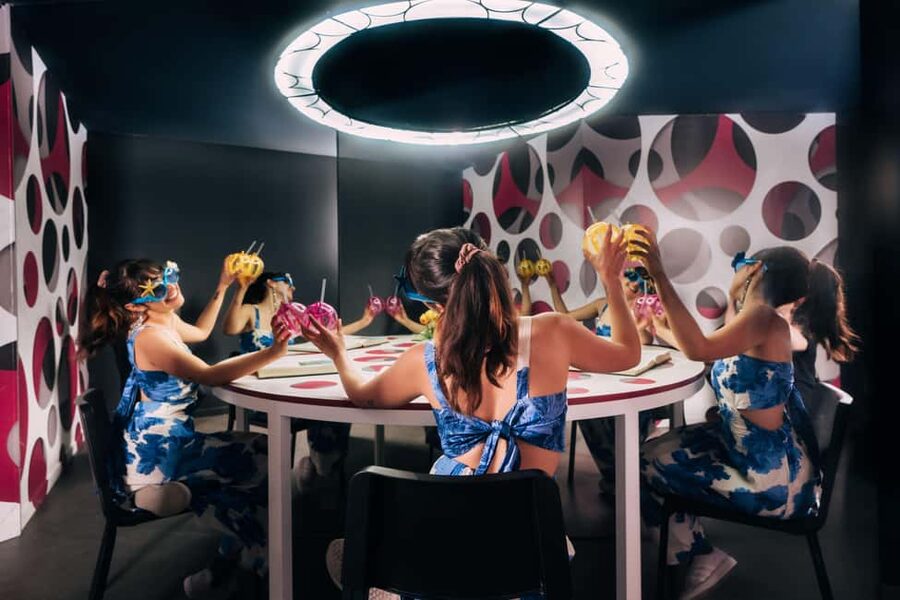
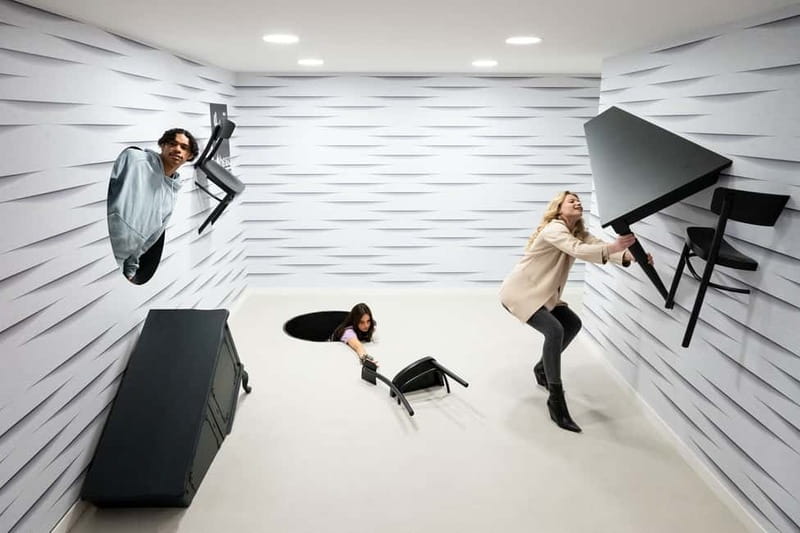
The Paradox Museum is not a traditional art museum where you quietly look at objects from behind a barrier. It is a chain of interactive set pieces built around visual tricks, impossible spaces, altered perspectives, and other situations that make your senses question what they see.
You move through the exhibits in a one-way flow. That matters because the route gives the visit a clear rhythm: enter, try the illusion, take a photo, read the explanation, then continue to the next room. You do not need to plan your own route or worry about missing an important display.
The museum presents 90 different illusions, described as the world’s largest collection of exhibits based on paradoxes. That number gives you plenty to do, but it also means this is not a five-minute photo stop. Plan for roughly 84 to 90 minutes, and allow more time if you are visiting with children or want photographs at many stations.
The appeal is simple. You are not just looking at an illusion. You are asked to take part in it. You may need to stand in a certain place, pose at a particular angle, or use the room around you to create the intended visual effect.
More museums in Paris:
- Paris: Louvre Museum Timed-Entrance Ticket
★ 4.6 · 71,977 reviews - Louvre Museum Masterpieces Guided Tour with Access
★ 4.5 · 12,023 reviews - Paris: Louvre Museum Entry Ticket With Host and River Cruise
★ 4.6 · 9,926 reviews
Following the one-way route through 90 illusions
The museum’s one-way system is one of its most useful features. You can follow the signs from one installation to the next without needing a guide or a printed map. This makes the visit easy to manage, especially for families and small groups.
At each exhibit, look for the instructions explaining what to do and what is happening. The first part helps you use the installation correctly. The second gives the visit some educational value, explaining the science behind the optical trick and why your brain interprets the scene in an unexpected way.
QR codes provide extra information for anyone who wants to spend longer with a particular illusion. You can skim the basics and keep moving, or pause for more detail. I like that flexibility because children may want to try everything at speed, while adults may prefer to understand the mechanics before heading on.
The route is designed for participation rather than passive viewing. You should expect to pose, shift position, look through unusual perspectives, and take pictures or videos. If you arrive hoping for a quiet museum visit, the activity level may feel high. If you enjoy hands-on exhibits, the format keeps the hour moving.
Why the photo spots matter
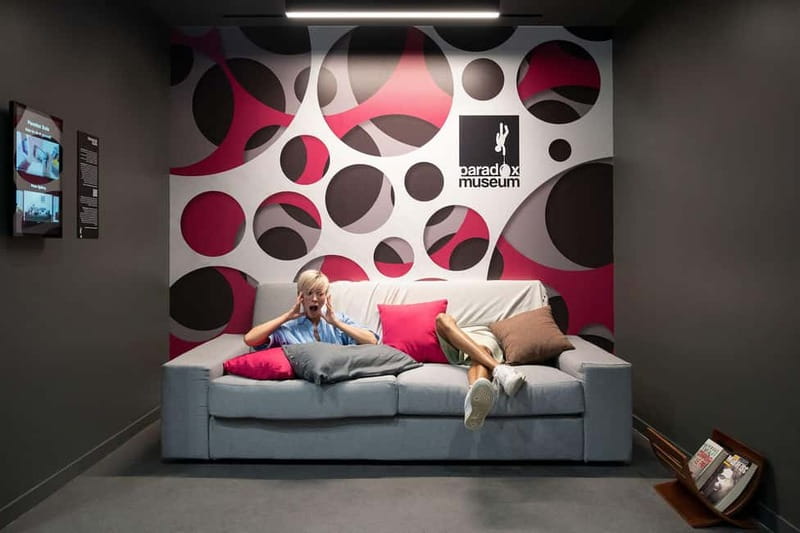
Photography is a central part of the Paris Paradox Museum, not a side activity. Many displays include a marked point showing where the person taking the picture should stand. That small detail can make a major difference.
Optical illusions often work only from one angle. Stand too far to the side and the effect may look ordinary. Use the marked spot and your photo has a much better chance of showing the visual trick clearly. You can also ask staff for help with group pictures, although staff are not stationed at every exhibit.
That last point is worth remembering. When the museum is quiet, you can usually take your time and work out the camera angle. When it is busy, you may need to wait for the exhibit and then arrange the photo quickly. One family found a Sunday afternoon visit fairly calm, but also noted that a crowded session could involve a lot of waiting while people take pictures.
For the best experience, decide early who will handle the camera and who will pose. If you are visiting as a family, take turns. A phone with enough battery is useful, since the 90 exhibits can create a surprising number of photos and short videos.
The science behind the tricks
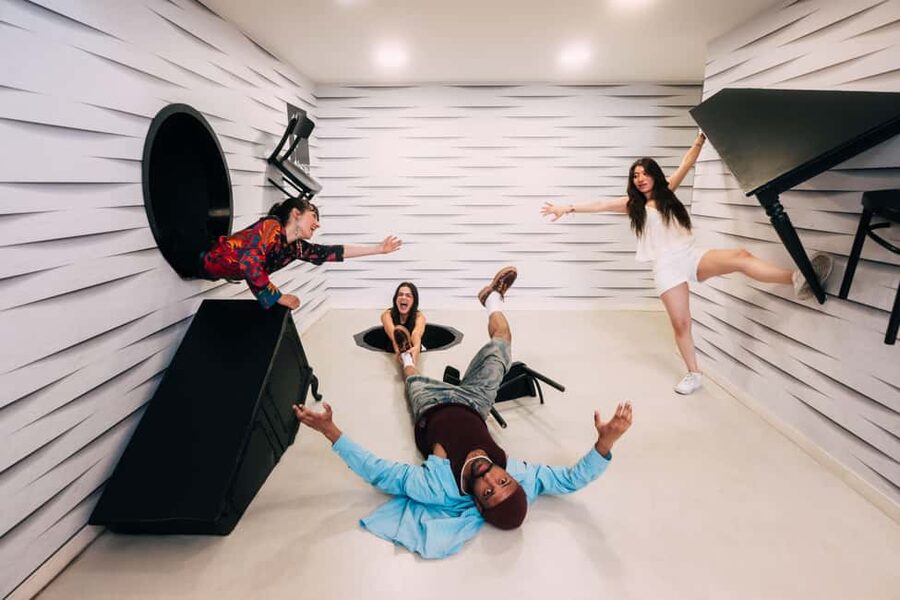
The museum earns its educational side through the explanations beside each exhibit. You learn not only that something looks impossible, but also why your eyes and brain accept the false impression.
That makes the visit more worthwhile than a room full of photo backdrops. The illusion gives you a puzzle, and the accompanying text gives you a way to understand the puzzle. QR codes add more information if you want to keep reading.
Still, the amount of explanation you receive depends partly on how you approach the museum. There is no regular guide leading you through every room, and no guide is listed as part of the admission. Some people may prefer that freedom. Others may want more staff help or a fuller explanation at each station.
I would treat the signs as an important part of the visit, not something to skip. If you rush from picture to picture, you may enjoy the images but miss the reason they work. Children can try the illusion first, then read the short explanation afterward.
A few more Paris outings to set side by side
- Disneyland® Paris 1-Day Ticket
★ 4.6 · 49,412 reviews - Paris: Versailles Palace and Gardens Full Access Ticket
★ 4.6 · 41,579 reviews - Paris: Evening River Cruise with Music
★ 4.4 · 22,721 reviews - Paris: Eiffel Tower Entry Ticket with Optional Summit Access
★ 4.4 · 20,035 reviews
A family outing that keeps children involved
The Paradox Museum is particularly well suited to families because it asks children to do something at every stop. A seven-year-old can enjoy the strange rooms and funny photographs without needing a long attention span for formal museum labels.
Adults get something from it too. The best exhibits invite you to test your own perception, and the results can be amusing when one person sees a scene differently from another. It is a shared activity rather than a place where children are expected to remain silent and still.
The family-friendly format has one practical weakness. Popular installations can become slow when several groups want the same photograph. Children may get impatient if they have to wait, especially when the museum is busy. A quieter time gives you more room to experiment and helps the visit feel less rushed.
The museum is also suitable for adults visiting without children. The combination of visual tricks, explanations, and photo opportunities gives couples and friend groups a reason to talk and compare what they see.
Timing, group size, and the visit’s pace
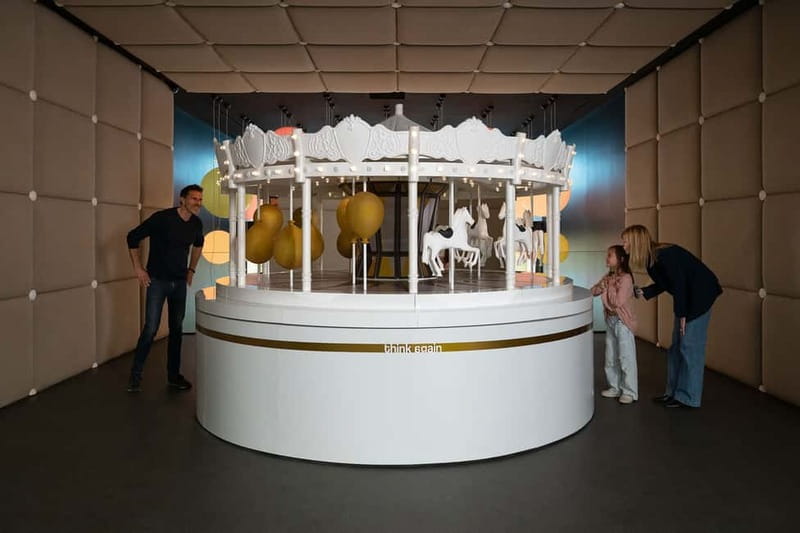
The advertised duration is 84 minutes, and the average visit is around 90 minutes. That is a useful planning figure for a Paris day because the museum is substantial enough to fill a short block of time without taking over an entire afternoon.
A group size limited to 10 participants helps keep the activity more manageable than a large organized tour. You are still sharing the exhibits with other people, but the small-group format should make the flow easier to follow.
Do not arrive too late in the day. Last entry is at 6 p.m., which is two hours before closing. The museum clearly expects you to have enough time to complete the route, and entering at the final moment would not give you much room for a relaxed visit.
The visit is available with English and French support. A host or greeter may assist at the start, and staff can help with questions or group photos when available. The exhibit signs and QR codes also help you follow the experience at your own pace.
Is the $33 admission good value?
At $33 per person, this is not a bargain-priced stop for a quick look. Its value depends on how fully you use the museum. If you take photos at many exhibits, read the explanations, and spend close to 90 minutes inside, the price is easier to justify.
I think the admission works best for a family or small group that wants a shared activity. The museum creates a set of pictures you can keep, and the interactive format gives you something to do together instead of simply walking through rooms.
The included access to the exhibits, café, and Paradox Boutique adds a little convenience, but I would not book the museum mainly for the shop or café. The real value is the number of interactive installations and the chance to produce unusual photos without needing a separate paid activity at each stop.
One helpful detail is that the gift shop is not necessarily an expensive trap. It carries games, clothing, souvenirs, and accessories with a paradox theme, and one family found the prices reasonable. Still, treat the boutique as an optional ending rather than part of the admission’s main value.
Accessibility and practical limits
The museum is wheelchair accessible, which makes it a practical option for visitors who need step-free access. The supplied information does not describe the exact layout of every installation, so you may want to ask staff for help if a particular exhibit looks difficult to use.
The museum is not suitable for people with epilepsy. This is an important safety point because optical illusion spaces can include strong visual effects. Check the suitability for everyone in your group before booking.
The language options are English and French. That should make the instructions and basic explanations easier to follow for many visitors, while QR codes may offer additional reading at selected exhibits.
Free cancellation is available up to 24 hours before the visit for a full refund. You can also reserve now and pay later, which helps if you are still arranging a Paris schedule. These policies are useful, but they do not change the main question: will your group enjoy taking part in the illusions?
The Paradox Boutique and café at the end
The one-way route finishes at the Paradox Boutique, giving you a natural place to slow down before leaving. The shop sells games, clothing, souvenirs, and accessories that continue the museum’s theme.
For families, this can be a useful final pause after the active exhibits. Children can look for a small reminder of the visit, while adults can decide if anything is worth taking home. The café is also included in the museum access, though the supplied details do not specify its menu or prices.
I like the placement of the boutique at the end. You are not pulled into shopping before seeing the exhibits, and you can leave without buying anything. It keeps the museum visit focused on the interactive displays.
Who will enjoy this museum most?
You should consider booking if you want an indoor Paris activity that is:
- Interactive rather than formal: You take part in the exhibits instead of only looking at them.
- Easy for families: Children can pose, test visual effects, and move through the route at a steady pace.
- Good for photos: Marked camera points help create clearer illusion pictures.
- Educational without being lecture-heavy: Short explanations and QR codes show the science behind the tricks.
- Manageable in a busy itinerary: The visit takes about 84 to 90 minutes.
You may want to skip it if you dislike posing for photographs, prefer quiet galleries, or expect a guide to explain every exhibit in person. The museum gives you instructions and information, but much of the discovery is self-directed.
It is also a poor choice for anyone with epilepsy because the activity is specifically listed as unsuitable for that condition.
Should you book the Paradox Museum Paris?
I would book this for families, couples, and friends who enjoy playful museums and want a reliable source of unusual holiday photos. The strongest features are the 90 exhibits, the helpful photo markers, the clear science notes, and the chance to make the visit as quick or detailed as you like.
I would choose a time when you can allow the full 90 minutes rather than squeezing it between fixed plans. A quieter session should also help you avoid long waits at the most popular photo stations.
At $33, the museum is worth it when you treat it as a full interactive outing, not a fast photo booth. Book it if you want to test your perception, laugh at the results, and leave Paris with pictures that look impossible.
FAQ
How long does the Paradox Museum Paris visit take?
The listed duration is 84 minutes, and the average visit takes around 90 minutes to pass through the exhibits.
How many optical illusions are inside?
The museum has 90 different optical illusions and paradox-based exhibits.
Is the museum suitable for children?
Yes. The interactive format is designed for people of all ages, and a seven-year-old child particularly enjoyed the experience.
Can I take photos inside the museum?
Yes. You can take photos and videos throughout the museum. Many exhibits have marked photo points to help you find the correct angle.
Will staff help take group photos?
You can ask staff for help with group photos and questions, although staff are not positioned at every exhibit.
Is the Paradox Museum wheelchair accessible?
Yes. The activity is listed as wheelchair accessible.
What languages are available?
The museum offers English and French support.
Is the museum suitable for people with epilepsy?
No. The activity is listed as not suitable for people with epilepsy.
Recently added in Paris
- Private Transfers in Paris★ 5.0 · 75 reviews
- CDG – Euro Disney – CDG Two Way Private Shuttle Transfer★ 5.0 · 233 reviews
- Disneyland® Paris 1 Day Ticket with Transport from Paris★ 3.5 · 302 reviews
- Personalized Transport service from Disneyland to Paris★ 5.0 · 63 reviews
- Monet’s Gardens & House-Private Giverny Tour From Paris★ 4.5 · 137 reviews
- Guided tour Monet’s house and gardens/small group★ 4.5 · 68 reviews
- Giverny Monet House and Gardens Skip the line Walking tour★ 4.0 · 217 reviews
- Monet’s House and Garden & Giverny Village★ 4.5 · 39 reviews
Museums, compared.
Louvre Museum Masterpieces Guided Tour with Access
Read our review →
Louvre Museum Entry Ticket With Host and River Cruise
Read our review →
Les Invalides: Napoleon’s Tomb & Army Museum Entry
Read our review →
Louvre Museum – Exclusive Guided Tour (Entry Included)
Read our review →
Louvre Museum Hosted Entry and Mona Lisa Audioguide
Read our review →
Louvre Museum Tour Mona Lisa & Iconic Masterpieces
Read our review →
Browse the lists this tour appears in