
REVIEW · MUSEUMS
Paris: Rodin Museum Entry Ticket
Sculpture feels different in a garden. At the Musée Rodin, you get two pleasures in one visit: an elegant former mansion filled with Auguste Rodin’s work and a peaceful outdoor garden where his sculptures meet trees, paths, and open air. I especially like the chance to see famous pieces such as The Thinker and The Gates of Hell in the setting Rodin’s work deserves. I also like that the museum usually feels calmer than Paris’s biggest art museums.
The main drawback is value. The ticket is listed at $23, yet direct purchase at the museum may cost less, and one visitor had trouble downloading the tickets. The building can also become very warm in summer, while part of the garden may be closed. Plan ahead, but do not assume that a skip-the-line ticket is always the cheapest choice.
In This Review
- Key points to know before you go
- Entering the Hôtel Biron in Paris
- Rodin’s masterpieces inside the museum
- Camille Claudel and the wider collection
- The sculpture garden deserves equal time
- How long should you plan for 510 minutes?
- Is the $23 ticket a good value?
- Comfort, access, and what to bring
- Who will enjoy the Musée Rodin most?
- Should you book the Rodin Museum ticket?
- FAQ
- Where is the Musée Rodin located?
- What does the ticket include?
- Are The Thinker and The Gates of Hell included?
- How long is the ticket valid?
- What are the opening hours?
- Is the museum open every day?
- Is an audio guide included?
- Can I take photographs?
- Can I bring a backpack or food inside?
Key points to know before you go
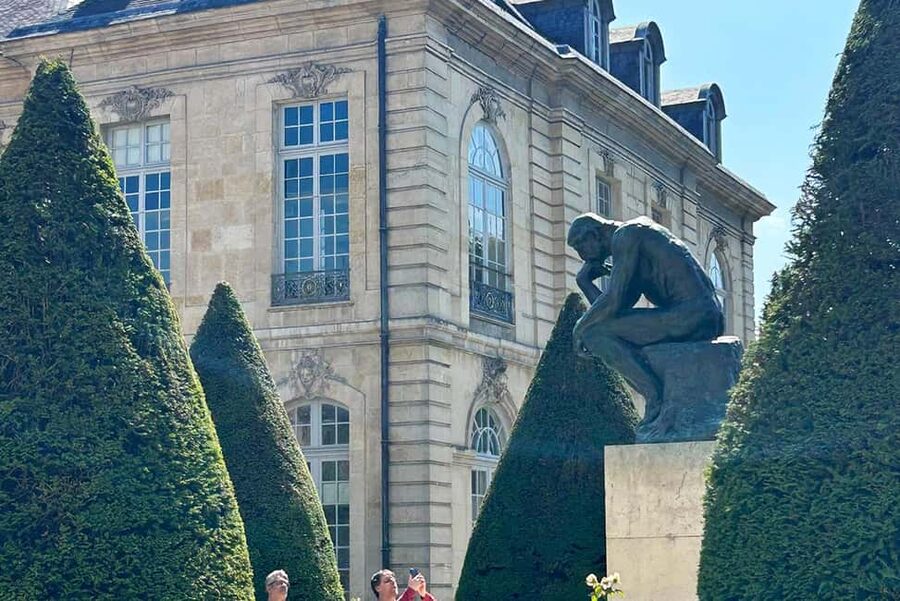
- The garden is a major part of the visit: Many of Rodin’s sculptures are displayed outside, where you can take your time and see them from different angles.
- The Thinker and The Gates of Hell are the headline works: These give the visit its familiar landmarks, but the collection goes far beyond them.
- Allow at least two to four hours: The ticket remains valid for 510 minutes after first use, so you do not need to rush through the rooms and garden.
- The Hôtel Biron adds atmosphere: Rodin’s work is shown inside an elegant former hotel rather than a large modern museum.
- Audio guidance is optional: It is not included, though one visitor found the available audio tour easy to use and especially well made.
- Check the ticket price before booking: Direct entry may be cheaper when there is no line, which has happened often.
Entering the Hôtel Biron in Paris
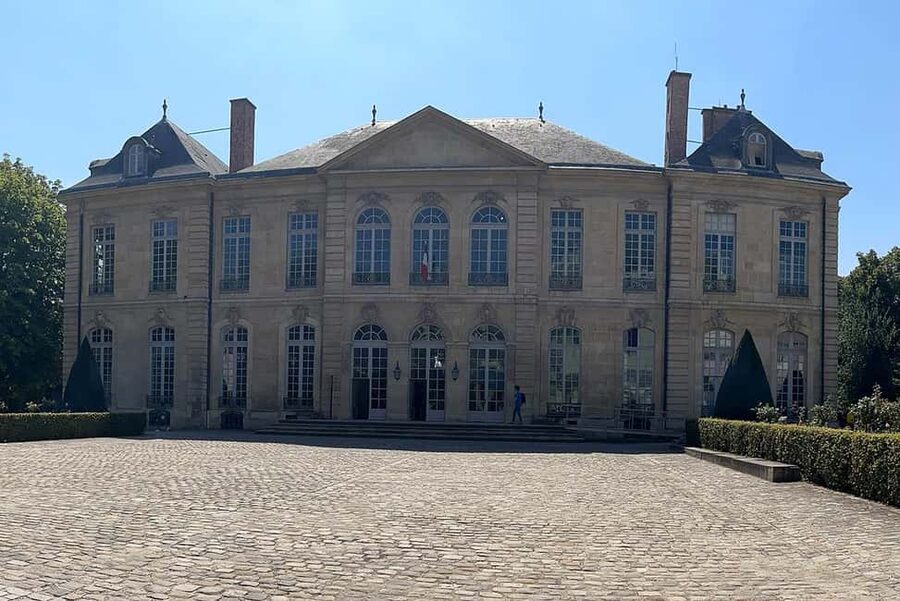
The Musée Rodin is located in the Hôtel Biron, an elegant building that gives the visit a more intimate feel than a huge museum hall. You go straight to the museum with your ticket, using a separate entrance intended to help you get inside more quickly.
That separate entrance is useful when the museum is busy. Still, I would not pay extra for the privilege without checking the museum’s own price first. One visitor found no line at all and felt the online ticket cost more than buying at the counter. Another had difficulty downloading the tickets and received only one ticket at first.
The practical lesson is simple: download every ticket before leaving your hotel, confirm the number of admissions, and compare the price with direct entry. The advance ticket gives you flexibility, including cancellation up to 24 hours before the visit and a reserve-now, pay-later option. But those conveniences may not be worth an added cost for everyone.
The museum is open from 10 a.m. to 6:30 p.m., with last admission 45 minutes before closing. It is closed on Mondays. Since the ticket is valid for 510 minutes from first activation, you have plenty of time to build the visit around another Paris sight, though you should still check the closing time before you set out.
More museums in Paris:
- Paris: Louvre Museum Timed-Entrance Ticket
★ 4.6 · 71,977 reviews - Louvre Museum Masterpieces Guided Tour with Access
★ 4.5 · 12,023 reviews - Paris: Louvre Museum Entry Ticket With Host and River Cruise
★ 4.6 · 9,926 reviews
Rodin’s masterpieces inside the museum
Inside, the collection follows Rodin’s artistic development through rooms filled with sculpture. You will see how he used the human body, rough surfaces, unfinished forms, and powerful poses to suggest movement and emotion.
The famous works deserve your attention, but I would not hurry past the smaller pieces. Rodin often tested an idea in several versions, changing the pose, scale, or surface. Seeing these works near one another helps you understand his process better than seeing one famous statue in isolation.
The Thinker is an obvious priority. Its pose is familiar from photographs, yet the physical sculpture has more force than its image suggests. Take a little time to walk around it rather than treating it as a quick photo stop. The viewing angle changes the balance between the figure’s concentrated face, bent limbs, and tense body.
The Gates of Hell is another essential work. It brings together many figures and ideas in a single large composition. Rodin worked on it for years, and its crowded arrangement gives you plenty to inspect. If you look carefully, you can recognize figures that later became separate sculptures, including The Thinker.
The museum holds more than 6,000 sculptures, so nobody sees every work with equal attention. I suggest choosing a few major pieces, then allowing yourself to slow down for works that catch your eye. The layout makes this manageable, since the rooms are organized as a walk through Rodin’s work rather than as one enormous open hall.
The building itself can be part of the pleasure. Its rooms create a close relationship between the art and the setting. The trade-off is comfort: one summer visit became extremely warm inside because the building had no air conditioning, and the fans did not do enough. If you visit during hot weather, go earlier in the day and bring water for before or after the museum. Food and drinks are not allowed inside.
Camille Claudel and the wider collection
The Musée Rodin is not only a display of Rodin’s own work. It also honors Camille Claudel, Rodin’s muse and protégé, with works of her own. This matters because it gives you a broader view of the artistic world around Rodin instead of presenting his career as an isolated story.
Claudel’s presence also adds human weight to the visit. You can compare her approach with Rodin’s and consider how two artists treated the body, expression, and motion in different ways. The collection includes works by other artists as well, so you should expect more than Rodin alone.
This wider selection is useful if you are visiting with someone who is not already devoted to Rodin. You can move between familiar masterpieces, Claudel’s sculpture, and other works without feeling that every room repeats the same idea. The museum remains focused, but it is not narrow.
For a first visit, I would give the indoor rooms around an hour to 90 minutes if you want to look carefully. If sculpture is a main reason for your Paris trip, you may want much longer. One enthusiastic visit lasted almost four hours, which seems reasonable if you include the garden and stop often.
The sculpture garden deserves equal time
The garden is the strongest reason to choose this museum over a quick indoor-only visit. Rodin’s sculptures are placed among paths and planted areas, giving you room to see them from a distance and then approach them closely.
I love sculpture outdoors because natural light changes the work from one moment to the next. A face, hand, or rough surface can look different as you walk around it. The garden also gives you a pause after the concentrated indoor rooms. You can sit, stroll, and return to a sculpture without feeling trapped in a crowded gallery.
Several people have made the outdoor portion their favorite part of the visit. The garden is also often described as less crowded than the Louvre or Musée d’Orsay, which means you may have more time to think about what you are seeing. That quieter pace is valuable in Paris, where famous museums can turn art into a queue with occasional glimpses.
Do not assume every section will always be open. Part of the garden was closed during one visit, so the outdoor route can change. The garden is also exposed to the weather. Comfortable shoes are a good idea, and sunscreen and water make sense on a bright day.
A café is available as part of the museum setting, but food and drinks are not permitted inside the museum rooms. Treat it as a possible break rather than something included with your admission. The ticket covers the museum, permanent collections, and garden only.
A few more Paris outings to set side by side
- Disneyland® Paris 1-Day Ticket
★ 4.6 · 49,412 reviews - Paris: Versailles Palace and Gardens Full Access Ticket
★ 4.6 · 41,579 reviews - Paris: Evening River Cruise with Music
★ 4.4 · 22,721 reviews - Paris: Eiffel Tower Entry Ticket with Optional Summit Access
★ 4.4 · 20,035 reviews
How long should you plan for 510 minutes?
The stated validity is 510 minutes from first activation, or eight and a half hours. That does not mean you need to spend the whole day at the Musée Rodin. It means you have room to visit at your own pace rather than racing through a timed slot.
For a focused visit, I would plan two hours:
- About 60 to 90 minutes inside the Hôtel Biron
- About 45 to 60 minutes in the garden
- Extra time for photographs, a pause, or the café
For a slower art visit, allow three to four hours. That suits you if you want to study the major sculptures, look at Claudel’s work, and walk through the garden more than once.
The long validity can also help if weather changes. You may prefer the indoor rooms during hot weather and the garden later, though your exact ability to leave and return should be confirmed at entry. The supplied details only promise validity for 510 minutes after activation, not a separate reentry policy.
Is the $23 ticket a good value?
At $23 per person, this is not a bargain admission by Paris standards, especially if you discover that the museum counter sells tickets for less. The ticket becomes more appealing when you value advance planning, a separate entrance, free cancellation up to 24 hours ahead, and the ability to reserve without paying immediately.
I would compare three things before booking:
- The current direct museum price
- The cost of this advance ticket
- How important skip-the-line access is on your chosen day
If there is a long queue, the separate entrance can save time. If there is no queue, direct purchase may be the smarter deal. One visitor specifically felt the online price was higher than the museum counter price, while another had trouble getting all tickets downloaded. Those are not reasons to avoid the museum, but they are good reasons to check the details carefully.
The ticket includes the permanent collections and garden. It does not include a guided tour, audio guide, hotel transportation, food, or drinks. An optional audio tour may be available at an extra charge. One person found it easy to use and unusually high quality, while another was not sure the extra cost was worthwhile. I would decide based on how much context you want. The rooms and garden can be enjoyed independently, but an audio guide may help you notice connections between the works.
Comfort, access, and what to bring
The practical packing list is short: comfortable shoes, a camera, sunscreen, and water. Photography is allowed without flash. Smoking, flash photography, backpacks, and large bags are not allowed inside.
The bag rule matters in Paris, where many visitors carry a daypack. Leave large bags at your accommodation if you can. Do not arrive expecting to bring a backpack into the galleries, and do not count on food or drinks as a museum-room snack.
The activity details call the entrance wheelchair accessible, but the same information also says it is not suitable for people with mobility impairments or wheelchair users. That is a clear conflict, so I would contact the provider or museum before booking if you need step-free access, seating, or a specific route. Do not rely on the general accessibility label alone.
The lack of air conditioning is another comfort issue. On a hot day, the former hotel can feel stuffy, particularly if you spend a long time in the indoor rooms. An early visit is sensible, and the garden provides an easier place to cool off if the weather is pleasant.
Who will enjoy the Musée Rodin most?
I would choose this visit if you want a museum that combines famous art with outdoor space. It works especially well for you if the Louvre feels too large, if you prefer sculpture to painting, or if you like to look slowly without constant crowds.
It is also a good choice for repeat visitors to Paris. You can see major works without committing a full day to a giant museum. The garden adds a calm break, and the Hôtel Biron gives the collection a more personal scale.
Families and mixed-interest groups may find it easier than a huge art museum because you can move between indoor rooms and outdoor paths. The garden gives restless visitors somewhere to walk, while sculpture provides plenty of visual variety.
I would be more cautious if you are seeking a guided tour. No guide is included, and the quality of your visit will depend on how much you want to read, rent an audio guide, or explore on your own. I would also reconsider if you dislike warm historic buildings, carry a large bag, or need guaranteed wheelchair access without advance confirmation.
Should you book the Rodin Museum ticket?
Book it if you value The Thinker, The Gates of Hell, Camille Claudel’s work, and a beautiful sculpture garden in one manageable stop. The quieter atmosphere, outdoor displays, and room to spend two to four hours make this one of Paris’s more rewarding museum visits.
Before paying, compare the online price with the museum counter and decide if the separate entrance is worth the difference. Download every ticket in advance, avoid Mondays, arrive with comfortable shoes and no large bag, and allow extra time on hot days.
For art lovers, I would gladly make room for the Musée Rodin. For everyone else, the garden is the convincing argument. It gives the visit fresh air, space, and a slower rhythm that many Paris museums cannot provide.
FAQ
Where is the Musée Rodin located?
The museum is in the Île-de-France region of France, at the Hôtel Biron in Paris.
What does the ticket include?
It includes entrance to the Musée Rodin, access to the permanent collections, and access to the garden.
Are The Thinker and The Gates of Hell included?
Yes. The museum displays both of these major Rodin works.
How long is the ticket valid?
The ticket is valid for 510 minutes from the time you first activate it.
What are the opening hours?
The museum is open from 10 a.m. to 6:30 p.m. Last admission is 45 minutes before closing.
Is the museum open every day?
No. The Musée Rodin is closed on Mondays.
Is an audio guide included?
No. A guided tour and audio guide are not included. An optional audio tour may be available for an additional charge.
Can I take photographs?
Yes. Photography is allowed without flash.
Can I bring a backpack or food inside?
No. Large bags and backpacks are not allowed inside, and food and drinks are not permitted in the museum.
Recently added in Paris
- Private Transfers in Paris★ 5.0 · 75 reviews
- CDG – Euro Disney – CDG Two Way Private Shuttle Transfer★ 5.0 · 233 reviews
- Disneyland® Paris 1 Day Ticket with Transport from Paris★ 3.5 · 302 reviews
- Personalized Transport service from Disneyland to Paris★ 5.0 · 63 reviews
- Monet’s Gardens & House-Private Giverny Tour From Paris★ 4.5 · 137 reviews
- Guided tour Monet’s house and gardens/small group★ 4.5 · 68 reviews
- Giverny Monet House and Gardens Skip the line Walking tour★ 4.0 · 217 reviews
- Monet’s House and Garden & Giverny Village★ 4.5 · 39 reviews
Museums, compared.
Louvre Museum Masterpieces Guided Tour with Access
Read our review →
Louvre Museum Entry Ticket With Host and River Cruise
Read our review →
Les Invalides: Napoleon’s Tomb & Army Museum Entry
Read our review →
Louvre Museum – Exclusive Guided Tour (Entry Included)
Read our review →
Louvre Museum Hosted Entry and Mona Lisa Audioguide
Read our review →
Louvre Museum Tour Mona Lisa & Iconic Masterpieces
Read our review →
Browse the lists this tour appears in