
REVIEW · MUSEUMS
The Musée d’Orsay Guided Tour Orsay Museum Semi-Private 6ppl Max
Art makes more sense with a good guide. This Musée d’Orsay tour links the artists, ideas, and scandals behind French Impressionism in a small group capped at six people. I especially like the personal attention and the clear route from Millet and Manet to Monet, Renoir, Degas, and Van Gogh. The main drawback is the price, $144.21 per person, which is high for a two-and-a-half-hour museum visit.
I also like the range of start times, including morning, afternoon, and evening options. Guides such as Eduardo, Liliya, Christophe, Ivana, and Alexandra have earned praise for making art understandable and keeping children involved. Just remember that the museum can still be crowded, skip-the-line entry may involve security delays, and temporary exhibitions are not included.
In This Review
- Key points to know before booking
- Why the Musée d’Orsay works so well with a guide
- Entering the former railway station
- Millet and Manet: the road to Impressionism
- Renoir, Monet, and the new way of seeing
- Degas, Van Gogh, and what came next
- The guides make or break the experience
- Is $144.21 a fair price?
- Choosing the best time and pace
- Who should book this Orsay tour?
- Should you book the Musée d’Orsay small-group tour?
- FAQ
- How long does the Musée d’Orsay guided tour last?
- How many people are in the semi-private group?
- Is museum admission included?
- Is the tour offered in English?
- Does the tour include hotel pickup or drop-off?
- Are temporary exhibitions included?
- Can I bring a large bag or suitcase?
- Can I cancel for a full refund?
Key points to know before booking
- Small group format: The tour is advertised for no more than six people, making it easier to hear the guide and ask questions.
- A story rather than a checklist: The route explains the move from Academic painting and Realism into Impressionism and later Post-Impressionism.
- Priority museum entry: Reserved admission is included, though security checks and occasional lines can still occur.
- Major works included: The usual route features Manet, Renoir, Monet, Van Gogh, Degas, and Millet, if a work is not on loan or under repair.
- Strong family option: Guides have been praised for keeping children and teenagers engaged, and a special family tour is available.
- Plan for two and a half hours: The tour ends where it begins, at the Musée d’Orsay, with some time often left for independent viewing.
Why the Musée d’Orsay works so well with a guide
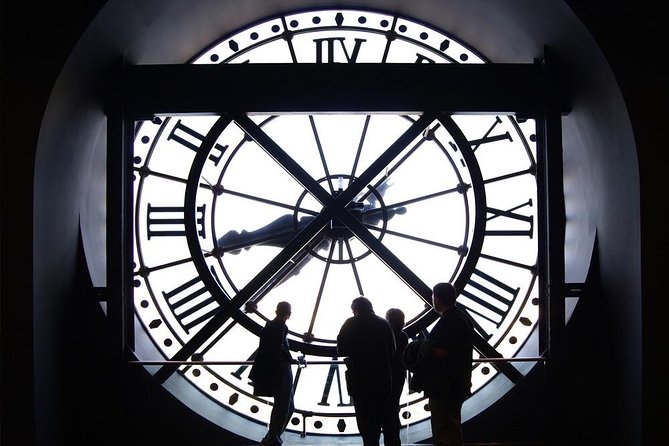
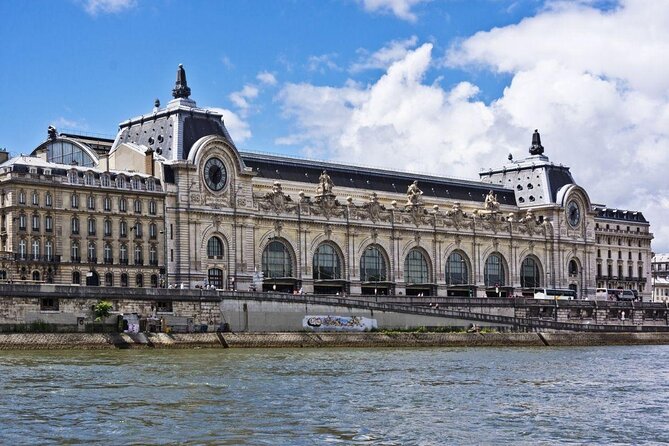
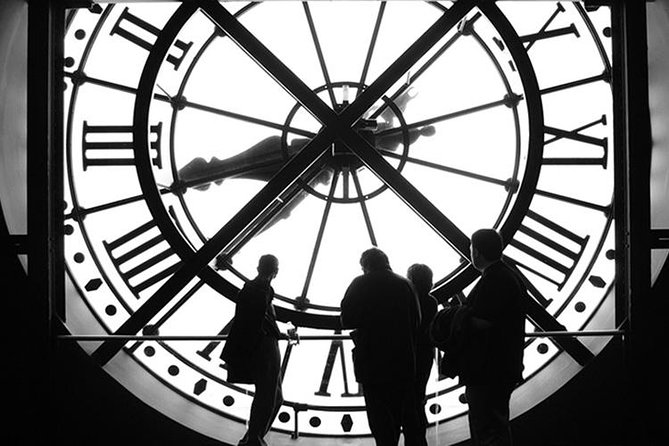
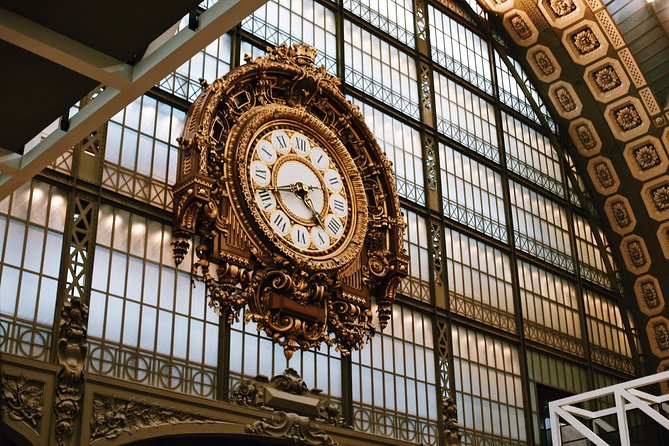
The Musée d’Orsay is not simply a room full of famous paintings. It occupies a former railway station, a grand Beaux-Arts building with a very different feel from the Louvre. Its enormous clock, high ceilings, and broad galleries are part of the experience.
The collection is also easier to understand when you see it as a chain of arguments. Artists did not suddenly wake up one morning and invent Impressionism. They reacted against the official art world, changed how they painted modern life, and challenged ideas about what deserved to appear on a museum wall.
That is where this tour earns its keep. Instead of walking from one famous canvas to another without context, you follow a rough progression from Jean-François Millet and Realism through Édouard Manet and the Impressionists, then onward to artists such as Vincent van Gogh.
A guide can point out why a painting once seemed shocking, how an artist handled light and movement, or why a seemingly simple scene caused such a stir. You still see the masterpieces, but you also get a framework for looking at them.
The small group matters here. With six people or fewer, you can ask why a work is important without holding up a large crowd. You are also more likely to hear the guide clearly in busy rooms. The booking information elsewhere gives a maximum of eight, so I would confirm the group size when booking, but the tour is presented primarily as a six-person experience.
More museums in Paris:
- Paris: Louvre Museum Timed-Entrance Ticket
★ 4.6 · 71,977 reviews - Louvre Museum Masterpieces Guided Tour with Access
★ 4.5 · 12,023 reviews - Paris: Louvre Museum Entry Ticket With Host and River Cruise
★ 4.6 · 9,926 reviews
Entering the former railway station
The meeting point is the Musée d’Orsay at 75007 Paris, and the activity ends at the same location. You need to make your own way there. The museum is near public transportation, and the operator recommends a taxi or Uber rather than hotel pickup, since pickup and drop-off are not part of the tour.
Reserved entry is included. This is useful at a major Paris museum, where standing in a long admission queue can eat into the limited time you have in the city. Still, priority entry does not mean you walk past every person without stopping. Security checks remain possible, and increased security can create short delays.
Bring only a handbag or small, thin backpack. Large bags and suitcases are not allowed inside. This is an easy detail to overlook, especially if you are touring Paris with luggage between hotels or train stations.
Once inside, the guide begins the museum visit in the station’s grand setting. The building itself helps explain the museum’s identity. It connects an older Paris with the modern city shown in many of the paintings.
Millet and Manet: the road to Impressionism
The tour generally starts before Impressionism, with artists such as Millet. His The Gleaners gives you a useful place to begin because it focuses on rural workers rather than kings, saints, or mythological heroes.
That shift in subject matter matters. The painting asks you to look at ordinary labor with the seriousness once reserved for grand historical scenes. Your guide can help you notice the scale, arrangement, and mood of the figures instead of treating the painting as only a picture of people working in a field.
Then comes Manet’s Luncheon on the Grass, one of the museum’s essential stops. The work caused a scandal partly because of its subject and partly because of the way Manet painted it. It did not behave like the polished official art expected by critics and institutions.
This is one of the tour’s best teaching moments. You can see how Manet borrows from earlier art while presenting a scene that feels startlingly direct and modern. A strong guide will explain both the visual choices and the public reaction, which makes the painting far more memorable than a quick photograph from across the room.
The tour does not treat Manet as an isolated rebel. Instead, he becomes part of the path toward the younger artists who wanted more freedom in subject, brushwork, and technique.
Renoir, Monet, and the new way of seeing
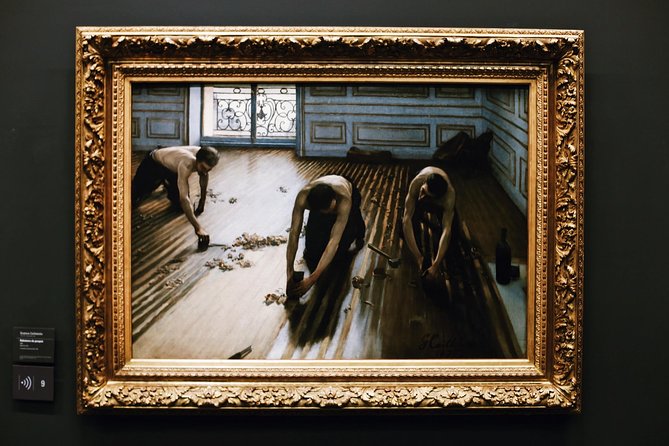
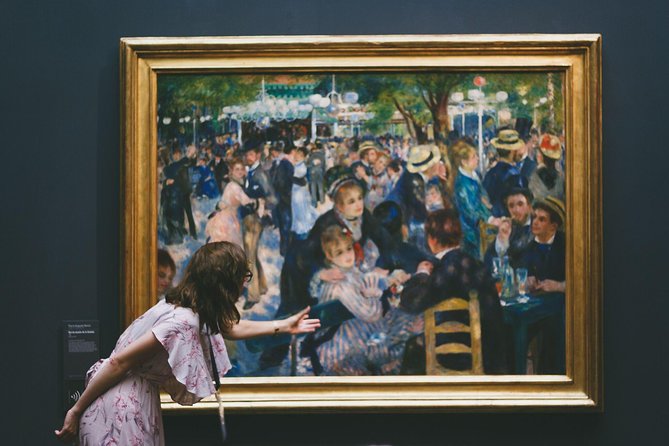
Renoir’s Dance at Le Moulin de la Galette brings you into a livelier social world. Rather than presenting an idealized figure or a formal historical event, Renoir shows people enjoying a modern Parisian afternoon.
Look closely at the way the scene is built from light, movement, overlapping figures, and patches of color. The painting can seem easygoing at first glance, but a guide helps you see the decisions behind that apparent ease.
Monet’s Poppy Field is another central stop. It offers a clear example of how Impressionist painters used changing light and broken brushwork to suggest a moment rather than record every detail with hard edges.
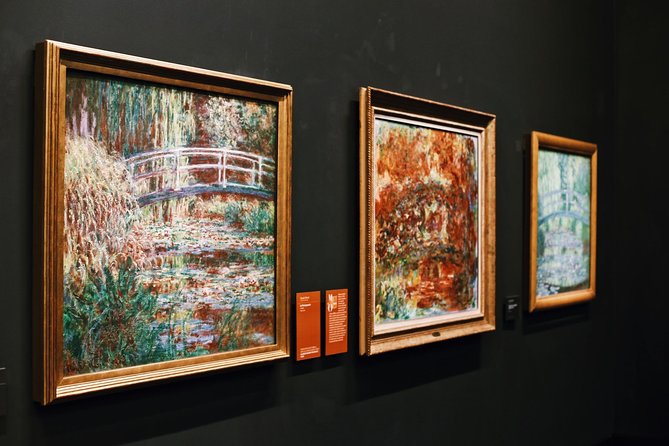
Monet’s water lilies are also generally included, if the works are on display and not being restored or lent elsewhere. These paintings reward a slower look. The point is not only the flowers or reflections, but the way the surface of the water becomes a subject in its own right.
The tour explains why this approach felt revolutionary. The artists were not merely painting colorful outdoor scenes. They were asking viewers to accept a painting as an impression of a particular moment, made with visible marks and an unfinished quality that earlier audiences often considered careless.
A few more Paris outings to set side by side
- Disneyland® Paris 1-Day Ticket
★ 4.6 · 49,412 reviews - Paris: Versailles Palace and Gardens Full Access Ticket
★ 4.6 · 41,579 reviews - Paris: Evening River Cruise with Music
★ 4.4 · 22,721 reviews - Paris: Eiffel Tower Entry Ticket with Optional Summit Access
★ 4.4 · 20,035 reviews
Degas, Van Gogh, and what came next
Degas’s ballerinas add another angle to the story. His dancers are not always presented in centered, graceful poses. Some appear cropped, off balance, or caught in rehearsal. That viewpoint makes the scene feel like a quick glimpse rather than a carefully arranged stage picture.
This is a good place to consider photography and modern life, though the exact emphasis will depend on your guide. The larger point is that artists were experimenting with what a painting could show and how a viewer might look at it.
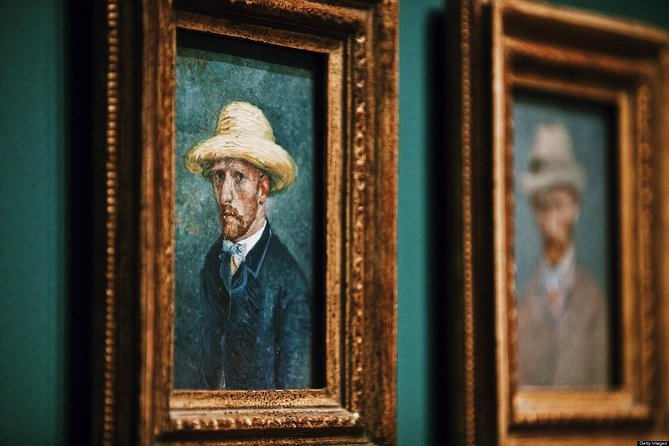
Van Gogh’s Bedroom in Arles takes the story beyond the first Impressionists. The colors, outlines, and simplified forms make the room feel personal and slightly unsettled. You do not need a degree in art to respond to it, but context helps you understand how Van Gogh took ideas about color and brushwork in his own direction.
The route may also touch on later movements, including Post-Impressionism, Neo-Impressionism, and Cubism. Ivana was praised for organizing the visit around this artistic progression, from Academic painting and Realism through Impressionism and later experiments.
That chronological structure is one of the tour’s most useful features. It prevents the museum from becoming a random parade of famous names. You see how one generation’s challenge became the next generation’s starting point.
The guides make or break the experience
The strongest praise is directed at the guides, and the names recur for good reason. Eduardo is described as passionate and engaging, with a talent for explaining the timeline leading into Impressionism. Liliya is praised for storytelling, clear English, and the ability to make art history accessible to adults and children alike.
Christophe is noted for a comfortable pace and his willingness to answer questions. He also paid attention to practical needs during the visit, including toilet breaks. That may sound minor, but it matters when you are touring with children or older family members.
Ivana organized the material by artistic development and used storytelling to make the paintings feel alive. Alexandra kept children engaged, while Nancy was especially attentive to an older couple who needed places to rest.
Other named guides include Kotryna S, Beatrice T, Valerie, Achille, Hugo, Ana, Sunday, Zdravko, and Florent S. The individual style will vary, but the repeated strengths are clear: strong art knowledge, humor, enthusiasm, clear explanations, and an ability to adjust the pace.
One useful detail is that a single-booking situation has sometimes led to a private tour rather than cancellation. Do not count on that outcome, since the tour requires at least two participants to operate, but the policy allows an alternative date or a full refund if the minimum is not met.
Is $144.21 a fair price?
At $144.21 per person, this is not a budget museum visit. A couple pays nearly $289 before any optional gratuity, and a family of four pays close to $577. That makes the price worth examining carefully.
You are paying for more than admission. The fee includes reserved entry, a professional English-speaking guide, and a two-hour to two-and-a-half-hour route designed around major works. The small group is the biggest value factor. A six-person group feels very different from a large tour where you stand at the back and hear only fragments.
The price makes the most sense if you are a first-time visitor, have limited time in Paris, or feel unsure how to approach nineteenth-century art. It is also a good fit if your family needs a guide who can explain difficult ideas in plain language.
For an art enthusiast, the value depends on what you want. If you prefer to spend hours alone with a few paintings, this organized route may feel too compressed. If you want artistic context and the chance to ask questions, the cost is easier to justify.
Gratuities are not included and are optional. Temporary exhibitions are also excluded, so check what you want to see before assuming the tour covers every gallery or special show.
Choosing the best time and pace
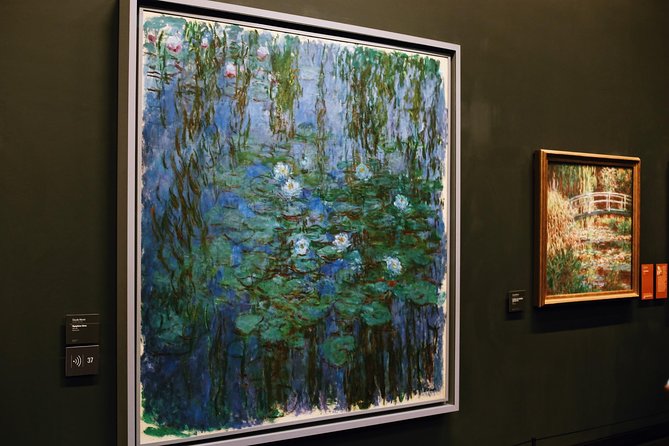
Morning, afternoon, and evening departures are available. The best choice depends on the rest of your Paris plans, but an evening visit can be appealing if you want to place the museum after other sightseeing.
Crowds can affect the experience. One guide noted that the museum may be especially busy on Tuesdays because the Louvre is closed that day, sending more people toward the Musée d’Orsay. If you have flexibility, avoiding Tuesday may help.
The tour lasts about two to two-and-a-half hours. That is long enough to cover major works without turning the museum into an all-day endurance test. It is not long enough to see every room carefully, so think of the tour as an introduction and orientation.
One particularly useful feature is time at the end for your own exploration. After the guide has shown you the major works, you can return to a favorite painting or visit another part of the collection at your own pace.
You should expect a moderate level of walking and standing. The tour is not suitable for people with walking disabilities or wheelchair users, according to the supplied information. Appropriate dress may also be required for entry into some sites, although this is primarily a museum visit.
Who should book this Orsay tour?
I would recommend it most strongly to first-time Musée d’Orsay visitors who want to understand what they are seeing. The museum is manageable compared with the Louvre, but its collection still covers enough artists and movements to leave you unsure where to begin.
Families are another good match. Guides such as Liliya, Christophe, Nancy, and Alexandra have shown an ability to adjust explanations for children, teenagers, and adults in the same group. The separate kid-friendly family tour may be worth considering if your children need a more tailored format.
This also suits couples or solo visitors who value conversation. The small group gives you a better chance to ask about a painting, an artist, or a detail you would otherwise miss.
You may want to skip it if you already know the Orsay well, dislike scheduled museum routes, or mainly want to see temporary exhibitions. You should also think twice if the price would make you rush through the rest of your Paris budget.
Free cancellation is available up to 24 hours before the start time. Cancellations made later are not refunded, and changes within that period are not accepted, so choose your time with care.
Should you book the Musée d’Orsay small-group tour?
Book it if you want the famous paintings to come with a clear story. The combination of reserved entry, a six-person format, and guides who can connect Millet to Manet, Monet, Renoir, Degas, and Van Gogh gives you a much better start than wandering without a plan.
I would especially choose it for a first Paris visit, a family with mixed ages, or anyone who finds art museums intimidating. The cost is substantial, but the personal guidance and saved time can make it worthwhile.
If you prefer quiet solo looking, already understand Impressionism, or want temporary exhibitions, buy admission and explore independently instead. For most first-time visitors, though, this is a practical way to meet the Musée d’Orsay without feeling lost in its grand old halls.
FAQ
How long does the Musée d’Orsay guided tour last?
The tour lasts approximately two to two-and-a-half hours. The stated duration is 2.5 hours.
How many people are in the semi-private group?
The tour is advertised as having no more than six guests. Additional booking information gives a maximum of eight, so you should confirm the exact group limit before booking.
Is museum admission included?
Yes. All entrance fees and reserved entry to the Musée d’Orsay are included.
Is the tour offered in English?
Yes. English is the listed tour language.
Does the tour include hotel pickup or drop-off?
No. Hotel pickup and drop-off are not included. You must reach the Musée d’Orsay meeting point yourself.
Are temporary exhibitions included?
No. Temporary exhibitions are not included in the tour.
Can I bring a large bag or suitcase?
No. Large bags and suitcases are not allowed inside the museum. Only handbags or small, thin backpacks can pass through security.
Can I cancel for a full refund?
Yes, if you cancel at least 24 hours before the experience start time. Cancellations made less than 24 hours in advance are not refunded.
Recently added in Paris
- Private Transfers in Paris★ 5.0 · 75 reviews
- CDG – Euro Disney – CDG Two Way Private Shuttle Transfer★ 5.0 · 233 reviews
- Disneyland® Paris 1 Day Ticket with Transport from Paris★ 3.5 · 302 reviews
- Personalized Transport service from Disneyland to Paris★ 5.0 · 63 reviews
- Monet’s Gardens & House-Private Giverny Tour From Paris★ 4.5 · 137 reviews
- Guided tour Monet’s house and gardens/small group★ 4.5 · 68 reviews
- Giverny Monet House and Gardens Skip the line Walking tour★ 4.0 · 217 reviews
- Monet’s House and Garden & Giverny Village★ 4.5 · 39 reviews
Museums, compared.

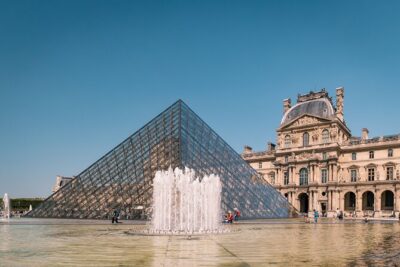
Louvre Museum Masterpieces Guided Tour with Access
Read our review →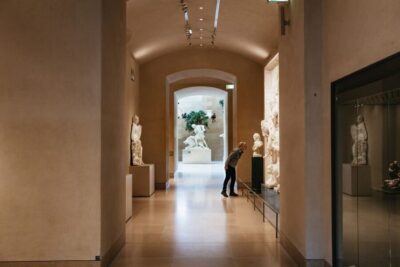
Louvre Museum Entry Ticket With Host and River Cruise
Read our review →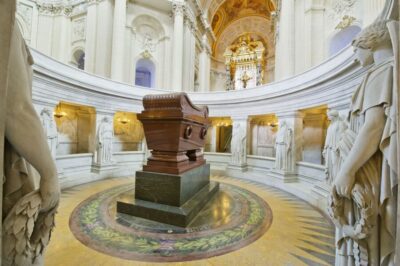
Les Invalides: Napoleon’s Tomb & Army Museum Entry
Read our review →
Louvre Museum – Exclusive Guided Tour (Entry Included)
Read our review →
Louvre Museum Hosted Entry and Mona Lisa Audioguide
Read our review →
Louvre Museum Tour Mona Lisa & Iconic Masterpieces
Read our review →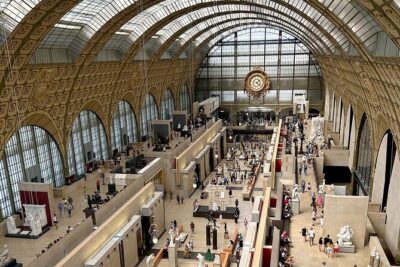
Browse the lists this tour appears in