
REVIEW · MUSEUMS
Cave Museum Village Troglodyte of Rochemenier Admission Ticket
Step beneath the surface of rural France. The Cave Museum Village Troglodyte of Rochemenier offers a rare look at homes carved into sandstone, with old furniture, farm tools, and photographs showing how local families lived. I like the authentic underground setting and the freedom to move at your own pace. I also like that the explanatory leaflet comes in 18 languages, making the visit useful even without an English-speaking guide.
The main thing to consider is that the guided visit is offered only in French. You can still explore independently in English, but anyone hoping for a fully narrated English tour should know this before booking. The underground rooms are also cool throughout the year, so bring a sweater.
In This Review
- Key points to know before you go
- Entering Rochemenier’s underground farms
- What you see inside the two preserved farms
- A self-guided visit with room to set your own pace
- Why the underground setting changes the experience
- Rural traditions told through tools and photographs
- How long should you allow?
- Price and overall value at $10.26
- Opening hours and practical planning
- Access, children, and comfort
- Who will enjoy Rochemenier most?
- Should you book the Cave Museum Village Troglodyte of Rochemenier?
- FAQ
- How long does the Rochemenier Cave Museum visit take?
- Is the tour available in English?
- What does the admission ticket include?
- Are food and drinks included?
- Can I bring a stroller?
- What are the opening hours?
Key points to know before you go
- A whole village beneath the ground: Rochemenier includes around 250 underground rooms spread across about 40 former farms.
- Two preserved farms form the public museum: These homes were abandoned near the start of the 20th century and opened to visitors in 1967.
- The oldest habitation dates from the 13th century: The village expanded over many centuries as the population grew.
- The sandstone tells part of the story: It contains sea shells and was also used by farmers to reduce acidity in their soil.
- Self-guided and family-friendly: You can visit in roughly one to three hours, with written information available in 18 languages.
- A cool, carefully presented museum: The displays are praised for being immaculately presented, with furniture, tools, and photographs left by former residents.
Entering Rochemenier’s underground farms
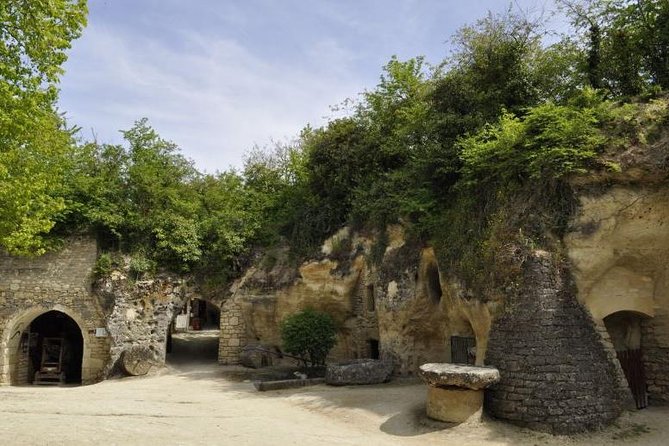
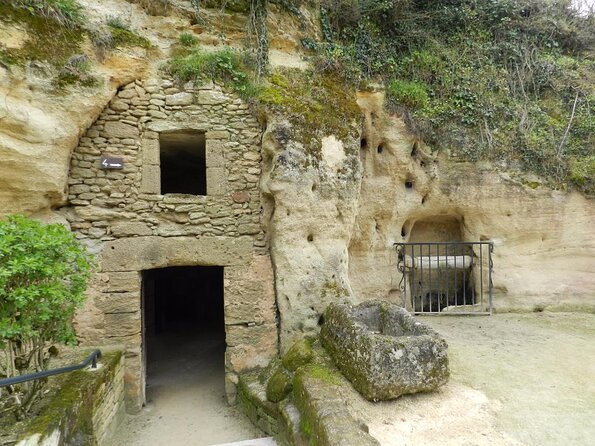
Rochemenier is not simply a cave with a few objects placed inside. It is a former village built into the rock, with about 250 rooms distributed among roughly 40 farms. The scale helps you understand that underground living here was a normal part of village life, not an unusual one-off shelter.
The rooms were excavated from sandstone, a calcareous sand that contains sea shells. That detail gives the site an unexpected link to an earlier natural world. The same material also had a practical use above ground, since farmers used it to neutralize acidic soil.
I find that combination especially useful for understanding the site. You are not looking at underground architecture in isolation. You are seeing how geology, farming, and daily life shaped one another over centuries.
The village grew as its population increased. More rooms were cut from the rock to meet changing needs, and the settlement continued to expand until the 19th century. The oldest habitation apparently dates from the 13th century, giving the visit a long time span without requiring you to walk through a formal historical timeline.
Instead, the history is built into the rooms. The walls, layouts, tools, and domestic objects show how people adapted to the space they had.
More museums in France:
- Paris: Louvre Museum Timed-Entrance Ticket
★ 4.6 · 71,977 reviews - Louvre Museum Masterpieces Guided Tour with Access
★ 4.5 · 12,023 reviews - Paris: Louvre Museum Entry Ticket With Host and River Cruise
★ 4.6 · 9,926 reviews
What you see inside the two preserved farms
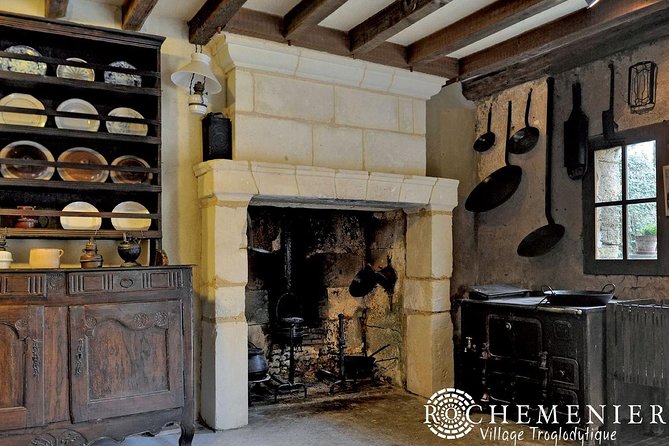
The public museum focuses on two farms abandoned toward the beginning of the 20th century. They opened to the public in 1967, and the displays describe the lifestyle of the last people who lived there.
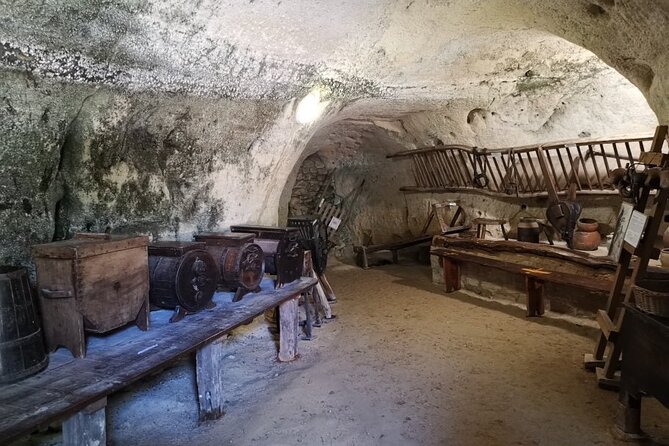
This is the strongest part of the visit for me. Furniture makes the rooms feel connected to real households, while tools point to the work that kept those households going. Photographs add faces and personal memory to the stone spaces.
You can expect to see:
- Furniture used by former residents
- Agricultural and household tools
- Photographs documenting the last inhabitants
- Underground rooms belonging to two former farms
- A chapel below ground, which is not accessible to strollers
The museum’s appeal comes from its ordinary details. You are not only learning about dates or construction methods. You are looking at the practical objects that shaped meals, work, storage, and family life.
A highly praised feature is the condition of the presentation. The museum is described as immaculately presented, which matters in a place where the setting itself could easily overwhelm the exhibits. Clean, orderly displays allow you to focus on what the objects tell you about rural traditions.
Take your time with the photographs. They can provide a useful bridge between the old stone rooms and the people who used them. If you hurry through, the site may feel like a collection of dark chambers. If you pause over the objects and images, it becomes a portrait of a community.
A self-guided visit with room to set your own pace
The standard experience is self-guided. You receive an explanatory leaflet available in 18 languages, including English, so you can read about the rooms as you go.
This format suits people who like to stop often, compare objects, or keep the visit short. You can make it a quick one-hour look or spend closer to three hours studying the farms and photographs. The listed visit duration is approximately one to three hours.
I see this flexibility as a real advantage. A family with young children can keep moving without waiting for a group. A history enthusiast can spend longer with the construction details. You can also return to a room if you want to make sense of how one part of the farm connects to another.
The tradeoff is the lack of an English-speaking guide. A guided visit is available at a specific time, but it is conducted in French only. If you understand French, that option may add useful detail and a stronger sense of structure. If you do not, the multilingual leaflet is your main tool.
The group size is limited to a maximum of 15 people for the activity. Even with a self-guided format, that limit should help keep the visit from feeling crowded, though the exact flow depends on the day and season.
Why the underground setting changes the experience
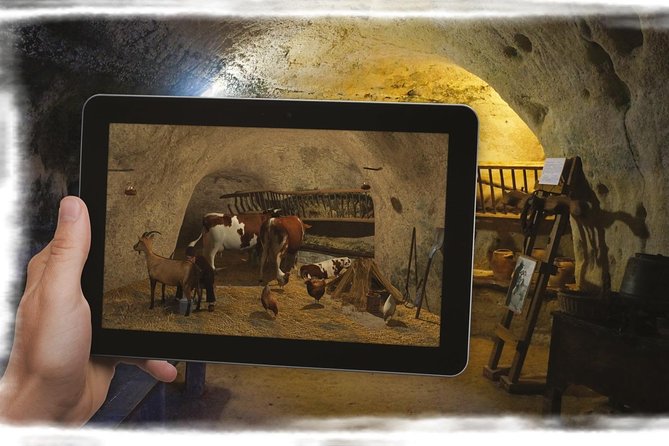
The rock is the main character here, but the museum does not treat it as a stage prop. Every room makes you think about the effort involved in cutting homes into sandstone and then adapting them over time.
Underground spaces also change your sense of time. The cool air and enclosed rooms create a clear break from ordinary sightseeing. You move through a place shaped by practical needs, not by modern museum design.
Bring a sweater. The underground freshness is specifically noted, and the temperature may feel cool even during warmer months. This is a small packing detail, but it can make the difference between lingering over the exhibits and rushing to finish.
The setting may also affect visitors who dislike enclosed areas. The supplied information does not describe serious restrictions, and most people can participate, but anyone uncomfortable underground should consider that the entire attraction centers on excavated rooms.
More entry tickets in France:
- Disneyland® Paris 1-Day Ticket
★ 4.6 · 49,412 reviews - Paris: Versailles Palace and Gardens Full Access Ticket
★ 4.6 · 41,579 reviews - Paris: Eiffel Tower Entry Ticket with Optional Summit Access
★ 4.4 · 20,035 reviews - Paris: Moulin Rouge Cabaret Show Ticket with Champagne
★ 4.7 · 16,088 reviews
Rural traditions told through tools and photographs
The museum works best when you connect objects to tasks. A tool is more than an old item behind a display. It suggests the work required to maintain a farm, prepare food, manage soil, or support a household in a village with limited space.
The photographs add another layer. They show that the farms were not empty archaeological remains. People lived here until relatively recently, and their routines shaped the rooms you walk through.
I like that the visit focuses on rural traditions rather than presenting only grand French history. You get a close view of how a local community used its environment. The experience is modest in scale, but that is part of its value.
For children, the underground rooms can make history easier to picture. Instead of reading only about past residents, they can see where those people lived and the objects they handled. Parents may want to explain that the village was not designed as a tourist attraction. It developed gradually because families needed homes and working spaces.
For adults, the site offers a useful pause from major monuments. It shows a less polished side of France, one tied to farming, geology, and daily work.
How long should you allow?
The official estimate is one to three hours. I would allow at least an hour if you want more than a quick walk through the main rooms.
A short visit can cover the basic layout, the furniture, and the tools. A longer visit gives you time to read the leaflet, study the photographs, and think through how the farms expanded.
Your pace will depend on your interest. Children may be ready to leave sooner. Anyone interested in historic homes, farming, or unusual architecture may want the full three hours.
Because the tour is self-guided, you do not need to match another group’s speed. That also means you should make your own plan before entering. Read the leaflet, look closely at the room arrangement, and avoid treating the attraction as a simple photo stop.
Price and overall value at $10.26
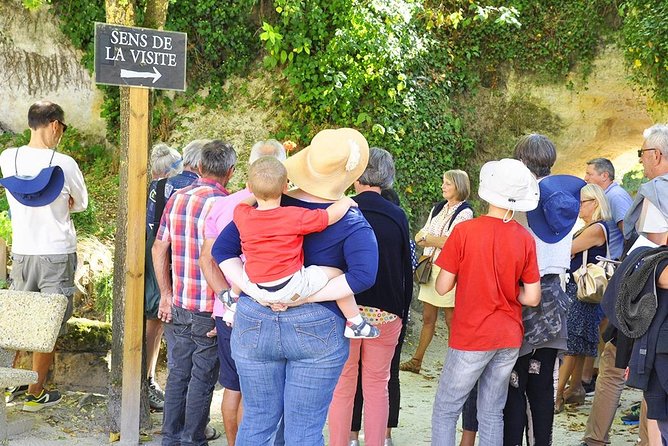
At $10.26 per person, this is a reasonably priced cultural visit. The ticket includes admission to the Cave Museum and the self-guided tour, with written information in 18 languages.
The value comes from the amount of site you can explore, not from a long list of added services. You are paying to enter a preserved underground village with two former farms, original domestic and agricultural objects, photographs, and access to a setting that is difficult to recreate elsewhere.
There is no food or drink included, and there is no English-language guided tour. Those omissions are not surprising at this price, but they matter if you are comparing the museum with a more structured excursion.
I would consider it especially good value if you are already visiting the area and want a focused stop lasting one to three hours. It is less suitable if you want a full-day activity with transportation, meals, or a guide speaking English throughout.
The high rating of 4.4 from 143 submitted ratings, along with a 90 percent recommendation rate, fits the experience described here. The strongest praise centers on the museum’s interesting content and immaculate presentation. That is the right reason to book it, rather than expecting entertainment or a theatrical performance.
Opening hours and practical planning
The museum’s opening schedule changes with the season:
- From February 1 through April 15, it is open Tuesday through Sunday from 10:00 a.m. to 5:00 p.m.
- From April 16 through September 15, it is open daily from 9:30 a.m. to 5:30 p.m.
- From September 16 through November 20, it is open Tuesday through Sunday from 10:00 a.m. to 5:00 p.m.
Check the date carefully when planning a visit. Monday access is available during the April 16 to September 15 period, but the museum is closed Mondays during the other listed periods.
The attraction is booked about 16 days ahead on average. That does not mean you must reserve that far in advance, but it gives you a useful planning guide if your schedule is fixed.
Confirmation is received at booking. The ticket has free cancellation up to 24 hours before the experience start time. Cancellations made less than 24 hours ahead are not refunded, and late changes are not accepted. The cut-off follows local time.
Access, children, and comfort
The visit is suitable for most people, and strollers can access the site. The underground chapel is the exception, since strollers cannot enter that area.
Service animals are allowed. The available information does not provide a full description of every surface or route, so anyone with specific mobility needs should confirm details before booking.
The self-guided format is useful for families. You can pause, explain objects in simple terms, or move along when younger children lose interest. The underground setting itself may be the main attraction for children, but the cooler temperature is another reason to pack an extra layer.
I would also keep the visit flexible rather than scheduling it between tight connections. The museum can take an hour, but it can also hold your attention for three. Giving yourself room makes it easier to appreciate the exhibits instead of racing through them.
Who will enjoy Rochemenier most?
I would recommend this experience to you if you enjoy:
- Historic homes and unusual architecture
- Rural French traditions
- Small museums with original objects
- Geology connected to human settlement
- Self-guided visits
- Family outings that combine learning with visual discovery
It is also a good choice if you have already seen France’s major castles and churches and want something more local and practical. Rochemenier shows how ordinary people made a home from the materials around them.
You may want to skip it if you strongly prefer guided interpretation in English. The leaflet helps, but it is not the same as asking questions or hearing a guide explain the site room by room.
You should also think carefully if underground spaces make you uncomfortable. The attraction is built around life below ground, so there is no easy way to avoid that central feature.
Should you book the Cave Museum Village Troglodyte of Rochemenier?
Book it if you want a calm, unusual history stop with real domestic detail. For $10.26, you get access to two preserved farms inside a much larger troglodyte village, plus furniture, tools, photographs, and an 18-language leaflet.
I especially recommend it for independent visitors who like to set their own pace. Bring a sweater, allow one to three hours, and do not expect an English-speaking guide. If those conditions suit you, Rochemenier offers a thoughtful look at French rural life that feels grounded in the homes and objects of the people who lived there.
FAQ
How long does the Rochemenier Cave Museum visit take?
The visit takes approximately one to three hours, depending on how much time you spend reading the leaflet and examining the rooms, furniture, tools, and photographs.
Is the tour available in English?
The self-guided tour includes an explanatory leaflet available in 18 languages. A guided visit is available at a specific time, but it is offered in French only.
What does the admission ticket include?
The ticket includes admission to the Cave Museum and the self-guided visit with the multilingual explanatory leaflet.
Are food and drinks included?
No. Food and drinks are not included in the admission ticket.
Can I bring a stroller?
Strollers can access the site, but the underground chapel is not accessible to strollers.
What are the opening hours?
From February 1 through April 15, the museum is open Tuesday through Sunday from 10:00 a.m. to 5:00 p.m. From April 16 through September 15, it is open daily from 9:30 a.m. to 5:30 p.m. From September 16 through November 20, it is open Tuesday through Sunday from 10:00 a.m. to 5:00 p.m.
Recently added in France
- Mt St. Michel Private Tour with Abbey tickets and tour guide★ 5.0 · 45 reviews
- Mont-St-Michel: Private Walking Tour “Abbey Ticket Included”★ 5.0 · 28 reviews
- Normandy Victory Museum admission ticket★ 5.0 · 58 reviews
- Private Guided Tour in WW2 Jeep of the Landing Beaches★ 5.0 · 110 reviews
- The Urban Hike of Marseille★ 5.0 · 35 reviews
- Airborne Museum Admission Ticket★ 5.0 · 424 reviews
- From Cherbourg: D-Day Beaches Shore Excursion★ 5.0 · 28 reviews
- Surf school Soonline Moliets★ 4.5 · 27 reviews
Museums, compared.


Louvre Museum Masterpieces Guided Tour with Access
Read our review →
Louvre Museum Entry Ticket With Host and River Cruise
Read our review →
Les Invalides: Napoleon’s Tomb & Army Museum Entry
Read our review →
Louvre Museum – Exclusive Guided Tour (Entry Included)
Read our review →
Louvre Museum Hosted Entry and Mona Lisa Audioguide
Read our review →
Louvre Museum Tour Mona Lisa & Iconic Masterpieces
Read our review →
Browse the lists this tour appears in