
REVIEW · COOKING CLASSES
Paris Cooking Class: Learn How to Make Macarons
Macarons are harder than they look. This three-hour Paris baking class turns a famous French treat into a hands-on lesson, with step-by-step help from a pastry chef and a generous box of your finished macarons to take home. You meet at Le Foodist in the Latin Quarter at 3 p.m., work with real kitchen equipment, and finish with tea or coffee.
I like the small advertised group size of four, which gives you room to ask questions and get help with tricky steps. I also like that you make the meringue shells and buttercream filling yourself, rather than simply decorating pastries prepared in advance. The main drawback is the price: at $156 per person, this is not a cheap afternoon activity, and macarons are sweet enough that some people may prefer a broader French cooking class.
The class has earned a 5 out of 5 rating from 634 reviews, with 99 percent of customers recommending it. That strong record makes sense. The best instructors, including Stéphane, Stephane, Luc, Paulo, Fanny, Fannie, Florence, Ann, and Stefan, are praised for patience, humor, clear explanations, and personal help.
In This Review
- Key points to know before booking
- Why macarons make a good Paris cooking class
- Arriving at Le Foodist in the Latin Quarter
- Making the meringue macaron shells
- Piping the shells and preparing buttercream
- The tea, coffee, and tasting at the end
- How much value do you get for $156?
- Who will enjoy this class most?
- Booking, timing, and cancellation details
- Should you book the Paris macaron class?
- FAQ
- Where does the macaron class take place?
- What time does the class start?
- How long does the experience last?
- Is the class taught in English?
- How many people can attend?
- What do I make during the class?
- What is included in the price?
- Is there a minimum age?
- What is the cancellation policy?
Key points to know before booking
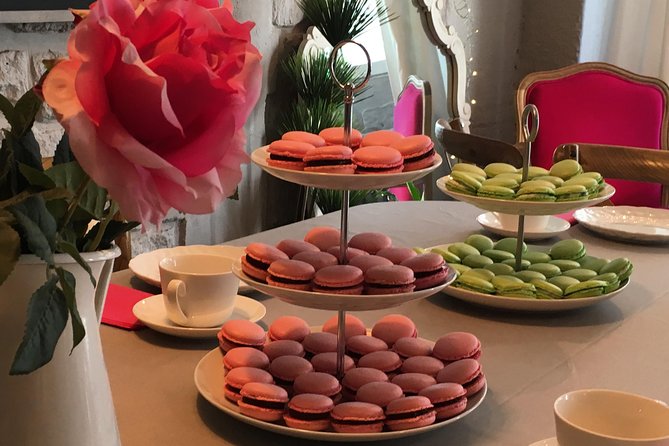
- You make macarons from scratch: The class covers meringue shells, piping, colors, and buttercream filling.
- You take home 20 to 30 macarons: That is enough to share, save, or eat during the rest of your Paris stay.
- The class is taught in English: You do not need to follow a French-language lesson.
- Tea and coffee close the session: Your finished pastries are sampled in a relaxed tasting.
- The class is designed for hands-on learning: You use the supplied equipment and attire instead of watching a demonstration from the sidelines.
- The advertised maximum is four people: Some individual class accounts describe groups of six or eight working in pairs, so group size may vary by session or booking format.
Why macarons make a good Paris cooking class
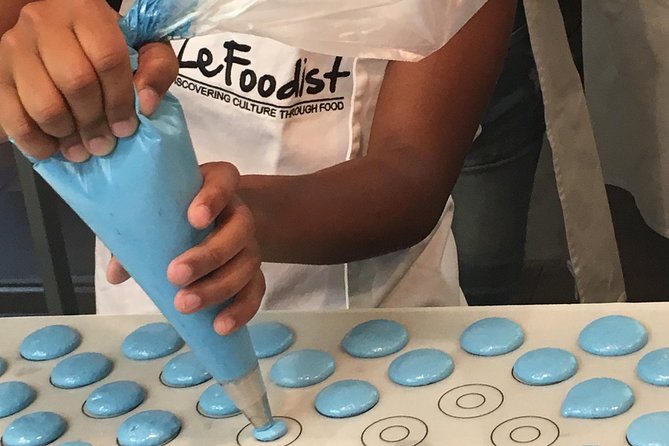
Macarons are a useful choice for a short cooking lesson because they require more than mixing ingredients and putting a tray in the oven. The shells depend on a well-prepared meringue, careful folding, steady piping, and proper baking. The filling needs its own attention, too.
That gives you several moments where technique matters. You learn how to create the shells, choose their colors, pipe them into shape, and fill them with buttercream. A good instructor can show you what to watch for before small mistakes become a tray of cracked, lopsided, or hollow cookies.
I also like the cultural side of the class. While you taste the finished pastries, your host talks about the macaron’s place in French culture and tradition. It is not a full history lesson, but it gives the dessert a proper Paris setting instead of treating it as just another sweet snack.
The activity also offers a welcome break from museums, monuments, and long walks. You spend the afternoon indoors, doing something social and creative. If your Paris schedule is full of sightseeing, three hours at a worktable can be a pleasant change of pace.
More hands-on sessions in Paris:
- Fragonard Paris: Mini Perfume Workshop
★ 4.5 · 1,924 reviews - Paris Cooking Class and Lunch with Wine plus Market Visit Option
★ 5.0 · 1,024 reviews - Paris Croissant Small-Group Baking Class with a Chef
★ 5.0 · 910 reviews
Arriving at Le Foodist in the Latin Quarter
The meeting point is Le Foodist at 59 Rue du Cardinal Lemoine in the 5th arrondissement. The school is near public transportation, so you can reach it without making a special expedition across Paris. Your scheduled start time is 3 p.m., and you should plan to arrive with enough time to find the cookery school calmly.
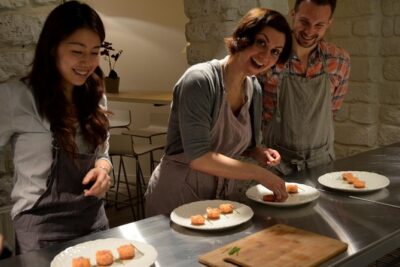
The class begins with a welcome drink. This small touch matters because it lets you meet the instructor and the other students before the technical work starts. Several people have taken the class alone and found it easy to connect with the group, while mother and daughter pairs and families have also enjoyed the format.
The school itself is described as attractive and easy to reach. You should not expect a grand sightseeing stop here. The value is in the kitchen, the instruction, and the chance to work directly with the ingredients.
The supplied equipment and required attire are included, so you do not need to pack anything special. The class is offered in English, which makes the technical instructions easier to follow, especially when timing and texture are important.
Making the meringue macaron shells
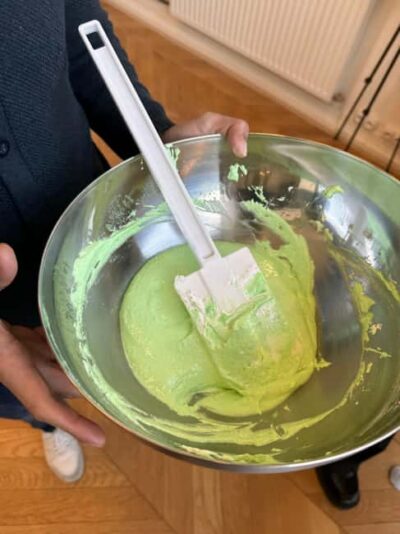
The most useful part of the afternoon is the shell-making stage. Your instructor walks you through the process step by step, explaining how to make the meringue and how to handle the mixture before piping.
This is where the class earns its keep. Macarons have a reputation for being fussy, and the reputation is deserved. The mixture needs the right consistency. If it is too stiff, the shells may not spread properly. If it is too loose, they can lose their shape. The class gives you a chance to see the correct texture and ask for help as you work.
You choose the colors for your shells, adding a personal touch without turning the class into a complicated design workshop. The finished pastries will not all look identical, and that is part of the fun. One especially useful lesson from the class is that attractive macarons do not require every shell to be perfect.
The instructors receive particularly strong praise for making the process manageable. Stéphane is described as patient, entertaining, and generous with practical tips. Luc is praised for giving students independence while stepping in before anyone felt lost. Paulo is noted for his patience, while Fanny is remembered for combining instruction with humor.
Those details point to an important advantage: you are not simply handed a recipe and left alone. You get real-time help. That is valuable for a first attempt, and it can give you enough confidence to try the recipe at home.
Piping the shells and preparing buttercream
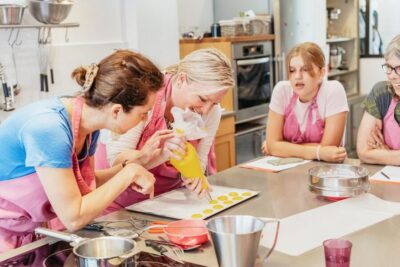
Once the meringue is ready, you practice piping the shells. This is a simple motion to describe but a difficult one to master. You need even pressure, consistent sizes, and enough control to create matching halves.
The instructor demonstrates the method and helps students at different skill levels. You may produce some uneven shapes, especially on a first attempt, but the finished macarons can still be attractive and delicious. The class is not about producing a factory-perfect box. It is about learning why the pastry behaves as it does.
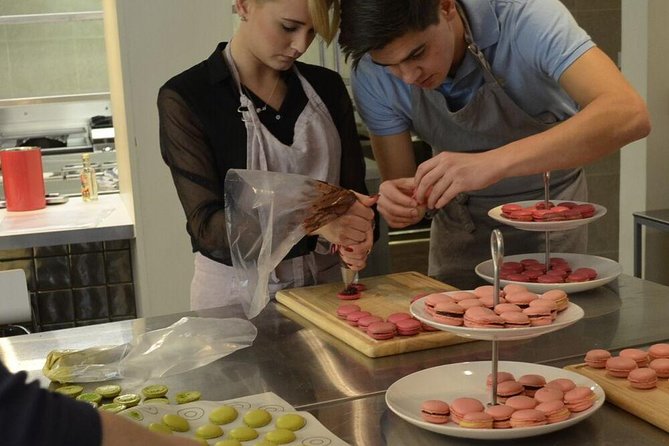
The buttercream filling comes next. You learn how to pipe the filling onto one shell and sandwich it with another. This is the stage when the macarons begin to look like the familiar French pastry you see in Paris bakeries.
The class is hands-on from start to finish. That means you should expect to participate rather than simply watch the chef work. If you enjoy baking, that active format is a major plus. If you prefer a relaxed demonstration with little personal involvement, the class may feel more demanding than expected.
During pauses for mixing and baking, the instructor may talk about professional pastry work, French food, and life in France. Stéphane, in particular, is praised for sharing his restaurant experience and offering restaurant, shop, and food recommendations around Paris. In one case, he even helped arrange a restaurant reservation.
That extra conversation is not guaranteed as a formal part of the program, but it shows how the best sessions can become more than a recipe lesson. You may leave with ideas for where to eat and shop after class, along with the macarons themselves.
More cooking classes in Paris:
- Paris: French Croissant Baking Class with a Chef
★ 4.9 · 712 reviews - Paris Evening Cooking Class French Dinner and Market Visit Option
★ 5.0 · 430 reviews - Paris: Macaron Baking Class for Families and Kids
★ 4.7 · 270 reviews - Paris: Macaron Baking Class in Central Paris
★ 5.0 · 208 reviews
The tea, coffee, and tasting at the end
When the baking and assembly are finished, you sit down with tea or coffee and sample your work. This closing tasting gives the three-hour class a pleasant rhythm. You have worked with your hands, waited through the baking stage, and then get to judge the results.
The tasting also gives you a chance to try different flavors if the class has prepared more than one variety. One class account describes students being paired up and making different flavors, then tasting the set together. The exact setup can vary, so do not assume every session will use the same number of flavors.
The macarons are naturally sweet. One person found them too sweet, though still tasty. That is not a flaw in the class so much as a matter of taste. If you already know that French macarons are not your favorite dessert, the activity may be more interesting for its technique than for the final snack.
The box of 20 to 30 macarons is a strong part of the value. You get to eat some during the tasting and carry the rest away. Several families found they had more than enough to share, and some people were excited to use the recipe again at home.
Pack the box carefully. One person reported that the box did not protect the macarons well during a checked flight. You should keep them in your carry-on rather than placing them in checked luggage. Better yet, enjoy a few during your stay in Paris.
How much value do you get for $156?
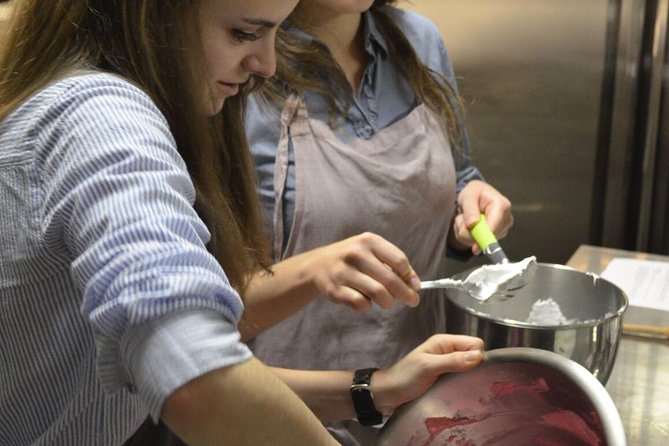
At $156 per person, the class costs more than a casual pastry stop, but it offers much more than buying macarons at a shop. You receive roughly three hours of instruction, a welcome drink, use of kitchen equipment and attire, tea or coffee, and 20 to 30 macarons.
The real value depends on how much you want to participate. If you only want to taste French pastries, spend less at a bakery. If you want to understand the technique, make the pastry yourself, and take home a substantial quantity, the price becomes easier to justify.
The group size is central to that calculation. The official format says a maximum of four people, which should allow for close help at the worktable. However, some class accounts describe six or eight participants working in pairs. That may reflect different sessions or booking arrangements. If individual attention is your main reason for booking, confirm the group setup for your chosen date.
The instructors are another reason the price may work for you. The class is repeatedly praised for patient teaching, clear directions, humor, and support for both adults and teenagers. The strongest sessions seem to create a friendly balance of social time and practical instruction.
Who will enjoy this class most?
I would recommend the class to:
- Pastry fans who want to learn a technique rather than simply eat dessert
- Parents and teenagers aged 12 and older
- Couples, friends, and mother and daughter pairs
- Solo visitors who enjoy meeting people through a shared activity
- Anyone who wants a slower afternoon away from major sights
- Home bakers hoping to make macarons after returning home
The minimum age is 12, and unaccompanied children are not accepted. Families should plan for an adult to attend with younger participants.
The class is also listed as suitable for people with gluten allergies. You should still communicate any dietary concern when booking, since allergy handling can depend on the exact setup and ingredients used that day.
You may want to skip it if you dislike sweet desserts, dislike careful baking work, or want a broad introduction to French cooking. This is a focused macaron lesson, not a tour of several French dishes.
Booking, timing, and cancellation details
The class starts at 3 p.m. and lasts about three hours. It ends back at the Le Foodist meeting point, so you can plan dinner afterward without arranging a separate return transfer.
The experience is offered in English and uses a mobile ticket. Confirmation is provided when you book. It is often reserved well ahead, with an average booking time of 57 days, so you should not wait until the last minute if your Paris dates are fixed.
You can cancel for a full refund up to six full days before the local start time. A cancellation two to six full days ahead receives a 50 percent refund. Cancellations made less than two full days before the start receive no refund, and late changes are not accepted.
The class requires a minimum number of participants. If that minimum is not met and the activity is canceled, you will be offered another date or experience, or receive a full refund.
Should you book the Paris macaron class?
Book it if you want a personal, practical food experience and like the idea of leaving Paris with a box of pastries you made yourself. The hands-on format, English instruction, capable chefs, and final tea or coffee tasting make this more satisfying than a quick bakery visit.
I would especially choose it for a parent and teenager, a couple who enjoys cooking, or a solo visitor looking for an easy way to meet people. The $156 price is fair only if you value the lesson and the quantity of macarons, not just the food.
Skip it if you want a cheaper tasting, a larger meal, or a wider-ranging cooking class. Also confirm the expected group size if the advertised four-person maximum is important to you. For pastry lovers, though, this is a thoughtful way to spend an afternoon in Paris and a good chance to learn a skill that you can attempt again at home.
FAQ
Where does the macaron class take place?
The class takes place at Le Foodist, 59 Rue du Cardinal Lemoine, 75005 Paris, France.
What time does the class start?
The scheduled start time is 3 p.m.
How long does the experience last?
The class lasts approximately three hours.
Is the class taught in English?
Yes. The experience is offered in English.
How many people can attend?
The advertised maximum is four participants. Some individual class accounts describe groups of six or eight working in pairs, so the exact setup may vary by session or booking format.
What do I make during the class?
You make meringue macaron shells, choose their colors, and pipe buttercream filling.
What is included in the price?
The experience includes a welcome drink, required equipment and attire, tea or coffee, and a box of approximately 20 to 30 macarons to take home. An advanced macarons class is included only if you select that option.
Is there a minimum age?
Yes. The minimum age is 12, and children cannot attend unaccompanied.
What is the cancellation policy?
You can receive a full refund if you cancel at least six full days before the start time. Cancellations two to six full days ahead receive a 50 percent refund. Cancellations less than two full days before the start time are not refunded.
Recently added in Paris
- Private Transfers in Paris★ 5.0 · 75 reviews
- CDG – Euro Disney – CDG Two Way Private Shuttle Transfer★ 5.0 · 233 reviews
- Disneyland® Paris 1 Day Ticket with Transport from Paris★ 3.5 · 302 reviews
- Personalized Transport service from Disneyland to Paris★ 5.0 · 63 reviews
- Monet’s Gardens & House-Private Giverny Tour From Paris★ 4.5 · 137 reviews
- Guided tour Monet’s house and gardens/small group★ 4.5 · 68 reviews
- Giverny Monet House and Gardens Skip the line Walking tour★ 4.0 · 217 reviews
- Monet’s House and Garden & Giverny Village★ 4.5 · 39 reviews
Cooking Classes, compared.
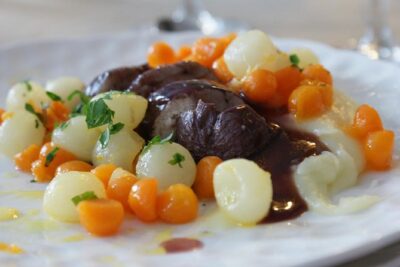
Paris Cooking Class and Lunch with Wine plus Market Visit Option
Read our review →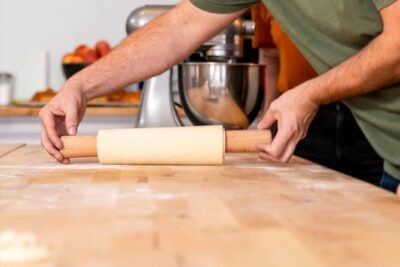
Paris Croissant Small-Group Baking Class with a Chef
Read our review →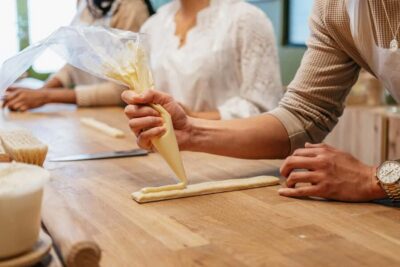
Paris Evening Cooking Class French Dinner and Market Visit Option
Read our review →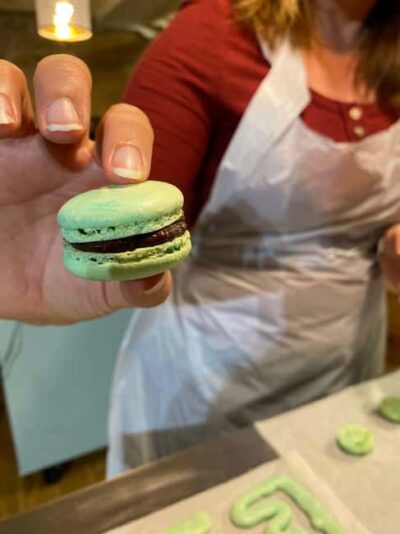
Macarons Cooking Class with Pâtisserie Chef Noémie
Read our review →Browse the lists this tour appears in