
REVIEW · COOKING CLASSES
Paris: Macarons Cooking Class with Pâtisserie Chef Noémie
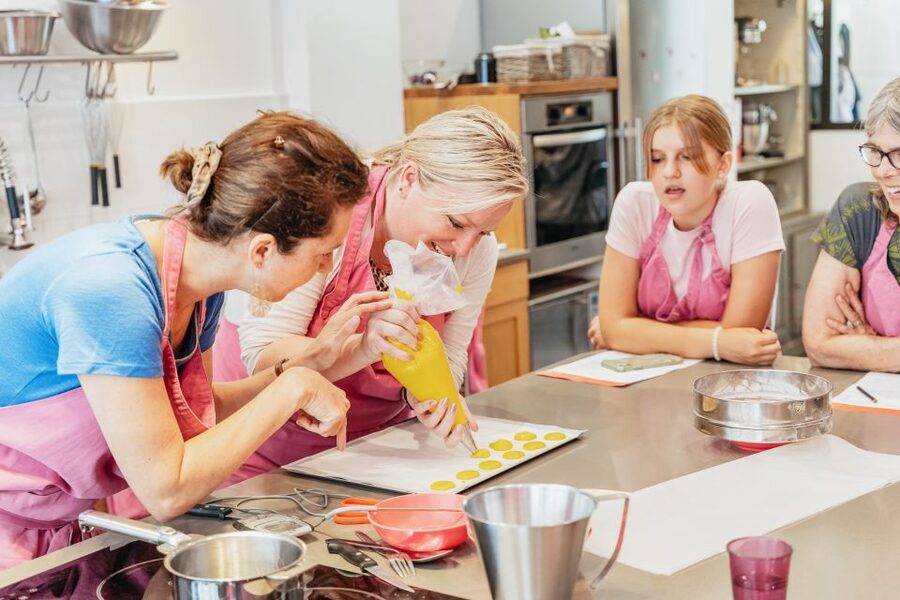
Macarons are harder than they look. This 150-minute Paris workshop turns a tricky French pastry into a friendly, hands-on lesson with Chef Noémie, a Lenôtre Culinary Institute graduate, in her small atelier on Rue Nollet. I especially like the small group of up to eight and the amount of personal guidance, plus the chance to choose flavors such as lemon, pistachio, chocolate, coffee, and salted butter caramel.
The bright, tidy studio keeps the class relaxed without feeling slapdash. You make two kinds of macarons, receive English recipes, and take your sweets home. One point to know: the class is collaborative, so you may not make an entire batch alone from start to finish. Some participants would prefer their own ingredients and equipment.
In This Review
- Key points to know before you book
- Why this macaron class works so well
- Arriving at the Rue Nollet atelier
- The first stage: learning what makes macarons difficult
- Piping, filling, and making two flavors
- Waiting for the oven, then tasting the results
- Chef Noémie’s teaching style
- What the $141 price includes
- Who should book this Paris baking experience?
- Timing, cancellation, and useful planning tips
- Should you book Chef Noémie’s macaron class?
- FAQ
- How long does the macaron class last?
- Where does the class meet?
- Is the class taught in English?
- How many people can join the class?
- What flavors can I make?
- What does the price include?
- Can I cancel the booking?
Key points to know before you book
- Chef Noémie leads the whole session: Her training at the Lenôtre Culinary Institute gives the class a professional base, while her teaching style stays warm, patient, and lighthearted.
- The group is capped at eight: That is small enough for questions, individual help, and real participation at the workstations.
- You make two macaron flavors: Choose from classic fillings including chocolate, lemon, salted butter caramel, coffee, pistachio, and walnuts.
- Children can take part: Families with children and teenagers have found the steps manageable and fun.
- You leave with more than a sugar rush: The class includes printed recipes in English, practical tips, and a box of macarons to enjoy later.
- The atelier is easy to locate: Go to the ground floor of 92 Rue Nollet. The entrance is to the left of the main entrance, and you do not need to enter the building.
Why this macaron class works so well
Paris has no shortage of pastry classes, but the appeal here is scale. You are not placed in a large demonstration room, watching a chef do all the important work while you nibble a sample. The group stays small, and the class is built around participation.
I like that the workshop welcomes beginners without treating experienced home bakers as children. Chef Noémie explains each stage clearly, then lets you handle the tools and ingredients. The practical focus matters with macarons, since small errors in measuring, mixing, piping, or baking can change the result.
The class also gives you a better sense of French pastry culture. You learn about the macaron as a classic French pâtisserie item while making it yourself, rather than simply buying a polished box from a shop. That connection between place, technique, and food makes the experience more memorable than a standard dessert tasting.
More hands-on sessions in Paris:
- Fragonard Paris: Mini Perfume Workshop
★ 4.5 · 1,924 reviews - Paris Cooking Class and Lunch with Wine plus Market Visit Option
★ 5.0 · 1,024 reviews - Paris Croissant Small-Group Baking Class with a Chef
★ 5.0 · 910 reviews
Arriving at the Rue Nollet atelier
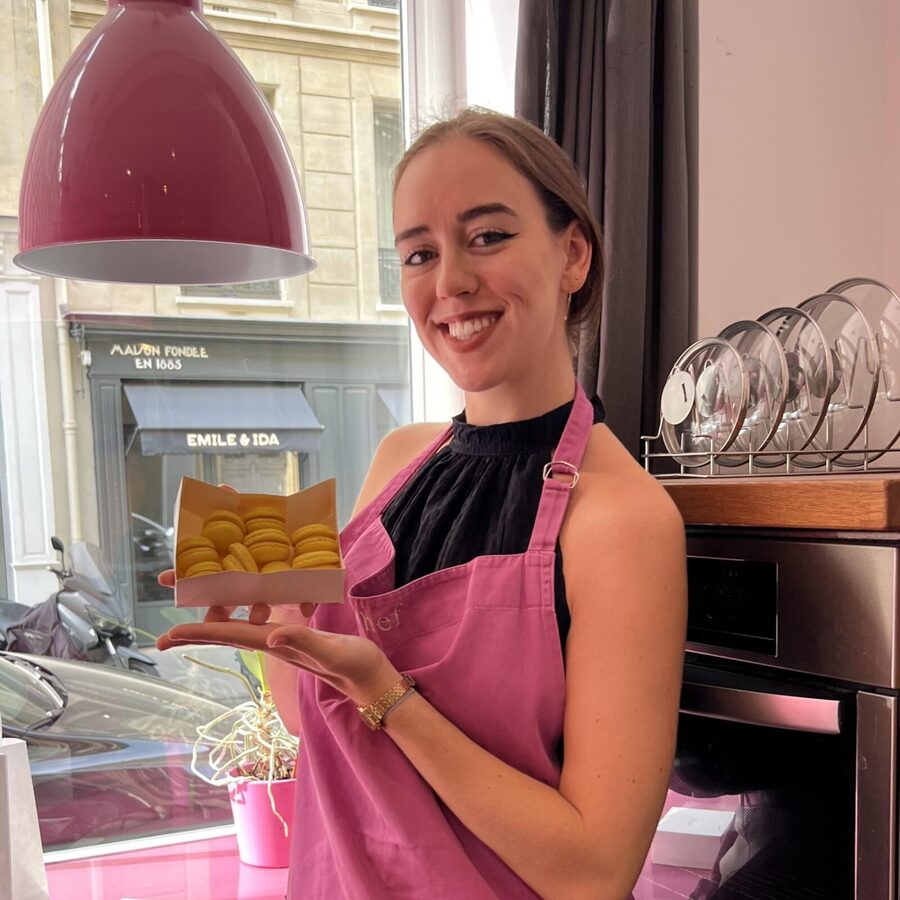
The meeting point is Noémie’s atelier at 92 Rue Nollet in the Ile-de-France region of Paris. The workshop takes place on the ground floor, with the entrance on the left side of the main entrance. You do not need to enter the residential building, which makes the arrival instructions fairly simple.
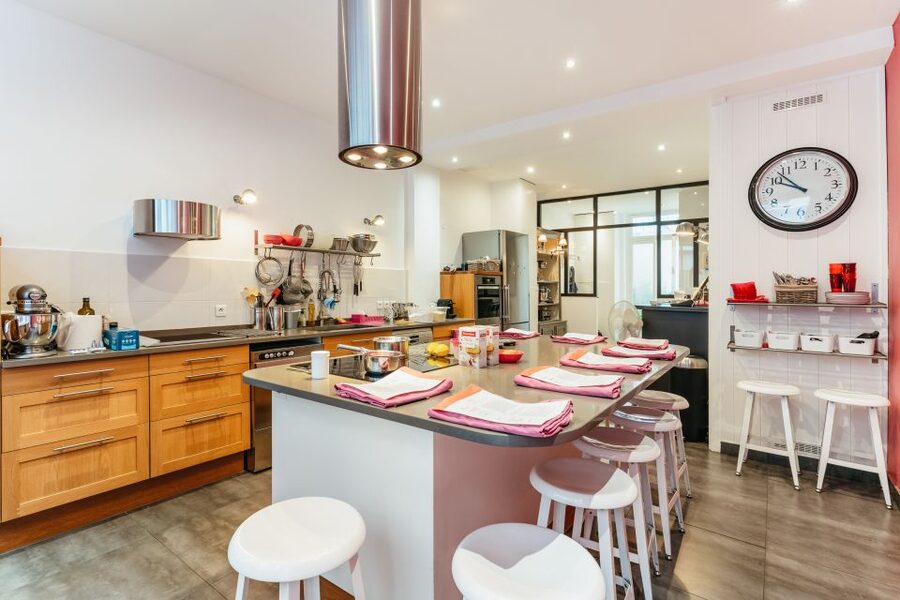
The studio has been described as bright, clean, and neatly arranged, with an immaculate stainless-steel and pink kitchen area. That sounds like a small detail, but it matters in a practical cooking class. You want enough room to work, clean utensils, and ingredients that are ready when you need them.
The atelier feels personal rather than institutional. That is a major part of the appeal, especially if you have already considered classes at larger cooking schools. The setting is functional, but the mood is informal. Chef Noémie’s humor helps keep the atmosphere easy when a piping bag or a bowl of batter refuses to cooperate.
The first stage: learning what makes macarons difficult
Macarons are made from simple ingredients, but the technique is unforgiving. The class breaks the process into clear steps, which helps you see where precision matters.
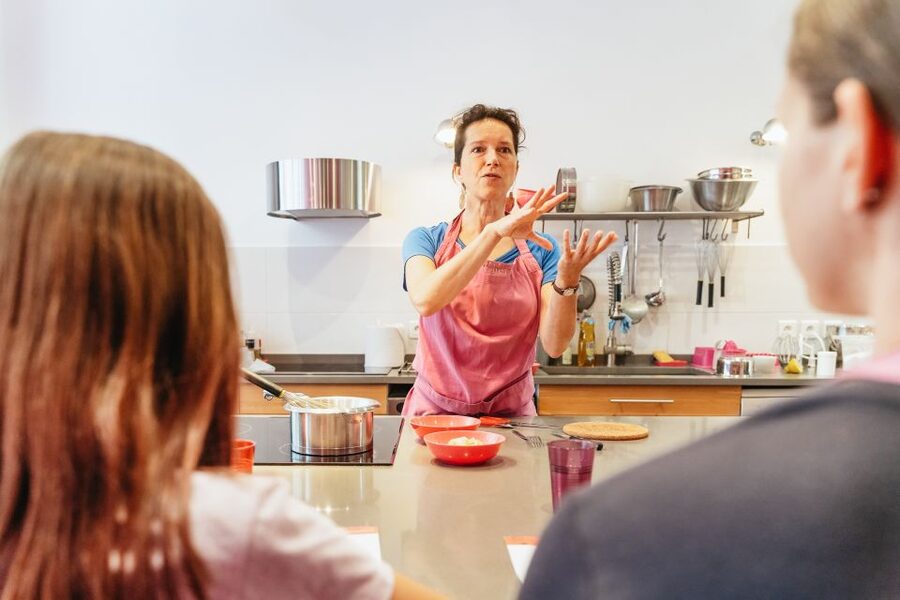
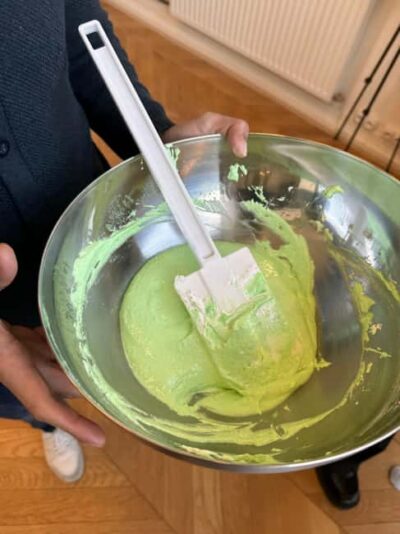
You work with the ingredients, utensils, and apron provided. The instructions cover the process from scratch, including the texture needed for the shells and the handling of the filling. You also get to see the correct consistency rather than relying only on a written recipe.
This visual lesson is one of the strongest reasons to book a class instead of learning from a cookbook. You can read that the mixture must reach a certain texture, but seeing it in front of you is far more useful. Several participants have left feeling confident enough to try the recipe at home, which is a good sign for beginners.
The weighing stage also deserves attention. One participant described making repeated mistakes while measuring ingredients, and Chef Noémie responded with patience rather than rushing the process. If you are nervous about baking, that kind of calm correction can make the class much more enjoyable.
Piping, filling, and making two flavors
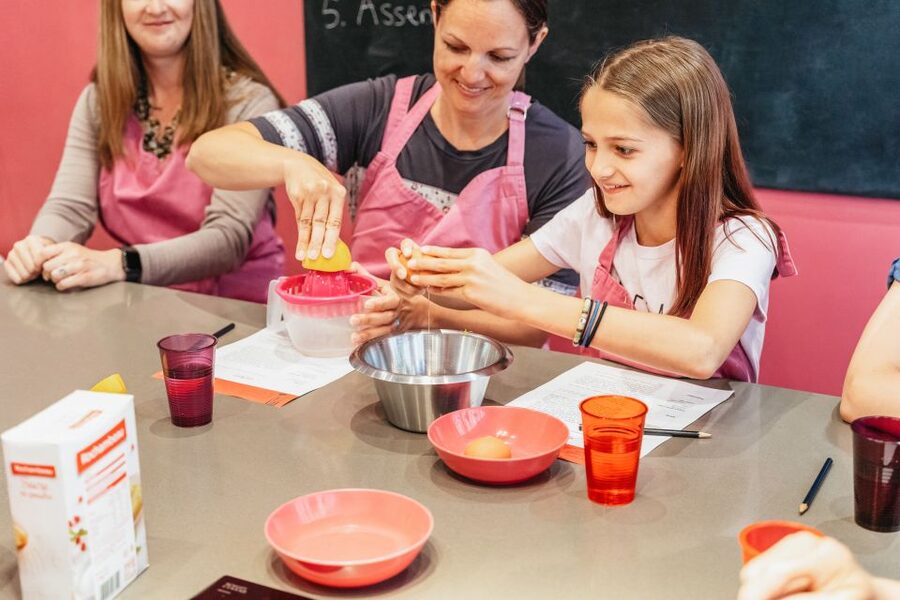
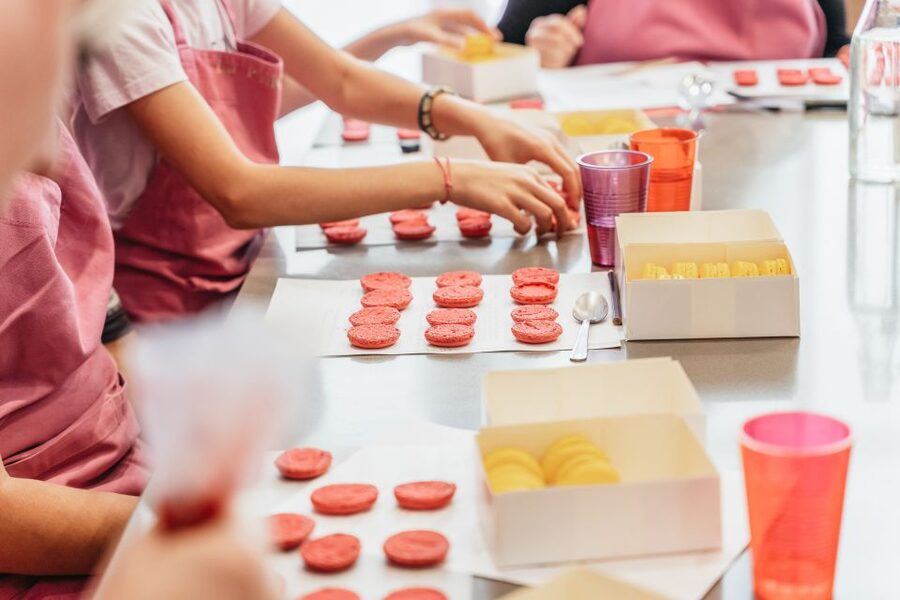
The hands-on work is the heart of the experience. You learn how to use a pastry bag, pipe the macaron shells, and work toward the smooth, even shapes associated with good macarons. You also get guidance on the fillings and how the finished pieces come together.
The plan is to create two distinct types of macarons. The available flavor choices include:
- Chocolate
- Lemon
- Salted butter caramel
- Coffee
- Pistachio
- Walnuts
The exact choices may depend on the session, so check the available options when booking or contact the provider if you have a serious allergy. One family member had a pistachio allergy, and Chef Noémie quickly changed the flavor to vanilla, which shows useful flexibility. Still, allergy needs are worth raising before the class rather than waiting until the ingredients are on the table.
Making two flavors gives you a helpful comparison. You can see how different fillings affect the finished pastry and choose the combination that suits your taste. Lemon and pistachio have been especially popular combinations, while chocolate and salted butter caramel offer a heavier, sweeter profile.
The class is not designed for each person to prepare a completely separate batch with individual ingredients and equipment. Instead, everyone takes part in different sections of the work. I see this as a reasonable tradeoff in a small shared kitchen, but it is important to understand before booking. If your main goal is to make a full batch entirely on your own, this may not meet your ideal.
More cooking classes in Paris:
- Paris: French Croissant Baking Class with a Chef
★ 4.9 · 712 reviews - Paris Cooking Class: Learn How to Make Macarons
★ 5.0 · 634 reviews - Paris Evening Cooking Class French Dinner and Market Visit Option
★ 5.0 · 430 reviews - Paris: Macaron Baking Class for Families and Kids
★ 4.7 · 270 reviews
Waiting for the oven, then tasting the results
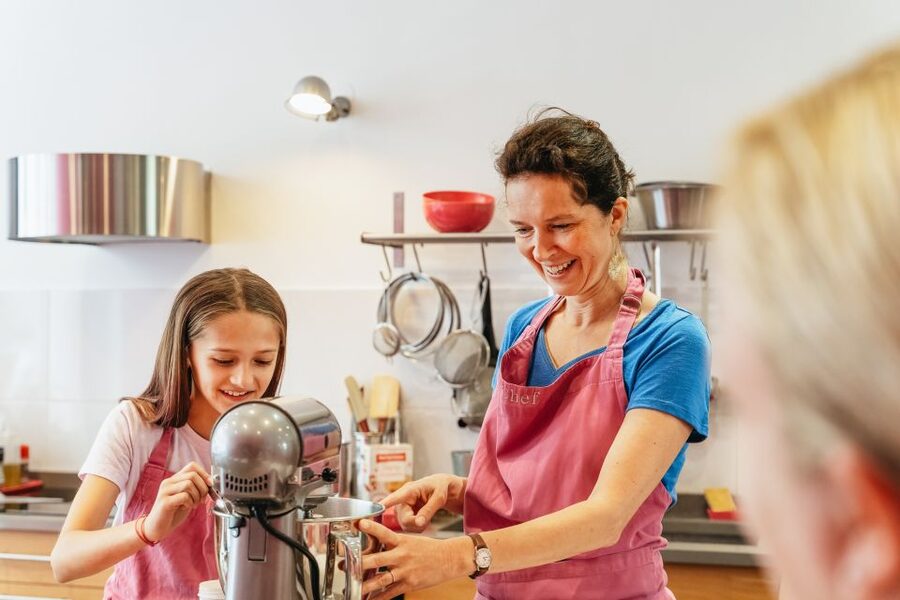
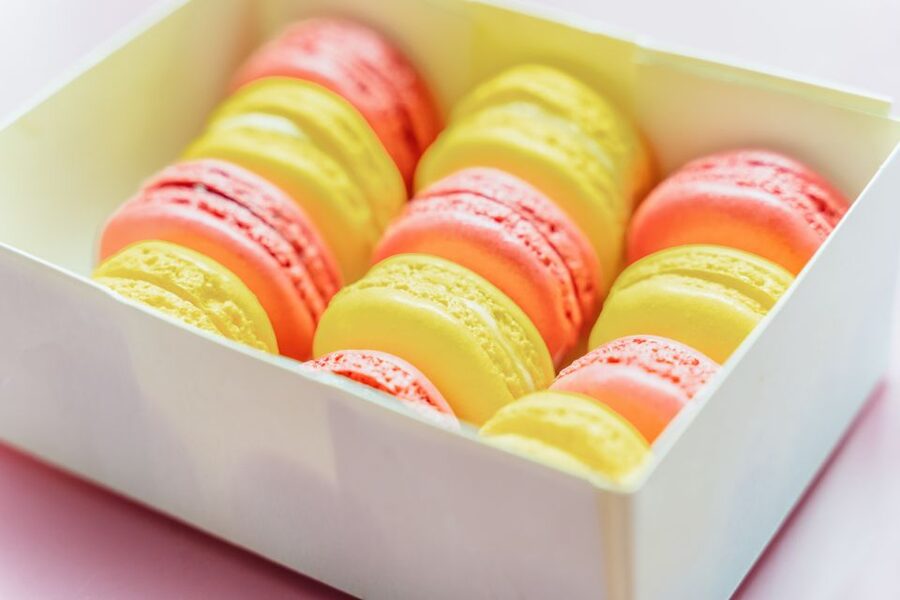
Once the macarons are prepared, baked, and filled, you get to taste the results. Fresh macarons are a reward after the careful measuring and piping, and the class gives you the chance to see how your work turned out before you leave Paris.
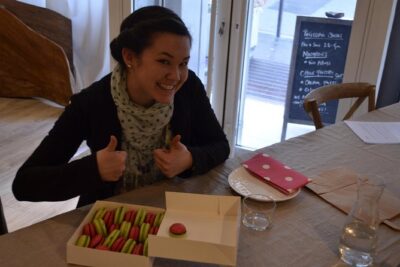
Participants have taken home boxes containing roughly a dozen or more macarons, with one group leaving with more than 20. The exact amount may vary, but you should expect to leave with a generous supply rather than one token sample. Pack them carefully if you plan to carry them around for the rest of the day.
The class ends with tea or coffee and time to chat with Chef Noémie. This quieter finish gives you a chance to ask about home baking, clarify a technique, or simply talk about French pâtisserie. It also keeps the experience from feeling like a rushed production line.
You receive an English-language copy of the recipes, so the value continues after your holiday. The printed instructions give you a starting point, while the demonstrations provide the visual clues that recipes often lack. One useful caution is that a past participant felt the written recipe should be updated to match some newer techniques. I would treat the recipe as a guide and add your own notes during the class.
Chef Noémie’s teaching style
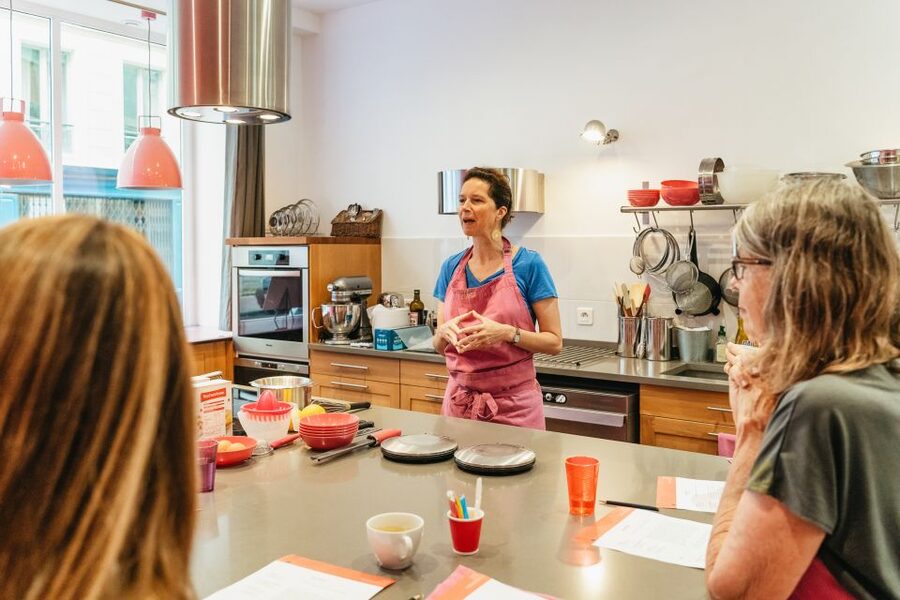
Chef Noémie is the main reason this class earns such strong praise. Her professional background is impressive, but her teaching manner is just as important. She is described as friendly, funny, patient, and clear, with a habit of involving everyone in the group.
That last point matters if you are booking as a family. Children around 11 and 12 have taken part successfully, and teenagers have enjoyed the class alongside adults. The hands-on format gives younger participants a real job to do rather than asking them to watch from the side.
The pace also seems well judged. You have enough time to understand each step, but the session does not drag. One participant with an individual class found that the 150 minutes passed quickly, helped by the steady work and the many small tips shared along the way.
If you are an experienced baker, you should still find useful details in the class. Macarons can expose weak spots even in a confident kitchen, especially when it comes to texture and piping. If you are a complete beginner, you get a supportive introduction without needing to arrive with specialist skills.
What the $141 price includes
At $141 per person, this is not a cheap snack stop. You are paying for a two-and-a-half-hour class, a trained pastry chef, ingredients, utensils, an apron, tea or coffee, recipes in English, and the macarons you make.
The value is strongest if you want an activity rather than simply a dessert. A box of macarons from a Paris shop costs less than the class, but it will not teach you how to reproduce them. Here, you leave with a skill, a recipe, practical corrections, and a story connected to your time in Paris.
The small group also supports the price. With no more than eight participants, you get a better chance to ask questions and handle the process directly. Larger classes may cost less, but they can leave you watching from the back while someone else does the tricky work.
For a family, the cost adds up quickly, so decide what you want from the outing. If your children are interested in baking and will genuinely participate, the class can be a memorable shared activity. If your group mainly wants to eat macarons, spend the money at a pâtisserie instead.
Who should book this Paris baking experience?
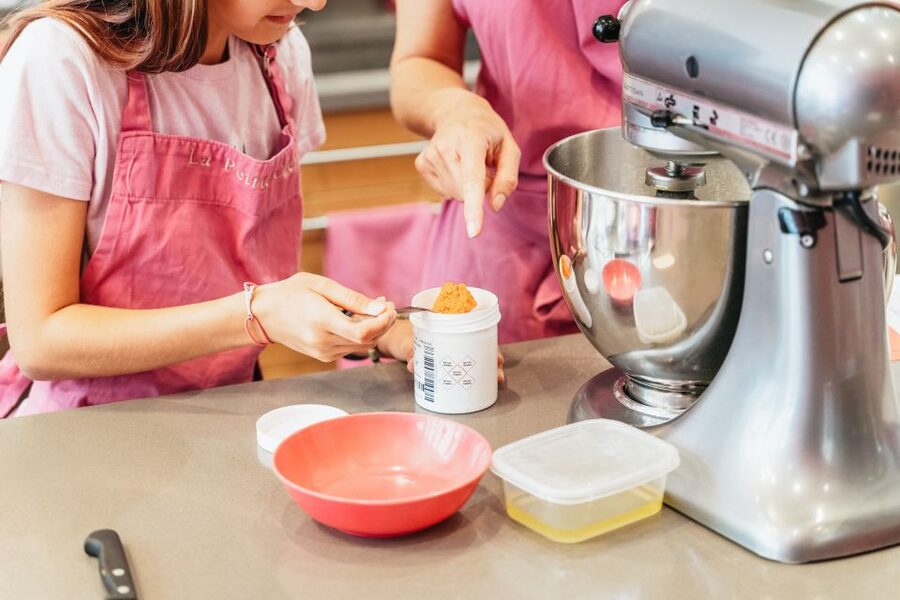
I would recommend this class to first-time macaron makers, home bakers who want to improve their technique, couples, families, and small groups of friends. It is also a good choice if you want a break from museums and monuments without leaving Paris behind.
The English-language instruction makes the class accessible to English speakers. The recipes are also printed in English, which helps if you want to practice the method at home after returning from France.
Families should note the positive experience of children and teenagers in past sessions. The chef makes an effort to include everyone, and the class is not limited to serious adult bakers.
This may be less suitable if you want a fully private class with every person making an independent batch. The experience is intimate, but it is still a shared small-group workshop. You will take part in the preparation, not necessarily control every single step.
Pets and smoking are not allowed. The ground-floor location may be useful for some visitors, but the available information does not provide full accessibility details, so ask the provider directly if you have specific mobility needs.
Timing, cancellation, and useful planning tips
The experience lasts 150 minutes, with starting times depending on availability. I would avoid scheduling it too close to a major timed attraction, since baking classes can run on a natural rhythm and you will want time to finish the tasting and conversation.
Free cancellation is available up to 24 hours before the class for a full refund. You can also reserve now and pay later, which helps if your Paris schedule is still changing.
Wear something comfortable for kitchen work and arrive with the meeting point details ready: 92 Rue Nollet, ground floor, entrance to the left of the main entrance. Since the atelier is small, arriving prepared should make the start calmer for you and the rest of the group.
If you have allergies, mention them before the session. The vanilla substitution for a participant with a pistachio allergy is encouraging, but advance notice gives the chef a better chance to plan safely.
Should you book Chef Noémie’s macaron class?
Yes, if you want to learn a real French pastry skill in a personal setting. The strongest features are the small group, Chef Noémie’s patient instruction, the two-flavor format, and the useful take-home recipes and techniques.
The main limitation is the shared nature of the work. You may not prepare a full batch entirely by yourself, and the printed recipe may not reflect every updated technique. Still, for most people, the chance to work directly with a trained pastry chef and leave with a box of macarons makes the $141 price reasonable.
Book it for the experience, not just the sweets. You will get both.
FAQ
How long does the macaron class last?
The class lasts 150 minutes, or two and a half hours.
Where does the class meet?
Meet at Noémie’s atelier at 92 Rue Nollet in Paris. It is on the ground floor, and the entrance is to the left of the main entrance. You do not need to enter the building.
Is the class taught in English?
Yes. The live instruction is in English, and you receive an English-language copy of the recipes.
How many people can join the class?
The class is limited to eight participants, making it a small-group workshop.
What flavors can I make?
Flavor choices include chocolate, lemon, salted butter caramel, coffee, pistachio, and walnuts. Options may vary by session.
What does the price include?
The $141 price includes the chef, cooking utensils, apron, ingredients, tea or coffee, English recipes, and the macarons made during the class.
Can I cancel the booking?
Yes. You can cancel up to 24 hours in advance for a full refund. A reserve-now, pay-later option is also available.
Recently added in Paris
- Private Transfers in Paris★ 5.0 · 75 reviews
- CDG – Euro Disney – CDG Two Way Private Shuttle Transfer★ 5.0 · 233 reviews
- Disneyland® Paris 1 Day Ticket with Transport from Paris★ 3.5 · 302 reviews
- Personalized Transport service from Disneyland to Paris★ 5.0 · 63 reviews
- Monet’s Gardens & House-Private Giverny Tour From Paris★ 4.5 · 137 reviews
- Guided tour Monet’s house and gardens/small group★ 4.5 · 68 reviews
- Giverny Monet House and Gardens Skip the line Walking tour★ 4.0 · 217 reviews
- Monet’s House and Garden & Giverny Village★ 4.5 · 39 reviews
Cooking Classes, compared.
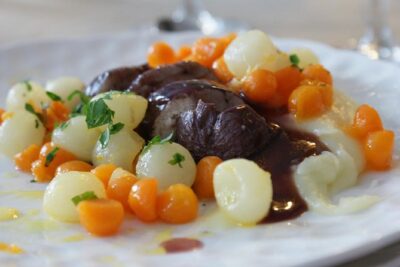
Paris Cooking Class and Lunch with Wine plus Market Visit Option
Read our review →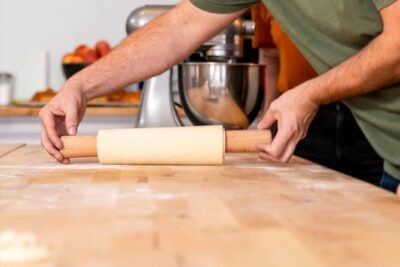
Paris Croissant Small-Group Baking Class with a Chef
Read our review →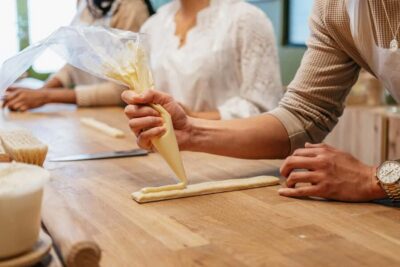
Paris Cooking Class: Learn How to Make Macarons
Read our review →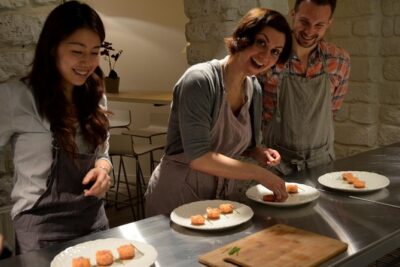
Paris Evening Cooking Class French Dinner and Market Visit Option
Read our review →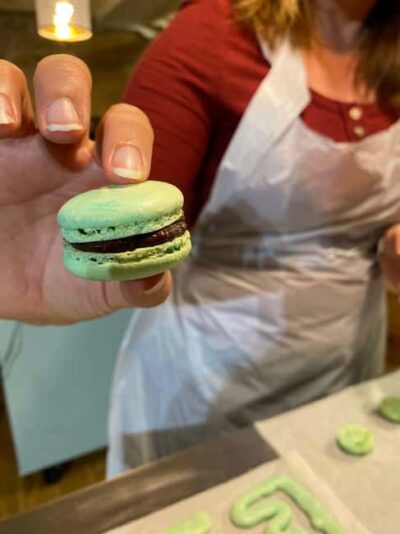
Browse the lists this tour appears in