
REVIEW · WINE TOURS
Chardonnay Masterclass – Wine tasting in Dijon
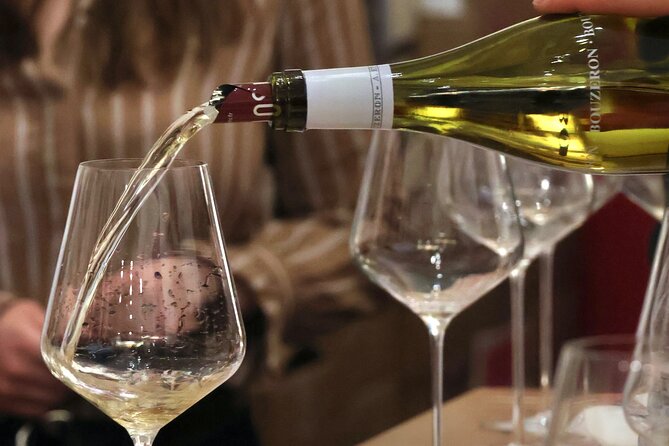
A small tasting can teach a big region. This Dijon Chardonnay masterclass gives you four Burgundy wines, a professional guide, and a brisk lesson on how village, Premier Cru, and Grand Cru labels fit together. I like the maximum group size of six, which keeps the session personal, and I like that the tasting reaches the top end of Burgundy classification rather than stopping with basic pours. The main caution is time: at about 45 minutes, this is an introduction, not a long wine seminar.
The setting is Les Clos Vivants, a wine shop at 1 Rue Musette in central Dijon, and the 4:00 pm start works well before dinner. I also appreciate the clear teaching style reported by past participants, especially from Adrien Tirelli and Mattéo, but you should know that the four tastes are modest pours designed for comparison and learning, not a full evening of wine drinking.
In This Review
- Key points to know before booking
- Starting at Les Clos Vivants in Dijon
- Four wines, arranged as a lesson
- Why Burgundy classification matters
- A guide-led class with a personal feel
- What the 45 minutes feel like
- How much tasting do you really get?
- Is $42.33 a fair price?
- Who will get the most from this class?
- Small drawbacks to keep in mind
- Booking, cancellation, and practical details
- Should you book the Chardonnay Masterclass?
- FAQ
- Where does the Chardonnay Masterclass take place?
- What time does the experience start?
- How long does the tasting last?
- How many wines are included?
- What does the class cover?
- Is the experience offered in English?
- What is the cancellation policy?
Key points to know before booking
- Four Burgundy wines in one short session: The tasting moves from village wine toward Premier Cru and Grand Cru examples, giving you a useful look at Burgundy’s ranking system.
- A lesson in terroir and classification: You learn how vineyard location, grape variety, history, and the famous Burgundy Climats shape the wines.
- Very small group: The experience accepts no more than six people, a real advantage if you want to ask questions.
- Professional wine instruction: The class is led by a member of the shop’s team and carries the Vignobles & Découvertes label for wine tourism services.
- A central Dijon meeting point: You meet and finish at Les Clos Vivants, Maître Caviste, 1 Rue Musette.
- Good value for serious Burgundy beginners: At $42.33 per person, the price makes more sense if the Premier Cru and Grand Cru pours matter to you.
Starting at Les Clos Vivants in Dijon
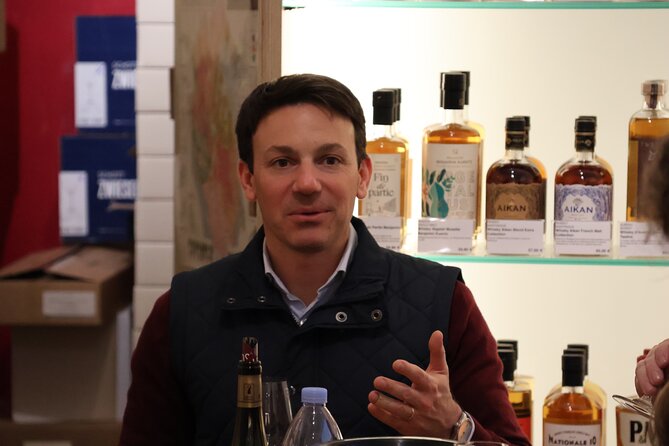
Your afternoon begins at 4:00 pm at Les Clos Vivants, Maître Caviste, located at 1 Rue Musette in Dijon. The activity ends at the same place, so you do not need to arrange a return transfer or find your way back from a vineyard outside the city.
That simple setup is part of the appeal. You are learning about Burgundy in a wine shop, in Dijon itself, rather than spending extra time on transport. If your schedule includes the city’s historic center, this fits neatly into an afternoon plan, followed by dinner nearby.
The booking includes a mobile ticket, and confirmation is sent at the time of booking. The experience is offered in English. Service animals are allowed, and the meeting point is near public transportation, which helps if you are not staying within easy walking distance.
The group limit is six people. That number matters more than it may sound. Wine questions are often personal and specific. You may want to ask why one wine tastes fuller, why a vineyard name matters, or how to describe a style you enjoy. In a group of six, there is a better chance of getting an answer than in a large tasting room.
More Food Tours in Burgundy
- Dijon: La Cave du Palais Burgundy Wine Tasting Experience
★ 4.8 · 400 reviews - Pinot Noir Masterclass – Wine tasting in Dijon
★ 5.0 · 147 reviews - Dijon: Cheese and Burgundy Wine Tasting Workshop
★ 4.8 · 122 reviews
Four wines, arranged as a lesson
The heart of the experience is a tasting of four Burgundy wines. The stated focus is Chardonnay, with the selection moving from village wine to Grand Cru. The point is not simply to sample four bottles. It is to compare wines within Burgundy’s classification system and understand why bottles from the same broad region can carry very different names and prices.
The class covers Burgundy’s vineyard classification, grape varieties, and history. You should expect the wines to act as examples for the explanation. A village-level wine gives you a starting point. A Premier Cru shows a higher classification. A Grand Cru offers the chance to taste a wine from the top tier, a bottle you may not normally order casually in a restaurant.
One useful detail is that the tasting includes Premier Cru and Grand Cru examples. That makes the fee easier to justify, particularly if you are curious about fine Burgundy but do not want to buy several expensive bottles yourself.
The class is not presented as a meal or a broad food-and-wine pairing. Lunch is not included, and the four alcoholic beverages are the central inclusion. Have lunch or a snack before you arrive if you need more than a light tasting. This is a focused wine lesson, not a replacement for dinner.
Why Burgundy classification matters
Burgundy can be confusing because its labels often focus on place rather than a large producer name or a simple grape label. Chardonnay is the grape, but the vineyard and village tell you much of what the bottle is meant to express.
This class helps put those names in order. You learn the difference between village wines, Premier Cru wines, and Grand Cru wines, along with the idea of Burgundy’s Climats. The term refers to precisely defined vineyard parcels, each with its own place, boundaries, and reputation. The Climats of Burgundy are recognized as World Heritage Sites, adding cultural importance to the wine lesson.
For a beginner, this is useful in a very practical way. After the tasting, you should have a better sense of what to look for on a Burgundy label and why two Chardonnays from nearby places may sell for very different prices. You are not just being asked to memorize French terms. You are given a framework for making sense of them.
The class also explains grape varieties and the history of the vineyard region. The published focus is Chardonnay, though the broader Burgundy context may lead into the region’s other important grape, Pinot Noir. One session response even suggested returning for a Pinot Noir class, so this experience is best understood as a Chardonnay-centered introduction rather than a complete survey of every Burgundy wine.
A guide-led class with a personal feel
The session is led by a professional member of the team. Adrien Tirelli is identified as the shop’s maître caviste and as an ambassador for the Climats of Burgundy. Mattéo has also led the masterclass and is praised for his energy and enthusiasm.
That matters because wine instruction can go wrong in two ways. It can become a dry lecture full of terms, or it can turn into vague talk about fruit and flowers without giving you useful facts. The strongest teaching here appears to sit between those extremes. You get concrete information about the region, plus guidance on how to taste.
The class has also been run bilingually when needed, accommodating an English speaker and French speakers in the same group. The official language offered is English, so you should book with that expectation, but the team has shown some flexibility in mixed-language settings.
A useful part of the teaching is the explanation of how to taste wine. Do not expect the guide to dictate one correct list of aromas for every glass. The approach leaves room for your own palate and experience. That is a sensible method for beginners, though it may feel less structured if you want precise tasting notes for every pour.
More Wine Tours in Burgundy
- Small-Group Full-Day Tour of Côte de Nuits, Côte de Beaune Vineyards and Beaune Historical District
★ 5.0 · 364 reviews - Half Day Tour of the Cote de Nuits Vineyards from Dijon
★ 5.0 · 108 reviews - Small group Burgundy tour of Beaune with Wine Tasting from Dijon
★ 4.5 · 85 reviews - Dijon: Bike tour and Tastings in the Vineyards of Burgundy
★ 3.9 · 47 reviews
What the 45 minutes feel like
The scheduled duration is approximately 45 minutes. That is enough time for a clear introduction and four comparisons, but you should arrive knowing that the pace will be brisk.
The likely flow is straightforward:
- You settle in at the Dijon wine shop.
- The guide introduces Burgundy, its grape varieties, vineyard structure, and classification.
- You taste four wines that move from village level toward the top of the classification.
- You compare the examples and learn basic tasting methods.
- You finish back at the same meeting point.
You may hear the session described as lasting close to an hour, but the official duration is about 45 minutes. Either way, this is a compact class. It works well for a first lesson, especially if you have other plans in Dijon. It will feel short if you already know Burgundy and want a detailed discussion of individual appellations, winemaking methods, or the full range of regional styles.
The limited time also explains a criticism you should take seriously. One participant felt the tasting was more of a taste and swallow than a full sensory analysis, with little time to identify each wine. That is a fair concern. Four wines in 45 minutes leaves limited room for slow comparison, note-taking, and extended questions.
How much tasting do you really get?
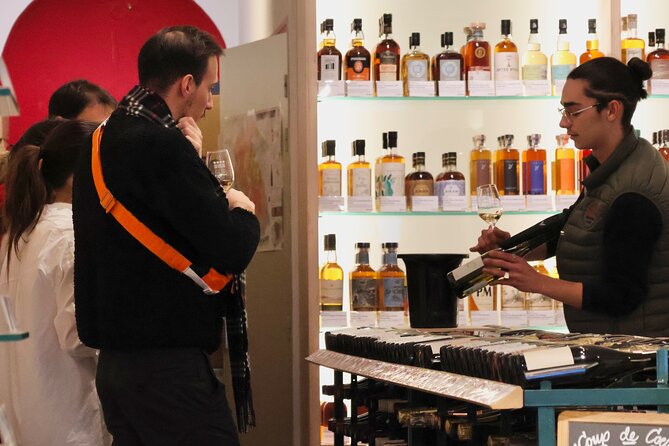
The word masterclass can suggest a lengthy seminar with generous pours. Here, you should read it as a guided introduction. The value lies in the explanation and the range of wines, not in the amount poured.
If you want to learn the basics of Burgundy, this format is efficient. You can compare several levels without committing to full bottles, and you can ask what kind of wine might suit your taste. If your goal is to spend an hour quietly studying aromas and finish, you may find the tasting too brief.
I especially like the decision to include higher-level wines. A Grand Cru taste gives you a reference point. You may not suddenly become an expert, but you can begin to understand what the classification promises and how a top-tier wine differs from a village example.
Still, do not expect the four glasses to reveal every distinction between Burgundy’s many villages. The session gives you a map, not every road. Use it to decide what you want to explore next, perhaps a specific village, a different producer, or a Pinot Noir tasting.
Is $42.33 a fair price?
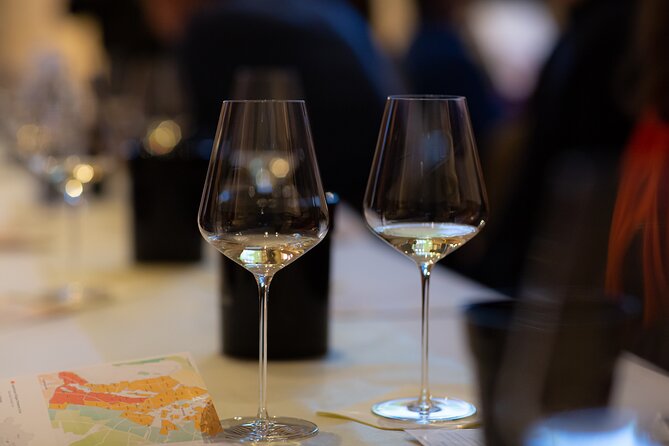
The cost is $42.33 per person. For a short tasting, that is not pocket change, especially when lunch is not included. The price makes the most sense if the class delivers what its format promises: instruction, four Burgundy wines, and access to Premier Cru and Grand Cru examples.
Buying comparable bottles yourself could cost far more, particularly at the upper end of Burgundy. The class lets you taste across classifications without paying for four bottles or guessing what to choose. You are also paying for the guide’s explanation, the shop setting, and the chance to ask questions in a very small group.
For a casual drinker who simply wants a glass of Chardonnay, the cost may feel high. A Dijon wine bar would likely offer a simpler and more relaxed experience. For someone trying to understand Burgundy labels and decide what styles to seek later, the price is easier to defend.
The strongest value comes from the comparison. If you treat the class as four isolated sips, it may seem expensive. If you use the wines to understand village, Premier Cru, and Grand Cru levels, the session gives you a useful reference that can improve future purchases.
Who will get the most from this class?
This is a good choice for you if you are new to Burgundy and want a clear starting point. You do not need a large vocabulary of wine terms. The teaching is designed to give you the basics, and the small group leaves room for questions.
It also suits people who already enjoy wine but feel lost when faced with Burgundy labels. You can learn how place and classification work, then use that information when ordering or shopping.
The experience may be less satisfying if you are an advanced Chardonnay student. The class does not promise a long technical session, a meal, or a wide selection of styles. You may want more detail about individual areas, including Chablis. One participant specifically hoped for more information about Chablis or a Chablis wine, but the session’s broader selection also introduced wines beyond that familiar favorite.
Because the group is capped at six, couples and solo visitors who prefer a quieter tasting should feel comfortable with the format. The 4:00 pm start is also handy for an afternoon activity before an evening meal.
Small drawbacks to keep in mind
The main weakness is the short duration. Burgundy has a lot of terminology, and 45 minutes can only cover the essentials. If the guide spends time answering questions, the formal material may move quickly.
The tasting itself may also feel light. The purpose is to teach comparison, not provide a long sequence of full glasses. You should not arrive expecting a leisurely wine flight.
There has been at least one scheduling mix-up in the past, when a class was registered for the wrong day and had to be arranged quickly. The shop handled that situation responsively, but it is still sensible to check your confirmation and arrive at the correct time.
Finally, the session may not match every palate or language need. English is offered, and bilingual teaching has been possible, but the official experience should be treated as an English-language class. The focus is Chardonnay and Burgundy classification, not a dedicated Chablis tasting or a full regional survey.
Booking, cancellation, and practical details
You can cancel for a full refund if you do so at least 24 hours before the 4:00 pm start time. Cancellations or changes made within 24 hours are not refunded or accepted, and the cut-off uses local time in Dijon.
The experience requires a minimum number of participants. If the provider cancels because that minimum is not met, you will be offered another date or experience, or you will receive a full refund.
You meet at Les Clos Vivants, Maître Caviste, 1 Rue Musette, 21000 Dijon, France, and finish there. The activity is near public transportation, accepts service animals, and is limited to a maximum of six people.
Should you book the Chardonnay Masterclass?
Book it if you want a compact, well-guided introduction to Burgundy and especially if the chance to taste Premier Cru and Grand Cru wines interests you. The small group, professional instruction, central Dijon location, and clear focus on classification give the $42.33 price a reasonable purpose.
Skip it if you want a long tasting, generous pours, lunch, or a dedicated Chablis session. You will get more from this class if you arrive curious about how Burgundy works, rather than expecting four wines to answer every question.
For most first-time Burgundy drinkers in Dijon, I would book it. It gives you a useful foundation, a few high-level reference points, and enough practical knowledge to make your next bottle choice less of a gamble.
FAQ
Where does the Chardonnay Masterclass take place?
It begins and ends at Les Clos Vivants, Maître Caviste, 1 Rue Musette, 21000 Dijon, France.
What time does the experience start?
The start time is 4:00 pm.
How long does the tasting last?
The listed duration is approximately 45 minutes.
How many wines are included?
Four Burgundy wines are included in the tasting.
What does the class cover?
The session covers Burgundy wines, vineyard classification from village level to Grand Cru, grape varieties, vineyard history, the region’s Climats, and basic wine-tasting guidance.
Is the experience offered in English?
Yes. English is an offered language. The class has also accommodated French speakers in a bilingual session.
What is the cancellation policy?
You can cancel at least 24 hours before the start time for a full refund. Cancellations and changes made less than 24 hours before the start are not accepted or refunded.
More Food Tours in Dijon
- Historic Center of Dijon : Discovery Tasting Wine Burgundy
★ 4.5 · 40 reviews - Paris: Seine Cruise & Crepe Tasting near the Eiffel Tower
★ 4.4 · 11,231 reviews - Authentic Parisian Gourmet Food Tour with 10 Local Dishes & Wines
★ 5.0 · 4,754 reviews - Normandy D-Day Small-Group Day Trip with Omaha Beach, Cemetery & Cider Tasting
★ 5.0 · 2,786 reviews
More Wine Tours in Dijon
- 🍷 Masterclass Pinot Noir – Wine tasting in Dijon 🇫🇷
★ 4.5 · 35 reviews - Côte de Beaune Half-Day Wine Tour from Dijon
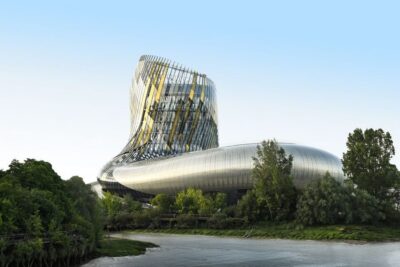
★ 4.7 · 32 reviews - Bordeaux: Cité du Vin Entry Ticket and Wine Tasting
★ 4.6 · 3,885 reviews - Montmartre Hill French Gourmet Food and Wine Tasting Walking Tour
★ 5.0 · 2,588 reviews
Recently added in Dijon
- Dijon with an Archaeologist: A Self-Guided Audio Tour★ 4.5 · 26 reviews
- Pinot Noir Masterclass – Wine tasting in Dijon★ 5.0 · 147 reviews
- Burgundy Wines Masterclass in Dijon★ 5.0 · 139 reviews
- Cheese and Wine Pairing 1-Hour Session in Dijon★ 5.0 · 34 reviews
- Small group Burgundy tour of Beaune with Wine Tasting from Dijon★ 4.5 · 85 reviews
- From Dijon: Full day the most of Burgundy with lunch★ 5.0 · 40 reviews
- Half Day Tour of the Cote de Nuits Vineyards from Dijon★ 5.0 · 108 reviews
- 🍷 Masterclass Pinot Noir – Wine tasting in Dijon 🇫🇷★ 4.5 · 35 reviews
Wine Tours, compared.
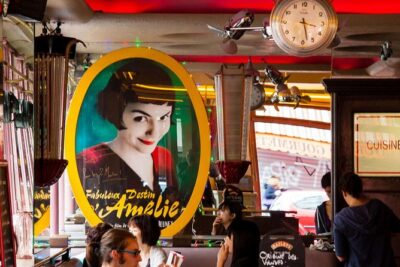
Montmartre Hill French Gourmet Food and Wine Tasting Walking Tour
Read our review →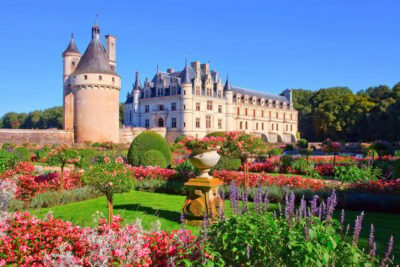
Loire Valley Castles Day Trip With Wine Tasting
Read our review →
Afternoon Saint-Emilion Wine Tasting & snack
Read our review →
Medoc or Saint Emilion Wine Tasting and Chateau from Bordeaux
Read our review →
Saint Emilion Day Trip with Sightseeing Tour & Wine Tastings from Bordeaux
Read our review →
Saint-Émilion: Grand Cru Classé Winery Visit and Tasting
Read our review →
Saint Emilion Half-Day Trip with Wine Tasting & Winery Visit from Bordeaux
Read our review →Browse the lists this tour appears in