
REVIEW · WINE TOURS
Pinot Noir Masterclass – Wine tasting in Dijon
Burgundy makes more sense one glass at a time. This compact Dijon tasting introduces you to four Burgundy wines, moving from the Village appellation up to Grand Cru, so you can compare the region’s system in a single sitting. I like the clear progression and the chance to learn from local wine specialists such as Mattéo, Emily, Adrien, and Pierre. I also like the small group size, capped at six people, which gives you room to ask questions.
The trade-off is the setting. This takes place at the back of a working wine shop on Rue Musette, not in a polished tasting lounge. Space can be tight, seating may be limited, and shop customers may pass through. If you expect a quiet hour at a table, adjust your expectations before you arrive.
In This Review
- Key points to know before booking
- Starting on Rue Musette in central Dijon
- The first lesson: how Burgundy names its wines
- Pinot Noir, terroir, and the Climats of Burgundy
- The four-glass tasting from Village to Grand Cru
- The guides make the short class work
- A wine shop, not a traditional tasting room
- Is $42.34 good value for the time?
- Who will get the most from this tasting?
- Booking, timing, and cancellation advice
- Should you book the Pinot Noir Masterclass?
- FAQ
- Where does the Pinot Noir Masterclass begin?
- What time does the tasting start?
- How long does the experience last?
- How many wines are included?
- Does the tasting include food?
- Is the tasting offered in English?
- What is the cancellation policy?
Key points to know before booking
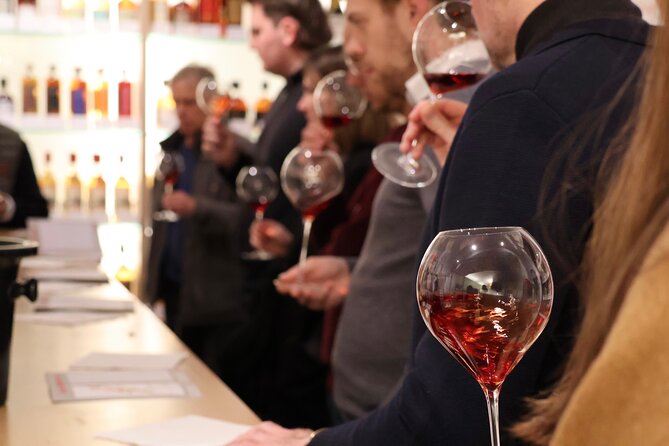
- Four levels of Burgundy in 45 minutes: Taste a Village wine, then examples from higher appellation levels, finishing with a Grand Cru.
- A useful first lesson in Pinot Noir: The session covers tasting technique, local geography, terroir, appellations, and the Climats of Burgundy.
- A very small group: No more than six people are accepted, making it easier to ask about unfamiliar wine terms.
- Held inside a Dijon wine shop: The setting feels local and practical, but it is cramped and may not offer a seat for everyone.
- Guides vary by date: Mattéo, Emily, Adrien, or Pierre may lead the class, and the strongest praise focuses on their clear, friendly teaching.
- Food is not included: The price covers four Burgundy wines only, so eat beforehand if you do not like tasting on an empty stomach.
Starting on Rue Musette in central Dijon
The tasting begins at 5:00 pm at 1 Bis Rue Musette, 21000 Dijon. This is a useful time for a wine lesson because it fits neatly after a day of sightseeing, though you should leave enough time to reach the shop without rushing.
You do not need to arrange a separate return journey. The session ends at the same place where it starts. The meeting point is near public transportation, which helps if you are staying outside the historic center or have spent the afternoon farther across Dijon.
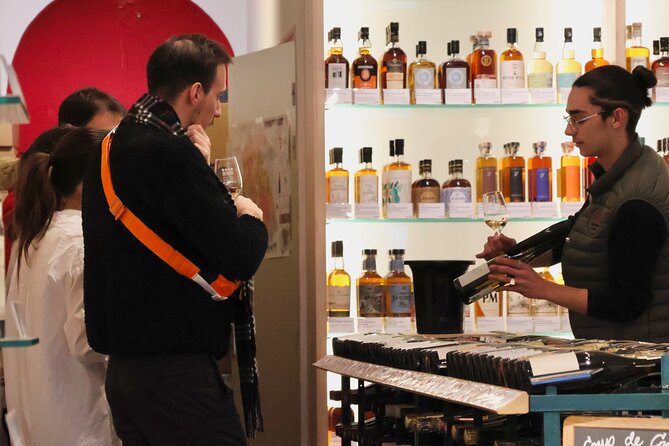
The wine shop matters here. You are not entering a grand château or a formal cellar. You are stepping into a place where Burgundy bottles are sold every day. That gives the class a direct connection to the region’s wine trade, but it also means the room is part of a working business.
The back area can feel close, especially when other customers come into the shop. Bottles may be stored around the tasting area, and you may find yourself standing for much of the session. Chairs have been provided on some occasions, but I would not book this expecting guaranteed lounge-style comfort.
More Food Tours in Burgundy
- Dijon: La Cave du Palais Burgundy Wine Tasting Experience
★ 4.8 · 400 reviews - Dijon: Cheese and Burgundy Wine Tasting Workshop
★ 4.8 · 122 reviews - Chardonnay Masterclass – Wine tasting in Dijon
★ 5.0 · 91 reviews
The first lesson: how Burgundy names its wines
The most useful feature is the order of the tasting. Instead of drinking four unrelated Pinot Noirs, you compare wines across Burgundy’s four broad quality levels.
The progression begins with a Village appellation. This wine represents a named village area, giving you a starting point for understanding local style without jumping straight to the most expensive bottle. From there, the class moves through higher classifications before reaching Grand Cru.
This matters because Burgundy labels can confuse first-time drinkers. The name on the bottle may refer to a broad regional area, a village, a premier vineyard, or one of the region’s top Grand Cru sites. The tasting gives your palate a practical reference point for those terms.
You will not simply hear a list of appellations and hope to remember it later. Tasting the wines one after another lets you notice how structure, aroma, length, and overall character can change as the classification rises. You may also begin to see why two Pinot Noirs made from the same grape can have very different prices.
The class is introductory, not a full professional wine qualification. That is part of its value. You get enough structure to understand later tastings without being buried under technical language.
Pinot Noir, terroir, and the Climats of Burgundy
Pinot Noir is the central subject. One explanation used in the class is that around 99 percent of Burgundy’s red wines are made from this grape variety. The figure helps explain why Pinot Noir is such a useful doorway into the region.
The teaching also connects the wine to place. Geography affects how the wines taste, and the guides explain how Burgundy’s vineyards are divided into distinct Climats. These are precisely defined vineyard parcels with their own names and identities, rather than one broad area treated as a single block.
That point can change how you look at Burgundy wine lists. Instead of thinking only about grape variety, you begin to ask where the grapes grew, which appellation applies, and what the parcel contributes to the finished wine.
The class also introduces the Climats of the Burgundy Vineyard, recognized as a UNESCO World Heritage site. You will not see the vineyard parcels during this short tasting, but the explanation gives you a better reason to visit them later.
I especially like this regional focus because it keeps the class tied to Burgundy. It is not a generic lesson on how to swirl a glass. The emphasis is on the local grape, local naming system, and local geography.
The four-glass tasting from Village to Grand Cru
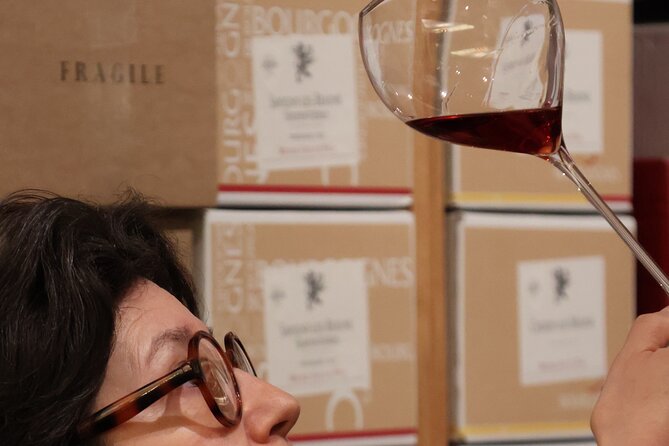
The four pours form the backbone of the session. You receive four Burgundy wines, with the tasting moving from Village level to Grand Cru. The exact bottles can vary, so you should think of the class as a comparison of classifications rather than a fixed bottle-by-bottle menu.
The Village wine gives you a useful baseline. It can show the general character of Burgundy Pinot Noir before the class asks you to think about finer distinctions.
The middle wines help bridge the gap. This is where the explanation of appellations and terroir becomes more useful, because you can connect the vocabulary to what is in your glass. The instructor may point out changes in fruit, texture, balance, or finish as the wines become more specific in origin and higher in classification.
The Grand Cru pour is the natural climax. It is not just included as an expensive finale. It shows what the top of Burgundy’s classification system means in practice. For many people, this is the first chance to taste the four levels together rather than comparing bottles on separate days.
The session also teaches basic tasting technique. You learn how to approach the wine, pay attention to its aromas and flavors, and compare one glass with another. The class is short, so do not expect a long, slow tasting of each wine. The pace is brisk and information-packed.
Some people have found the amount of information impressive for a 45-minute class. Others have found the presentation tiring when it alternates between French and English. If you prefer a leisurely tasting with long pauses, this may feel quick. If you want a useful orientation before visiting wineries, the compact format works well.
More Wine Tours in Burgundy
- Small-Group Full-Day Tour of Côte de Nuits, Côte de Beaune Vineyards and Beaune Historical District
★ 5.0 · 364 reviews - Half Day Tour of the Cote de Nuits Vineyards from Dijon
★ 5.0 · 108 reviews - Small group Burgundy tour of Beaune with Wine Tasting from Dijon
★ 4.5 · 85 reviews - Dijon: Bike tour and Tastings in the Vineyards of Burgundy
★ 3.9 · 47 reviews
The guides make the short class work
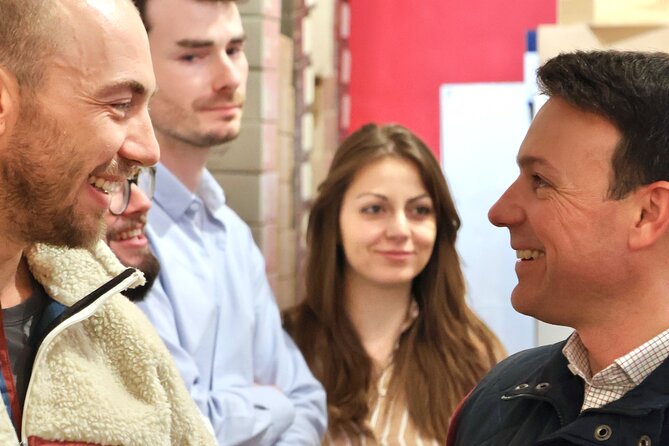
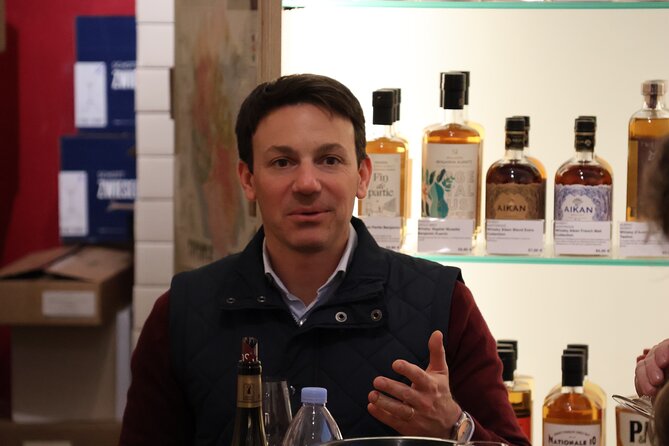
The guides are one of the strongest reasons to book. Adrien Tirelli, the shop’s maître caviste and an Ambassador of the Climats of the Burgundy Vineyard, is praised for his regional knowledge and welcoming manner. Mattéo is also described as especially good at teaching and explaining the wines.
Pierre receives repeated praise for his patience, humor, professionalism, and ability to answer questions. Valentin is noted for his understanding of local wines, history, and good places to stop in the region. Emily has also led sessions that guests found interesting, relaxed, and educational.
You should not assume that one particular guide will lead your booking unless the provider confirms it. The listed instructors include Mattéo, Emily, Adrien, and Pierre. The teaching style may vary slightly, but the shared aim is clear: give you a foundation for understanding Burgundy before you spend more time in the vineyards.
This is a good class for questions. Ask about the four levels, the meaning of a particular appellation, or how geography affects the taste. A group of six gives you a better chance of having that conversation than a large public tasting.
The staff also seems happy to continue the discussion after the formal tasting. The shop setting makes it possible to look at bottles and buy wine afterward. One tasting included cassis liqueur from Maison Briottet, a Dijon specialty, and it made a pleasant surprise for someone who usually avoids sweet spirits. Cassis is not listed among the four included Burgundy wines, so treat it as an extra possibility rather than part of the guaranteed tasting.
A wine shop, not a traditional tasting room
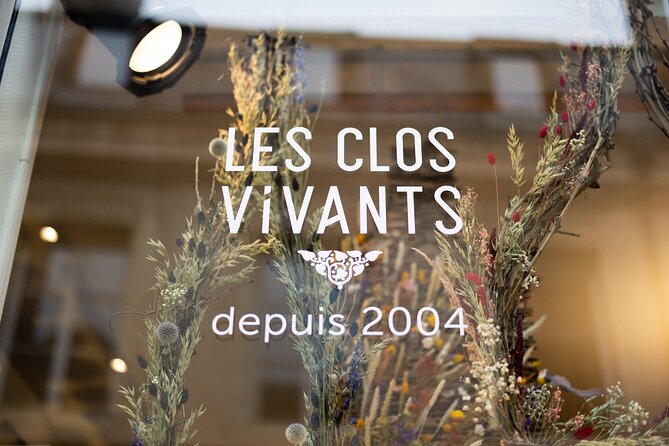
The setting deserves an honest explanation. You will be tasting at the rear of a small wine shop in Dijon’s historic center. This has an appealing local feel, and you can browse bottles before or after the class.
The drawback is comfort. The tasting area has been described as cramped, with bottles used as part of the shop stock and customers moving nearby. At times, you may feel slightly in the way. That is not a serious problem for everyone, but it changes the mood.
Ask for a chair if you need one. The provider has said chairs can be supplied, but they may not be automatically placed for every person. If you have mobility concerns, contact the provider before booking rather than relying on the room to be arranged for you.
The room is also not designed for a long meal. No food is included, and there is no promise of snacks or a substantial pairing. Have something to eat earlier, especially if four pours on an empty stomach do not suit you.
I see the shop as part of the appeal, provided you know what you are buying. This is an efficient, hands-on introduction in the middle of Dijon. It is not a slow afternoon in a vineyard estate.
Is $42.34 good value for the time?
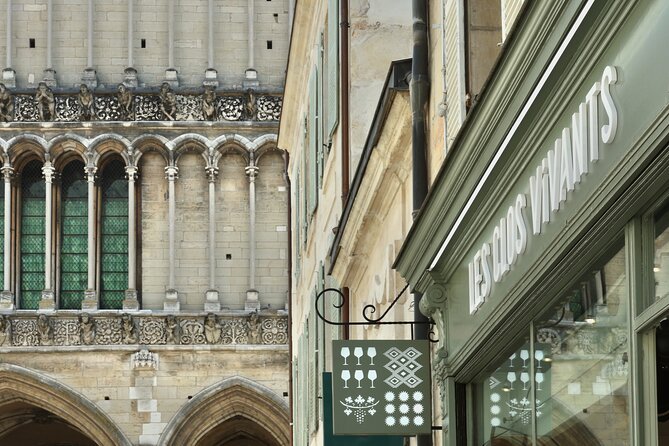
At $42.34 per person, the price is reasonable if you want a focused introduction to Burgundy and do not have time for a full day in the Côte d’Or. You receive four wines, a lesson on Burgundy’s classification system, and guidance on tasting Pinot Noir.
The Grand Cru comparison adds value. A single Grand Cru pour can make the class more than a basic regional tasting, because you are using the wines to understand a hierarchy rather than sampling four similar bottles.
The value is also educational. If you are planning a week of winery visits, this session can give you a vocabulary for asking better questions. You will have already heard about Village appellations, higher classifications, terroir, geography, and Climats.
Still, the price does not buy food, a vineyard visit, transportation into the countryside, or a seated luxury setting. If you want to see vines and cellars, spend your money on a longer excursion. If you want to get oriented in Dijon before making those plans, this is the more efficient choice.
The average booking lead time is about 22 days. That suggests you should reserve ahead during a popular travel period, especially because the group limit is only six people. The small capacity is good for the class, but it leaves less room for a last-minute plan.
Who will get the most from this tasting?
I would recommend it most strongly to people new to Burgundy wine. You can learn the basic system without committing to an expensive bottle or a full day outside Dijon.
It also suits anyone starting a longer wine trip. Take the class before visiting wineries and you will recognize the language more easily. The four-glass progression can help you decide which appellations or styles deserve more attention later.
It is a good fit for curious drinkers who enjoy explanation along with tasting. The instructors are praised for answering questions and using geography and local history to explain the wine.
You may want to skip it if you dislike standing, tight spaces, or a lively shop environment. It is also not the right choice if food pairings are central to your idea of a wine tasting. The session is short, direct, and focused on Burgundy Pinot Noir.
Service animals are allowed, and the site is near public transportation. The experience is offered in English. The maximum group size is six, which is a useful detail for anyone who prefers a more personal class.
Booking, timing, and cancellation advice
Confirmation is sent when you book. Plan to arrive at the Rue Musette meeting point before the 5:00 pm start so you can find the shop without cutting into the tasting.
Free cancellation is available up to 24 hours before the start time. Cancel at least 24 hours ahead for a full refund. Changes or cancellations inside that window are not accepted and are not refunded.
One past scheduling mistake led to a tasting being canceled without the person being informed until arrival. It appears to have been treated as an organizational error, not a normal feature of the experience, but it is sensible to keep your confirmation details handy and check any same-day message before walking over.
Should you book the Pinot Noir Masterclass?
Book it if you want a short, useful introduction to Burgundy wines in Dijon. The four-classification format is the key benefit, and the guides bring real local experience to a subject that can otherwise seem needlessly complicated.
Go in expecting a working wine shop, limited space, and a brisk 45-minute lesson. Eat beforehand, ask for a chair if needed, and do not expect a vineyard visit or food pairing.
For first-time Burgundy visitors, I think the class is worth the $42.34, especially before a longer trip through the Côte d’Or. For seasoned wine drinkers seeking a quiet, elaborate tasting, choose a more spacious cellar experience instead.
FAQ
Where does the Pinot Noir Masterclass begin?
It begins at 1 Bis Rue Musette, 21000 Dijon, France.
What time does the tasting start?
The tasting starts at 5:00 pm.
How long does the experience last?
It lasts approximately 45 minutes.
How many wines are included?
Four Burgundy wines are included.
Does the tasting include food?
No. Food is not included in the price.
Is the tasting offered in English?
Yes. The experience is offered in English.
What is the cancellation policy?
You can cancel up to 24 hours before the start time for a full refund. Cancellations or changes made less than 24 hours before the experience are not accepted or refunded.
More Food Tours in Dijon
- Historic Center of Dijon : Discovery Tasting Wine Burgundy
★ 4.5 · 40 reviews - Paris: Seine Cruise & Crepe Tasting near the Eiffel Tower
★ 4.4 · 11,231 reviews - Authentic Parisian Gourmet Food Tour with 10 Local Dishes & Wines
★ 5.0 · 4,754 reviews - Normandy D-Day Small-Group Day Trip with Omaha Beach, Cemetery & Cider Tasting
★ 5.0 · 2,786 reviews
More Wine Tours in Dijon
- 🍷 Masterclass Pinot Noir – Wine tasting in Dijon 🇫🇷
★ 4.5 · 35 reviews - Côte de Beaune Half-Day Wine Tour from Dijon
★ 4.7 · 32 reviews - Bordeaux: Cité du Vin Entry Ticket and Wine Tasting
★ 4.6 · 3,885 reviews - Montmartre Hill French Gourmet Food and Wine Tasting Walking Tour
★ 5.0 · 2,588 reviews
Recently added in Dijon
- Dijon with an Archaeologist: A Self-Guided Audio Tour★ 4.5 · 26 reviews
- Chardonnay Masterclass – Wine tasting in Dijon★ 5.0 · 91 reviews
- Burgundy Wines Masterclass in Dijon★ 5.0 · 139 reviews
- Cheese and Wine Pairing 1-Hour Session in Dijon★ 5.0 · 34 reviews
- Small group Burgundy tour of Beaune with Wine Tasting from Dijon★ 4.5 · 85 reviews
- From Dijon: Full day the most of Burgundy with lunch★ 5.0 · 40 reviews
- Half Day Tour of the Cote de Nuits Vineyards from Dijon★ 5.0 · 108 reviews
- 🍷 Masterclass Pinot Noir – Wine tasting in Dijon 🇫🇷★ 4.5 · 35 reviews
Wine Tours, compared.
Montmartre Hill French Gourmet Food and Wine Tasting Walking Tour
Read our review →
Loire Valley Castles Day Trip With Wine Tasting
Read our review →
Afternoon Saint-Emilion Wine Tasting & snack
Read our review →
Medoc or Saint Emilion Wine Tasting and Chateau from Bordeaux
Read our review →
Saint Emilion Day Trip with Sightseeing Tour & Wine Tastings from Bordeaux
Read our review →
Saint-Émilion: Grand Cru Classé Winery Visit and Tasting
Read our review →
Saint Emilion Half-Day Trip with Wine Tasting & Winery Visit from Bordeaux
Read our review →Browse the lists this tour appears in