
REVIEW · HISTORICAL TOURS
Historic Center of Dijon : Discovery Tasting Wine Burgundy
Burgundy begins beneath Dijon’s streets. This tasting brings five wines, a homemade Comté gougère, and a lesson in Burgundy’s famous Climats into the historic cellar of Les Caves de La Fine Heure. I like the central Dijon setting and the chance to taste a wine made in the cellar itself. I also like the mix of Crémant, white, and red wines, including a Premier Cru.
The main caution is that this is a cellar tasting, not a full vineyard excursion. At $47 per person, the value depends on how much you want guided instruction and a broad first taste of Burgundy. One English-speaking participant found the English explanation much shorter than the French portion, so I would confirm the language before booking.
In This Review
- Five useful things to know before you go
- Starting beneath Rue Berbisey
- A short lesson in Burgundy’s Climats
- First glass: Burgundy’s Crémant
- Two white wines, two different lessons
- Two reds, including a Premier Cru
- What the cellar setting adds, and what it does not
- Continuing at La Fine Heure
- Timing, access, and who should book
- The strongest points and the weak spots
- Should you book this Dijon wine tasting?
- FAQ
- Where does the Burgundy wine tasting take place?
- How long does the tasting last?
- How many wines are included?
- Is food included?
- Are the wines made by La Fine Heure?
- What languages are available?
- Is the activity wheelchair accessible?
- Can children join the tasting?
Five useful things to know before you go
- The tasting takes place at 32 Rue Berbisey, inside Les Caves de La Fine Heure in central Dijon.
- You taste five wines: one Crémant, two white wines, and two red wines, including one Premier Cru.
- A homemade Comté gougère is included, giving you a classic local bite with the wine.
- The cellar dates from the 16th and 18th centuries, adding atmosphere and a sense of place beneath the restaurant and shop.
- The listed activity lasts about 1.5 hours, although the booking information also displays a duration of one day, so check the exact start time when reserving.
Starting beneath Rue Berbisey
Your meeting point is Les Caves de La Fine Heure at 32 Rue Berbisey. The address puts you in Dijon’s historic center, which makes this easy to fit around sightseeing, lunch, or an evening meal.
The experience does not take you by bus into the Côte de Nuits or Côte de Beaune. Instead, it brings Burgundy’s wine country into the city. That is useful if you have only a short time in Dijon, or if you want an introduction before deciding which villages and appellations to visit later.
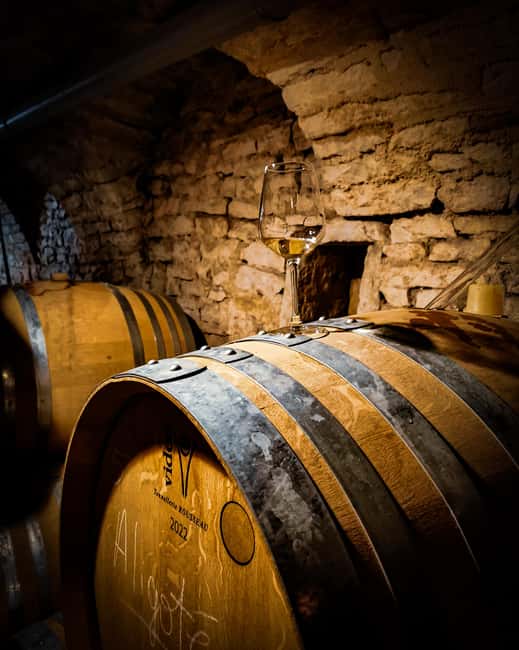
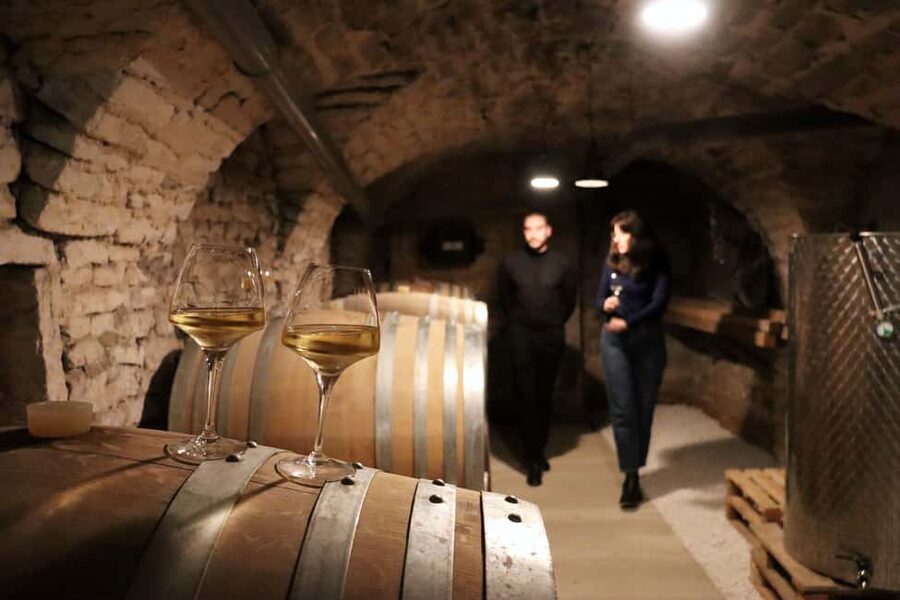
The cellar itself is one of the attraction’s strongest details. It occupies historic spaces dating from the 16th and 18th centuries. You are tasting in an old underground setting rather than a modern tasting room, though you should keep your expectations realistic: this is a cellar beneath a city restaurant, not a working vineyard estate.
The atmosphere is meant to be warm and convivial. The format suits people who enjoy sitting down, listening, asking questions, and comparing several styles of wine without spending most of the day on the road.
More Food Tours in Burgundy
- Dijon: La Cave du Palais Burgundy Wine Tasting Experience
★ 4.8 · 400 reviews - Pinot Noir Masterclass – Wine tasting in Dijon
★ 5.0 · 147 reviews - Dijon: Cheese and Burgundy Wine Tasting Workshop
★ 4.8 · 122 reviews
A short lesson in Burgundy’s Climats
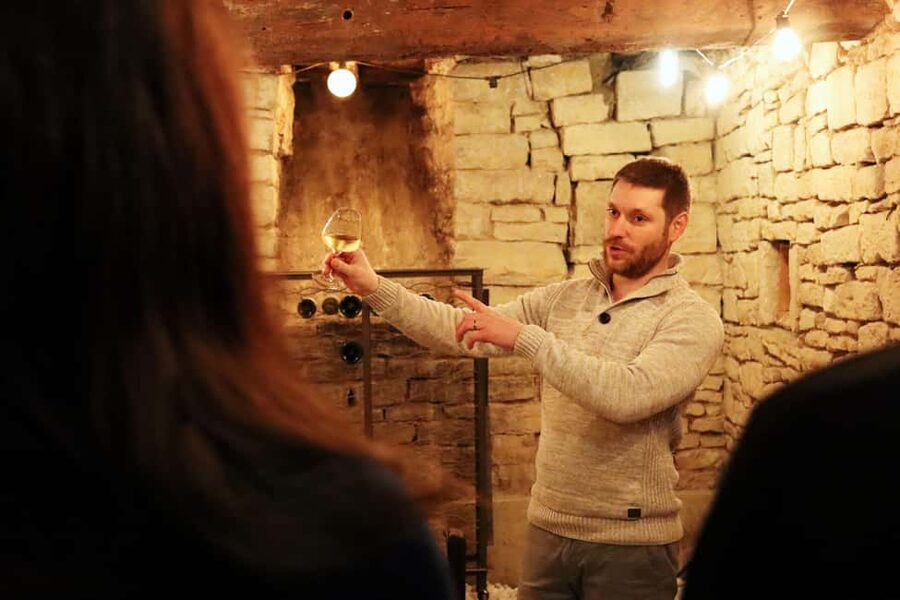
The tasting begins with a method for approaching wine. You learn how to look at the wine, smell it, taste it, and think about its character. That may sound basic, but it can make a Burgundy tasting much less intimidating.
Burgundy has a famously detailed wine system. Small changes in soil, slope, exposure, and village can affect the finished wine, and the term Climat refers to a precisely defined vineyard plot with its own name and identity. The session connects those ideas to Burgundy’s geology and wine history.
I like this educational angle because Burgundy labels can be confusing. A bottle may lead with the village, vineyard, or classification rather than the grape variety. A clear tasting method gives you something practical to use when you later read a wine list or stand in a shop comparing bottles.
The quality of the explanation will depend partly on the language of your guide. French and English are listed as the available languages. One booking was apparently made with Spanish expected, but Spanish was not available on arrival. If Spanish is important to you, confirm it directly rather than assuming it will be offered.
An English-speaking participant also felt that the English section was shorter and less detailed than the French explanation. That does not mean every session will be the same, but it is a fair reason to ask about the guide and language balance in advance.
First glass: Burgundy’s Crémant
The opening wine is a Crémant de Bourgogne. This sparkling wine gives the tasting a light start and shows a side of Burgundy that can be overlooked beside the region’s famous still wines.
Crémant is made in Burgundy using the traditional sparkling-wine approach. It is not Champagne, and that distinction matters, but it can offer a useful comparison in style, freshness, and texture.
For you, the value of this first glass is contrast. Starting with bubbles helps you notice acidity and freshness before moving into the still whites and reds. It also keeps the tasting from becoming five similar pours in a row.
The included gougère is especially well matched to this part of the session. A gougère is a savory cheese puff, and this one is homemade with Comté. It is more than a token snack: food helps prepare your palate and makes the experience feel like a small Burgundy food-and-wine lesson rather than a series of samples.
Two white wines, two different lessons
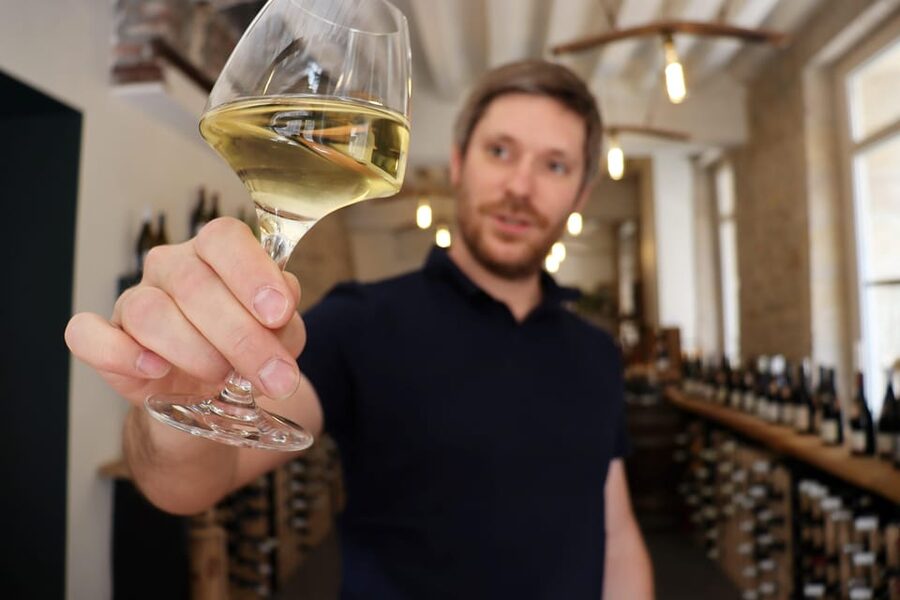
The next pair consists of two white Burgundy wines. The supplied details do not identify the appellations, producers, grape varieties, or vintages, so you should not book this expecting a fixed list of named bottles.
What you can expect is a chance to compare two white wines within the wider Burgundy tradition. The guide uses the glasses to discuss terroir, geology, and the way place shapes wine. This is where the tasting method becomes useful, since you can compare aromas, weight, acidity, and finish instead of simply deciding which one you like best.
I would ask questions here. Find out where each wine comes from, what classification it carries, and how it differs from the other white. The more specific the explanation, the more useful this section becomes.
One practical concern deserves attention. A participant reported that all five wines were poured into the same glass without rinsing or changing it. That is not ideal for a formal tasting because remnants of one wine can affect the next. If this happens, politely ask whether a fresh glass or a rinse is available. The criticism is specific and important, especially for anyone who already knows wine service standards.
More food tours in Dijon:
- Chardonnay Masterclass – Wine tasting in Dijon
★ 5.0 · 91 reviews - Small group Burgundy tour of Beaune with Wine Tasting from Dijon
★ 4.5 · 85 reviews - 🍷 Masterclass Pinot Noir – Wine tasting in Dijon 🇫🇷
★ 4.5 · 35 reviews - Paris: Seine Cruise & Crepe Tasting near the Eiffel Tower
★ 4.4 · 11,231 reviews
Two reds, including a Premier Cru
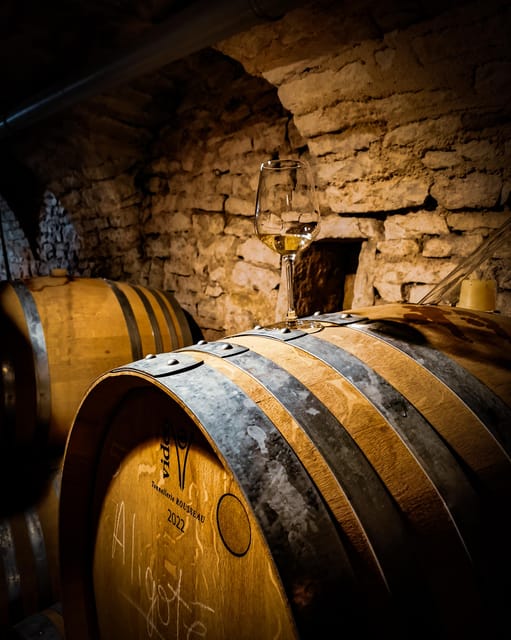
The final pair is red Burgundy, with one Premier Cru included. This gives you a chance to compare a more accessible red with a higher classification and to think about what the Premier Cru label means in practice.
Premier Cru is a vineyard classification, not a guarantee that every person will prefer the wine. The label signals a recognized level within Burgundy’s hierarchy, but taste remains personal. A well-explained comparison can help you understand why one bottle costs more and what you are paying for.
The tasting is also a good reminder that Burgundy is not just about famous names and expensive bottles. You can ask how the wines differ in structure, fruit, earthiness, age, and food pairing. Since the experience includes a wine made by La Fine Heure and vinified in its own cellar, ask which pour is theirs and what the cellar contributes to the finished wine.
That detail gives the session a personal touch. You are not only sampling outside producers selected for a generic tasting. You may also taste the establishment’s own work, though the supplied information does not specify which wine it is or the exact production method.
What the cellar setting adds, and what it does not
The historic cellar is the setting’s main physical draw. Old stone surroundings and underground rooms can make the tasting feel rooted in Dijon rather than copied from a hotel bar.
At the same time, the cellar is not a substitute for seeing Burgundy’s vineyards. You will not get a drive through wine villages, a walk among vines, or a visit to a rural domaine based on the information available here. The experience is best understood as an urban introduction to the region.
That distinction helps with the price. At $47, you are paying for five wines, a Premier Cru sample, the gougère, guided instruction, and access to the historic cellar. You are not paying for transportation, a full meal, or a day in the vineyards.
For a first-time Burgundy drinker, that can be fair value. For someone already comfortable with Burgundy and looking mainly for generous pours, the price may feel high. One participant judged the experience expensive for what amounted to a tasting in a restaurant basement. Your satisfaction will depend on whether the teaching and setting matter as much as the wine itself.
Continuing at La Fine Heure
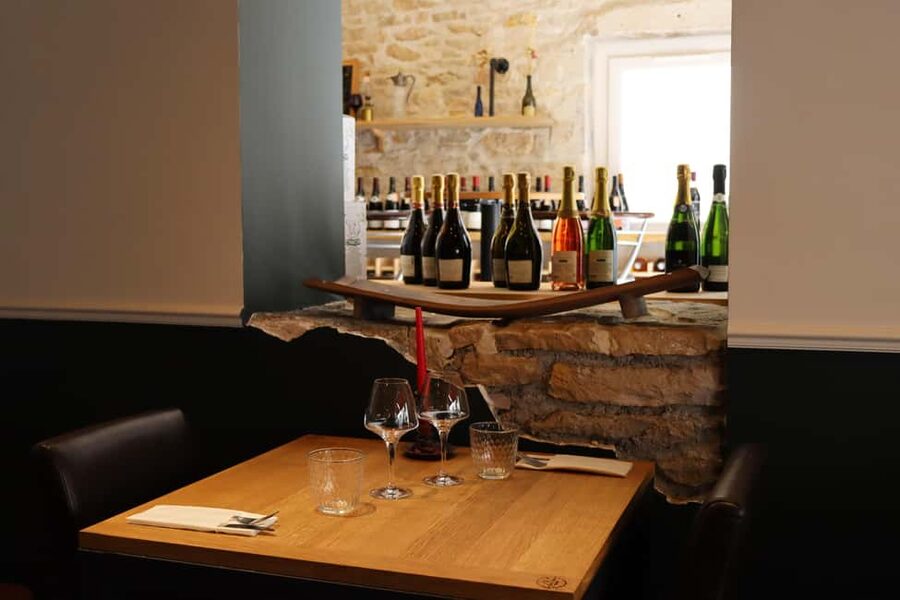
The tasting finishes back at 32 Rue Berbisey, and you can extend the experience in two straightforward ways. You can book a table at the La Fine Heure restaurant, which serves local specialties, or browse the wine shop and buy bottles.
Neither option is included in the $47 price. That is useful to know before you arrive, especially if you are planning a larger meal or hoping to take home several bottles.
The restaurant makes sense if you want to turn the tasting into a Burgundy-themed meal. The gougère gives you only one small taste of local food, so a full meal lets you continue thinking about pairings and regional cooking.
The shop is more useful if the guide helps you identify a wine style you enjoyed. Ask for the bottle details before buying. A tasting is most valuable when you leave with a better idea of what you like, not simply with an expensive label chosen because it says Premier Cru.
Timing, access, and who should book
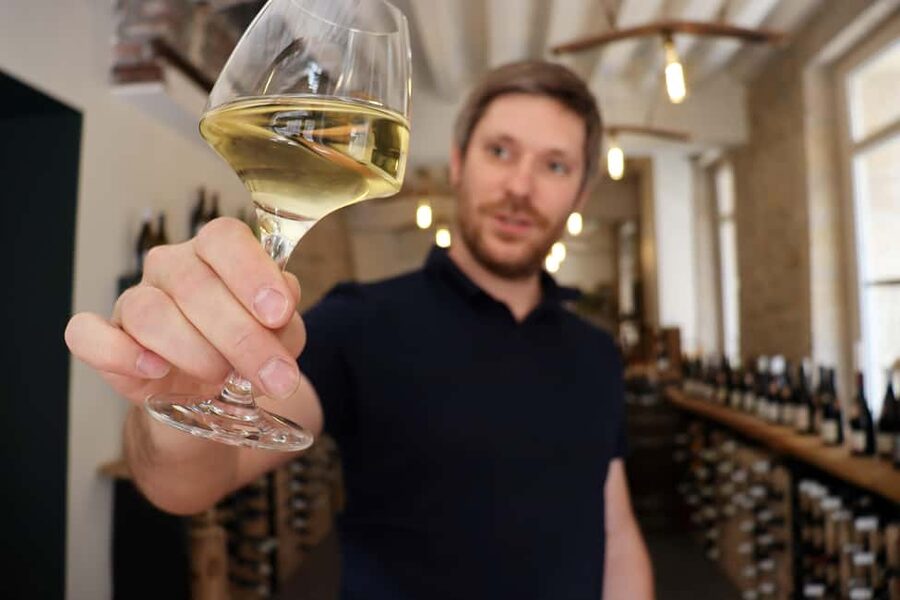
The scheduled tasting itself is about 1.5 hours. The booking page also gives the duration as one day, which likely refers to the overall activity date rather than a full-day program, but I would check the starting time and end time before arranging another appointment.
French and English are the listed languages. Because one English session was described as less detailed than the French explanation, English speakers who want a serious wine lesson should confirm that the guide can provide a full bilingual presentation.
The activity is wheelchair accessible. That is a useful point for anyone planning around mobility needs, although the provided information does not describe the exact cellar layout or restroom access.
This is an adults-only activity for people aged 18 and over. The information also lists people with altitude sickness as unsuitable, although the tasting takes place in Dijon and no high-altitude setting is described. If that warning affects you, ask the provider for clarification.
Free cancellation is available up to 24 hours before the booking for a full refund. You can also reserve now and pay later, which helps if your Dijon schedule is still changing.
The strongest points and the weak spots
The most consistently praised elements are the wine quality, the informative explanation, and the pleasant setting. One French participant praised the complete explanation of the region, while an American participant highlighted the lovely setting and informative guide. Another person simply appreciated trying the different wines.
Those comments fit the structure of the activity. You get a broad five-wine sample, a historic cellar, and a guide-led method that gives the pours some order and purpose.
The weaker points are also clear. The price can feel high if you see the experience as only five small pours in a basement. Language balance may be a problem in some sessions, and the reported single-glass service could reduce the quality of the tasting.
I would treat those concerns as things to clarify, not automatic reasons to avoid the experience. Ask about the language, the exact wines, and the glass service before paying. Those answers will tell you whether the session matches your expectations.
Should you book this Dijon wine tasting?
Book it if you want a convenient introduction to Burgundy without leaving Dijon. The historic cellar, five-wine sequence, homemade Comté gougère, and Premier Cru sample make a good package for curious beginners and visitors with limited time.
You should also book if you value explanation over spectacle. This is not a vineyard tour with sweeping countryside views. It is a focused city tasting that connects wine to Burgundy’s soil, history, and Climats.
I would be more cautious if you already know Burgundy well, expect a full meal, or want a polished professional tasting with separate glasses for every wine. In that case, $47 may not feel like strong value unless the guide gives you detailed, well-balanced instruction.
My practical choice would be to reserve a French or English session only after confirming that the language you need will receive the full presentation. If that checks out, this is a useful first step into Burgundy wine, with the bonus of being able to eat at La Fine Heure or shop for bottles afterward.
FAQ
Where does the Burgundy wine tasting take place?
It takes place at Les Caves de La Fine Heure, 32 Rue Berbisey, in Dijon’s historic center.
How long does the tasting last?
The tasting itinerary states approximately 1.5 hours. The activity information also displays a duration of one day, so check the exact start and end time when choosing a date.
How many wines are included?
Five wines are included: one sparkling Crémant, two white wines, and two red wines. One of the red wines is a Premier Cru.
Is food included?
Yes. You receive one homemade Comté gougère, a savory cheese puff.
Are the wines made by La Fine Heure?
The experience includes the opportunity to taste the provider’s own wine, vinified in its cellar. The supplied information does not identify which of the five wines it is.
What languages are available?
The listed languages are French and English. Spanish is not listed as an available language, and one booking had an issue because Spanish was expected but was not offered.
Is the activity wheelchair accessible?
Yes, the activity is listed as wheelchair accessible.
Can children join the tasting?
No. The activity is not suitable for children under 18.
More Historical Tours in Dijon
- Small-Group Full-Day Tour of Côte de Nuits, Côte de Beaune Vineyards and Beaune Historical District
★ 5.0 · 364 reviews - Paris: Louvre Museum Entry with History of Mona Lisa
★ 3.9 · 2,823 reviews - Paris: Dark History and Ghostly Guided Walking Tour
★ 4.7 · 1,000 reviews - Vieux Lyon Cultural & Historical Walking Guided Tour (English)
★ 5.0 · 942 reviews
Recently added in Dijon
- Dijon with an Archaeologist: A Self-Guided Audio Tour★ 4.5 · 26 reviews
- Chardonnay Masterclass – Wine tasting in Dijon★ 5.0 · 91 reviews
- Pinot Noir Masterclass – Wine tasting in Dijon★ 5.0 · 147 reviews
- Burgundy Wines Masterclass in Dijon★ 5.0 · 139 reviews
- Cheese and Wine Pairing 1-Hour Session in Dijon★ 5.0 · 34 reviews
- Small group Burgundy tour of Beaune with Wine Tasting from Dijon★ 4.5 · 85 reviews
- From Dijon: Full day the most of Burgundy with lunch★ 5.0 · 40 reviews
- Half Day Tour of the Cote de Nuits Vineyards from Dijon★ 5.0 · 108 reviews
Historical Tours, compared.
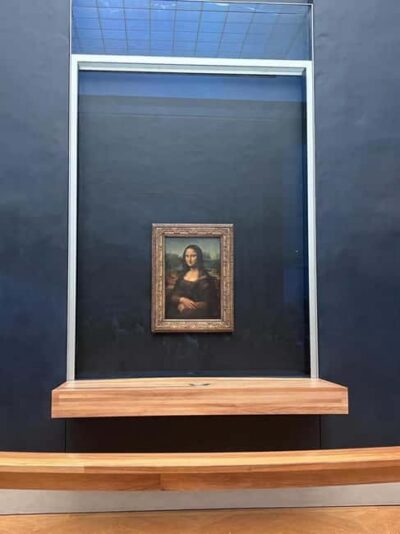
Louvre Museum Entry with History of Mona Lisa
Read our review →
Vieux Lyon Cultural & Historical Walking Guided Tour (English)
Read our review →
Toulouse Food & History Tour with a Chef (in English)
Read our review →
Small-Group Full-Day Tour of Côte de Nuits, Côte de Beaune Vineyards and Beaune Historical District
Read our review →
Browse the lists this tour appears in